Meditation Techniques 200 Hour YTT: The Ultimate Guide to What You Actually Learn
Mastering the meditation techniques 200 hour YTT programs offer is the true turning point in your practice. You might arrive thinking mostly about perfect chaturangas and flexible hamstrings.
However, you will soon discover that the physical postures are merely a preparation for the mind. Real growth happens when you finally sit still and confront your internal landscape.
Many students feel intimidated by the idea of meditating for long periods. You are not alone if you struggle to quiet your thoughts for even five minutes.
This comprehensive guide breaks down exactly what mental practices you will encounter during your training. You will learn how these methods systematically dismantle stress and build sharp, steady focus.
Why Meditation Techniques 200 Hour YTT Focus Matters
Modern yoga classes often rush through a brief seated silence at the end of a sweaty flow. A dedicated training course flips this script entirely.
You spend significant time studying the mind because you cannot teach others to find peace if your own mind is chaotic. This is a standard upheld by professional bodies like Yoga Alliance, ensuring teachers understand the complete eight-limbed path.
The shift from physical exertion to mental stillness requires immense discipline. Your nervous system must learn to transition from fight-or-flight mode into deep, conscious rest.
When you learn to regulate your own nervous system, you become a deeply grounded presence in the room. This energetic shift is exactly what draws students to great teachers.
Core Meditation Techniques 200 Hour YTT Programs Teach
You will not just sit and hope for the best during your training. You will learn specific, highly structured methods designed to anchor your drifting awareness.
Vipassana (Silent Observation)
Vipassana translates to seeing things exactly as they are. This practice involves scanning your body and observing physical sensations without any emotional reaction.
You learn to sit through discomfort, recognizing that physical aches and wandering thoughts are temporary. This builds profound mental resilience that bleeds into your daily life.
Trataka (Candle Gazing)
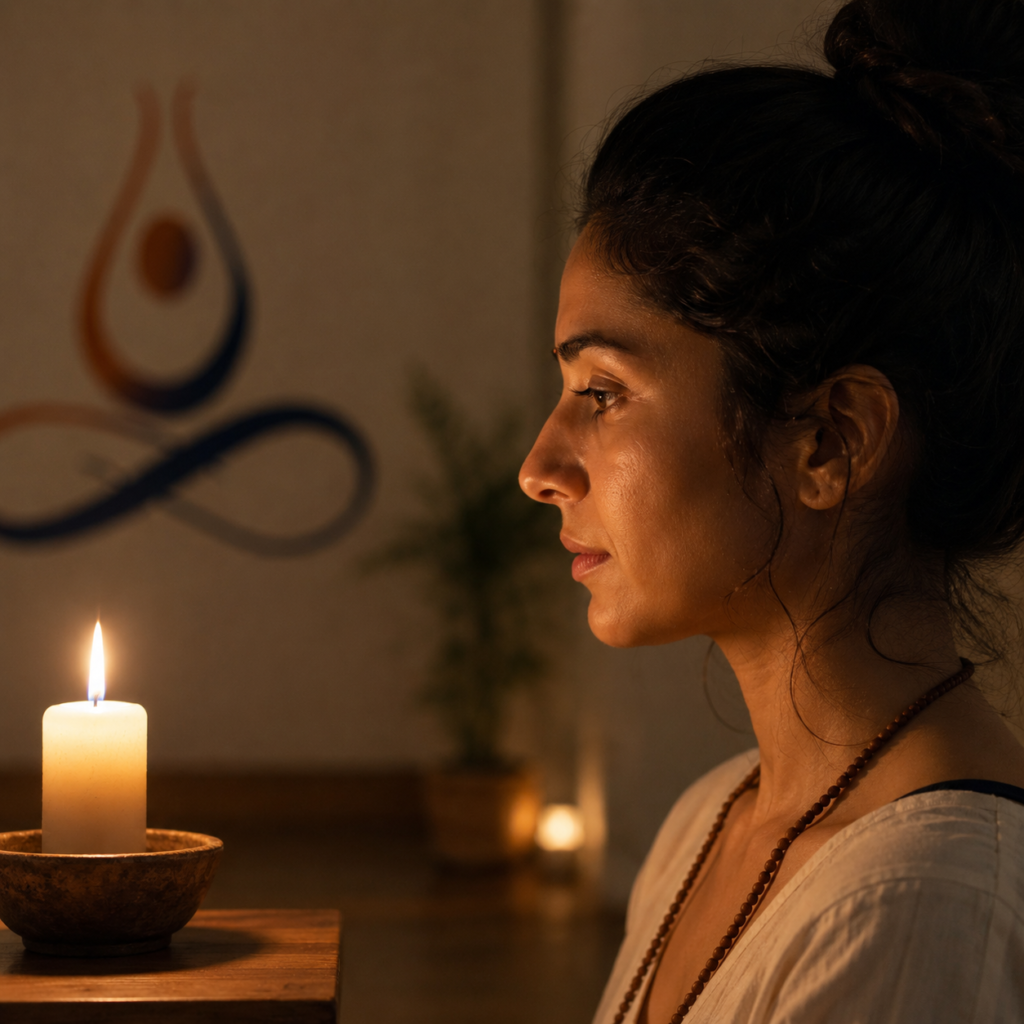
Trataka is a powerful purification practice that rapidly sharpens your concentration. You stare unblinking at a single point, usually a candle flame, until your eyes naturally water.
This technique cleanses the optical nerves and forces the mind to abandon its endless chatter. It is an incredibly effective tool for students who find closed-eye meditation too overwhelming at first.
Chakra Meditation
Understanding your energy centers is crucial for any aspiring yoga teacher. You will use visualization and specific seed mantras to activate and clear these energetic blockages.
This practice moves you beyond the physical body and into the subtle body. Exploring chakra balancing practices allows you to diagnose and heal your own energetic imbalances.
If you are curious about how to start this practice safely, you can review this beginner guide to chakra meditation.
Advanced Dhyana and Mantra Practices
Once you build a foundation of focus, your training will introduce tools that alter your brainwave states. These advanced methods use sound and deep relaxation to bypass your conscious defenses.
Mantra Japa (Chanting)
Mantra Japa involves repeating a sacred sound, word, or phrase, often using a mala string of 108 beads. The physical sensation of the beads combined with the vocal vibration creates a powerful anchor for the mind.
This is not just religious ritual; it is practical mental conditioning. You can dive deeper into the science behind mantra chanting to understand how these frequencies heal the nervous system.
You will notice how the vibrations clear mental fog and bring immediate clarity. This principle is heavily utilized in deeply restorative sound healing sessions as well.
Yoga Nidra (Yogic Sleep)
Yoga Nidra is a state of conscious deep sleep that provides the rest of several hours of normal sleep in just 45 minutes. You lie in Savasana while a teacher guides your awareness through your physical body.
You remain hovering on the edge of sleep, totally relaxed yet completely aware. It is a vital technique for trauma release and deep nervous system recovery.
How Daily Practice Reshapes Your Brain
The rigorous schedule of a teacher training course rewires your brain on a biological level. Neuroplasticity ensures that whatever you practice consistently becomes your default state of being.
Studies available through the National Library of Medicine show that consistent meditation increases the density of the prefrontal cortex. This is the area of your brain responsible for emotional regulation and complex decision-making.
At the same time, it shrinks the amygdala, which controls your fear and stress responses. You will literally return home with a brain that is more resilient to anxiety.
Teaching Meditation: From Student to Guide
Practicing meditation is entirely different from guiding a room full of beginners through their internal resistance. Your training bridges this gap by teaching you exact scripting, pacing, and vocal tonality.
You will practice leading small groups, learning how to hold space when a student experiences an emotional release. This requires immense empathy, strong boundaries, and a calm, unwavering voice.
Mastering these skills requires a solid grasp of mastering teaching methodology. You will quickly learn that silence is your most powerful teaching tool, provided you know how to wield it.
The Role of Breathwork in Entering Meditation
You cannot force the mind into stillness through sheer willpower. The breath acts as the primary bridge between your scattered thoughts and deep meditative absorption.
Before every seated session, you will engage in specific Pranayama techniques like Nadi Shodhana (Alternate Nostril Breathing) or Kapalabhati (Skull Shining Breath). These practices balance the left and right hemispheres of your brain.
Once the breath is smooth and rhythmic, the mind naturally follows suit without a fight. This preparation phase is the secret to avoiding the frustration of a restless sitting practice.
Designing Meditation Sequences for Future Students
As a future teacher, you must learn to sequence a mental practice just as carefully as a physical vinyasa flow. You cannot throw a beginner straight into a 30-minute silent Vipassana sit.
You will learn how to build progressive sequences, starting with body scans, moving into breath awareness, and ending with visualization. This tiered approach prevents students from feeling defeated or overwhelmed.
Understanding how to layer these techniques ensures your future classes are accessible and genuinely impactful. It is about creating a safe container for self-exploration.
Why Rishikesh? The Global Capital of Meditation
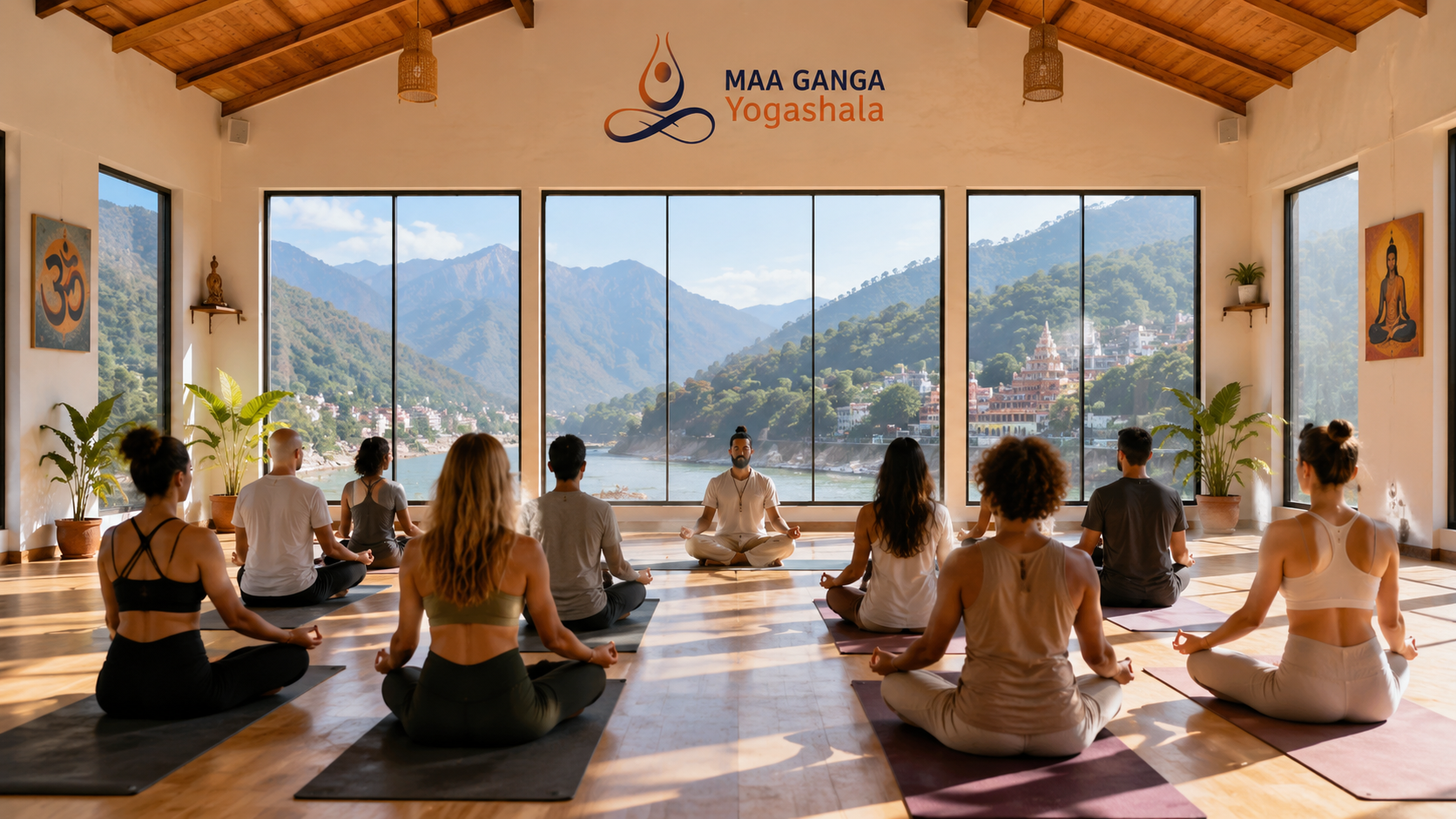
There is a distinct, tangible energy in the foothills of the Himalayas that accelerates spiritual growth. The environment itself strips away your usual distractions and forces you to look inward.
Practicing near the banks of the sacred Ganga River connects you to thousands of years of uninterrupted yogic history. The daily sounds of temple bells, chanting, and flowing water naturally pull your mind into a meditative state.
Immersing yourself in practicing yoga in Tapovan provides a backdrop of devotion that simply cannot be replicated in a Western studio. You absorb the culture of meditation just by breathing the air.
Overcoming Common Meditation Struggles
Every student hits a wall during their intensive training, usually around the second week. Your ego will rebel, your knees will ache, and your mind will invent urgent reasons to stop sitting.
Physical Discomfort
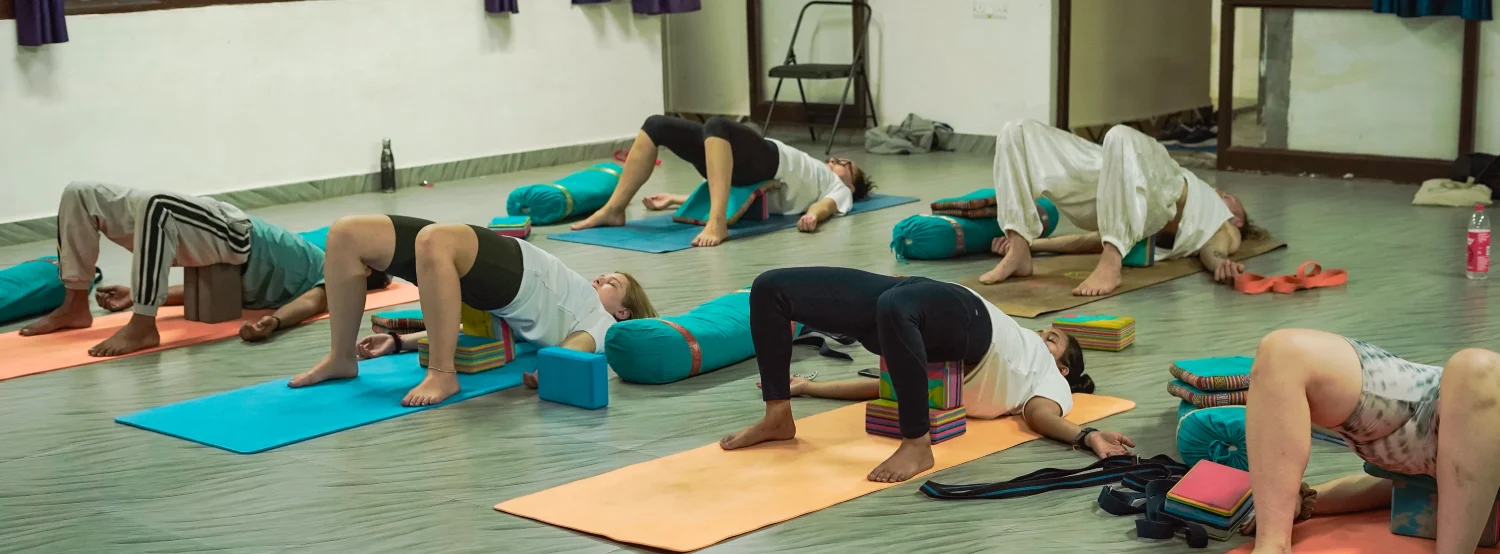
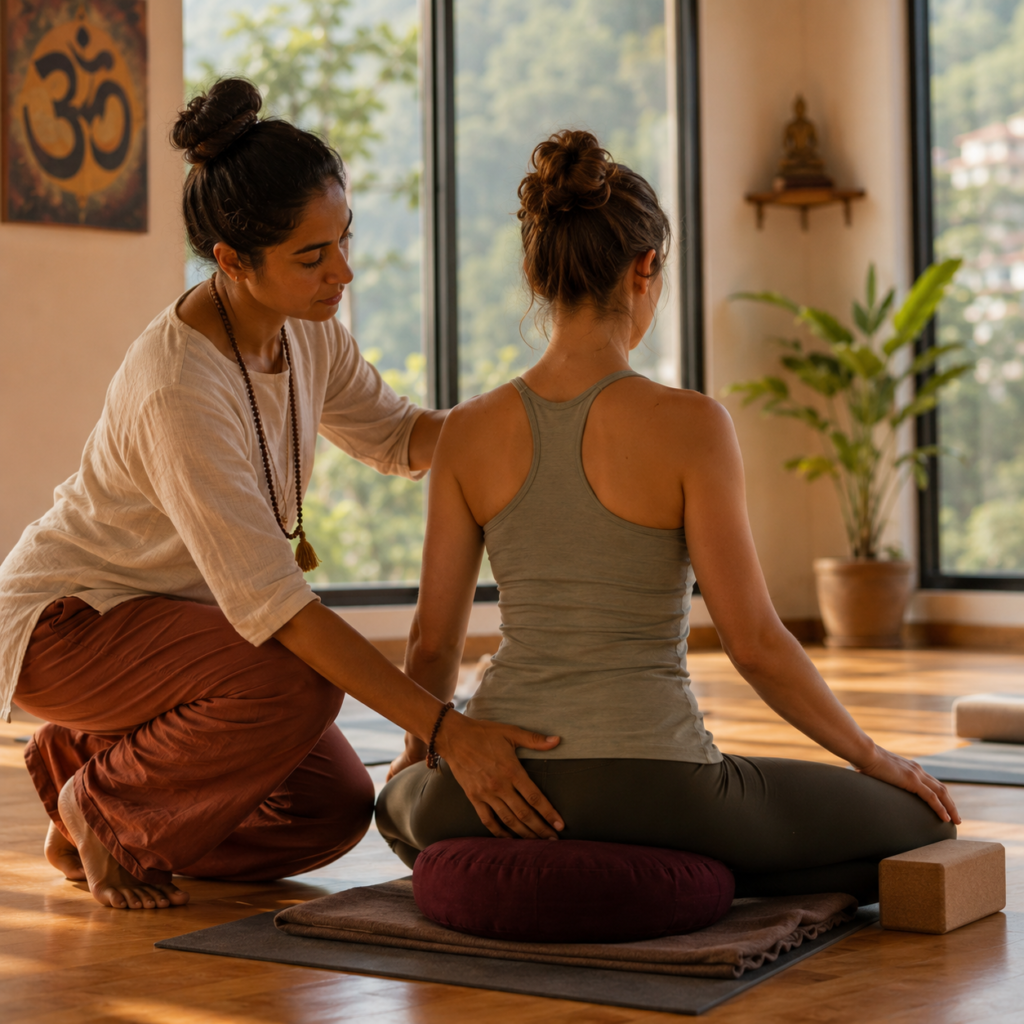
Sitting cross-legged for an hour reveals tensions in your hips and spine you never knew existed. You will learn how to properly use props, cushions, and subtle postural adjustments to find physical ease.
The goal is a steady, comfortable seat (Sthira Sukham Asanam), not silent agony.
The Restless Mind
You will face days where your brain feels like a chaotic marketplace. Your teachers will show you how to observe this mental noise without judging yourself as a “bad meditator.”
The victory is not in achieving a blank mind, but in the repeated, gentle return of your focus to the present moment.
Sustaining Your Practice Post-Graduation
The real test of your training begins the day you return to your normal life. Without the structured ashram schedule and the collective energy of your classmates, maintaining a daily sit becomes challenging.
You will leave your training with a personalized blueprint for your home practice. You will know exactly which techniques to use when you feel anxious, sluggish, or disconnected.
Consistency, even just ten minutes a day, will protect the profound mental clarity you worked so hard to achieve in India.
Experiencing Real Growth in India
Reading about mental stillness is one thing; living it under the guidance of traditional masters is another. If you’re considering training in Rishikesh, Maa Ganga Yogashala offers an authentic ashram experience at Maa Ganga Yogashala that honors the deep roots of these practices.
Our teachers do not just instruct; they live the philosophy they share. You are supported through every physical ache and emotional breakthrough in a truly safe environment.
FAQs
Do I need prior meditation experience for a 200-hour YTT?
No prior experience is required, though a willingness to sit with yourself is essential. The training is designed to build your practice from the ground up, starting with very short, guided sessions.
How many hours a day will I meditate?
You can generally expect one to two hours of dedicated meditation and Pranayama daily. This is usually split between morning and evening sessions to bookend your intense physical practice.
What if I cannot sit cross-legged for long periods?
Your teachers will help you find modifications using blocks, bolsters, or even a chair if necessary. You can also explore common beginner questions about YTT to ease any anxieties before you arrive. Physical limitations should never prevent you from experiencing the benefits of a quiet mind.
Conclusion: Take the Next Step in Your Journey
The meditation techniques 200 hour YTT courses provide are the ultimate tools for self-mastery. You will learn to navigate your inner world with grace, patience, and unwavering focus.
This profound mental shift is what elevates you from a simple fitness instructor to a true yoga teacher. Are you ready to begin your transformation?
Explore our 200-Hour YTT in Rishikesh and take the first step toward true inner peace today.