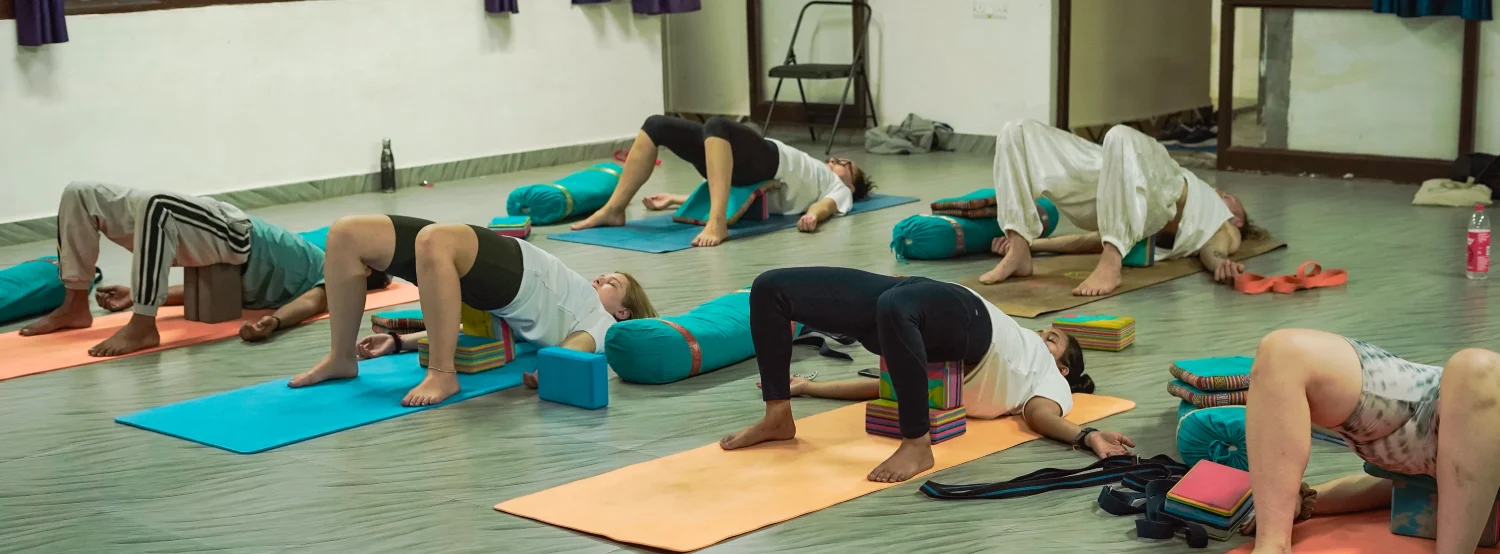
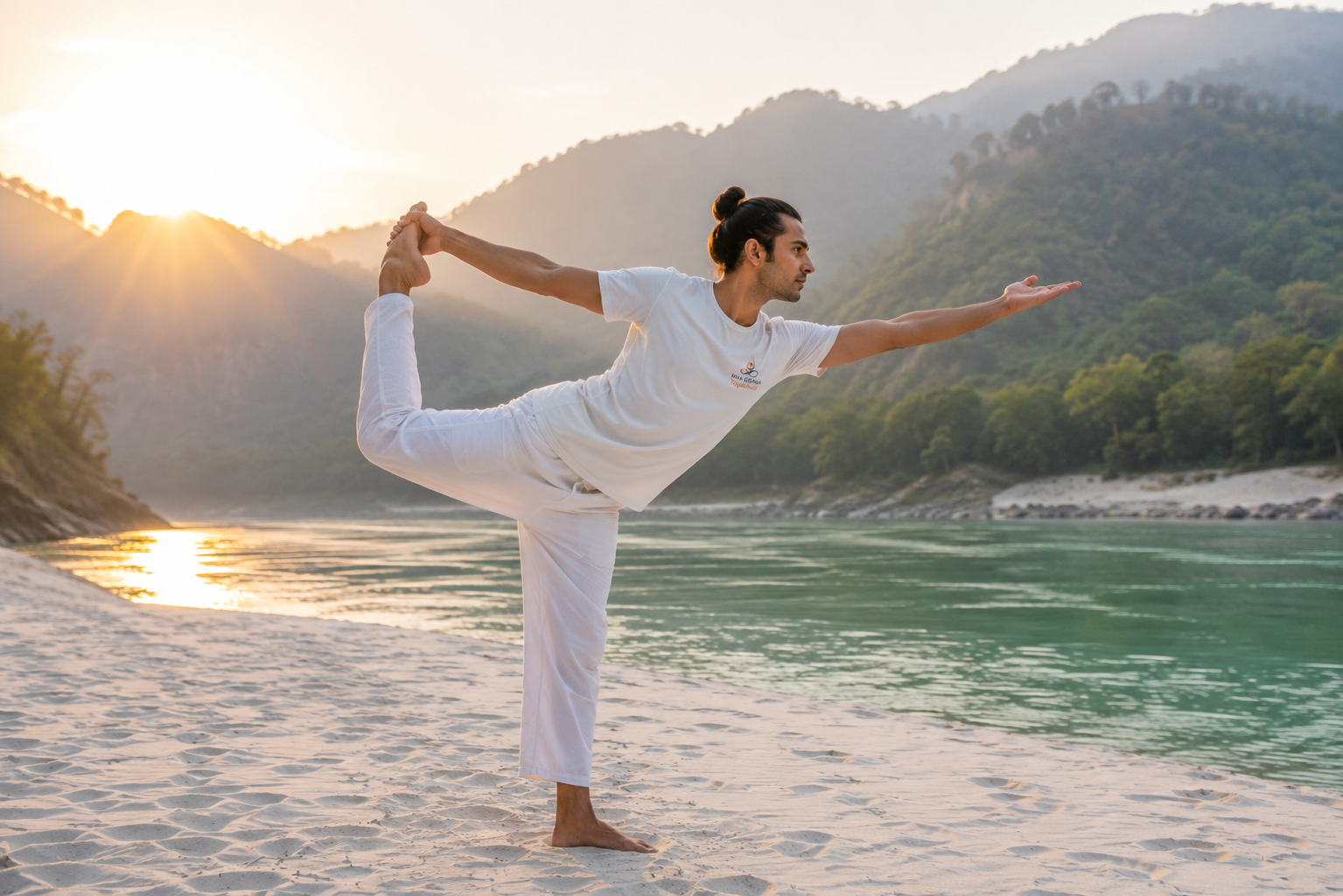
Ganga River Yoga Rishikesh Spiritual Significance: Why Location Matters
The Ganga river yoga Rishikesh spiritual significance is not just traditional folklore; it is a living reality that completely shifts your inner state the moment you unroll your mat beside the glacial emerald water. Have you ever wondered why thousands of yogis leave modern studios across the globe to practice on the rocky banks of northern India?
When you practice here, the environment does half the work for you. The rhythmic roar of the river silences mental chatter, while the cool mountain air carrying Himalayan prana revitalizes your respiratory system. In this guide, you will uncover the historical, energetic, and physiological reasons why practicing yoga along the sacred Ganga changes everything about your spiritual path.
The Historical Roots of Ganga River Yoga Rishikesh Spiritual Significance
For thousands of years, Vedic sages and yogic masters traveled to Uttarakhand to seek higher consciousness. The Ganga river yoga Rishikesh spiritual significance originates in the ancient scriptures, where the river is revered not merely as water (jal), but as Amrita—the nectar of liberation and divine consciousness.
According to classical texts documented on Wikipedia, the descent of the Ganga (Gangavataran) represents supreme cosmic grace flowing down to purify earthly existence. When the sage Bhagiratha performed severe austerities, Lord Shiva broke the river’s immense fall within his matted hair (Jata), allowing her waters to nourish the earth peacefully.
When you sit along these banks, you step into an unbroken lineage of practice. The ancient rishis did not choose this valley randomly. They recognized that the geological convergence of the upper Himalayas and the virgin river creates a natural sanctuary where deep meditation happens effortlessly.
Energetic and Pranic Vibrations Along the Sacred River Banks
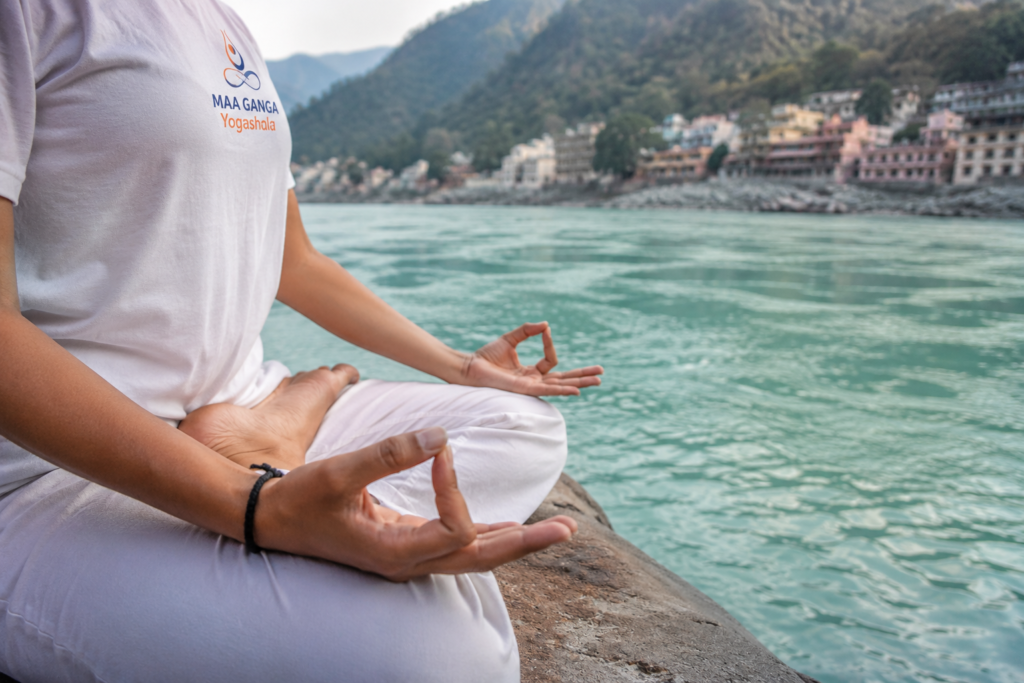
Practicing yoga directly beside the river exposes your subtle body to high concentrations of Prana (vital life force energy). In yogic physiology, the water element (Jala Tattva) governs our emotional fluidity, adaptability, and the Sacral (Svadhisthana) chakra.
The constant motion of glacial water charges the atmosphere with negative ions. These naturally occurring particles balance your nervous system, clear brain fog, and increase oxygen flow to your tissues. When you begin to understand chakra balancing, you realize how the river’s natural resonance gently harmonizes your subtle energy channels (nadis).
Pranic Dynamics of River Practice:
- Physical Level: High negative ion concentration improves respiratory efficiency.
- Mental Level: Natural white noise slows down beta brainwaves to alpha/theta states.
- Energetic Level: Jala Tattva cleanses stagnation within the emotional body.
Your physical postures (asanas) feel lighter, and your breath expands without strain. The ambient vibration of rushing water works as a natural sound therapy, steadily drawing your senses inward into spontaneous Pratyahara.
The Role of Sacred Sound and Nadanusandhana
Sound is the first element of creation in Vedic cosmology. The sound of the flowing Ganga is traditionally considered a physical manifestation of the primordial sound, Aum (Om).
In traditional practices of Nadanusandhana (meditation on inner sound), yogis use external pure frequencies to tune the mind before listening to the internal subtle sounds of the heart. If you have ever attended a sound healing session in Rishikesh, you know that ambient acoustic purity accelerates deep cellular recovery and physical stillness.
Why Breathwork Beside the Ganga Shifts Your Physiology
Breath is the bridge between your physical frame and your conscious awareness. When you sit beside the cold river at dawn, the air is crisp, pure, and rich in natural mountain oxygen.
Practicing Pranayama along the river amplifies the regulation of your autonomic nervous system. The cool temperature stimulates the vagus nerve, immediately shifting your body from a sympathetic state (fight-or-flight) to a parasympathetic state (rest-and-digest). To gain a deeper understanding of these techniques, exploring pranayama teacher training importance highlights how breath mastery directly balances the human endocrine system.
The physical benefits of river-side breathwork include:
- Clearer nasal passages and enhanced lung capacity due to pristine mountain air.
- Reduced cortisol levels supported by the continuous sound of moving water.
- Deeper retention (Kumbhaka) because your nervous system feels inherently secure.
- Accelerated mental quietude, making seated meditation accessible even for beginners.
Research compiled on PubMed confirms that natural water environments combined with paced breathing significantly lower blood pressure and systemic inflammation markers.
The Science of Sacred Geography: Why Rishikesh is Different
Not all locations offer the same energetic baseline. Rishikesh sits at the exact point where the sacred river leaves the rugged Himalayan gorges to enter the plains of northern India.
This transition zone creates a rare geographical microclimate. The granite rocks, mineral-rich glacial waters, and dense pine forests act as a natural acoustic and energetic shield against environmental pollution. Modern wellness science now terms this phenomenon “blue space benefits,” confirming what yogis realized millennia ago.
When you practice in an authentic 100-hour yoga teacher training, you notice that your body requires less recovery time between intense sessions. The environment actively supports your physical restoration, muscle recovery, and mental clarity.
Daily Rituals: Ganga Aarti and Sunset Meditation
Spiritual practice in Rishikesh extends far beyond your physical yoga mat. Life here revolves around the daily rhythms of the river, especially during sunrise and twilight (Sandhya).
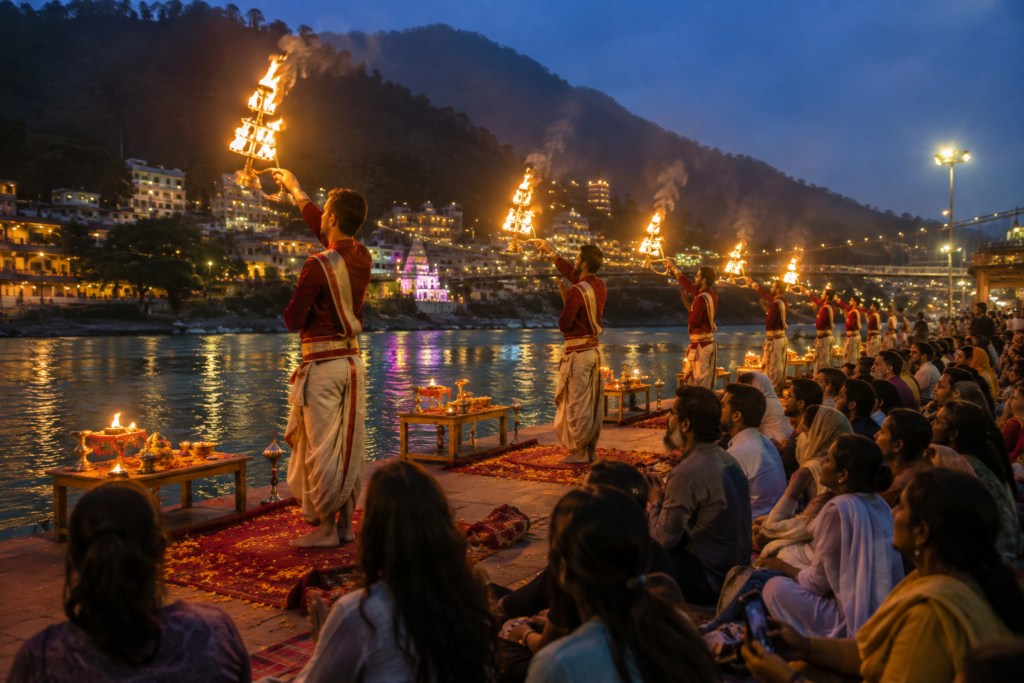
Every evening, the riverbanks light up with sacred fire ceremonies known as the Ganga Aarti. Bells ring, Vedic mantras echo across the cliffs, and floating lamps (diyas) drift downstream. Sitting along the ghats during this time offers a profound sense of surrender.
Key elements of daily river rituals include:
- Brahma Muhurta Dip: An early morning bath in the cold waters to awaken circulation and clear mental inertia (Tamas).
- Surya Namaskar at Dawn: Aligning physical sun salutations with the morning rays reflecting off the water.
- Twilight Japa Meditation: Chanting personal mantras as dusk settles over the Himalayan foothills.
- Ganga Aarti Immersion: Participating in communal gratitude, grounding the day’s spiritual study.
These communal ceremonies remind you that yoga is a lived discipline of devotion (Bhakti), surrender (Ishvara Pranidhana), and active awareness.
Deepening Your Practice in Tapovan
Tapovan, located just above the classic suspension bridges of Rishikesh, has historically been the chosen spot for intense penance (Tapasya). The neighborhood balances quiet spiritual ashrams with accessible modern wellness cafes.
Staying in Tapovan allows you to step away from urban noise and center your daily routine entirely around your practice. You can easily walk down to private river beaches for morning meditation before your regular alignment and philosophy classes begin.
If you are planning your journey, reading about yoga retreat booking for first-timers can help you choose the right season and prepare your travel itinerary smoothly.
Deepen Your Journey with Maa Ganga Yogashala
If you feel called to experience this sacred river energy firsthand, Maa Ganga Yogashala offers authentic, traditional courses right along the riverbanks in Tapovan, Rishikesh.
Whether you want to establish strong foundational habits or pursue international teaching credentials, practicing here gives you direct access to experienced Indian masters and the timeless tranquility of the holy river.
Frequently Asked Questions
What is the spiritual significance of the Ganga River in yoga?
The Ganga is viewed as a living embodiment of purity and cosmic grace (Shakti). Practicing near her waters cleanses emotional blockages, clears the mind, and accelerates spiritual concentration (Dharana).
Why is Rishikesh considered the Yoga Capital of the World?
Rishikesh provides an unbroken lineage of master teachers, sacred Himalayan geography, and the pristine flow of the holy river. This combination provides the ideal ecological and spiritual environment for inner development.
Can beginners join a yoga retreat beside the Ganga?
Yes. Short programs such as a 5-day yoga retreat in Rishikesh or a weekend immersion are designed to welcome all experience levels, offering gentle guidance in postures, breathwork, and meditation.
What should I wear for riverbank yoga sessions?
Modest, breathable, and comfortable cotton clothing is recommended. Respectful attire that covers your shoulders and knees aligns with local cultural traditions along sacred ghats.
Step Onto the Sacred Banks: Begin Your Transformation
The true power of yoga is unlocked when your internal effort meets an environment rich in peace, lineage, and natural vitality. The sacred waters of Tapovan provide the stillness you need to release chronic tension and discover real clarity.
Ready to deepen your practice? Join our internationally accredited 200-hour yoga teacher training in Rishikesh and experience the life-changing energy of the sacred Ganga firsthand.