
Navratri Yoga Retreat Rishikesh: Combining Festival Energy with Spiritual Practice
Introduction
What if you could experience Navratri beyond crowded celebrations, festive decorations and traditional rituals? A Navratri yoga retreat Rishikesh spiritual experience gives you an opportunity to connect with the deeper meaning of these nine sacred nights through yoga, meditation, devotion and self-reflection.
Navratri is one of India’s most meaningful Hindu festivals, dedicated to the divine feminine energy, Shakti. Across nine nights, people celebrate different manifestations of Goddess Durga through fasting, prayers, music, dance and spiritual observances.
For you, this festival can become more than a cultural experience. It can be an opportunity to slow down, understand Indian spiritual traditions and develop a consistent personal practice.
Rishikesh offers a distinctive setting for this combination. With its Himalayan surroundings, sacred Ganga River, yoga traditions and spiritual communities, you can explore festival practices while maintaining space for physical and mental well-being.
Whether you are an international visitor discovering Indian spirituality or an Indian practitioner seeking a deeper Navratri experience, understanding how to combine these traditions can help you plan a meaningful retreat.
H2: Understanding the Spiritual Connection Between Navratri and Yoga
Navratri and yoga share an important underlying principle: the cultivation of awareness, discipline and inner balance.
Navratri literally refers to nine nights. The festival celebrates the divine feminine energy, commonly represented through different forms of Goddess Durga. Its spiritual significance extends beyond external celebrations.
For many practitioners, these nine nights represent an opportunity to reduce distractions, strengthen discipline and reconnect with personal values. Yoga Alliance website.
Yoga supports similar intentions through physical postures, breathing techniques, meditation and self-observation.
During a festival period, these practices can help you approach celebrations with greater awareness rather than simply following routines without understanding their purpose.

The Nine Nights and Inner Transformation
Different Indian traditions interpret the nine nights through different spiritual frameworks. In many popular traditions, the festival honours nine manifestations of Goddess Durga, known as Navadurga.
Each manifestation represents different qualities, including courage, compassion, wisdom, strength and devotion.
You can reflect on these qualities during your personal practice:
- Courage: Develop the confidence to face personal challenges.
- Discipline: Maintain a consistent yoga and meditation routine.
- Compassion: Practise kindness towards yourself and others.
- Wisdom: Observe your thoughts and understand your reactions.
- Devotion: Develop gratitude through prayer, mantra and mindful living.
These reflections do not replace traditional religious observances. Instead, they provide a practical way to connect festival symbolism with your everyday behaviour.
Why Yoga Fits Naturally Into Navratri
Yoga is not limited to physical flexibility. Its broader philosophy includes ethical living, concentration, self-study and meditation.
During Navratri, you can combine gentle asana practice with pranayama, mantra chanting and meditation to create a balanced daily routine.
For a deeper understanding of yoga traditions and professional teaching standards, you can explore the official
.
The important point is to approach the festival with respect. You do not need to adopt every religious practice to appreciate its spiritual meaning.
H2: How a Navratri Yoga Retreat Combines Meditation, Mantra and Devotion
A well-planned retreat during Navratri should offer more than a collection of yoga classes. The real value comes from combining physical practice with meaningful spiritual activities.
You can create a daily schedule that allows enough time for movement, quiet reflection, cultural learning and rest.
1. Morning Yoga and Pranayama
Start your day with gentle yoga postures and breathing exercises.
Hatha Yoga is particularly suitable if you want a balanced practice involving physical postures, controlled breathing and awareness.
Depending on your experience, you can include:
- Surya Namaskar for a gentle movement sequence.
- Standing postures to improve balance and stability.
- Seated postures for flexibility and body awareness.
- Nadi Shodhana for calm, controlled breathing.
- Short meditation to prepare your mind for the day.
You should adjust the intensity according to your fitness level, especially if you are observing a fast.
2. Meditation and Self-Reflection
Meditation gives you an opportunity to observe your thoughts without immediately reacting to them.
During Navratri, you can dedicate a few minutes to reflecting on one quality associated with the festival.
For example, you might focus on courage, patience or gratitude.
A simple practice involves sitting comfortably, observing your natural breathing and returning your attention whenever your mind wanders.
You do not need complicated techniques or lengthy sessions to begin.
3. Mantra Chanting and Kirtan
Mantra chanting is an important part of many Indian spiritual traditions.
During Navratri, devotional mantras associated with Goddess Durga are commonly recited. Kirtan and bhajans can also create a shared atmosphere of devotion.
You can participate by listening, learning the pronunciation and gradually joining the chanting.
If you are unfamiliar with Sanskrit, ask someone knowledgeable to explain the meaning rather than memorising sounds without understanding their context.
You can also explore the relationship between devotional music and well-being through kirtan and bhajan traditions.
4. Evening Reflection and Relaxation
End your day with a quieter activity.
You might attend a devotional gathering, practise gentle stretching, listen to singing bowls or write in a journal.
Sound-based relaxation can be a useful complement to meditation, although it should not be treated as a medical treatment or guaranteed healing method.
A combination of these activities helps you experience Navratri through participation rather than observation alone.
H2: Planning Your Daily Routine During a Navratri Yoga Retreat
Your daily schedule determines whether a retreat feels balanced or exhausting.
Trying to attend every festival event, complete intensive yoga sessions and maintain strict fasting can become counterproductive.
Instead, create a realistic routine that gives equal importance to practice, nourishment and rest.
A Sample Daily Schedule
| Time | Activity |
|---|---|
| 6:00 AM | Wake up and morning preparation |
| 6:30 AM | Meditation and pranayama |
| 7:15 AM | Hatha Yoga practice |
| 8:30 AM | Breakfast |
| 10:00 AM | Spiritual discussion or cultural learning |
| 12:30 PM | Lunch and relaxation |
| 3:00 PM | Personal reflection or journaling |
| 4:30 PM | Gentle yoga or restorative practice |
| 6:00 PM | Mantra chanting or devotional gathering |
| 7:30 PM | Dinner |
| 8:30 PM | Quiet reflection and preparation for sleep |
This is an illustrative schedule, not a fixed Navratri programme. You can modify it according to festival events, your retreat arrangements and your physical needs.
Understanding Fasting and Yogic Nutrition
Fasting is an important observance for many people during Navratri, but dietary practices differ between households, regions and individuals.
Some people consume fruits, dairy products and selected grains, while others follow different fasting traditions.
If you decide to fast while attending a yoga retreat, avoid assuming that eating less automatically makes your practice more spiritual.
Your body still needs adequate energy, hydration and nutrients.
Keep these points in mind:
- Avoid intense physical practice when you feel weak or dizzy.
- Drink sufficient water unless medically advised otherwise.
- Choose suitable meals that provide adequate nourishment.
- Do not begin restrictive fasting without understanding your health requirements.
- Consult a healthcare professional if you have an existing medical condition or take regular medication.
The Indian Ministry of AYUSH provides information about traditional Indian systems of health and wellness through its
.
Your spiritual discipline should support your well-being, not compromise it.
H2: Choosing the Right Yoga Practices During the Nine Days
Not every yoga style is equally suitable for every person during Navratri.
Your choice should depend on your experience, physical condition, fasting routine and personal intentions.
Hatha Yoga for Stability and Awareness
Hatha Yoga offers a structured approach to physical postures, breathing and concentration.
It is a practical option if you want to establish a steady morning routine without making your retreat unnecessarily demanding.
You can focus on alignment, controlled movement and mindful breathing.
Restorative Yoga for Relaxation
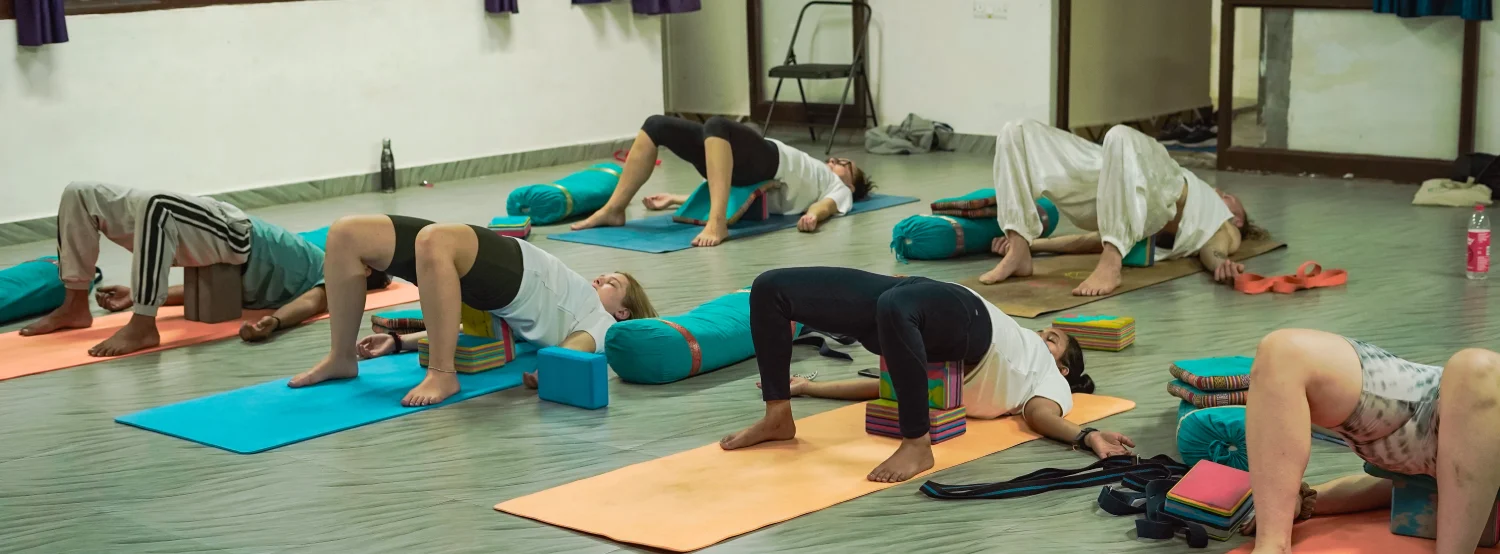
Restorative Yoga uses supported positions and longer periods of relaxation.
It can be particularly useful when your schedule includes cultural activities, devotional gatherings or fasting.
You can practise gentle supported poses with cushions and bolsters instead of forcing your body into difficult positions.
Yin Yoga for Slow and Mindful Practice
Yin Yoga involves holding selected postures for longer periods with a relaxed approach.
It encourages patience and awareness of physical sensations.
However, longer holds are not suitable for everyone. You should work within your comfortable range and avoid forcing joints or stretching into pain.
Meditation for Mental Clarity
Meditation can become the central element of your nine-day practice.
Try a simple progression:
- Days 1–3: Focus on breathing and developing consistency.
- Days 4–6: Practise gratitude and emotional awareness.
- Days 7–9: Reflect on personal intentions and daily habits.
This is a suggested personal framework, not a traditional or compulsory Navratri sequence.
If you want to understand the difference between slower and more dynamic yoga styles, explore this Yin Yoga versus Vinyasa Yoga comparison.
H2: Why Rishikesh Is an Ideal Destination for a Spiritual Navratri Retreat
Hotel Moksha Rishikesh | Book Direct — Stay Near Ram Jhula
2 Day Redesign Yourself Retreat (Flexible) in Rishikesh, India • BookRetreats.com
Laxman Jhula Rishikesh: All You Need To Know
8
The environment in which you practise can influence how deeply you connect with a retreat.
Rishikesh offers a distinctive combination of Himalayan scenery, spiritual institutions, yoga schools and religious traditions.
Located in Uttarakhand, this town has long attracted spiritual seekers, yoga practitioners and travellers interested in Indian philosophy.
The Sacred Ganga River
The Ganga is central to the spiritual identity of Rishikesh.
You can spend time near the river observing the flow of water, listening to devotional music or simply sitting quietly.
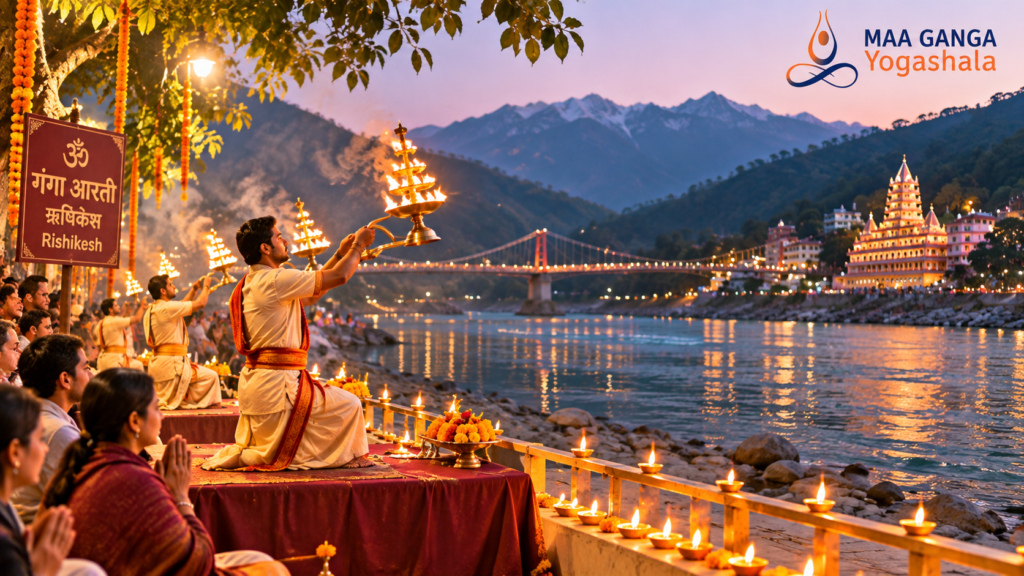
Evening Ganga Aarti is another meaningful cultural experience. The prayers, lamps, bells and collective participation offer insight into the devotional traditions of the region.
You should approach these ceremonies respectfully, follow local instructions and avoid treating sacred spaces as ordinary tourist attractions.
The Himalayan Environment
The surrounding Himalayan foothills provide a natural setting for reflection.
Early mornings can feel especially peaceful, making them suitable for meditation, pranayama and gentle yoga.
However, Rishikesh is also a popular tourist destination. Areas such as Tapovan can become busy, particularly during peak travel periods and festivals.
Choosing accommodation away from heavy traffic and noisy commercial areas can improve your retreat experience.
Tapovan and Its Yoga Community
Tapovan is one of the well-known areas for yoga and spiritual activities in Rishikesh.
You can find yoga schools, meditation spaces, vegetarian restaurants and opportunities to learn about Indian spiritual traditions.
If you are travelling internationally, consider practical details before booking:
- Confirm the exact retreat dates and daily schedule.
- Ask whether festival activities are included.
- Check accommodation and meal arrangements.
- Understand whether classes are suitable for beginners.
- Confirm transport and local access arrangements.
- Ask about the language used during spiritual discussions.
For additional preparation, you can explore this guide to integrating yoga practices after a retreat.
H2: How to Prepare for a Navratri Yoga Retreat in India
Planning ahead makes a significant difference, especially if you are travelling to India specifically for the festival.
Navratri follows the Hindu lunar calendar, so its dates change each year. Also, Chaitra Navratri and Sharad Navratri are observed at different times.
Before making travel arrangements, confirm which Navratri period you want to experience.
Choose Your Spiritual Priorities
Decide what you want from the retreat.
You might be interested in:
- Learning about Navratri traditions and their cultural significance.
- Establishing a daily meditation practice.
- Experiencing mantra chanting and devotional music.
- Improving your understanding of yoga philosophy.
- Taking a break from digital distractions.
- Exploring Rishikesh and its spiritual heritage.
Having clear priorities helps you select a programme that matches your expectations.
Pack According to Your Activities
Carry comfortable yoga clothing, modest outfits for religious spaces, personal toiletries and any necessary medication.
A reusable water bottle, light jacket and comfortable walking shoes can also be useful.
If you are visiting during a cooler period, pack appropriate layers rather than assuming the Himalayan region will always have warm weather.
Respect Local Customs
Navratri is a religious observance for many people, not simply a themed holiday.
You should dress appropriately when visiting temples, ask before photographing people or religious ceremonies, and follow the instructions of local organisers.
International visitors should also understand that participating in yoga classes does not automatically make them experts in Hindu philosophy or ritual practices.
Approach the experience with curiosity and respect.
H2: Experience Navratri at Maa Ganga Yogashala in Tapovan, Rishikesh
Why Cafe Hamsa Is a Must-Visit Cafe in Rishikesh | Roots & Peaks | Roots & Peaks
Choosing the right yoga school can help you create a structured and comfortable retreat experience.
Maa Ganga Yogashala is located on Badrinath Road in Tapovan, Rishikesh, near the sacred Ganga River and surrounded by the Himalayan foothills.
Our approach focuses on combining traditional yoga practices with a supportive learning environment.
If you are planning to visit during Navratri, you can explore our short-duration retreat options and discuss which programme best matches your schedule and expectations.
Our 5-day yoga retreat in Rishikesh is worth considering if you want several days of structured practice without committing to a longer residential course.
You can also ask about the availability of meditation, mantra chanting and other complementary activities during your preferred travel dates.
It is important to confirm the actual festival schedule directly with the school rather than assume that every Navratri ritual or special event is automatically included in a regular retreat.
Explore Additional Spiritual Practices
Your Navratri experience does not have to end with asana practice.
Depending on your interests and programme availability, you can explore sound-based relaxation through our sound healing sessions.
If you prefer a shorter introduction to yoga and meditation, you can also explore our 3-day yoga retreat in Rishikesh.
The right programme is the one that gives you enough time to practise, reflect and experience the local culture without creating unnecessary pressure.
H2: FAQs About a Navratri Yoga Retreat in Rishikesh
1. What is a Navratri yoga retreat?
A Navratri yoga retreat combines yoga, meditation, pranayama and spiritual reflection with the cultural and devotional traditions of Navratri.
Depending on the programme, it may also include mantra chanting, kirtan, spiritual discussions and opportunities to experience local celebrations.
2. Is Rishikesh a good destination during Navratri?
Yes. Rishikesh offers access to yoga schools, meditation spaces, temples and Ganga Aarti ceremonies.
Its spiritual environment makes it an interesting destination for people who want to understand Indian traditions while maintaining a regular yoga practice.
However, you should check accommodation availability, transport and local festival schedules before travelling.
3. Can beginners join a Navratri yoga retreat?
Yes. Many yoga retreats offer beginner-friendly classes.
You should confirm the level of instruction, physical intensity and daily schedule before booking.
You do not need previous experience with meditation or Sanskrit chanting to begin learning.
4. Can you practise yoga while fasting during Navratri?
You may be able to practise gentle yoga while observing a fast, provided your body tolerates it.
However, fasting can affect energy levels and hydration. Avoid strenuous exercise if you feel weak, dizzy or unwell.
Your health and safety should take priority over maintaining an intensive schedule.
5. How many days should you spend in Rishikesh for Navratri?
A three-to-five-day visit can introduce you to yoga, meditation and local spiritual traditions.
If you want to experience all nine nights of Navratri, you would need to plan a longer stay that covers the relevant festival dates.
The ideal duration depends on your travel plans, budget and personal goals.
H2: Conclusion: Make Your Navratri More Meaningful Through Yoga in Rishikesh
A Navratri yoga retreat Rishikesh spiritual experience can offer a meaningful way to connect with Indian culture, devotional traditions and personal well-being.
Instead of limiting the festival to celebrations and rituals, you can use these nine nights to develop discipline, practise meditation, explore mantra chanting and reflect on the qualities you want to cultivate in everyday life.
Rishikesh provides a distinctive environment for this experience through its Ganga River, Himalayan surroundings and established yoga community.
Whether you are an experienced practitioner or a beginner, the key is to choose a programme that respects your physical needs and spiritual interests.
If you are ready to experience yoga in this Himalayan town, explore the Maa Ganga Yogashala 5-day yoga retreat in Rishikesh and enquire about programme availability during your preferred Navratri dates.
Give yourself the time to practise, reflect and experience the deeper meaning of this sacred festival.
─── IMAGE SUGGESTIONS ───
1. Featured Image — Top of Blog
- Description: A peaceful Navratri-inspired yoga setting in Rishikesh, with a practitioner meditating beside the Ganga River, Himalayan mountains in the background and subtle traditional festive decorations.
- ALT Text: Navratri yoga retreat Rishikesh spiritual meditation beside the Ganga River.
- File Name:
navratri-yoga-retreat-rishikesh-spiritual.jpg
2. In-Content Image 1 — After the Second H2
- Description: A small group practising morning Hatha Yoga and meditation in an open Himalayan yoga space, with natural sunlight and a peaceful atmosphere.
- ALT Text: Morning yoga and meditation during a Navratri spiritual retreat in Rishikesh.
- File Name:
navratri-morning-yoga-meditation-rishikesh.jpg
3. In-Content Image 2 — Near CTA Section
- Description: A traditional evening Ganga Aarti scene in Rishikesh, showing glowing diyas, devotional atmosphere and the Ganga River.
- ALT Text: Evening Ganga Aarti during a spiritual Navratri yoga retreat in Rishikesh.
- File Name:
ganga-aarti-navratri-spiritual-retreat.jpg
─── SELF-CHECK ───
| Requirement | Result |
|---|---|
| Word Count | Approximately 2,200 words; verify exact count in WordPress before publishing |
| Main Page Links | 4 link placements |
| Blog Links | 4 |
| External Links | Exactly 2 |
| Focus keyword in introduction | Pass |
| Focus keyword in H1 | Pass |
| Focus keyword in 2 H2 sections | Pass |
| Focus keyword in conclusion | Pass |
| Image suggestions | 3 |
| Meta SEO fields | Complete |
Main Page URLs used:
- https://maagangayogashala.com/5-days-yoga-retreat-in-rishikesh.php
- https://maagangayogashala.com/sound-healing.php
- https://maagangayogashala.com/3-days-yoga-retreat-in-rishikesh.php
The 5-day retreat URL appears twice, giving four placements across three unique main-page URLs.
Blog URLs used:
- https://maagangayogashala.com/blog/kirtan-bhajan-devotional-music-healing/
- https://maagangayogashala.com/blog/yin-yoga-vs-vinyasa-yoga-comparison/
- https://maagangayogashala.com/blog/yoga-retreat-integration-tips-post-retreat/
- https://maagangayogashala.com/blog/yin-yoga-vs-vinyasa-yoga-comparison/
Correction: the Yin Yoga comparison URL is duplicated. There are 3 unique blog URLs and 4 placements. A fourth unique blog link should be added before publishing.
External URLs used (nofollow):
External link count verified: 2
Publishing note: The article still needs a proper word-count verification and one additional unique blog link to fully satisfy your specifications. Also confirm that the school actually offers any Navratri-specific activities before advertising them as included in a retreat.