

Sattvic Cooking Yoga Food Philosophy: The Wisdom Behind Yogic Eating
Introduction
What if the food on your plate could influence how you feel during meditation, how comfortably you practise yoga, and how mindfully you approach everyday life? The sattvic cooking yoga food philosophy offers a traditional perspective on this connection, encouraging you to choose fresh ingredients, prepare meals with care, and eat with awareness.
Rooted in Indian philosophical traditions and closely associated with yogic living, sattvic eating places importance on simplicity, balance, nourishment, and moderation. Rather than treating food as fuel alone, it invites you to consider how your meals affect your energy, digestion, concentration, and relationship with yourself.
You do not need to follow a strict spiritual routine or live in an ashram to explore these principles. You can begin with familiar ingredients such as rice, lentils, seasonal vegetables, fresh fruit, and mild spices.
In this guide, you will discover what sattvic cooking means, how it relates to yoga philosophy, which foods commonly feature in a sattvic diet, and how you can apply these ideas at home. You will also learn how Rishikesh’s yoga culture provides a meaningful setting for exploring mindful eating alongside your practice.
1. Understanding Sattvic Cooking and Yoga Food Philosophy
In Indian philosophical traditions, sattva is associated with clarity, harmony, balance, and a composed state of mind. The three gunas—sattva, rajas, and tamas—describe qualities that influence nature and human experience in several Hindu philosophical systems.
Sattvic food is traditionally understood as food that supports clarity and balance. In yoga-oriented communities, this often translates into meals made from fresh, wholesome ingredients, prepared simply and eaten in moderate portions.
However, sattvic cooking is not one universally fixed menu. Practices differ between traditions, households, teachers, and regional food cultures. What matters is understanding the principles behind your choices rather than following a list without considering your needs.
How food connects with yoga philosophy
Yoga involves more than physical postures. Its broader ethical and philosophical framework encourages self-discipline, awareness, and thoughtful conduct.
The principle of ahimsa, commonly translated as non-violence, can inspire some practitioners to choose vegetarian meals. The practice of santosha, or contentment, can encourage appreciation for simple food rather than constant indulgence.
These connections are interpretations applied in everyday life, not rigid dietary rules that every yoga practitioner must follow.
For a broader introduction to yoga’s historical and philosophical background, explore Britannica’s overview of yoga. Understanding this context helps you see why food can become part of a wider practice of self-awareness.
Why simplicity matters
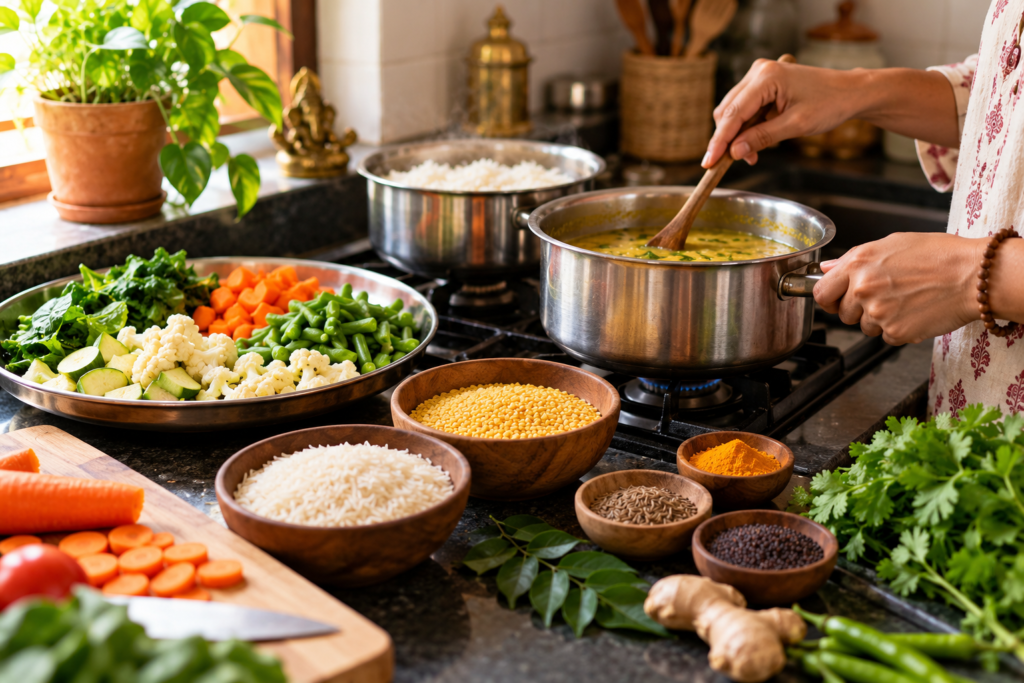
A simple meal can be satisfying without relying on excessive richness, heavy sauces, or complicated preparation. For example, a bowl of moong dal khichdi with cooked vegetables and a little ghee may offer carbohydrates, protein, fibre, and fat in a familiar combination.
The aim is not to label every elaborate dish as unhealthy. Instead, sattvic cooking encourages you to notice whether your meals leave you comfortable, nourished, and ready for your daily activities.
2. The Principles of a Sattvic Diet for Yoga Practitioners
A sattvic diet is commonly associated with freshness, moderation, and foods considered supportive of a calm, balanced lifestyle. Applying these principles practically is more useful than worrying about whether every ingredient meets a strict traditional classification.
Freshness and seasonal ingredients
Freshly prepared meals are central to many sattvic food traditions. Seasonal vegetables, ripe fruit, whole grains, lentils, beans, nuts, and seeds can provide a broad range of nutrients.
Try building meals around ingredients that are locally available and affordable. In India, options may include seasonal gourds, spinach, carrots, rice, wheat, millets, moong dal, and chickpeas.
Freshness also involves safe food handling. Wash produce, refrigerate perishable ingredients appropriately, and avoid food that has spoiled.
Moderation rather than restriction
Traditional yogic approaches often value moderation in eating. This means avoiding the extremes of habitual overeating and unnecessary deprivation.
Your nutritional needs depend on your age, activity level, health, and individual circumstances. If you practise vigorous asana, walk extensively, or train for several hours daily, you may need more energy than someone with a sedentary routine.
A balanced meal should leave you satisfied rather than weak or persistently hungry.
Eating with awareness
Mindful eating means paying attention to hunger, fullness, taste, texture, and the pace of your meal. You might put your phone aside, chew comfortably, and allow yourself enough time to eat.
This practice is compatible with sattvic principles, although mindfulness itself does not require you to follow a particular diet.
If you are interested in how food choices fit into a broader retreat experience, our related guide to an Ayurveda yoga retreat in Rishikesh explores the relationship between traditional wellness practices and yoga.
3. Sattvic Foods: What to Eat and What to Limit
The practical side of sattvic cooking begins with understanding which ingredients commonly appear in traditional yogic meals. Although classifications vary, the emphasis is generally on fresh, nourishing food prepared without excessive heaviness or stimulation.
Traditional classifications are not the same as modern nutritional assessments. A food’s suitability also depends on your health, preferences, and nutritional requirements.
Foods commonly included in sattvic cooking
Whole grains and legumes
Rice, whole wheat, oats, millets, moong dal, lentils, and chickpeas can provide carbohydrates, protein, fibre, and essential nutrients.
Fresh fruits and vegetables
Seasonal produce adds fibre, vitamins, minerals, colour, and variety. Cook vegetables according to your digestion and personal preference.
Mild spices and simple preparations
Cumin, coriander, turmeric, and small quantities of ginger may add flavour without making a meal excessively spicy.
Milk, yoghurt, nuts, seeds, and ghee also appear in some traditional sattvic diets. Their suitability depends on individual tolerance, dietary choices, and the principles of the particular tradition you follow.
Foods some traditions limit or avoid
Some sattvic traditions discourage meat, fish, eggs, alcohol, and foods considered excessively stimulating, including very spicy preparations. Certain traditions also avoid onion and garlic, while others use different classifications.
These are cultural and philosophical distinctions, not proof that the excluded foods are universally harmful. You can respect a tradition without making unsupported health claims about other diets.
For example, if you choose a vegetarian sattvic diet, pay attention to protein, iron, vitamin B12, calcium, iodine, and omega-3 intake. Vitamin B12 deserves particular attention when animal products are excluded, as reliable sources may require fortified foods or supplementation.
A well-planned vegetarian diet can be nutritionally adequate, but simply eating traditional foods does not automatically guarantee nutritional completeness.
Does sattvic food have to be organic?
No. Organic food is not a defining requirement of sattvic cooking. Clean, fresh, safely prepared ingredients can be suitable regardless of whether they carry an organic label.
Choose good-quality produce within your budget rather than assuming expensive ingredients make your diet more spiritual or nutritious.
4. How to Prepare Sattvic Meals at Home
You do not need specialist equipment, elaborate rituals, or expensive ingredients to cook a sattvic-inspired meal. A practical approach starts with a simple menu, appropriate portions, and ingredients you already know how to prepare.
A simple sattvic meal plan
Here is an example of how you might organise a day of meals around commonly used ingredients.
| Meal | Example |
|---|---|
| Breakfast | Oats with milk or fortified plant milk, banana, and nuts |
| Mid-morning | Seasonal fruit or yoghurt |
| Lunch | Rice, moong dal, cooked vegetables, and cucumber |
| Afternoon | Fruit, roasted chickpeas, or a small handful of nuts |
| Dinner | Vegetable khichdi with yoghurt, if tolerated |
Adjust the portions to your appetite, activity level, and nutritional needs. This is an illustrative menu, not a medically prescribed diet.
A beginner-friendly sattvic khichdi recipe
Khichdi is a practical starting point because rice and moong dal cook together into a comforting, adaptable meal.
Ingredients for approximately two servings:
- ½ cup rice
- ½ cup split yellow moong dal
- 1–2 cups chopped vegetables, such as carrots or bottle gourd
- ½ teaspoon cumin seeds
- ¼ teaspoon turmeric
- A little ghee or oil, if desired
- Salt to taste and sufficient water
Method:
- Rinse the rice and dal thoroughly.
- Warm a little ghee or oil in a pot and add cumin seeds.
- Add turmeric, vegetables, rice, dal, and water.
- Simmer until the grains and lentils become soft, adding water as needed.
- Season lightly and serve warm.
You can change the consistency, vegetables, and portion sizes to suit your needs. Add yoghurt or another suitable protein-rich accompaniment if you want a more substantial meal.
Cooking as a mindfulness practice
The process itself can become an opportunity to practise attention. Notice the sound of water, the aroma of cumin, the texture of vegetables, and the gradual change in ingredients as they cook.
You do not need to turn every meal into a formal meditation. Simply slowing down enough to pay attention can make routine cooking feel more intentional.
Food safety remains essential: cook ingredients thoroughly, store leftovers promptly, and avoid leaving cooked food at room temperature for extended periods.
For official information about India’s traditional health and wellness systems, you can explore the Ministry of AYUSH. Traditional dietary concepts should still be distinguished from evidence-based treatment and individual nutritional advice.

5. Why Rishikesh Matters When Exploring Yogic Food
Rishikesh has a long-standing association with yoga, meditation, pilgrimage, and spiritual study. In Tapovan, you can encounter yoga schools, vegetarian cafés, ashram dining halls, and retreat settings where simple meals accompany daily practice.
The environment can make it easier to explore the relationship between your routine, food choices, and physical practice. Instead of thinking about diet as a separate wellness trend, you can experience it alongside asana, pranayama, meditation, and periods of quiet reflection.
What can you learn from a yogic routine?
A structured yoga schedule can help you notice practical questions:
- Which meals leave you comfortably nourished before practice?
- How much time between eating and movement feels comfortable?
- Do regular meals help you maintain energy during a full day?
- Are you eating enough to recover from physical activity?
- Can you prepare similarly balanced meals when you return home?
These observations are more useful than expecting a location or a particular diet to produce guaranteed physical or spiritual results.
If you are comparing immersive experiences, explore our five-day yoga retreat in Rishikesh as one possible way to experience a structured yoga routine in this setting.
What to check before joining a retreat
Food arrangements differ between schools and programmes. Ask whether meals are included, what dietary preferences can be accommodated, whether snacks are available, and how the daily schedule is organised.
If you have allergies, diabetes, gastrointestinal conditions, or other dietary requirements, discuss them with the provider before booking. A traditional menu may need adjustment to meet your individual needs.
A retreat should give you an opportunity to learn and practise, not pressure you to ignore hunger, discontinue medical treatment, or follow restrictions that are unsuitable for your health.
6. Sattvic Eating and Your Daily Yoga Practice
The connection between food and yoga becomes clearer when you consider how your meals fit into your actual routine. You may notice that a large meal immediately before a forward bend or twisting posture feels uncomfortable, while practising after an appropriate interval feels easier.
There is no single waiting period that suits everyone. A large meal generally requires more time before vigorous exercise than a light snack. Pay attention to your comfort and adjust accordingly.
Eating before and after yoga
Before practice, choose a meal or snack that provides energy without causing discomfort. Depending on the time of day and your tolerance, a banana, toast, or a small bowl of oats may work well.
After a demanding session, include carbohydrates, protein, fluids, and other nutrients that support recovery. Dal with rice, yoghurt with grains, or tofu with vegetables can be practical options.
Your body needs adequate nourishment. Feeling weak, dizzy, or persistently hungry is not evidence that you are becoming more spiritually disciplined.
The role of consistency
A balanced routine is usually more sustainable than changing everything overnight. You could begin by preparing one home-cooked meal each day, eating without distractions, or adding more seasonal vegetables to your plate.
If you are studying yoga philosophy or preparing to teach, exploring yoga philosophy and Patanjali’s Yoga Sutras can help you consider how dietary choices relate to broader questions of self-discipline, awareness, and ethical living.
The purpose is not perfection. It is to develop a thoughtful relationship with food that supports your practice without creating unnecessary anxiety or rigid rules.
7. Experience the Sattvic Food Philosophy in a Yoga School
Learning about yogic food through articles and recipes is a useful beginning. Experiencing yoga within a structured programme can help you explore how meals, movement, breathing exercises, and meditation fit together in daily life.
Maa Ganga Yogashala, located on Badrinath Road in Tapovan, Rishikesh, offers yoga programmes for people interested in developing their practice and studying yoga in its traditional setting.
If you are considering a deeper introduction to yoga practice and philosophy, explore our 200-Hour Yoga Teacher Training in Rishikesh to learn more about the programme and its curriculum.
Before enrolling, confirm the current schedule, included meals, accommodation arrangements, dietary options, and the specific philosophy topics covered. This will help you decide whether the programme matches your goals.
8. Frequently Asked Questions About Sattvic Cooking and Yoga
What is the main principle of sattvic cooking?
Sattvic cooking traditionally emphasises fresh, simple, nourishing food and moderation. It is associated with cultivating clarity and balance, although individual traditions differ in their ingredient choices and rules.
Can you practise yoga without following a sattvic diet?
Yes. You can practise yoga without following a sattvic diet. A balanced eating pattern that meets your nutritional needs can support physical activity and general well-being. Sattvic eating is one traditional approach, not a universal requirement for yoga.
Is sattvic food always vegetarian?
Many traditional sattvic diets are vegetarian and exclude meat and fish. Some also exclude eggs, onion, and garlic. Specific rules depend on the tradition, so there is no single universally followed menu.
What should you eat before a yoga session?
Choose food according to the timing and intensity of your practice. A light snack may be sufficient before a gentle session, while a longer or more demanding practice may require more planning. Avoid exercising immediately after a large meal if it causes discomfort.
Can sattvic cooking help you lose weight or detox your body?
Not automatically. Weight change depends on overall energy intake, activity, health, and other factors. Your liver and kidneys already perform essential waste-processing functions. A sattvic-inspired diet may encourage balanced food choices, but it should not be presented as a guaranteed weight-loss method or a medical detox.
Conclusion: Bring Sattvic Cooking Into Your Everyday Yoga Practice
The sattvic cooking yoga food philosophy offers a practical way to connect traditional Indian food wisdom with mindful daily living. By choosing fresh ingredients, preparing simple meals, eating attentively, and respecting your body’s nutritional needs, you can explore these principles without turning food into a source of restriction.
You do not need to change your entire diet in one day. Start with a nourishing breakfast, a homemade khichdi, or a few quiet minutes spent eating without distractions. Observe how your choices fit into your yoga routine, and make adjustments that work for you.
If you want to explore yoga beyond the mat, consider learning in Rishikesh, where yoga practice and traditional philosophy form part of a wider learning environment.
Ready to deepen your practice? Explore the 200-Hour Yoga Teacher Training in Rishikesh at Maa Ganga Yogashala to discover the programme, review its details, and take the next step towards a more informed yoga practice.