Sound Healing Session Preparation Tips: How to Prepare for a Sound Healing Session
Sound healing session preparation tips can make the difference between simply hearing beautiful tones and giving yourself the space to settle, listen, and experience the session fully. If you are attending a sound bath for the first time, you may wonder what to eat, what to wear, whether you should meditate beforehand, or what you are actually supposed to do once the bowls begin to sound.
The good news is that preparation does not need to be complicated. You do not need advanced yoga experience, special flexibility, or a particular belief system. What matters most is arriving physically comfortable, mentally unhurried, and willing to observe your experience without forcing an outcome.
In this guide, you will learn practical ways to prepare before a sound healing session, common mistakes to avoid, what to expect during the practice, and how to make the most of a session in Rishikesh. You will also learn when a shorter retreat or a deeper yoga program may fit your goals better.
Sound Healing Session Preparation Tips: What to Do Before You Arrive
The best preparation starts several hours before the session. You are not trying to create a perfect mental state; you are simply reducing avoidable distractions.
Check the session instructions first. Some sessions involve lying down for a longer period, while others combine sound with meditation, breathwork, gentle movement, or guided relaxation.
Wear loose, breathable clothes that allow you to sit or lie down without pressure around the waist, chest, or shoulders. If the room is cool, carry a light layer or shawl. You may remain still for a significant part of the session, so comfort matters more than appearance.
Give yourself enough travel time. Rushing into a quiet practice with your heart rate elevated and your mind occupied by traffic or a late arrival defeats part of the purpose. Arriving 10–15 minutes early gives you time to settle, use the restroom, silence your phone, and choose a comfortable place.
You also do not need to arrive with a dramatic intention. A simple intention such as “I will slow down and notice what I feel” is enough.
If you are exploring yoga professionally, remember that sound-based practices should be approached within the teacher’s training and scope. Yoga Alliance describes professional responsibilities around competence, ethical conduct, and teaching within appropriate qualifications. Learn more through the official Yoga Alliance resource.
A useful final check before leaving:
- Wear comfortable clothing.
- Carry water for after the session.
- Avoid arriving immediately after strenuous exercise.
- Put your phone on silent.
- Tell the facilitator about relevant concerns before the session begins.
What to Eat and Drink Before a Sound Healing Session
Food can strongly influence how comfortable you feel while sitting or lying still. The goal is not to follow a rigid “sound healing diet.” It is to avoid arriving either uncomfortably full or distracted by hunger.
For most people, a light meal a couple of hours before the session works better than a heavy meal immediately beforehand. Choose foods you already know your body handles well. A simple meal with moderate portions is usually easier than something very oily, spicy, or unusually rich.
If your session is early in the morning, you may prefer a small breakfast rather than forcing yourself to eat a large meal. If it is in the evening, leave enough time after dinner for digestion before lying down.
Hydration matters, but drinking a large amount of water right before the session can become uncomfortable when you are expected to remain still. Sip normally throughout the day and use the restroom before the practice starts.
Avoid treating caffeine, alcohol, or unfamiliar supplements as tools for creating a deeper experience. Caffeine can make some people feel restless, while alcohol can alter alertness and perception. Neither is necessary for a sound session.
You should also avoid experimenting with fasting if you have never done it before. Feeling weak, dizzy, or intensely hungry can pull your attention away from the practice.
The practical rule is simple: eat familiar food, give yourself time to digest, and arrive hydrated but not overfull.
If you want to explore sound practices as part of a broader wellness stay, you can compare them with a structured 5-day yoga retreat in Rishikesh, where sound, meditation, yoga, and rest may be integrated into a more complete schedule.
How Much Water Should You Drink?
There is no special quantity of water required for sound healing. Drink according to your normal needs, weather, activity level, and health circumstances.
Rishikesh can be warm, and travel can change your normal routine, so hydration is worth paying attention to. Just avoid drinking a large volume immediately before lying down.
What to Wear, Bring, and Expect During a Sound Healing Session
Your physical environment matters because sound sessions often involve stillness. Small discomforts that you would ignore during an active yoga class can become surprisingly noticeable when you are lying quietly for 45–90 minutes.
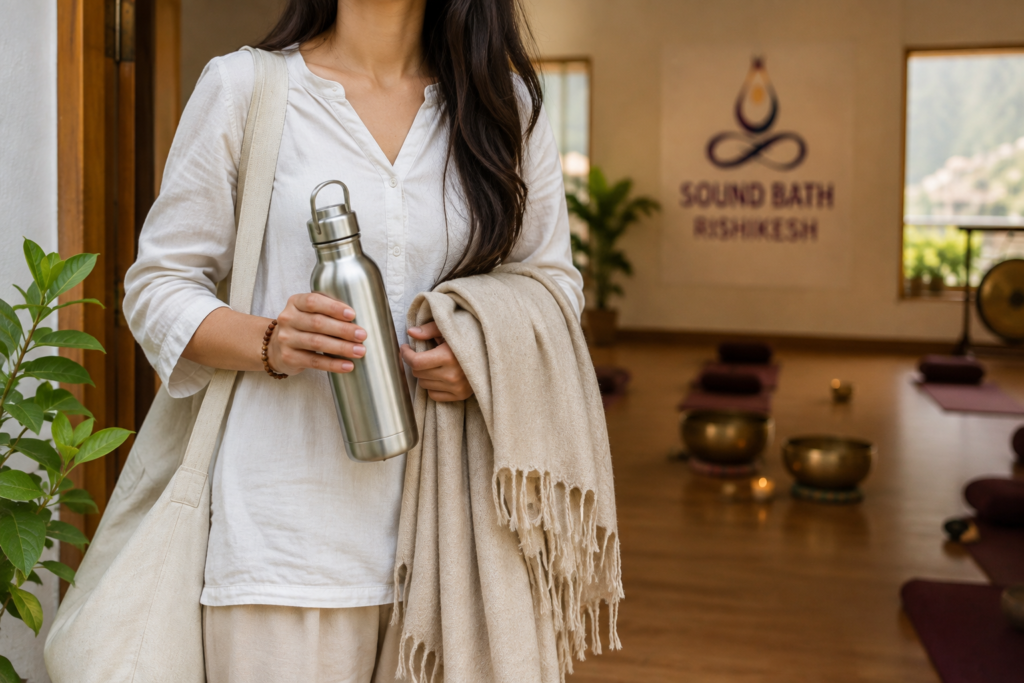
Choose soft clothing without tight waistbands or stiff seams. Socks can be useful if your feet get cold. A light shawl, thin blanket, or eye pillow can also make relaxation easier, depending on what the venue provides.
You usually do not need to bring much. A practical session bag might include:
- A water bottle.
- A light layer.
- A small towel or eye cover if you prefer one.
- Any personal item you need for comfort.
- Your phone, switched to silent or airplane mode.
Once the session starts, there is no performance requirement. You may lie down, sit comfortably, or follow the facilitator’s instructions. You might notice the sound clearly, drift toward sleep, experience changes in attention, or simply feel bored for a few minutes. All of those reactions are possible.
Do not judge the session by whether you “felt energy,” saw colors, released emotions, or had an unusual experience. Those outcomes are not a test of whether you did it correctly.
Research on singing bowls is promising but still developing. A 2025 systematic review identified 19 clinical studies and reported potential benefits involving anxiety, depression, sleep, and cognitive outcomes, while also reflecting the limitations of the existing evidence. You can also review the research directly through PubMed’s singing-bowl research.
If you are particularly interested in the relationship between sound practices and sleep, you can also explore sound therapy for sleep and insomnia to understand the topic from another angle.
Sound Healing Session Preparation Tips: What Not to Do
Knowing what to avoid can be just as useful as knowing what to do.
First, do not arrive expecting the facilitator to “fix” a specific physical or emotional problem. A sound session can be a relaxation or contemplative practice, but it should not replace appropriate medical or mental-health care.
Second, do not force yourself to stay in an uncomfortable position because you think moving will ruin the experience. If you need to adjust your legs, change position, sit up, or ask for help, do so. Quiet practice does not require unnecessary suffering.
Third, do not compare your experience with another participant. One person may fall asleep. Another may remain highly alert. Someone else may feel emotional. None of these responses automatically means one person had a better session.
Fourth, avoid recording the entire practice on your phone unless the facilitator explicitly permits it. Screens, notifications, and camera sounds can disturb other participants and pull you out of the moment.
Finally, do not assume that stronger sound is always better. A skilled session is not about overwhelming your senses. If a sound feels physically uncomfortable, tell the facilitator. Your comfort and consent matter.
A good practitioner should also be clear about what the session can and cannot offer. Responsible wellness communication avoids promising cures for disease or presenting a relaxation practice as a substitute for professional healthcare.
When Should You Tell the Facilitator About a Concern?
Tell the facilitator before the session if you have a condition, sensitivity, recent injury, pregnancy, significant hearing concerns, or another issue that could affect your comfort. You do not need to disclose private details to the entire group.
The facilitator can then explain available options, modifications, or whether another practice would be more appropriate. You remain responsible for following medical advice from your qualified healthcare professional.
Why Rishikesh Makes Sound Healing Feel Different
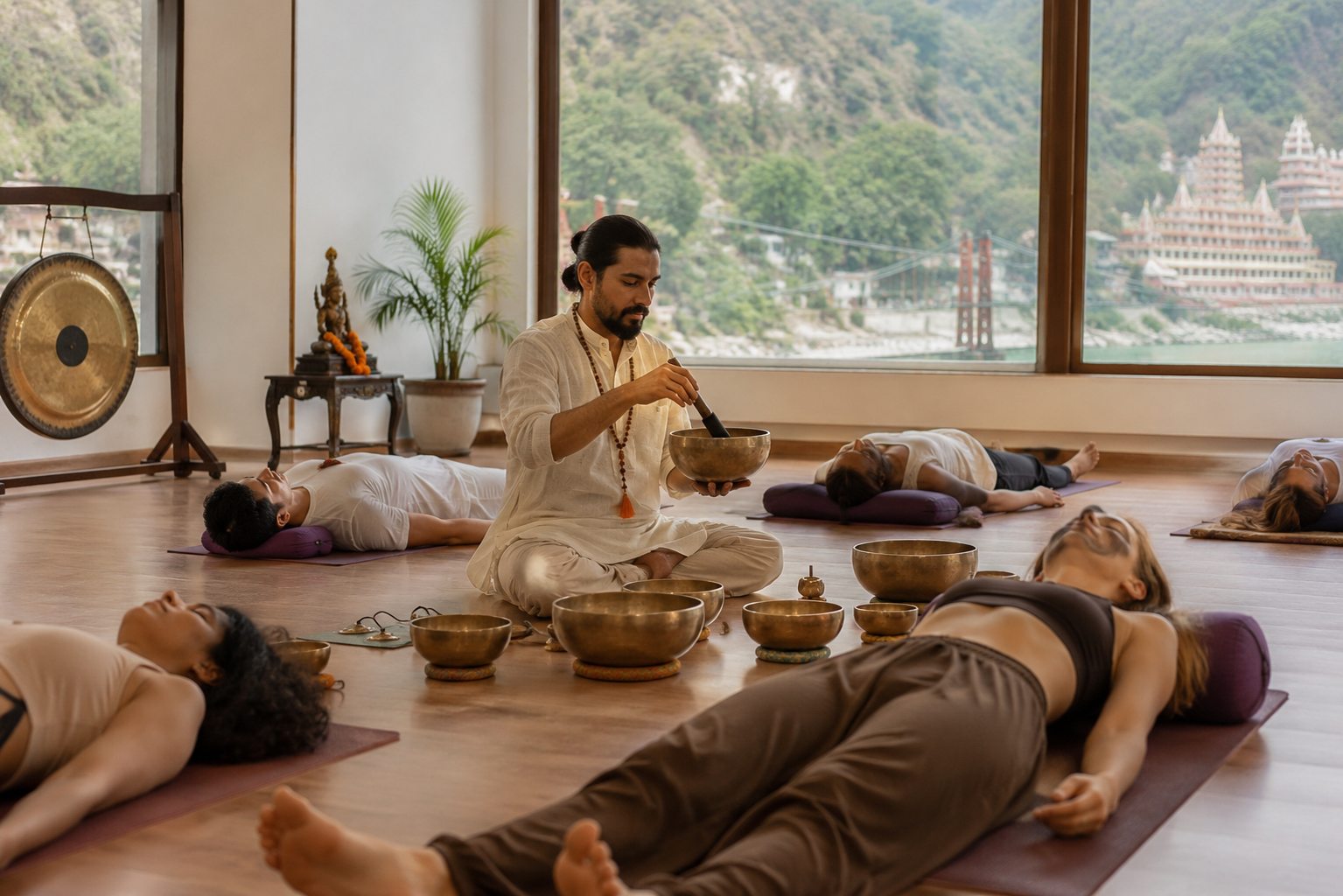
A sound healing session can happen almost anywhere, but the surrounding environment influences how you approach it. Rishikesh offers a combination of yoga culture, Himalayan scenery, and the presence of the Ganga that naturally encourages many visitors to slow down.
For you, the value is not that the location magically makes sound therapy more powerful. It is that travel can create a psychological boundary between your normal routine and dedicated practice time.
Tapovan, where many yoga schools and retreats operate, gives you access to yoga classes, meditation spaces, spiritual practices, and quieter moments alongside the energy of a busy pilgrimage and travel destination.
The Ganga is an important part of the cultural and spiritual identity of Rishikesh. This guide to the spiritual significance of the Ganga River in Rishikesh explains why the river is more than a scenic backdrop for many practitioners.
Your expectations still matter. If you arrive exhausted from a packed itinerary and rushing between activities, the location alone will not create deep rest. Build some margin into your day.
That might mean taking a quiet walk, practicing gentle yoga, sitting near the river, or simply leaving an hour with nothing scheduled.
If your interest goes beyond a single session, a longer retreat can give you more time to establish a rhythm instead of trying to experience everything in one afternoon.
Choosing the Right Sound Healing Experience for You
Not every sound healing session has the same format. Before booking, ask what instruments are used, how long the session lasts, whether it is group or private, whether you will lie down, and whether other practices are included.
A group session can suit you if you enjoy shared practice and want structure without individualized attention. A private session may be better if you want personalization, have comfort concerns, or prefer a quieter setting.
You can compare the practical differences in group vs private sound healing sessions before choosing.
Also consider your larger goal. If you want a single restorative experience during a Rishikesh trip, a short session or retreat may be enough. If you want to develop teaching skills and build a deeper foundation in yoga practices, teacher training is a different commitment.
For example, a 200-hour yoga teacher training in Rishikesh is designed around a broader educational experience rather than one isolated wellness session.
If you are comparing sound healing with other holistic practices, remember that your best choice depends on what you actually want from the experience: rest, curiosity, spiritual exploration, structured learning, or professional development.
A Simple Preparation Routine You Can Follow
If you want a practical routine, keep it uncomplicated.
The day before:
Avoid scheduling an exhausting day if possible. Get reasonable sleep and check the session timing, location, and instructions.
Two to three hours before:
Have a familiar, moderate meal if you need one. Avoid experimenting with new foods or supplements.
Thirty minutes before:
Start slowing down. Reduce unnecessary phone use, arrive at the location, use the restroom, and let the facilitator know about relevant concerns.
Immediately before:
Choose a comfortable position. Set a simple intention. Take a few natural breaths without trying to control them.
During the session:
Listen without chasing a particular sensation. If you become uncomfortable, adjust your position or communicate with the facilitator.
After the session:
Get up slowly, drink some water, and give yourself a few quiet minutes before jumping into another activity. If you had an emotional or unusual response, you do not need to immediately interpret it. Let the experience settle.
Preparation should support awareness, not become another complicated ritual.
Experience Sound Healing in a Yoga-Focused Setting
If you want to experience sound healing while staying in Rishikesh, the quality of the setting, facilitator, schedule, and overall approach matters. A session should feel organized, respectful, and comfortable rather than mysterious or overly promotional.
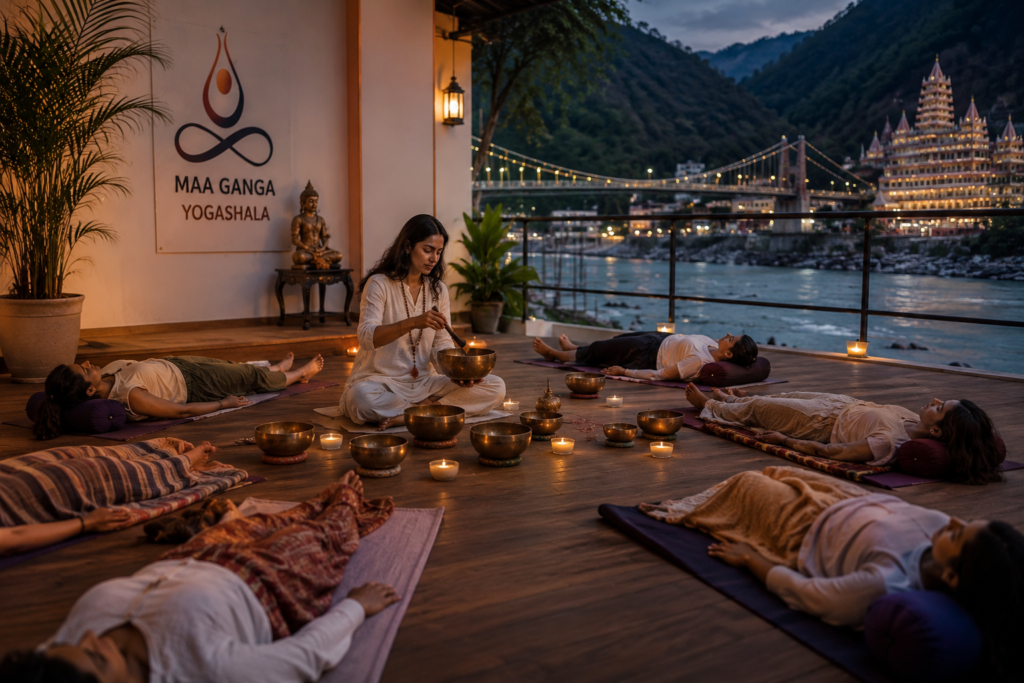
At Maa Ganga Yogashala, our sound healing program gives you an option to explore sound practices as part of your broader yoga and wellness experience in Rishikesh.
If you are staying longer, our home page can help you compare the different yoga, retreat, and training options available.
FAQs
Do I need yoga experience before a sound healing session?
No. You generally do not need previous yoga experience. Sound sessions can be approached as a relaxation and listening practice, and the facilitator should explain what you need to do.
Should I eat before sound healing?
Usually, yes if you are hungry, but keep the meal light and familiar and allow time for digestion. Arriving extremely full can make lying down uncomfortable, while arriving very hungry can distract you.
Can I fall asleep during a sound healing session?
Yes. Falling asleep can happen when you become deeply relaxed. You do not need to force yourself to remain intensely focused. However, follow the facilitator’s instructions about how the session is intended to be practiced.
Is sound healing scientifically proven to treat health conditions?
The evidence is not strong enough to make broad treatment claims. Reviews of singing-bowl research have reported potentially positive effects, but studies remain limited and vary in quality. A 2020 systematic review concluded that more robust research was needed before firm health recommendations could be made.
How long should I stay in Rishikesh for a sound healing experience?
That depends on your purpose. A single session can fit into a short trip, while a retreat gives you more time to slow down and combine sound with yoga and meditation. If you want formal teacher education, choose a dedicated training program rather than treating a retreat as a substitute.
Conclusion: Prepare Simply and Let the Session Unfold
Sound healing session preparation tips are ultimately less about creating a perfect ritual and more about removing unnecessary distractions. Eat sensibly, hydrate normally, wear comfortable clothes, arrive early, communicate your needs, and release the pressure to have a dramatic experience.
In Rishikesh, you can make the experience even more meaningful by giving yourself time away from constant movement. Let the Ganga, the yoga environment, and the quiet periods around your session support the practice without expecting the location to do the work for you.
If you are ready to explore sound healing in a dedicated yoga setting, our sound healing program in Rishikesh is a natural place to begin. And if you want to go beyond one session, explore our retreats and yoga teacher training options to find a format that matches your goals.
The best preparation is simple: arrive comfortable, stay curious, and give yourself permission to experience the session without forcing it.