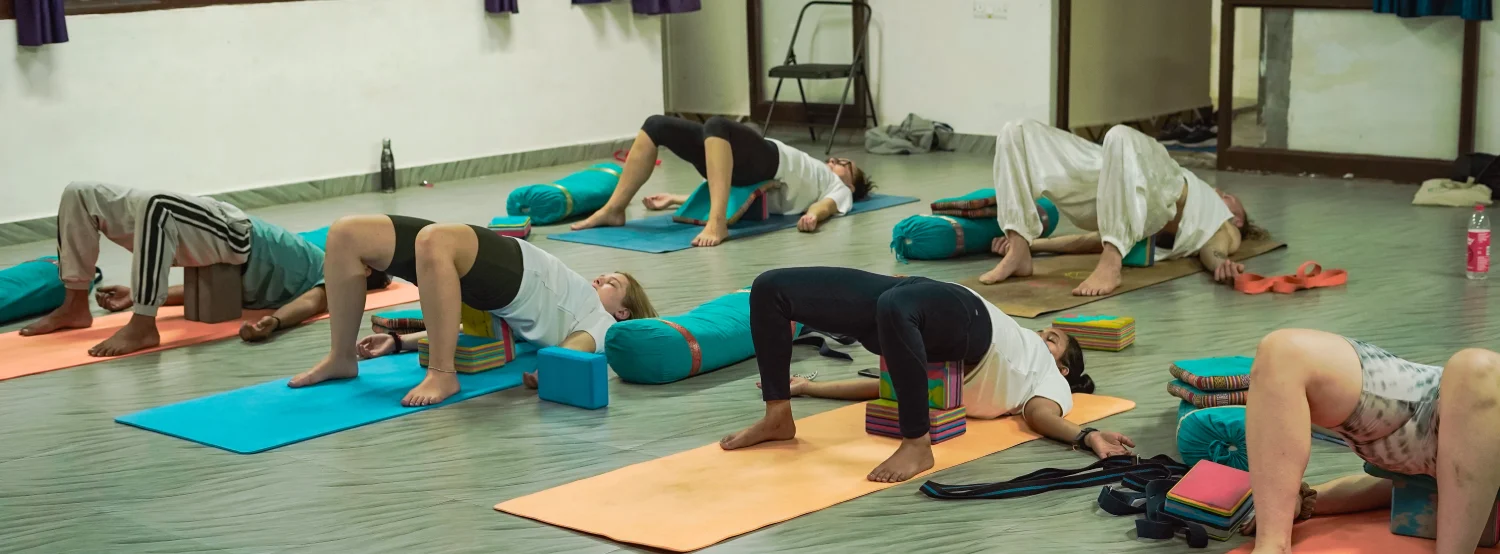

transformative yoga retreat vs yoga holiday: What Makes a Retreat Genuinely Transformative?
Introduction
A beautiful Himalayan view, a few yoga classes, and a break from work can make any trip feel refreshing. But what separates a transformative yoga retreat vs yoga holiday? The difference is not how many days you spend away or how impressive your accommodation looks. It is what you learn about yourself and what changes when you return home.
A yoga holiday gives you permission to pause. A meaningful retreat can help you understand your habits, reconnect with your body, develop a steadier mind, and build practices that support your everyday life. Both have value, but they serve different purposes.
If you are considering a yoga retreat in Rishikesh, India, you may be wondering whether a structured programme is worth choosing over a relaxing getaway. You might also be unsure how to distinguish a genuine learning environment from a retreat that simply uses spiritual language to sell a holiday.
This guide explores the practical differences, the elements that support lasting personal growth, and the questions worth asking before you book. You will also learn how to choose a retreat that matches your experience, expectations, and available time.
1. Transformative Yoga Retreat vs Yoga Holiday: Understanding the Real Difference
The most important difference lies in intention. A holiday generally prioritises enjoyment, rest, sightseeing, and freedom. A retreat may include these things, but it places greater emphasis on intentional practice, reflection, and learning.
Neither option is automatically better. Your ideal choice depends on what you need at this stage of your life.
A yoga holiday might involve a morning yoga class, a leisurely breakfast, an afternoon exploring local cafés, and an evening beside the Ganga. You can enjoy the benefits of movement without committing to an intensive schedule.
A structured retreat usually offers a more deliberate rhythm. You may practise yoga and meditation daily, learn breathing techniques, follow a consistent timetable, and receive guidance from experienced teachers. Some programmes also incorporate yoga philosophy, mindful eating, journaling, or relaxation practices.
Here is how the two commonly compare:
| Feature | Yoga holiday | Transformative yoga retreat |
|---|---|---|
| Primary intention | Rest and enjoyment | Rest, learning, and self-reflection |
| Daily routine | Flexible | Usually structured |
| Yoga practice | Often occasional | Usually consistent |
| Personal reflection | Optional | Often encouraged |
| Teacher guidance | May be limited | May include regular feedback |
| After the trip | Relaxation may fade | Practices can continue at home |
These are general tendencies, not rigid rules. A well-designed holiday can support meaningful personal growth, while an expensive retreat can leave you with little beyond pleasant memories.
Look beyond the programme’s label. Ask what you will actually practise, how teachers support students, and whether the experience includes opportunities to reflect on what you learn.
For a broader understanding of yoga’s professional standards and teacher education, consult Yoga Alliance. Certification can provide useful information about a school’s credentials, but it does not independently guarantee the quality or personal impact of every retreat.

2. What Makes a Yoga Retreat Genuinely Transformative?
A retreat becomes more meaningful when its activities work together towards a clear purpose. Simply attending multiple classes each day does not guarantee progress. What matters is the quality of your practice, the guidance you receive, and your willingness to engage with the experience.
Consistent practice instead of occasional sessions
Repeating a practice helps you notice patterns that a single class might not reveal. You may discover that your shoulders tense whenever you feel stressed or that your breathing becomes shallow when your attention wanders.
With regular, appropriately paced sessions, you can begin exploring these patterns rather than simply trying another pose.
Consistency does not mean pushing your body harder. A good teacher helps you adapt postures to your abilities, recognise your limits, and understand when rest is appropriate.
Space for reflection and self-awareness
Transformation often begins with noticing rather than changing. Quiet time, guided meditation, and journaling can help you examine how you respond to pressure, relationships, uncertainty, and everyday responsibilities.
For example, you might realise that you check your phone whenever you feel uncomfortable being alone. That observation does not automatically solve the habit, but it gives you a practical starting point.
Guidance that goes beyond impressive postures
Physical flexibility is not a reliable measure of personal growth. A beginner who learns to breathe calmly during a difficult moment may gain more from a retreat than an experienced practitioner who masters an advanced posture.
Look for teachers who explain the purpose of practices, offer modifications, welcome questions, and avoid promising instant healing or guaranteed spiritual breakthroughs.
A balanced programme
A useful retreat combines activity with recovery. Depending on the programme, this could mean asana practice, pranayama, meditation, philosophy, nourishing meals, and sufficient sleep.
For a deeper perspective on how yoga and emotional well-being are discussed in research, explore the National Library of Medicine’s research collection. Scientific evidence should inform realistic expectations: yoga may support aspects of physical and psychological well-being, but outcomes vary, and a retreat is not a substitute for professional medical or mental health care.
3. The Practices That Can Turn a Retreat into Lasting Personal Growth
The setting may attract you to a retreat, but the practices you learn are what you can carry home. Before booking, examine the actual daily schedule rather than relying on general descriptions such as holistic, immersive, or life-changing.
Yoga asana: Build a relationship with your body
Asana practice develops awareness of movement, posture, balance, and physical limitations. It can also teach you to respond more thoughtfully when a pose feels challenging.
A meaningful session does not require extreme flexibility. It should offer suitable variations and encourage you to distinguish productive effort from pain.
Pranayama: Learn to work with your breath
Breathing practices can help you pay attention to the relationship between breathing patterns and your state of mind. Gentle, appropriately taught techniques may support relaxation and concentration.
However, not every breathing exercise suits every person. Forceful breathing and prolonged breath retention are not appropriate for everyone, so follow qualified instruction and discuss relevant health concerns with a suitable professional.
Meditation: Create room between thought and reaction
Meditation gives you an opportunity to observe thoughts without automatically following each one. You may notice distraction, frustration, boredom, or restlessness. These are ordinary experiences, not proof that you are failing.
Start with manageable sessions and build gradually. A useful retreat teaches you how to practise independently, not how to become dependent on a particular location or teacher.
Journaling and yoga philosophy
Reflection becomes more practical when you connect it to daily decisions. After a session, consider writing down three things:
- What did you notice about your body, breathing, or thoughts?
- What recurring habit would you like to understand better?
- What small action could you practise differently tomorrow?
Yoga philosophy can add another dimension by encouraging reflection on discipline, non-harming, contentment, and mindful action. The goal is not to memorise philosophical terms. It is to explore how these ideas apply to your choices.
Sound healing and complementary practices
Some retreats include sound-based relaxation, mantra chanting, or other contemplative activities. These may help you slow down and focus your attention, depending on your preferences.
Treat them as complementary practices rather than guaranteed treatments. Claims that a particular frequency balances every chakra or cures a medical condition should not be accepted without credible evidence.
The real test: Can you explain what you learned and identify a practical way to use it after leaving the retreat? If the answer is yes, your experience has a stronger foundation for lasting value.
4. How to Choose a Retreat That Delivers More Than a Holiday
A programme can look appealing online yet fail to match your needs. Before paying a deposit, assess its structure, teaching approach, accommodation, and expectations.
Check the timetable and teaching approach
Ask how much time is devoted to asana, meditation, pranayama, philosophy, and personal reflection. Check whether the programme is suitable for beginners or intended for experienced practitioners.
A retreat with a packed schedule is not necessarily more effective. You need time to absorb what you learn, eat properly, rest, and ask questions.
Consider the length of your stay
A short retreat can provide a useful introduction to a more intentional routine. A longer stay may offer more opportunities to practise consistently and explore different techniques.
Neither duration guarantees transformation. A focused three-day programme may suit a first-time visitor, while five days may give you more room to establish a rhythm without extending your leave from work.
Compare the actual itineraries of a 3-day yoga retreat in Rishikesh and a 5-day yoga retreat in Rishikesh. Review what each includes before deciding which duration works for your goals.
Evaluate the teachers and group environment
Look for clear information about teaching experience, class size, student support, and safety practices. A welcoming group can make it easier to ask questions, but a good retreat should also respect your privacy and individual pace.
Be cautious of programmes that pressure you to disclose personal experiences, insist that discomfort always signals spiritual progress, or discourage you from seeking outside professional support.
Understand what the price includes
Compare accommodation, meals, classes, excursions, transport, and any additional sessions. A lower headline price may exclude important expenses, while a higher price does not automatically mean better instruction.
Ask about cancellation terms, accessibility, dietary needs, and what happens if you cannot participate in a scheduled activity.
Set realistic expectations
A retreat may help you develop healthier routines and a clearer understanding of your needs. It cannot guarantee that anxiety will disappear, that every personal problem will be resolved, or that you will experience a dramatic spiritual awakening.
Choose a programme that supports exploration without promising results it cannot control.
5. Why Rishikesh? A Setting That Can Support Intentional Practice
Rishikesh offers a distinctive environment for yoga study, with the Ganga, Himalayan foothills, established yoga communities, and a variety of meditation and learning spaces. For many visitors, being away from familiar routines makes it easier to dedicate time to practice.
Tapovan is particularly relevant if you want to explore yoga schools, attend classes, and experience the town’s mix of spiritual traditions and modern wellness offerings.
The setting can encourage reflection, but scenery alone does not create personal growth. A beautiful view cannot replace competent teaching, an appropriate schedule, or your own willingness to practise.
Make room for local culture
A meaningful visit involves more than attending classes and photographing the river. You can learn about local customs, dress respectfully in religious spaces, ask before photographing people, and approach spiritual traditions with curiosity rather than assumptions.
You may also find that quieter experiences matter more than a packed sightseeing itinerary. An early walk, an unhurried meal, or a few minutes of sitting beside the river can give you space to process what you have learned.
Choose the right season and pace
Weather, crowd levels, travel time, and your tolerance for heat or rain can influence your experience. Check seasonal conditions before booking, especially if you plan to spend time outdoors.
Build some flexibility into your itinerary. Arriving exhausted, rushing between activities, and trying to see every attraction can undermine the purpose of taking time away.
For practical planning, prioritise a safe and comfortable stay, realistic travel arrangements, and a retreat schedule that leaves enough room for rest.
Rishikesh can provide a supportive backdrop, but the quality of your experience still depends on the programme and how you engage with it.
6. From a Retreat in Rishikesh to a Sustainable Practice at Home
The weeks after your retreat matter as much as the days you spend there. Without a realistic plan, even useful habits can disappear when work, family responsibilities, and familiar distractions return.
Instead of attempting to recreate every part of your retreat, identify the practices that made the biggest difference.
Create a simple daily routine
Begin with a manageable commitment, such as ten minutes of gentle movement, five minutes of comfortable breathing, or a brief meditation. Choose a time that fits your existing schedule.
A modest routine you can maintain is generally more useful than an ambitious routine you abandon after three days.
Identify your personal triggers
Notice when your old habits return. You might rush through meals during stressful periods, stop moving when deadlines increase, or lose sleep because of late-night screen use.
Use these observations to adapt your routine. If mornings are difficult, practice in the evening. If a long session is unrealistic, break it into smaller periods.
Keep reflection practical
Once a week, ask yourself what has improved, what remains difficult, and which practice you want to continue. Measure progress through observable behaviors rather than expecting to feel peaceful every day.
If your retreat experience raised difficult emotions, give yourself time and seek appropriate professional support when needed. You do not have to interpret every uncomfortable feeling as a spiritual lesson.
For a practical framework, explore these post-retreat integration tips. The aim is to make what you learned relevant to ordinary life, not to preserve the exact atmosphere of your holiday.

7. Explore a Yoga Retreat with Maa Ganga Yogashala
If you want to experience yoga in a dedicated learning environment, Maa Ganga Yogashala offers retreat options in Tapovan, Rishikesh, on Badrinath Road, in the wider setting of the Ganga and Himalayan foothills.
Our approach is to help you explore yoga through structured practice and a supportive learning environment, rather than treating every visit as a sightseeing break.
Before choosing a programme, consider your available time, current experience, and the balance of practice and rest you prefer. Review the schedule, inclusions, and suitability of the retreat carefully so that your expectations match what is offered.
You can visit the Maa Ganga Yogashala website to explore the school’s programmes and find the option that best fits your intentions.
A retreat does not need to promise a new life to be worthwhile. A well-matched programme can give you time to practise, ask questions, and develop habits that you can continue beyond Rishikesh.
8. FAQs: Choosing a Transformative Yoga Retreat
Is a yoga retreat better than a yoga holiday?
Neither is universally better. A holiday is suitable when you primarily want relaxation and flexibility. A structured retreat may suit you better when you want consistent practice, guided learning, and time for reflection. Compare the actual programmes rather than relying on their labels.
How many days do you need for a meaningful yoga retreat?
Three to five days can provide a useful introduction to a regular yoga routine and basic reflective practices. Longer retreats may offer more time for learning and repetition. The right duration depends on your goals, experience, schedule, and the quality of the programme.
Do you need yoga experience before attending a retreat in Rishikesh?
Not necessarily. Many programmes welcome beginners, while others expect previous experience. Check the entry requirements, intensity, and available modifications before booking. You should feel comfortable asking teachers for guidance and adapting practices to your ability.
Can a yoga retreat really change your daily life?
It can help you develop awareness, learn practical techniques, and establish routines. Lasting change depends on how you apply those lessons after returning home. No retreat can guarantee a particular emotional, physical, or spiritual outcome.
What should you look for when choosing a yoga retreat?
Review the daily schedule, teacher experience, class suitability, accommodation, meals, group size, safety practices, inclusions, and cancellation policy. Be cautious of guaranteed healing claims or pressure to participate in activities that make you uncomfortable.
Conclusion: Choose an Experience That Continues Beyond Your Stay
The difference between a transformative yoga retreat vs yoga holiday is ultimately the intention behind the experience and what you carry forward afterwards.
A yoga holiday can help you rest, explore Rishikesh, and enjoy time away. A well-designed retreat can offer those benefits alongside consistent practice, thoughtful guidance, and opportunities to develop greater self-awareness.
Before booking, ask yourself one question: what would you like to do differently when you return home? Your answer can help you choose a programme that fits your needs instead of chasing an unrealistic promise of instant transformation.
If you are ready to explore a structured yoga experience in Rishikesh, take the next step by reviewing our 5-day yoga retreat in Rishikesh. Compare the programme with your goals, check the inclusions, and choose a retreat that gives you room to practise, reflect, and build habits that last beyond your stay.