100 Hour YTT For Beginners No Experience: The Ultimate Honest Guide to Starting
Wondering if a 100 hour YTT for beginners no experience is actually possible? You are absolutely not alone in asking this question.
Thousands of people dream of deepening their practice but feel completely intimidated by the idea of joining a formal training course. They scroll through social media, seeing advanced practitioners in perfect handstands, and mistakenly believe they do not belong in a yoga school.
The truth is much more welcoming and accessible than you might think. Yoga was never designed exclusively for the flexible, the strong, or the experienced.
In this guide, we will break down exactly what a foundation course entails and why your current skill level is perfectly fine. You will learn what the daily schedule looks like, how to mentally prepare, and what subjects you will study.
By the end of this post, you will have a clear, realistic understanding of what to expect in Rishikesh. Let us explore why starting from scratch is actually your greatest advantage.
What Exactly Is a 100 Hour YTT For Beginners No Experience?
A 100-hour yoga teacher training is specifically designed to be an immersive, foundational experience. It serves as the first half of a standard 200-hour certification program.
This structure allows you to dip your toes into ashram life without committing to a full month of intensive study right away. You get to learn the core principles of alignment, breathwork, and philosophy at a manageable pace.
For many, a 100 hour YTT for beginners no experience acts as an intensive retreat rather than a strict career move. It is meant to establish a deeply personal practice before you even think about teaching others.
According to Yoga Alliance, foundation courses must cover a specific number of contact hours in anatomy, philosophy, and methodology. However, the curriculum is always adapted to ensure entry-level students can absorb the material safely.
You are not expected to show up knowing Sanskrit names or complex sequencing. The instructors are there to teach you these exact fundamentals from the ground up.
Think of this course as a blank canvas. Coming in without prior habits means you will not have to unlearn improper alignment or bad breathing techniques. You get to build your foundation correctly from day one.
5 Honest Myths About Starting Without Experience
The biggest barrier to joining a yoga course is rarely physical; it is almost always mental. Let us dismantle the most common fears that hold beginners back.
Myth 1: You must be extremely flexible to join.
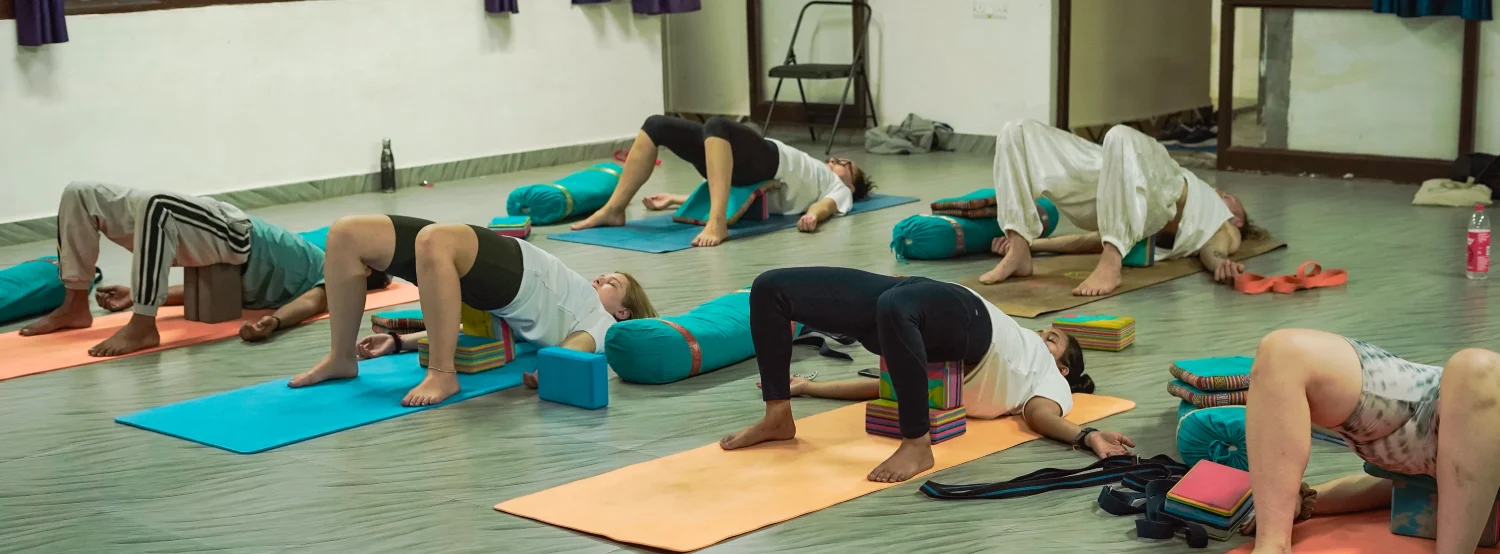
Flexibility is a result of yoga, not a prerequisite for it. If you cannot touch your toes, you are actually the perfect candidate for this training. Instructors teach you how to use props like blocks and straps to make every posture accessible.
Myth 2: You need to know the poses before arriving.
While basic familiarity helps, it is absolutely not required. The entire purpose of the training is to break down each posture systematically. You will learn the mechanics, benefits, and contraindications of every single pose.
Myth 3: The physical intensity will be too much.
While the schedule is full, the physical practice is balanced with lectures, meditation, and rest. If you need a gentler introduction to ashram life first, exploring a 5 Days Yoga Retreat in Rishikesh can help you adjust to the routine.
Myth 4: You have to want to become a teacher.
More than half of the students in a foundation course are there solely for personal growth. You are learning to be a student of your own body and mind. Teaching is simply an option, not an obligation.
Myth 5: Everyone else will be an expert.
In a beginner-focused program, your peers will be exactly where you are. You will share a classroom with people from all walks of life, dealing with similar stiffness, doubts, and challenges. The shared vulnerability creates an incredibly supportive community.
Core Subjects: What Will You Actually Learn?
A comprehensive training program goes far beyond physical stretching. It is a holistic education that covers the mind, body, and spirit.
Asana Practice and Alignment
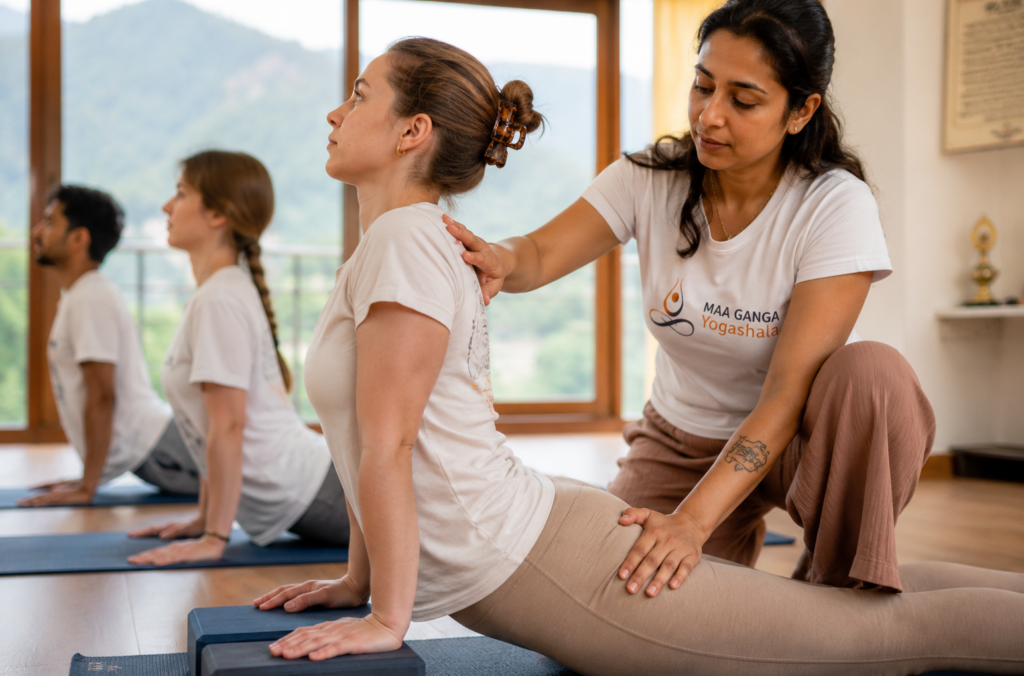
You will spend several hours a day practicing physical postures, known as Asanas. However, this is not a fast-paced fitness class. You will hold poses, study their anatomical alignment, and learn how to adjust them for your specific body type.
Pranayama and Meditation
Breath is the bridge between the physical and mental aspects of yoga. You will learn various breathing techniques (Pranayama) designed to heat, cool, or balance the nervous system. Daily meditation sessions will help you cultivate focus and inner stillness.
Yoga Philosophy and History
Understanding the roots of this ancient science changes how you move on the mat. You will study foundational texts like Patanjali’s Yoga Sutras. If you want a head start on these concepts, read our guide on the Eight Limbs of Yoga Philosophy before you arrive.
Basic Anatomy and Physiology
To practice safely, you must understand how your body moves. Anatomy classes cover skeletal structures, muscle groups, and joints. You will learn how different postures impact your physical systems and how to prevent common injuries.
A Day in the Life: The Ashram Schedule
Knowing how your day will unfold helps remove the fear of the unknown. While schedules vary slightly, ashram life follows a disciplined, rhythmic routine.
Your day typically begins before sunrise, around 6:00 AM, with cleansing practices (Shatkarma) and herbal tea. This is followed by a silent meditation session and your morning Pranayama practice to awaken the body.
At 7:30 AM, you will step onto your mat for a dynamic, 90-minute Ashtanga or Hatha yoga class. This is where you build strength and stamina. Breakfast is usually served at 9:00 AM, providing a much-needed break and nourishing vegetarian food.
The mid-morning and afternoon are dedicated to theory. You will sit in classrooms to study anatomy, philosophy, and alignment methodology.
Following a nutritious lunch and some rest, your late afternoon involves a gentler practice, often focused on alignment or Yin yoga. Dinner is served early, around 7:00 PM, ensuring you digest your food properly before an early bedtime.
The schedule is undeniably rigorous, but it is designed to completely immerse you in the yogic lifestyle away from modern distractions.
How to Prepare Your Mind and Body for a 100 Hour YTT for Beginners No Experience
Even though you do not need advanced skills, a little preparation goes a long way in making your transition smoother.
Start by establishing a simple, consistent routine at home. Try practicing basic stretches or gentle flows for just twenty minutes a day. This builds a habit of showing up on your mat, which is harder than the physical practice itself.
Begin reducing your intake of caffeine, processed sugars, and heavy foods a few weeks before arrival. A yogic diet is vegetarian and lightly spiced, so preparing your digestive system will prevent headaches and fatigue during your first week.
Various clinical studies show that consistent mindfulness practices significantly reduce cortisol levels. Start sitting quietly for five minutes every morning to gently train your mind for longer meditation sessions.
Packing correctly also reduces arrival anxiety. You will want loose, breathable clothing and a few essential comfort items. For a complete checklist, review our detailed guide on What to Pack for a Yoga Retreat in Rishikesh to ensure you forget nothing important.
Why Tapovan, Rishikesh Is the Ultimate Destination
Location matters deeply when choosing your first training. Rishikesh is globally recognized as the Yoga Capital of the World, and for very good reason.
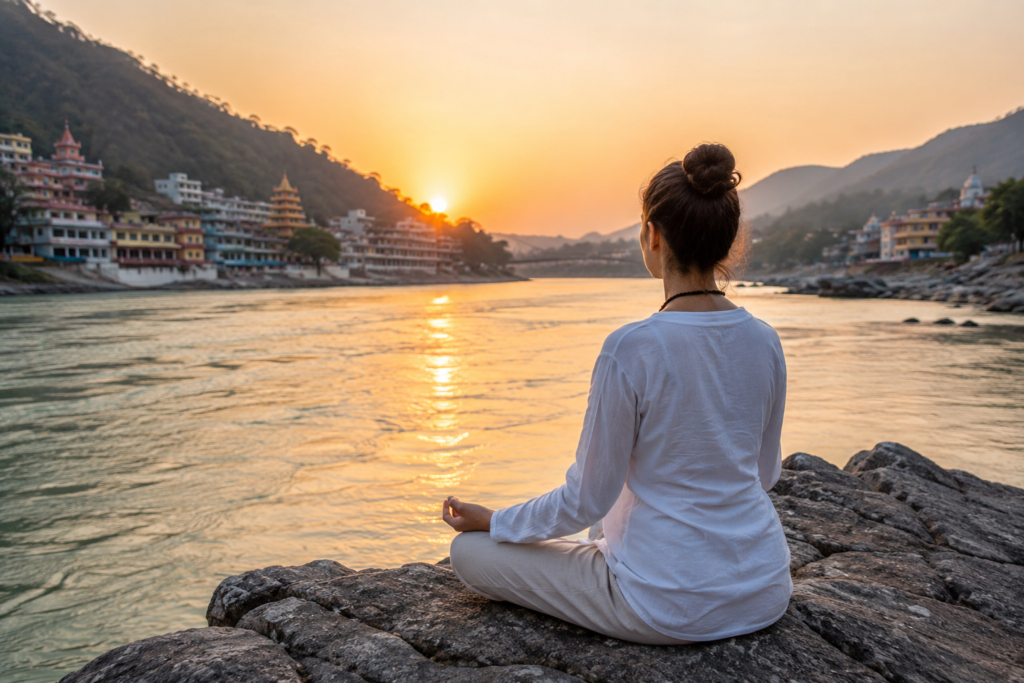
Situated in the foothills of the Himalayas, the town is split by the sacred Ganges River. The energy here is palpable, steeped in thousands of years of spiritual seeking and meditation.
Tapovan, a specific area in Rishikesh, offers the perfect blend of traditional ashram life and modern traveler comforts. You are surrounded by lush green mountains, yet you have access to cozy cafes, organic food stores, and vibrant local markets.
Studying here means you are learning from masters whose families have passed down yogic wisdom for generations. To understand more about the unique energy of this specific area, you can read our insights on Tapovan Rishikesh Yoga.
Finding Your Path at Maa Ganga Yogashala
If you are considering taking this step in Rishikesh, it is vital to choose a school that genuinely understands entry-level students. We know how overwhelming the research process can be.
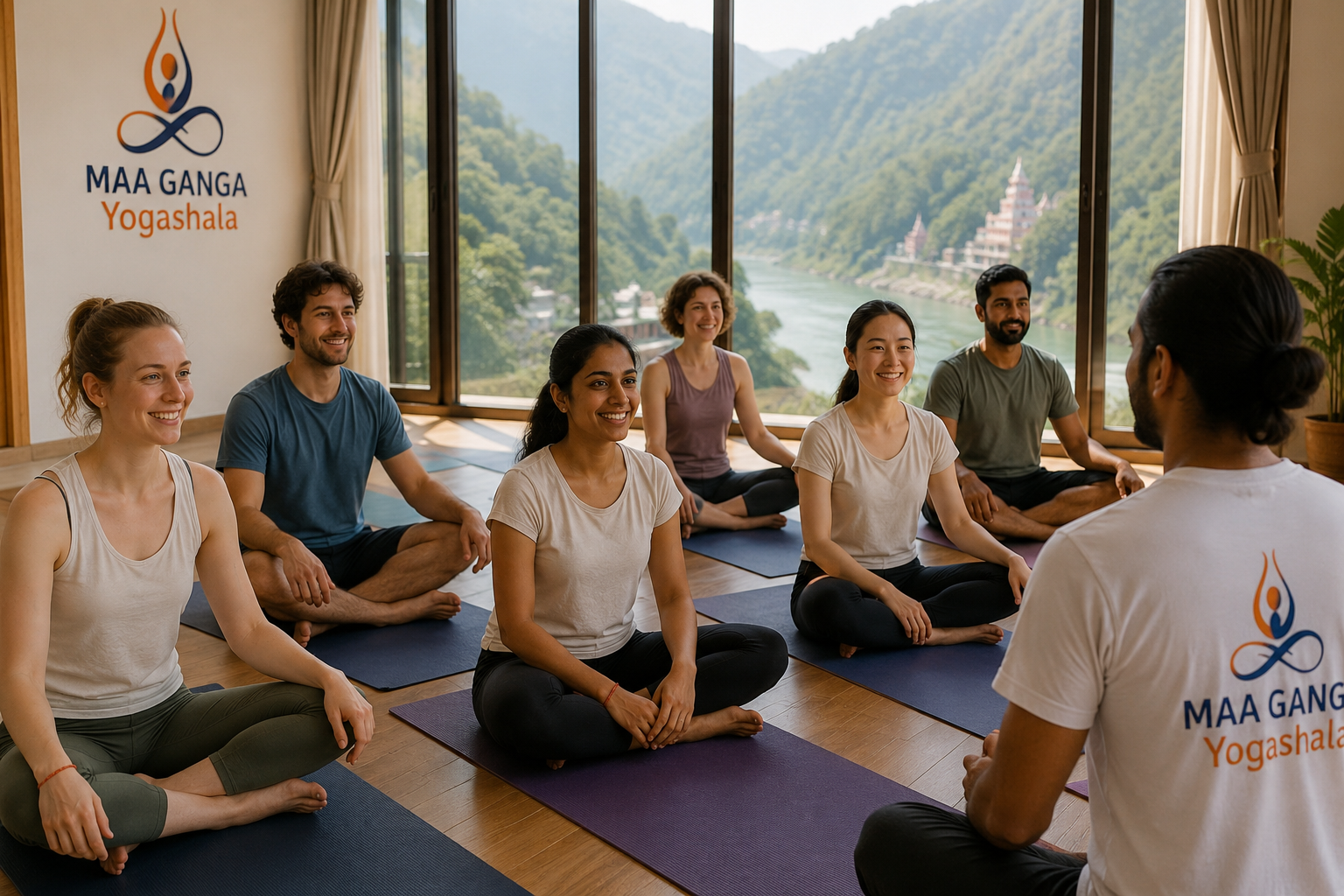
At Maa Ganga Yogashala, we pride ourselves on creating a safe, inclusive, and highly supportive environment for complete novices. Our teachers are specifically trained to break down complex concepts into simple, actionable steps.
We keep our class sizes small so you receive the personalized attention required to build a safe foundation. Whether you are looking for a short retreat or a formal certification, we guide you with patience and deep respect for your individual journey.
Frequently Asked Questions (FAQs)
Will I be a certified teacher after completing 100 hours?
No, 100 hours is not enough to register as a certified teacher globally. It is a foundation course. To become a fully certified instructor recognized worldwide, you must complete a 200-hour program.
Can I upgrade to a full certification later?
Absolutely. Many students complete their first 100 hours, return home to integrate what they learned, and then come back later. You can easily transition into a 200-Hour Yoga Teacher Training in Rishikesh when you feel ready.
Is the language barrier an issue if English is not my first language?
Not at all. Our teachers are highly experienced in teaching international students. Yoga is largely a physical and visual language, and instructors use clear, simple English combined with hands-on adjustments.
What if I struggle to keep up with the physical classes?
You are always encouraged to listen to your body and take rest whenever needed. There is zero judgment. For more answers to common worries, check out our Yoga Teacher Training Beginners FAQ for deeper insights.
Conclusion: Your Yoga Journey Begins Here
Enrolling in a 100 hour YTT for beginners no experience is one of the most rewarding gifts you can give yourself. It is not about mastering advanced acrobatics; it is about learning to breathe, move, and live with intention.
You do not need to be perfectly flexible, strong, or spiritually enlightened to start. You simply need an open mind and the willingness to show up on your mat every day.
The mountains of Rishikesh are waiting to support your transformation, and our community is ready to welcome you exactly as you are.
Ready to begin your journey? Explore our 100-Hour Yoga Teacher Training in Rishikesh and take the first confident step toward your new foundation today.