Eight Limbs of Yoga Philosophy: Your Complete Guide to Inner Alignment
Most practitioners step onto a mat simply seeking physical flexibility, unaware that the eight limbs of yoga philosophy hold the true secret to profound mental and spiritual freedom. You might master complex poses, but without understanding the deeper framework, your practice remains incomplete.
This ancient system acts as a precise roadmap for navigating human consciousness. It moves you far beyond mere stretching, offering a step-by-step guide to mastering your mind, regulating your breath, and ultimately discovering lasting inner peace.
By exploring these traditional stages, you uncover a completely different dimension of practice. You begin to understand why certain physical movements create such profound emotional shifts, and how the true goal of your time on the mat extends far into your daily life.
Whether you are a dedicated home practitioner or preparing for a serious training journey, understanding this foundational framework changes everything. Read on to discover how these eight ancient steps can completely reshape your approach to wellness, clarity, and self-discovery.
What Are the Eight Limbs of Yoga Philosophy?
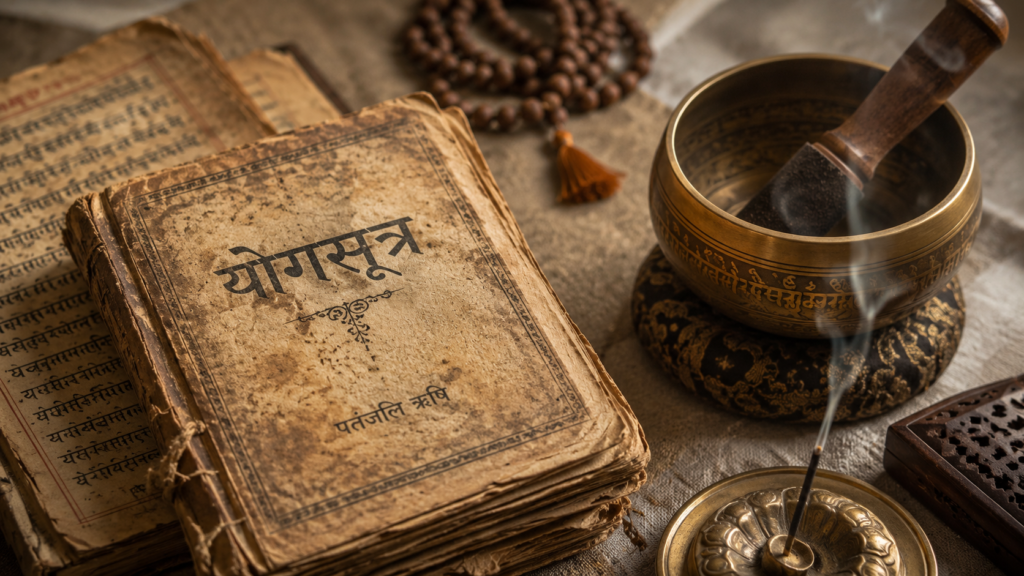
The concept originates from the Yoga Sutras, a foundational text compiled by the sage Patanjali thousands of years ago. He organized the vast, complex spiritual knowledge of his time into a concise, systematic path known as Ashtanga.
In Sanskrit, “Ashta” means eight, and “Anga” means limb. Together, they form a cohesive tree of practices that must grow and work together to bear fruit.
This system ensures that your physical practice is always grounded in ethical awareness and mental discipline. Institutions worldwide, including organizations like Yoga Alliance, recognize this framework as the gold standard for comprehensive yoga education.
To truly grasp this evolution, it helps to understand how different styles interpret these roots. You can explore this dynamic further in our guide comparing Hatha vs Ashtanga Yoga.
The Foundation: Yamas and Niyamas
Before you even attempt a physical posture, the eight limbs of yoga philosophy demand a look inward. The first two limbs focus entirely on your behavior, ethics, and personal conduct.
They act as the fertile soil in which the rest of your practice will grow. Without them, physical flexibility means very little in the broader scope of spiritual development.
1. Yamas (Ethical Restraints)
The Yamas guide how you interact with the external world and other living beings. They are universal moral vows designed to reduce suffering and friction in your daily interactions.
- Ahimsa (Non-violence): This means practicing deep compassion. It applies to how you treat others, but equally to how you treat your own body during physical practice.
- Satya (Truthfulness): Beyond just not lying, this involves living authentically. It means aligning your thoughts, words, and actions with reality.
- Asteya (Non-stealing): This covers physical theft, but also stealing someone’s time, energy, or claiming ideas that are not your own.
- Brahmacharya (Energy Conservation): Traditionally linked to celibacy, modern interpretations focus on directing your energy toward your highest spiritual goals rather than depleting it on fleeting desires.
- Aparigraha (Non-attachment): This teaches you to let go of greed and hoarding. It encourages you to take only what you need and release the heavy burden of materialism.
2. Niyamas (Personal Observances)
While the Yamas focus outward, the Niyamas turn your attention entirely inward. They are the daily habits and self-discipline required to purify your mind and body.
- Saucha (Purity): This involves maintaining cleanliness in your physical environment, your body, and most importantly, your thoughts.
- Santosha (Contentment): True peace comes from accepting your current circumstances without constant craving for something different.
- Tapas (Discipline): This is the inner fire that drives you to practice even when it is difficult. It burns away impurities and builds incredible mental resilience.
- Svadhyaya (Self-study): This requires honest introspection. It involves studying sacred texts and deeply analyzing your own behavioral patterns.
- Ishvara Pranidhana (Surrender): This final Niyama teaches you to let go of ego-driven control and trust in a higher universal intelligence.
The Physical and Energetic Limbs
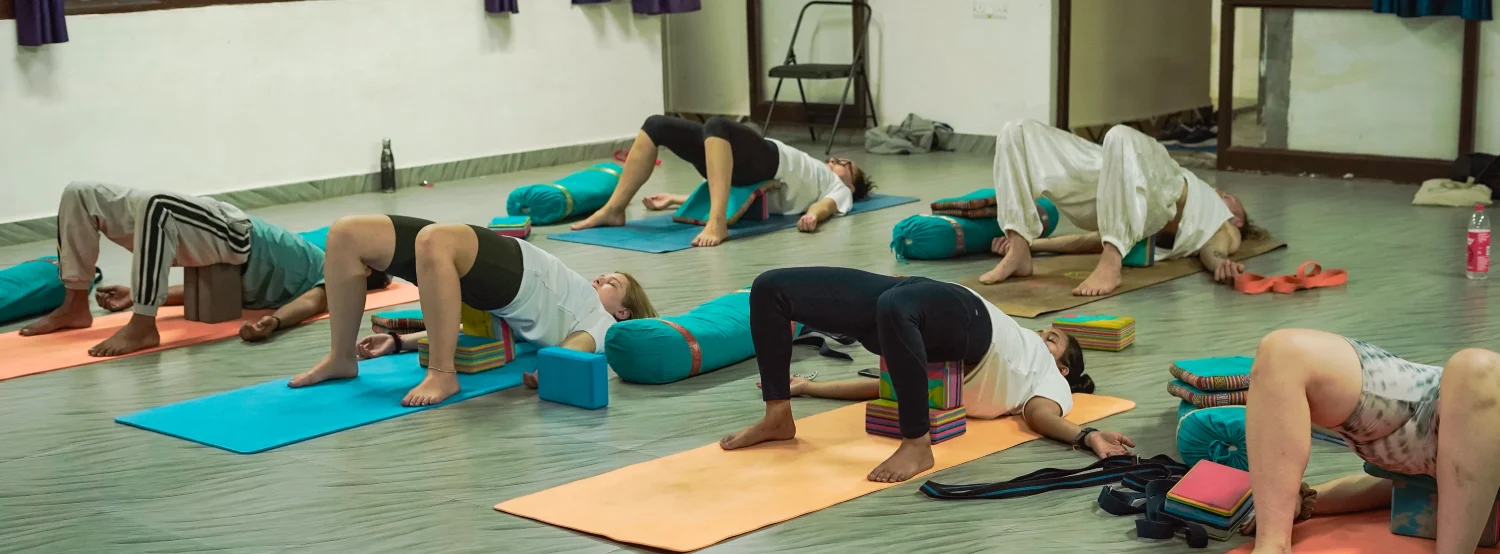
Once your ethical foundation is secure, the eight limbs of yoga philosophy guide you to refine your physical vessel. This prepares the body to sit comfortably during long periods of meditation.
Without this physical and energetic preparation, the mind remains distracted by bodily discomfort and erratic breathing patterns.
3. Asana (Physical Postures)
This is the limb most familiar to modern society. However, Patanjali describes Asana simply as a posture that is both steady and comfortable.
The primary purpose is not acrobatic achievement, but rather developing a strong, disease-free body capable of holding still. The physical challenge teaches the mind to remain calm under pressure.
4. Pranayama (Breath Control)
Prana is the vital life force energy, and Ayama means to extend or regulate. By controlling your breath, you gain direct control over your nervous system and mental state.
This limb acts as the crucial bridge between the physical body and the subtle mind. To dive deeper into specific breathing techniques, explore our detailed guide on Pranayama Types Benefits Practice.
The Inner Journey: Pratyahara to Samadhi
The final four limbs represent a profound shift inward. Once the body is still and the breath is regulated, you must conquer the restless nature of human consciousness.
These stages transition from conscious effort into effortless flow. They represent the highest goals of traditional spiritual practice, widely studied by holistic health bodies globally, including the Ministry of Ayush in India.
5. Pratyahara (Withdrawal of the Senses)
Your senses naturally constantly scan the external environment for stimulation. Pratyahara is the deliberate act of pulling that awareness inward.
You do not lose the ability to hear or feel, but you choose not to react to those inputs. This deep internal focus is often beautifully facilitated by therapies like Sound Healing, which anchor the mind.
6. Dharana (Concentration)
With external distractions silenced, Dharana trains the mind to focus on a single point. This could be the breath, a mantra, or an internal energy center.
The goal is to prevent the mind from wandering. It requires intense mental effort and serves as the immediate prerequisite for true meditation.
7. Dhyana (Meditation)
While Dharana is the act of concentrating, Dhyana is the uninterrupted flow of concentration. It is a state of being, rather than something you actively “do.”
In Dhyana, the illusion of separation begins to dissolve. The observer, the act of observing, and the object being observed merge into a single stream of awareness.
8. Samadhi (Complete Absorption)
This is the ultimate pinnacle of the eight limbs of yoga philosophy. Samadhi is a state of absolute bliss and union with the divine.
In this state, the ego is entirely transcended. You experience a profound, unshakeable realization of your interconnectedness with the entire universe.
Why Rishikesh? The Perfect Place to Learn
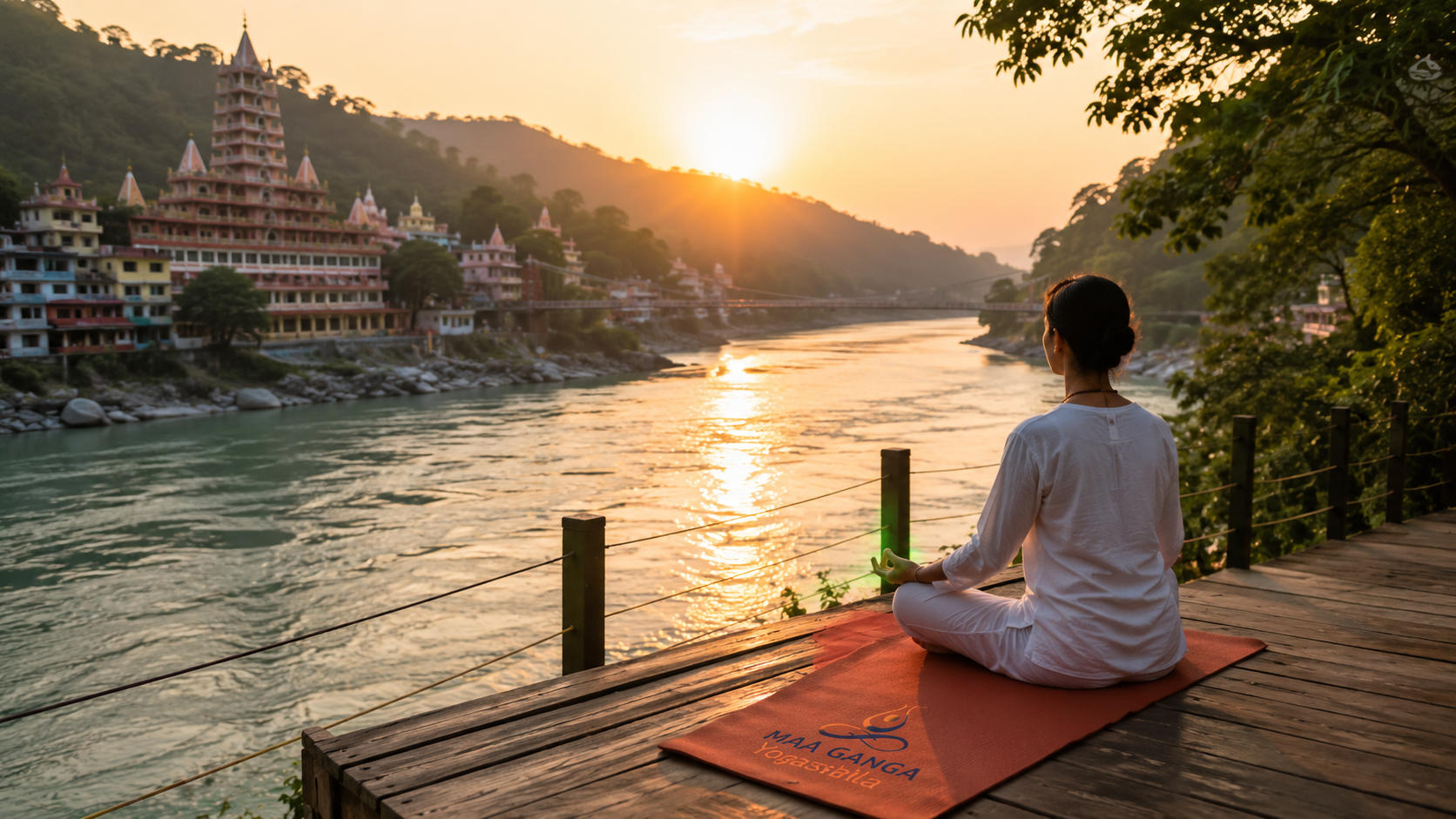
Reading about these profound concepts is one thing, but experiencing them requires the right environment. Rishikesh, located in the foothills of the Himalayas, offers an unparalleled energetic frequency.
Practicing near the sacred Ganga River connects you to centuries of uninterrupted spiritual tradition. The environment naturally pulls you inward, making the transition from physical postures to deep meditation feel seamless.
The entire town is built around supporting this precise inner journey. If you want to understand how this specific environment accelerates your growth, read more about Why Yoga in Rishikesh is Life-Changing.
Deepen Your Understanding
If you’re considering training in Rishikesh, Maa Ganga Yogashala offers a deeply authentic environment to master these ancient teachings. Our 100-Hour Yoga Teacher Training in Rishikesh provides the perfect immersion for those ready to move beyond basic physical practice.
Frequently Asked Questions
Do I need to perfect Asana before moving to the other limbs?
No, the limbs are designed to be practiced concurrently. While mastering physical stillness helps, you can practice the Yamas, Niyamas, and breath control regardless of your physical flexibility.
Are the eight limbs of yoga philosophy a religion?
They are not a religion, but rather a universal ethical and spiritual framework. Practitioners from any religious background, or none at all, can apply these principles to achieve profound mental clarity.
Can beginners learn this philosophy easily?
Absolutely. The structure is incredibly logical and accessible. If you are wondering how structured learning accelerates this process, you might find our thoughts on whether Is Yoga Teacher Training Worth It? highly insightful.
Conclusion
The journey through the eight limbs of yoga philosophy is the most profound undertaking you can commit to for your mental and spiritual evolution. It requires patience, immense discipline, and a willingness to look deeply at your own habits. Yet, the reward—a life lived with profound clarity, deep compassion, and unshakable inner peace—is unparalleled.
The physical postures are merely the gateway. The true magic happens when you integrate ethical awareness, breath control, and deep meditation into a seamless daily reality. This transformation does not happen overnight, but taking the first step in the right environment changes your trajectory forever.
Ready to begin? Explore our comprehensive 200-Hour Yoga Teacher Training in Rishikesh and discover how Maa Ganga Yogashala can guide you toward genuine mastery today.