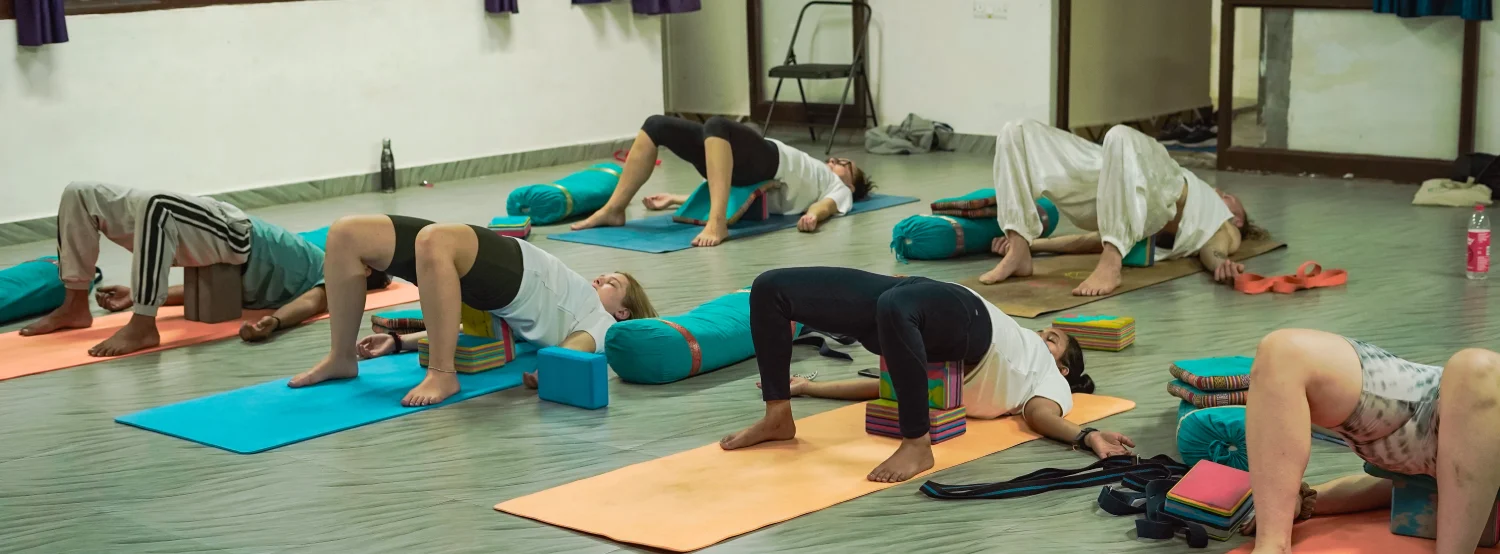
How to Become Sound Healing Practitioner India: A Complete Guide to Starting Your Career
Introduction
How to become sound healing practitioner India is a question worth exploring if you feel drawn to meditation, holistic wellness, and the therapeutic use of sound. But can you turn your interest in singing bowls, gongs, and healing frequencies into a professional skill? Yes, with the right training, consistent practice, and a responsible approach.
Sound healing has attracted growing interest among yoga practitioners, wellness professionals, meditation enthusiasts, and people exploring complementary relaxation practices. From individual singing bowl sessions to group sound baths, practitioners use different instruments and sound-based techniques to create immersive relaxation experiences.
However, becoming a practitioner involves much more than learning how to strike a Tibetan singing bowl. You need to understand instruments, sound production, session planning, client communication, safety considerations, and professional boundaries.
India, particularly Rishikesh, offers opportunities to explore these practices in an environment closely connected with yoga and meditation.
This guide explains the training options, essential skills, certification considerations, career possibilities, and practical steps you can take to begin.
1. How to Become a Sound Healing Practitioner in India: Understand the Profession
Before enrolling in a course, understand what a sound healing practitioner actually does.
A sound healing practitioner facilitates sessions using sound-producing instruments and techniques. The objective is generally to create an environment that supports relaxation, meditation, mindfulness, and personal reflection.
You may work with individuals or groups, depending on your training and professional experience.
Unlike a conventional music performance, a sound healing session is usually designed around the participant’s experience rather than musical entertainment.
What does a sound healing practitioner do?
Your responsibilities may include:
- Preparing a comfortable and quiet environment for sessions.
- Selecting appropriate instruments based on the session format.
- Playing singing bowls, gongs, chimes, and other sound instruments.
- Guiding participants through relaxation or meditation.
- Maintaining an appropriate volume and comfortable sound environment.
- Observing participant feedback and adjusting the session.
- Explaining the process and setting realistic expectations.
You should also understand that sound healing is not a replacement for medical treatment, psychotherapy, or prescribed medication.
Although some studies have investigated the effects of music and sound-based interventions on relaxation and well-being, claims that particular frequencies cure diseases or repair organs are not established medical facts.
For a scientific starting point, explore the research resources available through
.

Is sound healing the same as music therapy?
No. These practices have different professional frameworks.
Music therapy is a recognised clinical discipline involving trained professionals who use music-based interventions within healthcare and therapeutic settings.
Sound healing workshops commonly focus on relaxation, meditation, and experiential sound practices.
If you want to provide clinical music therapy, you need appropriate professional education and qualifications. A short singing bowl workshop does not qualify you to provide clinical treatment.
Understanding this distinction is essential before starting your professional journey.
2. Choose the Right Sound Healing Training and Certification in India
Once you understand the profession, your next step is selecting suitable training.
A good sound healing course should teach practical instrument handling alongside theoretical knowledge. Watching online videos can introduce you to singing bowls, but it cannot replace supervised practice and feedback from an experienced instructor.
Training options in India range from introductory workshops to structured certification programs.
What should a sound healing course teach?
Look for a curriculum covering the following areas:
1. Introduction to sound healing
Understand the history, philosophy, applications, and limitations of sound-based relaxation practices.
2. Singing bowl techniques
Learn how to hold, strike, and play different singing bowls. You should understand how striking and rim-playing techniques produce different sounds.
3. Instrument knowledge
Explore the characteristics of Tibetan singing bowls, crystal bowls, gongs, tuning forks, and other instruments.
4. Sound meditation
Learn how to combine sound with breathing exercises, meditation, and guided relaxation.
5. Session planning
Understand how to structure an opening, main sound experience, relaxation period, and closing.
6. Practical experience
A meaningful course should include opportunities to conduct practice sessions and receive instructor feedback.
7. Professional ethics and safety
Learn about sound sensitivity, participant consent, appropriate volume, personal boundaries, and situations where medical guidance may be necessary.
Does sound healing certification have international recognition?
This is an important question, especially if you plan to work outside India.
Sound healing does not have one universally accepted licensing or certification framework applicable across every country.
You may find private training certificates, institutional course certificates, and professional development programs. Their value depends on the training provider, curriculum, instructor experience, practical hours, and acceptance within your intended market.
Yoga Alliance, for example, maintains a framework for yoga teacher education and registration. You can explore its official information at
.
However, completing a sound healing course does not automatically make you a Yoga Alliance Registered Yoga Teacher or a licensed healthcare professional.
Before paying for certification, ask the school:
- How many practical training hours are included?
- Who teaches the course?
- Is supervised practice provided?
- What certificate will you receive?
- Does the school explain the limitations of sound healing?
- Can you observe or assist in real sessions?
Do not choose a course simply because its certificate promises international recognition.
A credible education is more valuable than an impressive-looking certificate without practical skills.
3. Learn Essential Sound Healing Instruments and Techniques
Your ability to work confidently with instruments will directly influence the quality of your sessions.
You do not need to purchase an expensive collection immediately. Start with a few instruments, understand their characteristics, and gradually develop your skills.
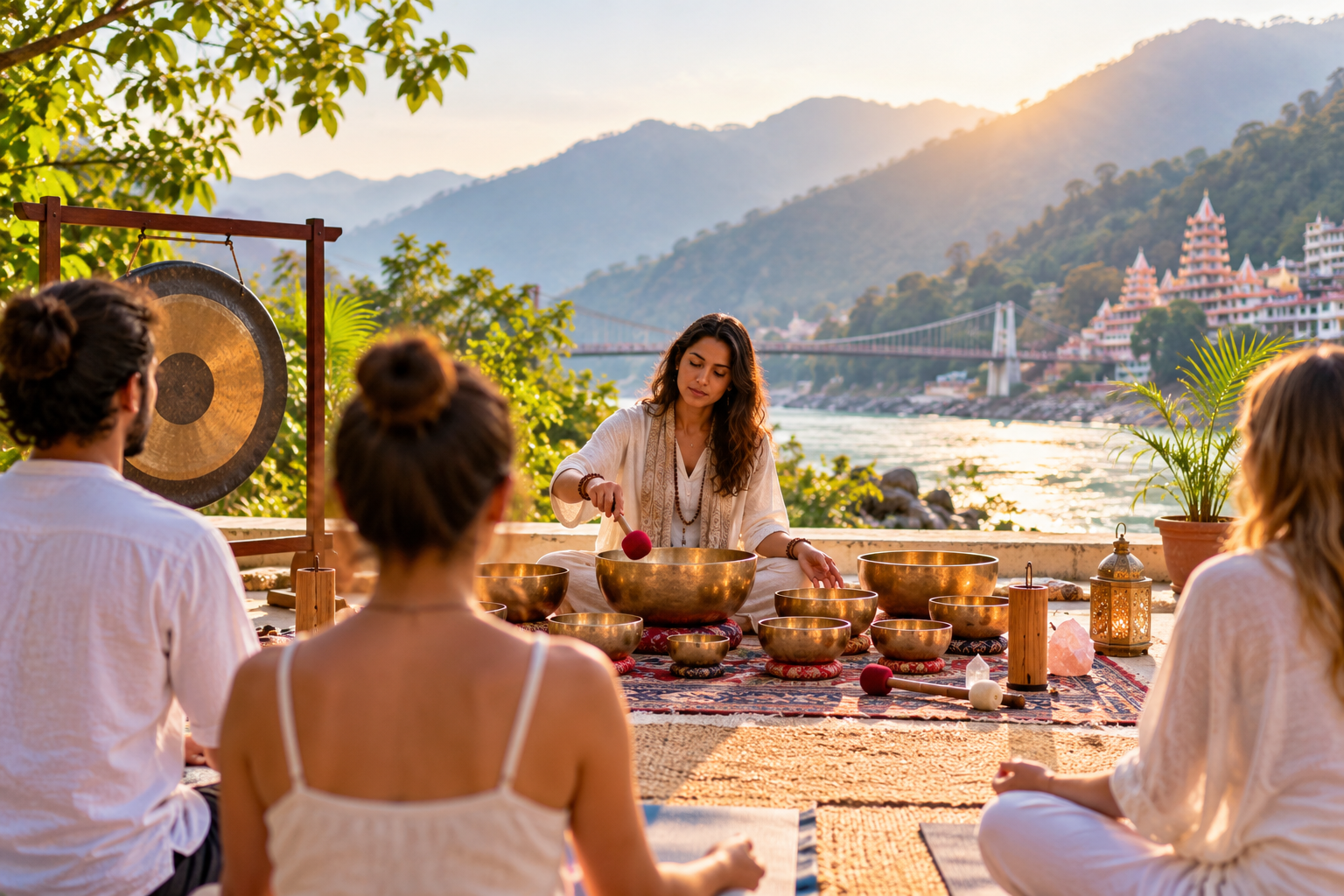
Tibetan singing bowls
Tibetan singing bowls are among the most commonly used instruments in sound healing sessions.
They produce resonant tones when struck or played around their rims using suitable mallets.
You should learn:
- Different striking techniques.
- Rim-playing and continuous sound production.
- Bowl selection and handling.
- Controlling volume and resonance.
- Creating transitions between sounds.
Learn to listen carefully rather than concentrating only on producing louder or longer sounds.
For a deeper understanding of the equipment, explore this guide to sound healing instruments and their uses.
Crystal singing bowls and gongs
Crystal singing bowls are commonly made from quartz and produce sustained, distinctive tones.
Gongs create a wider range of sound textures, from gentle vibrations to powerful resonant effects.
Both instruments require control. Their volume and intensity should always be appropriate for the participant and the environment.
Tuning forks
Tuning forks produce specific tones when activated.
Some practitioners incorporate them into relaxation sessions, while others use them as part of their personal sound-based practices.
You should learn how to handle them properly and understand the difference between using an instrument for sound meditation and making unverified claims about treating physical conditions.
Explore how tuning forks are used in sound healing to understand their practical applications.
Binaural beats and recorded sound
Not every sound healing experience requires physical instruments.
Recorded sound, ambient music, and binaural beats can also be incorporated into relaxation practices.
Binaural beats involve presenting slightly different frequencies to each ear, creating the perception of a third rhythmic beat.
However, they are not interchangeable with singing bowls or traditional instrument-based sound sessions.
Your training should help you understand the differences between these approaches rather than treating every sound technique as identical.
For additional reading, see binaural beats versus singing bowls.
4. Develop the Practical Skills Needed to Work as a Professional Sound Healer
Knowing how to play instruments is only one part of becoming a capable practitioner.
Your ability to communicate, organise sessions, understand participants, and maintain professional boundaries matters just as much.
Learn to conduct a complete session
A beginner-friendly group sound healing session might follow this structure:
Step 1: Welcome and introduction
Explain what participants can expect. Ask about sound sensitivity, hearing-related concerns, and any relevant comfort requirements.
Step 2: Prepare the environment
Arrange mats, cushions, instruments, and appropriate lighting. Make sure participants have enough personal space.
Step 3: Introduce relaxation
Begin with gentle breathing guidance or a short meditation. Avoid forcing participants to close their eyes or follow uncomfortable instructions.
Step 4: Introduce the instruments
Start with comfortable sound levels and gradually introduce different instruments.
Step 5: Allow quiet integration
Finish the sound portion with a period of silence so participants can return to their normal awareness comfortably.
Step 6: Close the session
Give participants time to sit up, ask questions, and share feedback if they wish.
The duration and structure should depend on the participants, your training, and the session’s purpose.
Understand safety and participant consent
Professional responsibility should always come before dramatic claims or complicated techniques.
Pay attention to:
- Participants who experience discomfort from particular sounds.
- People with tinnitus or sound sensitivity.
- Participants who prefer not to hear loud or sudden sounds.
- Individuals who do not consent to instruments being placed near or on their bodies.
- People who become uncomfortable during meditation or relaxation.
Do not make therapeutic promises, diagnose medical conditions, or advise participants to discontinue treatment.
If someone experiences discomfort, stop or modify the session. A participant should always be able to leave or take a break.
Build confidence through supervised practice
Before charging clients, practise with friends, fellow students, or small volunteer groups.
After every session, review:
- Whether the volume was comfortable.
- Whether transitions between instruments felt natural.
- Whether instructions were clear.
- Whether participants felt respected.
- What you could improve next time.
You can also learn from the differences between group and private sound healing sessions.
Consistent practice will help you develop your own style without compromising the participant’s comfort.
5. Why Rishikesh Is a Meaningful Place to Learn Sound Healing
Rishikesh is widely associated with yoga, meditation, spiritual learning, and wellness education.
For someone interested in becoming a sound healing practitioner, the location offers an opportunity to explore different aspects of yogic and meditative traditions within the same learning environment.
An established yoga and meditation environment
Tapovan and surrounding areas have yoga schools, meditation centres, wellness spaces, and practitioners from different parts of the world.
This creates opportunities to observe different teaching approaches and interact with people who share an interest in holistic wellness.
You may also find opportunities to attend meditation sessions, sound baths, and workshops alongside your main training.
Connection with Himalayan singing bowl traditions
Metal singing bowls are strongly associated with Himalayan sound practices.
Learning in Rishikesh can introduce you to teachers and practitioners who incorporate these instruments into meditation and relaxation sessions.
However, remember that the quality of your education depends on the instructor and curriculum, not simply the geographical location.
Do not assume every school in Rishikesh provides authentic or equally comprehensive training.
An environment that supports personal practice
A quieter daily routine, access to the Ganga, and the presence of yoga and meditation communities can help you establish consistent personal practice.
You can combine sound meditation with yoga, pranayama, and mindfulness.
If you are interested in exploring these practices beyond a short workshop, you can also consider a yoga retreat in Rishikesh.
The important thing is to choose an environment that supports focused learning rather than selecting a location based only on its reputation.
6. How to Start a Sound Healing Career in India
After completing your training, you need a realistic plan for entering the wellness industry.
A certificate is a starting point, not a guarantee of employment or income.
Your professional growth will depend on practical experience, reputation, networking, and the ability to provide well-organised sessions.

Explore different career opportunities
You can consider several professional pathways.
1. Independent sound healing practitioner
Conduct individual and small-group sessions through your own practice, subject to local business and professional requirements.
2. Yoga and wellness centres
Collaborate with established yoga schools, meditation studios, retreat centres, and wellness businesses.
3. Retreat facilitator
Include sound meditation sessions in yoga retreats, wellness retreats, and mindfulness programs.
4. Private sessions
Offer personalised relaxation sessions for individuals who prefer a smaller setting.
5. Online sound meditation
Create guided meditation experiences using recorded sounds, provided you have suitable equipment and the necessary permissions.
How much can a sound healing practitioner earn in India?
There is no dependable, standard salary benchmark for sound healing practitioners across India.
Your earnings may vary according to:
- Your city and target audience.
- Your training and practical experience.
- Whether you work independently or with a wellness centre.
- The number of sessions you conduct.
- Your instruments and operating expenses.
- Your marketing and client retention.
Independent practitioners may charge per session, while retreat facilitators may receive a fixed fee or negotiate a package arrangement.
Do not assume that completing a short certification course will immediately generate a full-time income.
Start by building experience and testing whether there is genuine demand in your target market.
Build your professional identity
You should develop a clear professional profile that explains your training, experience, session formats, and approach.
Useful steps include:
- Create a professional website or portfolio.
- Share educational content about your instruments.
- Publish short demonstrations of your playing techniques.
- Collect genuine participant feedback with permission.
- Develop relationships with yoga teachers and wellness centres.
- Offer introductory sessions to build practical experience.
If you already have yoga teaching experience, combining yoga and sound meditation can help you create more comprehensive wellness sessions.
However, keep your qualifications transparent. Do not advertise yourself as a medical therapist unless you hold the appropriate professional credentials.
7. Choose a Sound Healing Course That Matches Your Goals
Not everyone entering sound healing has the same objective.
Some people want to learn singing bowl techniques for personal meditation. Others want to facilitate group sessions or add sound meditation to their existing yoga teaching practice.
Your choice of course should reflect your actual goal.
Consider these three learning pathways:
For personal development: Choose an introductory program that covers basic instrument handling, sound awareness, and meditation practices.
For yoga teachers: Look for practical training that helps you integrate sound meditation into existing yoga and relaxation sessions.
For aspiring professional practitioners: Prioritise structured training with instrument knowledge, supervised practice, session planning, participant safety, and professional ethics.
Before enrolling, compare the course duration, practical hours, instructor background, certificate details, accommodation arrangements, and total cost.
Also ask whether instruments are included or need to be purchased separately.
A course that appears inexpensive may become expensive once travel, accommodation, meals, and equipment are added.
How long does it take to become a practitioner?
There is no universal duration.
An introductory workshop may take a few days, while a more comprehensive training program may require a longer period of structured learning and practice.
The time needed to become confident enough to facilitate sessions depends on your previous experience, learning pace, and the number of supervised sessions you complete.
Avoid rushing into paid work immediately after learning a few basic techniques.
Develop competence first, then gradually increase the complexity of the sessions you offer.
8. Learn Sound Healing in Rishikesh with Maa Ganga Yogashala
If you are considering sound healing training in Rishikesh, the learning environment and practical approach should be important parts of your decision.
Maa Ganga Yogashala is located on Badrinath Road in Tapovan, Rishikesh, near the Ganga River and surrounded by the Himalayan landscape.
We offer opportunities to explore sound-based relaxation practices alongside the broader traditions of yoga and meditation.
Our Sound Healing program is relevant to those who want to understand singing bowls and sound meditation in a dedicated learning environment.
We also encourage you to explore our chakra balancing practices if you are interested in learning about the relationship between meditation, yogic philosophy, and traditional energy concepts.
Before enrolling, contact us to confirm the current curriculum, course duration, practical sessions, certificate details, upcoming dates, and fees.
Choosing training based on what you will actually learn is more important than choosing a course based on marketing promises.
9. Frequently Asked Questions About Becoming a Sound Healing Practitioner
1. Do you need a yoga certification to become a sound healing practitioner in India?
No universal requirement makes a yoga teaching certificate mandatory for every sound healing practitioner. However, knowledge of meditation, yoga, and relaxation techniques can be useful.
If you intend to teach yoga alongside sound healing, you should obtain appropriate yoga teacher training.
2. Can beginners learn sound healing without musical experience?
Yes. Previous musical experience is generally not essential for learning basic singing bowl techniques.
However, you need patience, regular practice, good listening skills, and an understanding of rhythm, resonance, and instrument handling.
3. Is sound healing a recognised medical treatment?
Sound healing sessions are commonly offered as complementary relaxation and meditation experiences.
They should not be represented as substitutes for evidence-based medical treatment. Claims about curing specific diseases through particular frequencies require reliable scientific evidence.
4. Can you start your own sound healing business after certification?
You can explore independent practice after developing appropriate skills and understanding the applicable local business requirements.
However, certification alone does not guarantee clients or income. You will need practical experience, professional communication, marketing, and a clear understanding of your scope of practice.
5. Why should you consider learning sound healing in Rishikesh?
Rishikesh offers an established environment for yoga, meditation, and wellness education.
You can explore sound practices alongside other yogic disciplines and interact with practitioners from different backgrounds. The quality of your chosen instructor and training program should remain your primary consideration.
10. Conclusion: Begin Your Sound Healing Practitioner Journey in India
Learning how to become sound healing practitioner India requires more than purchasing singing bowls or completing a short workshop.
You need a proper understanding of sound instruments, consistent practical experience, session facilitation skills, participant safety, and realistic professional expectations.
Start by identifying your goals. Research training providers carefully, compare their curricula, and prioritise supervised practice over impressive certification claims.
Rishikesh can be a meaningful place to develop your knowledge because of its established yoga and meditation environment.
If you are ready to explore sound-based meditation and develop practical skills, take the next step with a structured learning program.
Ready to begin? Explore the Sound Healing Course at Maa Ganga Yogashala in Rishikesh and contact our team for current course details, training information, and upcoming availability.