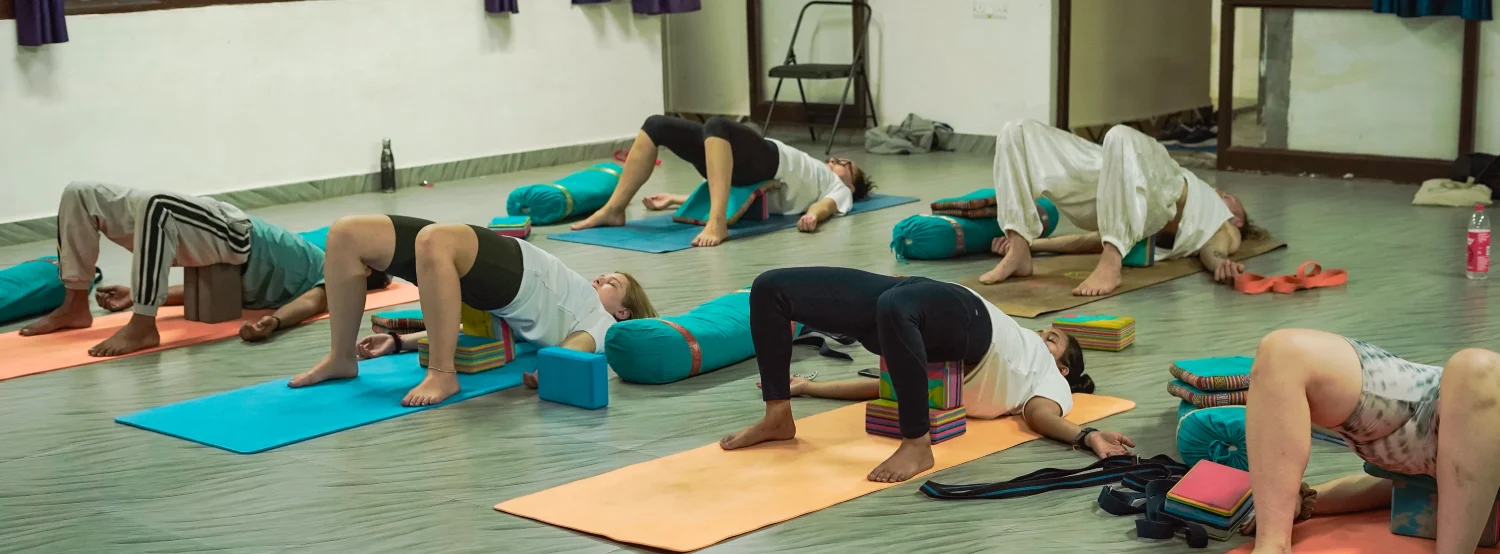
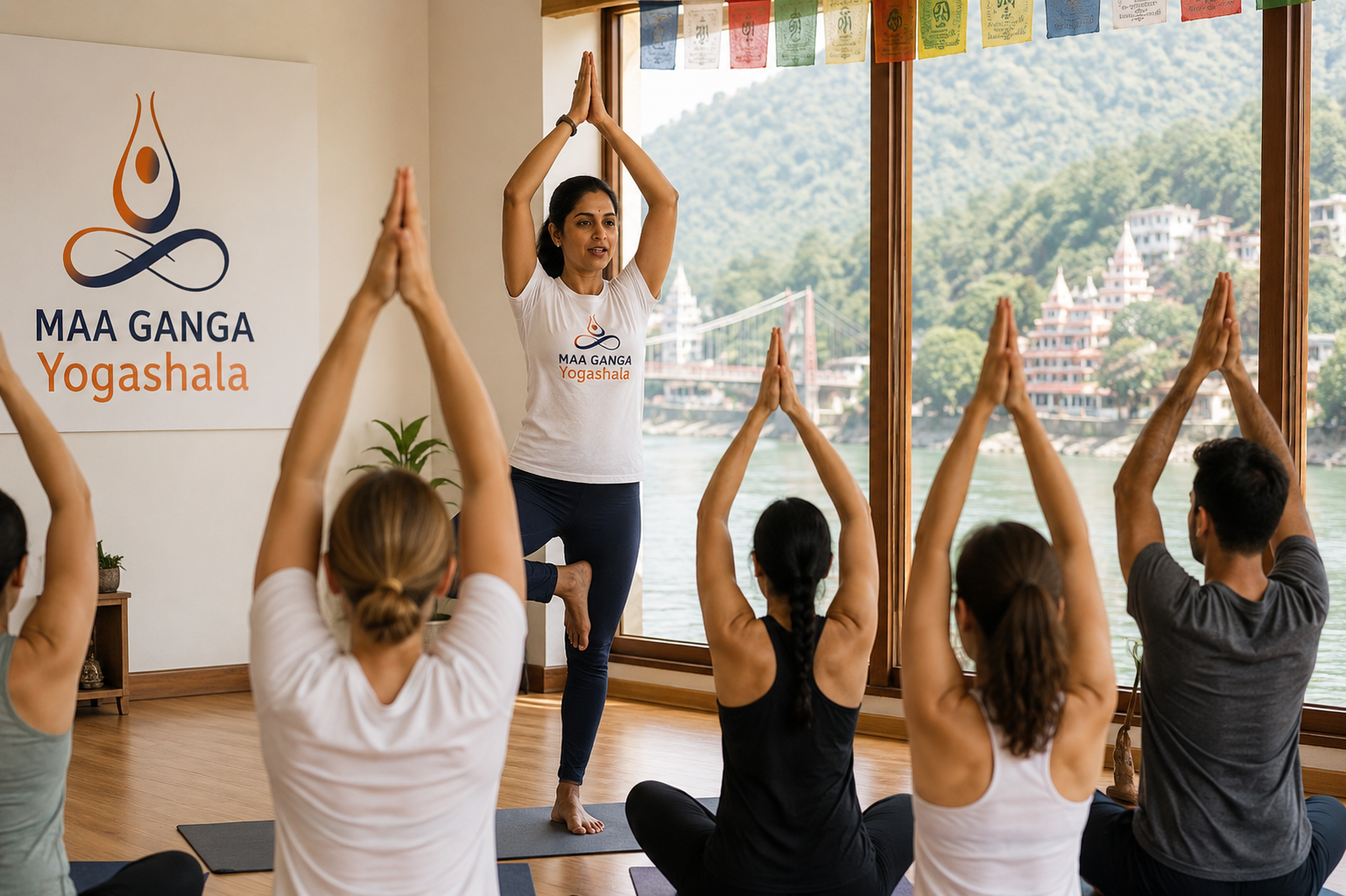
Yoga Teaching Methodology TTC: What It Really Means and Why It Matters
Yoga teaching methodology TTC is the defining bridge between being a dedicated student and becoming a powerful, confident leader. You might have a beautiful personal practice, able to hold complex inversions or sit in deep meditation for hours. However, the moment you step to the front of a room, everything changes entirely.
Teaching is a completely different skill set from practicing. When you are the student, your focus is inward on your own breath, alignment, and physical sensations. When you are the guide, your awareness must instantly expand to encompass every single person in the room.
Have you ever walked out of a yoga class feeling completely transformed, while another class just left you feeling disjointed and confused? The difference almost always comes down to the instructor’s grasp of methodology.
In this comprehensive breakdown, you will discover the hidden mechanics of creating impactful classes. We will explore the exact techniques that turn nervous beginners into grounded, authoritative instructors.
By understanding the psychology, science, and structure of teaching, you prepare yourself for a sustainable and inspiring career. If you are serious about sharing this ancient wisdom, mastering the art of instruction is where your true journey begins.
Yoga Teaching Methodology TTC: The Heart of Your Practice
At its core, a yoga teaching methodology TTC module deconstructs the architecture of a successful class. It removes the guesswork and replaces it with a reliable, structured framework.
Many aspiring teachers mistakenly believe that teaching simply means calling out a list of poses they personally enjoy. This approach inevitably leads to awkward transitions, unbalanced physical stress on the students, and a lack of energetic flow.
Methodology teaches you how to observe bodies in motion. You learn to recognize when a student is struggling with alignment versus when they are safely exploring their edge. This observational skill is what separates a generic fitness instructor from a true yoga teacher.
Furthermore, this training module forces you to confront your own communication habits. Do you speak too quickly when you are nervous? Do you use filler words or vague instructions like “feel the stretch”?
You will learn to strip away unnecessary language and deliver precise, actionable cues. Every word you speak in a studio should serve a distinct purpose.
Understanding these foundational concepts prepares you for the realities of leading diverse groups. For a deeper look at what to expect before stepping into a classroom, review these essential Yoga Teacher Training India Preparation: 7 Ultimate Steps.
The Science and Art of Sequencing
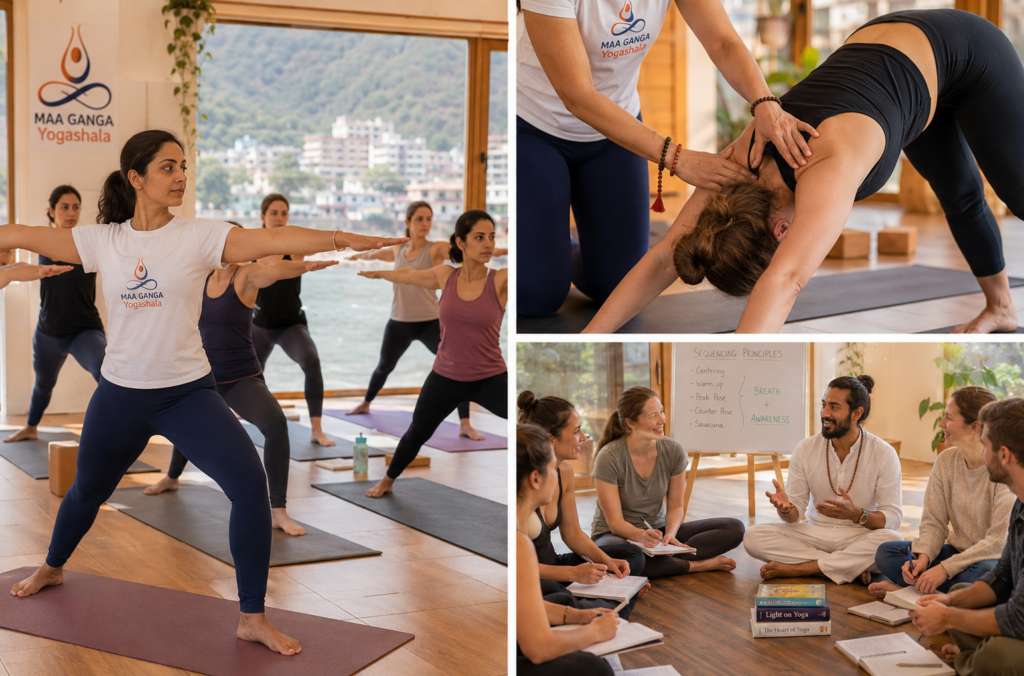
The most technical aspect of any yoga teaching methodology TTC is the science of sequencing, traditionally known as Vinyasa Krama. This is the intelligent, step-by-step progression of postures designed to prepare the body and mind for a specific goal.
A masterfully sequenced class feels like a beautifully written story. It has a clear introduction, a building progression of tension, a satisfying climax (the peak pose), and a grounding resolution.
If you sequence poorly, you risk injuring your students. Asking a class to jump into a deep backbend like Urdhva Dhanurasana (Wheel Pose) without properly opening the hip flexors and warming up the thoracic spine is a failure of methodology.
You must learn how to anatomically prepare the body. If your peak pose requires open hamstrings, your early standing sequence must strategically target those exact muscle groups.
Beyond the physical body, sequencing also manages the energetic arc of the room. You learn when to build heat to stimulate the nervous system and when to utilize cooling postures to trigger the parasympathetic rest-and-digest response.
The structure of your class dictates the emotional journey of your students. If you are debating how deep you want to go into sequencing theory, you might want to compare program depths in this guide: 100 Hour vs 200 Hour Yoga Teacher Training: Best Real Guide.
Finding Your Authentic Teacher Voice
Perhaps the most confronting and rewarding part of learning yoga teaching methodology TTC is discovering your authentic voice. When new teachers first stand in front of a mirror, they often unconsciously mimic the instructors they admire.
While imitation is a natural starting point, students can always spot a teacher who is playing a character. True connection happens when you lead from your own lived experience and speak with genuine authenticity.
Your voice is your primary instrument. You will practice modulating your tone, pitch, and volume to match the energy of the sequence. A powerful, commanding voice is necessary during a fiery warrior sequence, while a soft, grounding tone is required during Savasana.
Pacing is equally critical. Nervous teachers tend to rush, filling every moment of silence with unnecessary chatter.
Methodology teaches you the profound power of the pause. You must give your students the physical space to process your cue, adjust their bodies, and actually feel the posture before moving on.
Holding space requires you to be completely present. You are creating a safe container for people to explore their physical and emotional boundaries without judgment.
The Mechanics of Cueing and Demonstration
Effective communication in a yoga class relies on three distinct types of cueing: verbal, visual, and physical. A robust methodology curriculum ensures you are highly proficient in all three.
Verbal cueing must be economical and action-oriented. Instead of saying “try to make your back straight,” a methodology-trained teacher says “lengthen your tailbone toward your heels and lift your sternum.”
You will learn to cue from the ground up, establishing the foundation of the pose before refining the upper body. This ensures safety and stability before exploring deeper ranges of motion.
Visual cueing involves strategic demonstration. You must learn when to stay on your mat to show a complex transition, and when to step off your mat to walk the room.
If you practice alongside your students for the entire class, you cannot effectively observe them. Stepping off the mat is often terrifying for new teachers, but it is an essential boundary to cross.
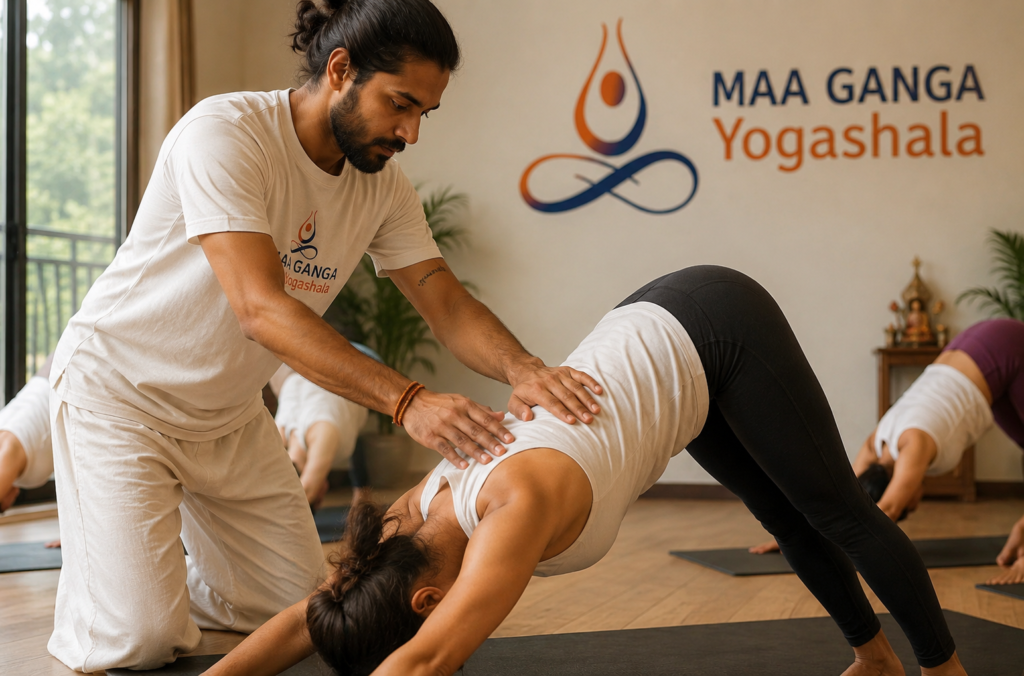
Physical cueing, or hands-on adjustments, is an advanced skill that requires deep anatomical knowledge and clear consent. You will practice how to use a firm, supportive touch to guide a student into safer alignment.
Every touch must have a clear intention. For a realistic look at how these skills are practiced day-to-day during a course, check out the 100 Hour YTT Daily Schedule: 7 Best Proven Realities.
Why Rishikesh Elevates Your Training Experience
Studying teaching methodology in the West often focuses heavily on fitness, treating yoga primarily as a physical workout. When you study in Rishikesh, the birthplace of yoga, the methodology is deeply intertwined with ancient philosophy and spiritual integrity.
You learn to teach not just the physical postures (asanas), but the breath (pranayama) and the mind (dhyana). The curriculum standards are rooted in tradition but structured to meet modern global requirements set by organizations like Yoga Alliance.
The environment of Tapovan itself acts as a master teacher. Being surrounded by the Himalayas and the sacred Ganges River strips away your ego, allowing you to absorb information with profound humility.
You are learning from Indian masters who have lived this lifestyle for decades. Their approach to teaching is steeped in devotion rather than performance.
This environment accelerates your growth immensely. You are completely immersed in the lifestyle, eating sattvic food, waking up before dawn, and living alongside a global community of dedicated seekers.
If you want to understand the profound impact of becoming a teacher in this sacred land, explore these Certified Yoga Teacher India: 7 Ultimate Steps to Success.
Preparing Your Mindset for the Classroom
Stepping into a teacher training program requires a distinct shift in mindset. You are transitioning from a consumer of yoga to a creator of experiences.
Imposter syndrome is incredibly common during the methodology module. You will inevitably face moments where you stumble over your words, forget your left from your right, or completely blank on your sequence.
This is exactly why you need a structured methodology. Your framework catches you when your memory fails. If you know the anatomical logic behind your sequence, you can easily pivot and adapt on the fly.
You must learn to embrace failure as the fastest route to competence. The practice teaching labs are designed to be safe spaces where you can make mistakes, receive constructive feedback, and immediately try again.
A great teacher is simply a student who never stopped learning. Even after certification, you will continuously refine your cues, study new anatomy, and adapt your sequencing based on the bodies in your classroom.
Scientific literature, such as studies documented on resources like PubMed, increasingly validates the physical and psychological benefits of precisely structured yoga, proving that sound methodology yields measurable health results.
Stepping Into Your Power at Maa Ganga Yogashala
If you are seeking an authentic environment to develop these critical teaching skills, Maa Ganga Yogashala provides the ideal sanctuary. Our curriculum places a heavy emphasis on practical teaching labs, ensuring you graduate with real-world confidence.
We keep our batches small so that every student receives individualized feedback on their voice, alignment, and sequencing structure. Whether you are looking to teach globally or simply deepen your own understanding, our experienced masters guide you every step of the way.
To explore our foundation, visit the main Maa Ganga Yogashala page and see how our lineage can support your journey.
FAQs
What is the most difficult part of teaching methodology?
For most students, finding their authentic voice and speaking clearly while demonstrating poses is the biggest hurdle. Overcoming the fear of public speaking and learning to hold space for others requires practice, vulnerability, and a willingness to make mistakes in front of your peers.
Will I have to teach a full class to graduate?
Yes, a recognized certification requires you to pass a practicum. You will typically be required to design, sequence, and teach a full 60 to 90-minute class to your fellow students and lead instructors, demonstrating your grasp of cueing, safety, and pacing.
How does methodology differ from anatomy?
Anatomy focuses on the internal structure of the body, muscles, joints, and biomechanics. Methodology is the practical application of that knowledge; it is how you verbally and physically communicate that anatomical safety to a room full of moving students.
Do I need to be advanced in my physical practice to teach well?
Absolutely not. Some of the most highly effective teachers cannot perform advanced acrobatic postures. Great teaching relies on your ability to observe, communicate, and safely guide others, not on your personal ability to perform a perfect handstand.
Can I learn teaching techniques during a short retreat?
While a short retreat is wonderful for your personal well-being and stress relief, it does not provide the rigorous educational framework needed to teach. However, a 3 Days Yoga Retreat in Rishikesh is an excellent way to observe professional teachers in action before committing to a full training course.
Conclusion
Mastering the yoga teaching methodology TTC module is what truly transforms you from a practitioner into a professional. It equips you with the structural science, the vocal confidence, and the psychological awareness required to safely guide others through their own transformations.
When you understand the profound mechanics of sequencing and the subtle art of holding space, teaching stops being intimidating and becomes a genuine joy. You are no longer just calling out physical shapes; you are leading a moving meditation that has the power to heal and inspire.
Ready to begin your journey and claim your voice? Take the decisive step today and join our 200-Hour Yoga Teacher Training in Rishikesh. Your future students are waiting for the unique light only you can share.