100 Hour YTT Daily Schedule: What Really Happens Every Day?
Understanding the 100 hour YTT daily schedule is the first step to conquering the fear of the unknown before booking your course. You might be wondering if you have the physical stamina, mental focus, or sheer willpower to survive an intensive yoga program in India.
The truth is, stepping into a yoga ashram requires dedication, but the routine is designed specifically to build your strength progressively. You are not thrown into advanced acrobatics on day one.
Instead, the program systematically breaks down your old habits and replaces them with mindful, healthy routines. Every single hour is curated to help you absorb centuries of yogic wisdom.
By the time you finish your training, waking up before the sun will feel natural, and your body will crave the discipline. Let us walk through exactly what your days will look like from dawn until dusk.
The Morning 100 Hour YTT Daily Schedule: Waking Up to Wellness
The most challenging adjustment for many international students is the early morning wake-up call. Your day typically begins at 5:30 AM, long before the town of Rishikesh wakes up.
This specific timing is known as Brahma Muhurta, a highly auspicious period in yogic tradition. The air is fresh, the mind is empty of daily worries, and the environment is perfectly still.
You will start your morning with warm water, lemon, or traditional herbal tea. This gently wakes up your digestive system without the harsh jolt of caffeine, preparing your body for the physical practices ahead.
Shatkarma and Cleansing Practices
By 6:00 AM, you will engage in Shatkarma, the traditional yogic purification techniques. These are not just symbolic rituals; they are highly practical methods for cleaning the body.
You will learn practices like Jal Neti, which involves using warm, salted water to clear your nasal passages. This immediately improves your breathing capacity for the upcoming physical exertion.
Clearing physical blockages allows your vital energy, or prana, to flow freely. It is a vital foundation that makes every subsequent breathing and movement practice significantly more effective.
Pranayama and Breathwork
Following the cleansing, the morning moves into Pranayama at 6:30 AM. Here, you transition from cleaning the physical body to expanding the energetic body.
You will sit quietly, focusing entirely on the rhythm, depth, and control of your breath. If you want to understand the types of pranayama and their benefits, this is where the theory comes alive.
The science behind these breathing techniques is well-documented. According to various clinical research studies, controlled breathing actively lowers cortisol levels and regulates the nervous system.
By 7:30 AM, you are fully awake, oxygenated, and mentally sharp. You have achieved more before breakfast than most people do all morning, setting a powerful tone for the hours ahead.
Mid-Day 100 Hour YTT Daily Schedule: Movement and Mechanics
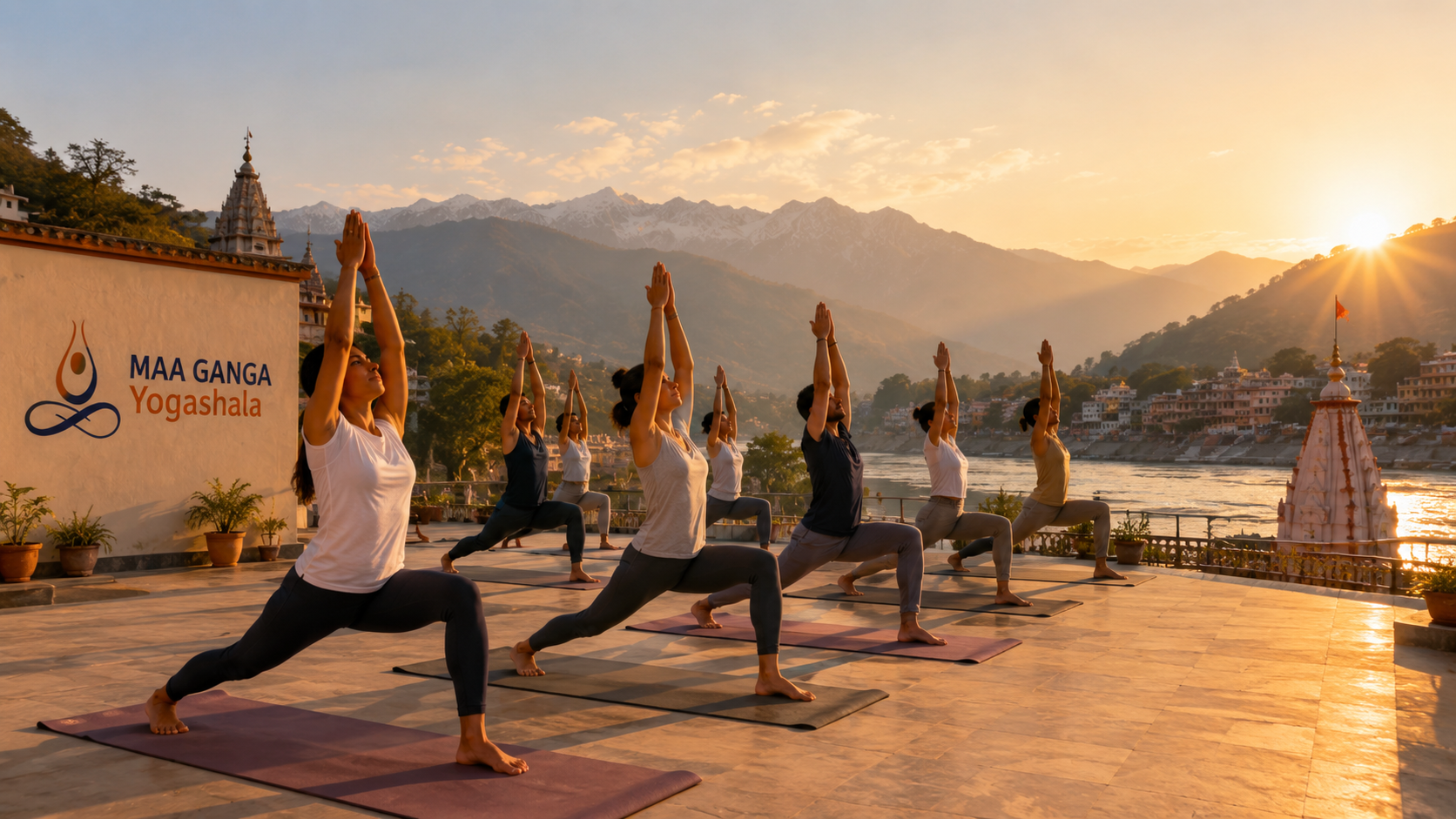
As the morning progresses, you move into the most physically demanding portion of your day. At 8:00 AM, the primary asana practice begins, usually lasting for about ninety minutes.
This is where you unroll your mat and truly test your physical limits. The style often focuses on foundational alignments, giving you a deep understanding of how your body interacts with gravity.
You will sweat, you will stretch, and you will likely discover muscles you never knew existed. The instructors will guide you through complex postures while adjusting your form to prevent injury.
Asana Practice: Hatha and Vinyasa
Depending on your specific syllabus, this morning session usually emphasizes strong, holding postures or fluid, breath-linked movements. Understanding the differences between Hatha and Ashtanga becomes experiential rather than just theoretical.
The focus is not on perfecting a pose for social media, but on understanding the biomechanics required to achieve it safely. You learn how to modify postures for different body types and limitations.
By 9:30 AM, the intense physical session concludes, and a well-deserved, nutritious, Sattvic breakfast is served. This vegetarian meal is designed to refuel your body without making you feel sluggish or heavy.
Yoga Anatomy and Alignment
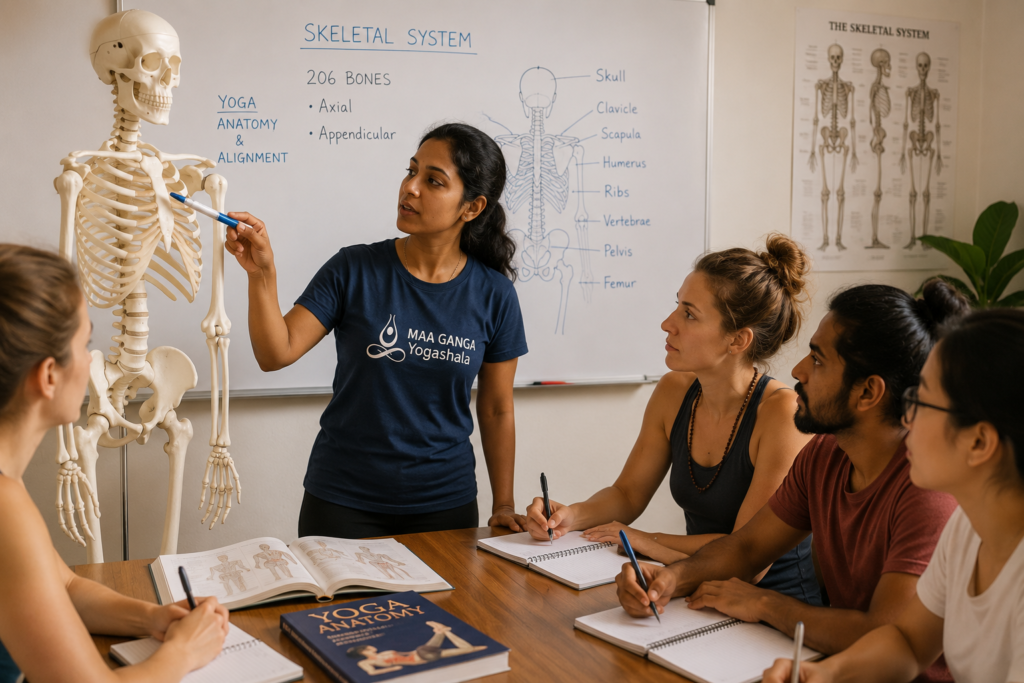
After breakfast, around 11:00 AM, the schedule shifts from physical exertion to intellectual absorption. You will enter the classroom for Yoga Anatomy.
This is a crucial pillar of your education. You cannot safely teach yoga without understanding skeletal structures, muscular engagement, and the nervous system’s response to stretching.
You will study how the spine moves, which joints bear weight in specific poses, and how to protect the knees and lower back. This knowledge immediately transforms how you approach your own afternoon practice.
Afternoon Sessions: Philosophy and Methodology
Lunch is served at 1:00 PM, followed by a brief period of rest. This hour of downtime is essential; many students use it to journal, nap, or simply sit by the Ganges.
By 3:00 PM, you are back in the learning environment, diving deep into the spiritual and mental framework of yoga. The physical postures are merely the tip of the iceberg in yogic tradition.
These afternoon classes challenge your worldview, asking you to look inward. You will discuss ancient texts and discover how their teachings apply directly to your modern, everyday life.
Patanjali Yoga Sutras and Philosophy
Yoga philosophy classes typically center around the Patanjali Yoga Sutras, the foundational text of classical yoga. You will explore the Eight Limbs of Yoga, moving far beyond mere physical exercise.
Discussions often touch upon ethics, self-discipline, and the nature of human suffering. It is a profound psychological exploration that challenges you to identify and release deep-seated mental patterns.
Understanding these concepts is what separates a certified instructor from a casual fitness teacher. It provides the spiritual vocabulary needed to guide future students through emotional releases on the mat.
Teaching Methodology Workshops
At 4:00 PM, the focus turns to the practical art of teaching. Knowing how to do a pose is entirely different from knowing how to instruct a room full of strangers safely.
You will learn how to use your voice, how to sequence a class logically, and how to offer hands-on adjustments. As outlined by the Yoga Alliance, strict competency in methodology is required for global certification.
You will practice teaching small groups of your peers. It feels nerve-wracking at first, but this daily exposure rapidly builds the confidence necessary to lead a full classroom.
Evening Routine: Winding Down the Day
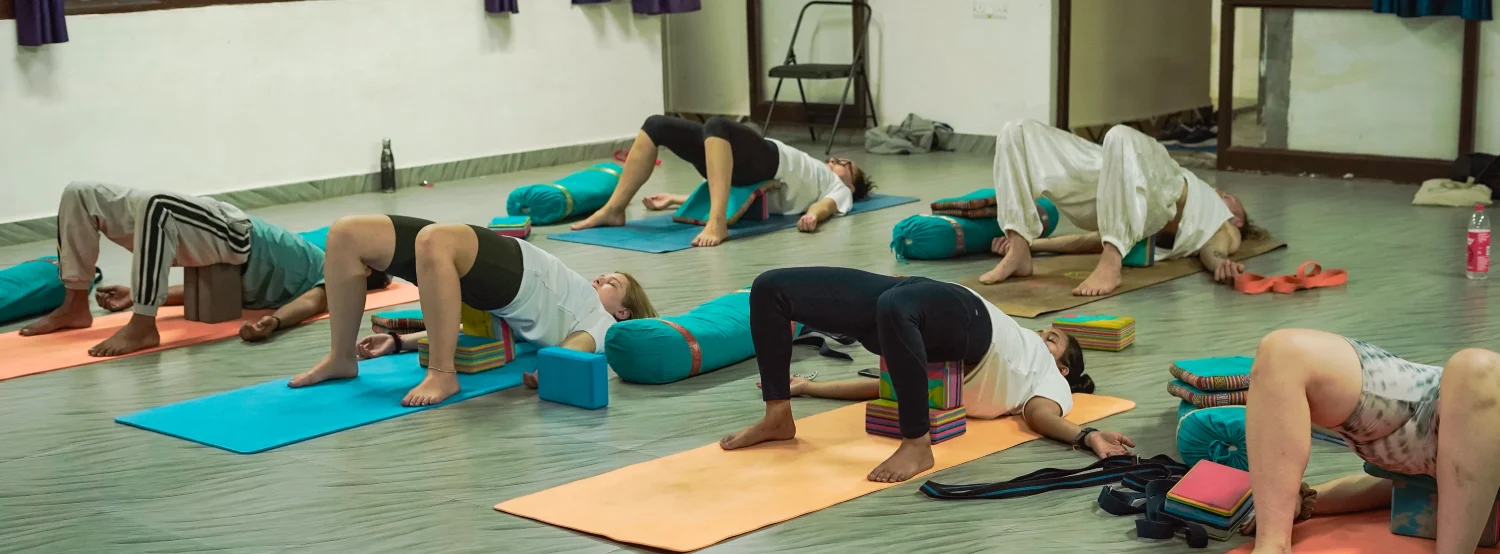
As the sun begins to lower, the energy of the ashram shifts from intense output to deep restoration. At 5:00 PM, you return to the yoga hall for your second physical practice of the day.
Unlike the rigorous morning session, this class usually focuses on restorative poses, Yin yoga, or deep stretching. It is designed to release the lactic acid built up from the morning and calm the nervous system.
You hold poses for longer durations, using props to support the body. This practice teaches you the vital importance of surrender and relaxation in a balanced routine.
Meditation and Mental Clarity
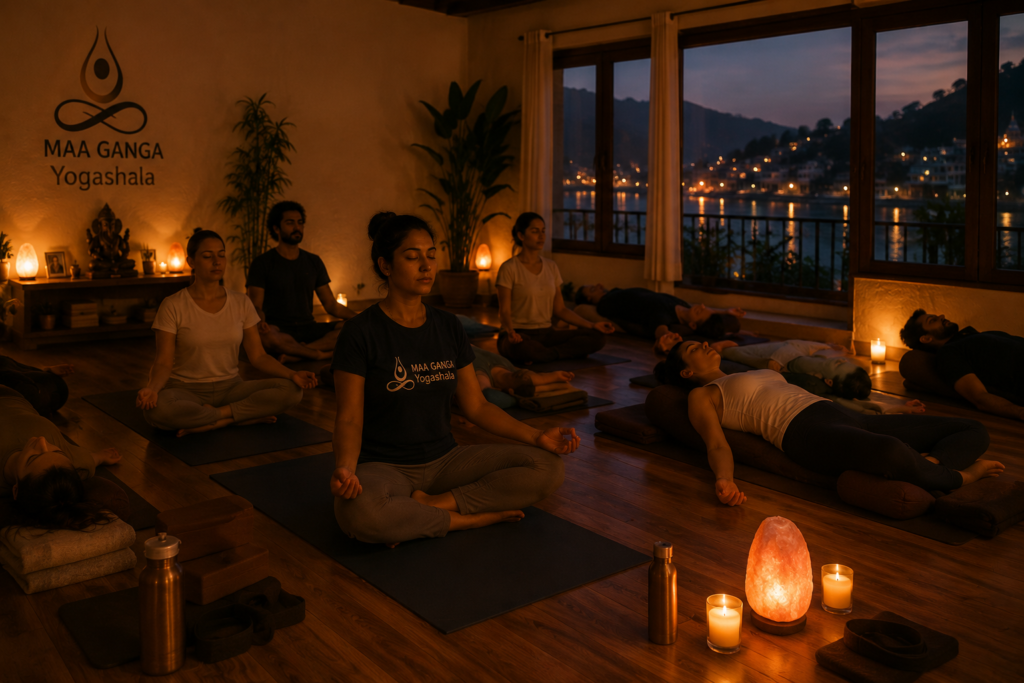
Following the evening physical practice, you enter the meditation segment around 6:30 PM. This is the culmination of your entire day’s effort.
Because you have cleansed your body, exhausted your muscles, and studied philosophy, your mind is finally quiet enough to sit still. You will explore various techniques, from breath awareness to guided visualizations.
Some evenings might feature specialized therapies, like experiencing profound Chakra Balancing Therapy to align your energy centers. These sessions help clear emotional blockages that physical stretching alone cannot reach.
Rest, Reflection, and Dinner
Dinner is served at 7:30 PM, offering another warm, easily digestible Sattvic meal. The dining hall becomes a place of quiet camaraderie as students share their breakthroughs and struggles from the day.
After dinner, you might occasionally participate in special events, such as attending Sound Healing Sessions using Tibetan singing bowls. The vibrations help settle your brainwaves into a state of deep sleep preparation.
By 9:00 PM, the ashram observes silence. You return to your room, physically tired but mentally clear, ready to sleep deeply and repeat the transformative cycle tomorrow.
Why Rishikesh? The Spiritual Power of the Himalayas
You could study yoga anywhere in the world, but completing this intensive routine in Rishikesh offers a unique energetic advantage. This city is globally recognized as the birthplace of yoga.
Practicing on the banks of the sacred Ganges River, surrounded by the foothills of the Himalayas, provides a backdrop of profound spiritual gravity. You are walking the same paths that sages have walked for millennia.
If you are planning your yoga journey for 2026, choosing this location instantly connects you to a global community. You will meet seekers from every corner of the Earth, all sharing your dedication.
The environment itself acts as a teacher, constantly reminding you of the ancient roots of your practice. It is easy to see why practicing here changes everything about how you view wellness.
A Supportive Space for Your Journey
If you’re considering taking this leap, we provide an environment designed to nurture your growth while challenging your limits. The daily structure at Maa Ganga Yogashala offers the perfect balance of discipline and compassion.
Our experienced teachers walk alongside you every step of the way. You can explore our foundational 100-Hour Yoga Teacher Training program to see how we specifically structure our curriculum to support your success.
Frequently Asked Questions
Is a 100-hour YTT enough to teach professionally?
A 100-hour course is technically the first half of a standard 200-hour certification. While it deeply enriches your personal practice and gives you teaching foundations, you will generally need to complete the full 200 hours to register as an international teacher. Many students take the 100-hour course to test the waters.
If you are unsure which path to choose, comparing 100-hour and 200-hour programs can help clarify your long-term goals.
How physically demanding is the daily routine?
The routine is undeniably rigorous, requiring up to three hours of physical practice daily. However, it is designed to be progressive. Instructors offer modifications for all body types, ensuring that you build strength safely without risking injury or burnout.
Do I get free time during the course?
Yes. While the schedule is packed from dawn until dusk, you typically receive one full day off per week. Sundays are usually reserved for rest, local excursions, visiting temples, or simply recovering physically and mentally.
Conclusion: Your Next Step Towards Transformation
Committing to a 100 hour YTT daily schedule is not just about learning how to touch your toes; it is about learning how to master your mind. The discipline you cultivate during these intensive weeks will spill over into every other aspect of your life.
You will leave with a stronger body, a clearer mind, and a profound understanding of ancient philosophy. It is a challenging journey, but the rewards are genuinely life-altering.
Ready to begin? Whether you want to dip your toes in with a 5 Days Yoga Retreat or dive fully into a certification course, take the first step today and join us on the mat.