
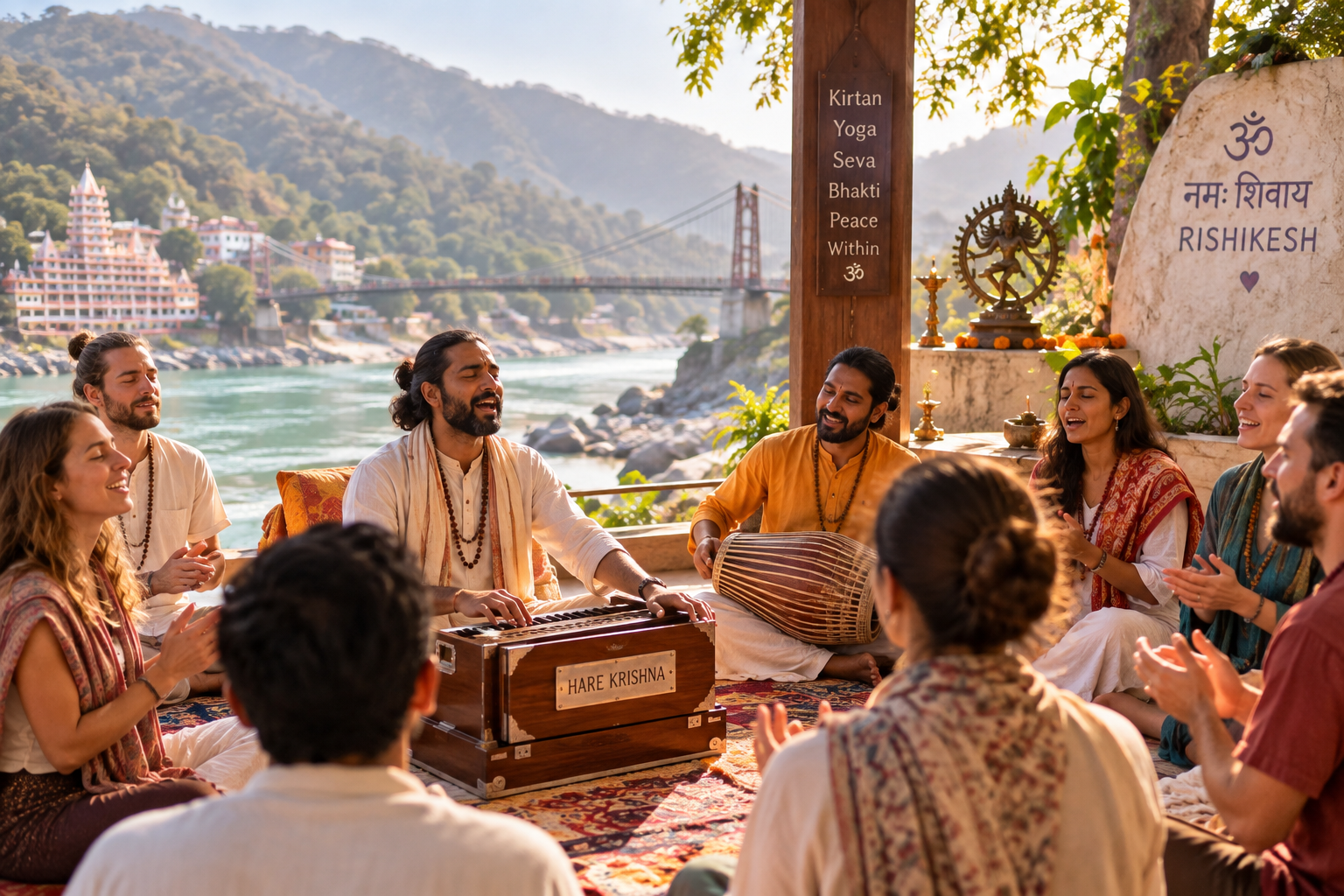
Kirtan bhajan devotional music healing: How Devotional Music Heals from Within
What if a few minutes of singing could change the way you experience your own mind? Kirtan bhajan devotional music healing is not simply about listening to pleasant sounds; it combines rhythm, repetition, breath, attention, and devotion in a practice that can help you slow down and reconnect with yourself.
You do not need a trained voice, a perfect understanding of Sanskrit, or a particular religious background to experience the reflective side of devotional music. You can sit quietly, listen, hum a mantra, or join a group. The point is not performance. It is presence.
In this guide, you will learn how kirtan and bhajan differ, why repetitive chanting can feel calming, what modern research says about chanting and music, how to approach a devotional music session respectfully, and why Rishikesh offers a distinctive setting for this practice. You will also discover simple ways to bring the experience into your daily routine without turning it into another task on your checklist.
Kirtan Bhajan Devotional Music Healing: What Makes It Different?
Kirtan and bhajan are closely related forms of devotional music, but they are not identical. A bhajan is usually a devotional song, often with a more defined lyrical structure and melody. Kirtan commonly involves call-and-response chanting, where one person or group leads a phrase and others repeat it. Both can use sacred names, mantras, stories, or expressions of devotion.
That distinction matters because the experience is not only auditory. When you repeat a phrase, your attention has something simple to return to. Instead of following every thought, you keep returning to the sound, rhythm, breath, and meaning of the words.
This is one reason devotional singing can feel different from ordinary entertainment. You are participating rather than simply consuming. The repeated pattern can make it easier to settle into a steady rhythm, while the shared voice of a group can create a feeling of belonging.
The spiritual meaning also matters. If a particular mantra or devotional phrase carries personal significance for you, singing it may bring up gratitude, humility, faith, remembrance, or emotional release. You do not have to force any of those responses. A quiet session in which you simply feel more settled is enough.
The Indian tradition of mantra practice gives sound a deliberate role in concentration. The Ministry of Ayush‘s yoga guidance describes mantra repetition as a way to engage the mind with sound, duration, and repetition during meditation. Ministry of Ayush provides broader information on yoga and traditional wellness practices.
You can therefore approach kirtan as both a devotional practice and a concentration practice. You do not need to decide that it is “magic” for it to be meaningful.
How Devotional Music Can Support Your Mind and Emotions
The phrase “healing” can be misleading if you interpret it as a promise to cure illness. Kirtan and bhajan should not replace medical or psychological care. A more useful way to understand their potential is as practices that may support relaxation, emotional regulation, attention, and social connection.
Repetition is a major part of the experience. When your mind is caught in rumination, a simple repeated phrase can provide an anchor. Your attention may wander, but you have an immediate point to return to. That is similar to what happens in many forms of meditation.
Research on mantra-based meditation has found small-to-moderate improvements in measures of anxiety, depression, stress, and mental-health-related quality of life, although the researchers also caution that the evidence has limitations, including risk of bias and relatively limited long-term data. PubMed is a useful starting point for exploring the underlying research.
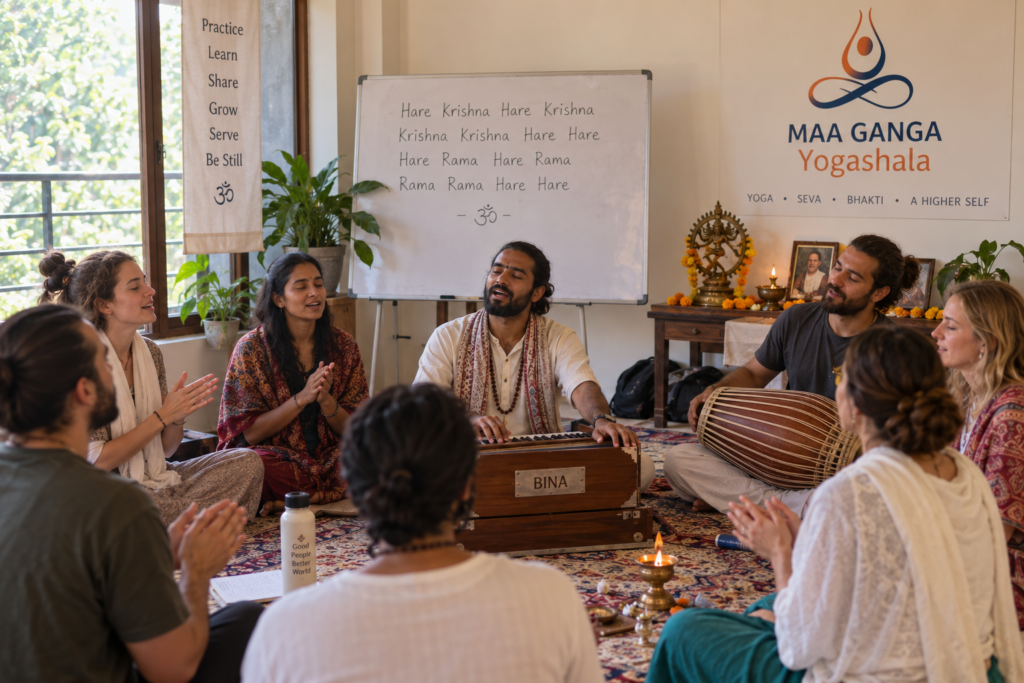
Group chanting may add another layer. Singing with others requires some degree of synchronization: you listen, breathe, vocalize, pause, and begin again with the group. A 2024 study of group chanting reported reductions in cortisol and self-reported anxiety, with vocal chanting producing a stronger reduction in self-reported anxiety than silent repetition in that small study. That is promising, but it is not proof that every person will experience the same effect.
You may also notice emotional benefits that are difficult to measure. A devotional song can give you a safe structure for feelings such as grief, gratitude, longing, or joy. Instead of analyzing an emotion repeatedly, you can allow it to move through the experience of sound.
If you are new to chanting, start with ten minutes. Sit comfortably, relax your jaw, breathe naturally, and repeat one simple phrase. If singing feels uncomfortable, listen first. There is no requirement to produce a beautiful sound.
Why Repetition Can Feel So Grounding
Think of repetition as reducing the number of decisions your brain has to make. You do not need to choose a new thought every few seconds. The phrase returns, the breath follows, and your attention has a familiar pathway.
That simplicity can be especially valuable after a day filled with notifications, conversations, work, travel, and constant choices. You are not trying to “empty your mind.” You are giving it fewer things to chase.
Kirtan, Bhajan, and the Difference Between Listening and Participating
You can experience devotional music in several ways, and none is automatically superior. Listening may be the easiest starting point if you feel shy about singing. Participation can feel more immersive because your breath and voice become part of the rhythm.
If you listen, notice three things: the quality of the voice, the repetition of the words, and what happens inside you as the music continues. Do you become calmer? More emotional? More focused? Or simply more aware?
If you participate, do not judge your voice. In a kirtan setting, the group sound is more important than individual performance. Follow the leader, listen for the next phrase, and let the rhythm carry some of the effort.
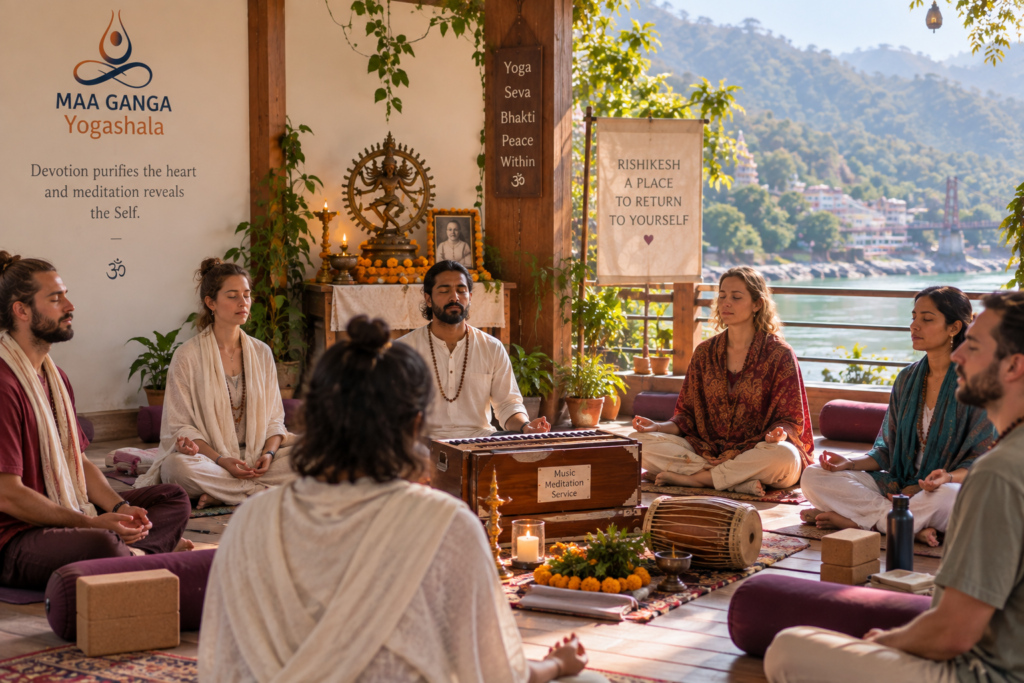
You can also combine devotional music with a yoga practice. A few minutes of chanting before meditation may help create a transition from activity to stillness. After asana practice, a quiet bhajan can similarly give you time to notice the effects of movement before returning to ordinary tasks.
This is where sound healing and devotional music can overlap, but they should not be treated as identical practices. Sound healing may use instruments, frequencies, sustained tones, or guided listening, while kirtan and bhajan place greater emphasis on devotional words, melody, repetition, and shared participation.
If you want to explore how sound-based practices are approached in a structured wellness setting, you can learn more about sound healing sessions in Rishikesh. You can also explore what current evidence says about sound and wellbeing in research on sound healing and chronic pain, while keeping medical claims in perspective.
You can also experiment with a simple personal ritual. If you are preparing for a guided sound session, these sound healing session preparation tips can help you arrive with realistic expectations. Then use this simple personal ritual: three minutes of slow breathing, seven to ten minutes of chanting or listening, and two minutes of silence. The silence matters. It gives you a chance to notice the after-effect rather than immediately filling the space with another activity.
What You May Notice During a Devotional Music Practice
Your response to kirtan may not look like anyone else’s. One person may feel peaceful; another may become tearful; someone else may feel energized or deeply focused. None of these reactions automatically means the practice is working or failing.
A useful approach is to observe rather than judge. During a session, you may notice:
- Your breathing becoming slower or more regular.
- Less mental urgency around unfinished tasks.
- Greater awareness of your body and voice.
- A temporary reduction in repetitive thoughts.
- A feeling of connection with people singing around you.
- Emotional memories or feelings becoming more noticeable.
- A sense of gratitude, devotion, or quietness after the music ends.
These experiences are subjective, but that does not make them meaningless. At the same time, you should avoid turning every emotional response into a medical claim. If you have persistent anxiety, depression, trauma symptoms, sleep problems, or physical illness, use appropriate professional care alongside any spiritual or wellness practice.
You can make the experience more useful by keeping the session simple. Put your phone away. Choose a comfortable place. Keep the volume moderate. Give yourself enough time to settle before deciding how you feel.
You do not need incense, elaborate rituals, expensive instruments, or a dramatic setting. Those things can be meaningful, but the core practice is attention, sound, repetition, and intention.
A Simple 15-Minute Practice
Try this when you have a quiet window in your day:
- Sit comfortably and take five slow breaths.
- Choose one devotional song or mantra that you understand or feel comfortable repeating.
- Listen for two minutes without singing.
- Join softly for seven minutes.
- Sit in silence for three minutes.
- Before standing, notice one physical sensation, one emotion, and one thought.
Repeat the practice several times across a week before deciding whether it helps you. One emotional session can be memorable, but consistency gives you a better basis for understanding your own response.
Why Rishikesh Makes Devotional Music Feel Especially Meaningful
Rishikesh is not just a backdrop for yoga photography. For many visitors, its temples, ashrams, riverfront spaces, satsangs, meditation halls, and daily devotional rhythms make spiritual practices feel less separate from ordinary life.
When you sit near the Ganga and hear bells, voices, flowing water, and devotional singing in the same environment, your attention naturally has more sensory material to work with. You may notice that the practice feels less like an isolated wellness appointment and more like part of a wider culture of spiritual practice.
That does not mean Rishikesh automatically makes every session profound. A crowded room, unfamiliar ritual, or expectation of having a “spiritual breakthrough” can actually distract you. Your best experience may come from lowering the pressure.
If you are visiting for a yoga retreat, consider leaving space in your schedule for devotional music rather than trying to fit it between ten tourist stops. You can explore the city, but allow at least one evening to be slow.
For a shorter introduction to yoga and reflection in Rishikesh, a 3-day yoga retreat in Rishikesh can be a practical option. If you want more time for practice, rest, and immersion, a 5-day yoga retreat in Rishikesh gives you a longer window to establish a rhythm.
Rishikesh can also help you understand something important: spirituality does not always feel dramatic. Sometimes it is simply sitting, listening, breathing, and allowing a familiar song to slow you down.
A Gentle Way to Explore Devotional Music with Maa Ganga Yogashala
If you want to explore yoga, meditation, sound, and devotional practices in Rishikesh in a structured setting, our 200-hour yoga teacher training in Rishikesh offers a deeper path into consistent practice.
The important question is not whether devotional music will produce a dramatic result for you. Ask whether it helps you become more attentive, less reactive, more connected, or more willing to sit with your own experience.
If certification is part of your goal, you can also review this Yoga Alliance RYT 200 certification guide before choosing a training format.
FAQs About Kirtan, Bhajan, and Devotional Music Healing
Is kirtan the same as bhajan?
Not exactly. Both are forms of devotional music, but they can differ in structure and style. Bhajan is generally a devotional song, while kirtan often uses call-and-response chanting. In real practice, the terms can overlap, and different traditions use them differently.
Do you need to be religious to participate in kirtan?
No. You can participate respectfully without adopting beliefs that are not your own. You can approach the session as meditation, music, cultural learning, or devotional practice. If you are unsure about a ritual, observe first and follow the guidance of the host.
Can chanting really reduce stress?
Research suggests that chanting and mantra-based meditation may support reductions in stress and anxiety for some people. Studies have reported encouraging results, but they vary in design and quality, so it is better to describe chanting as a complementary practice rather than a guaranteed treatment.
What should you do if you feel emotional during bhajan?
Let the feeling be present without immediately labeling it as a breakthrough or problem. Slow your breathing, stay grounded, and give yourself permission to pause. If the emotion becomes overwhelming or connects to ongoing mental-health difficulties, consider speaking with a qualified professional.
How can you start kirtan practice at home?
Choose one simple song or mantra, set aside ten to fifteen minutes, and remove distractions. Listen first, then repeat softly if you feel comfortable. Finish with a few minutes of silence. You can gradually extend the practice, but consistency is more useful than forcing long sessions.
Conclusion: Let Sound Become a Doorway to Stillness
Kirtan bhajan devotional music healing is best understood as a practice of sound, attention, repetition, emotion, and devotion rather than a quick cure. When you sing or listen with intention, you give your mind a simple anchor and your emotions room to be noticed.
Rishikesh offers a particularly rich environment for exploring that experience because yoga, meditation, devotional music, and the presence of the Ganga are woven into everyday spiritual life. Still, the real value comes from how you practice, not from the location alone.
If you are ready to experience this dimension of yoga in a supportive Rishikesh setting, explore our sound healing sessions in Rishikesh and take a practical next step into the relationship between sound, attention, and inner stillness.