
Yin Yoga vs Vinyasa Yoga Comparison: Complete Beginner Guide
If you’re searching for a yin yoga vs vinyasa yoga comparison, you’re probably wondering why two yoga classes can feel completely different while using many of the same poses. One may leave you moving continuously with your breath, while the other asks you to stay in a posture for several minutes.
The difference is not simply “slow versus fast.” Yin and Vinyasa have different approaches to movement, muscular engagement, duration, breath, and the way you experience stillness.
If you’re new to yoga, choosing between them can feel confusing. You may want flexibility but also strength, relaxation but also energy, or perhaps you’re considering yoga teacher training and want to understand different styles before committing.
This guide breaks down the practical differences so you can choose a practice that matches your current goals, experience, and lifestyle.

Yin Yoga vs Vinyasa Yoga Comparison: What Is the Difference?
The simplest way to understand the difference is to look at what each practice asks you to do.
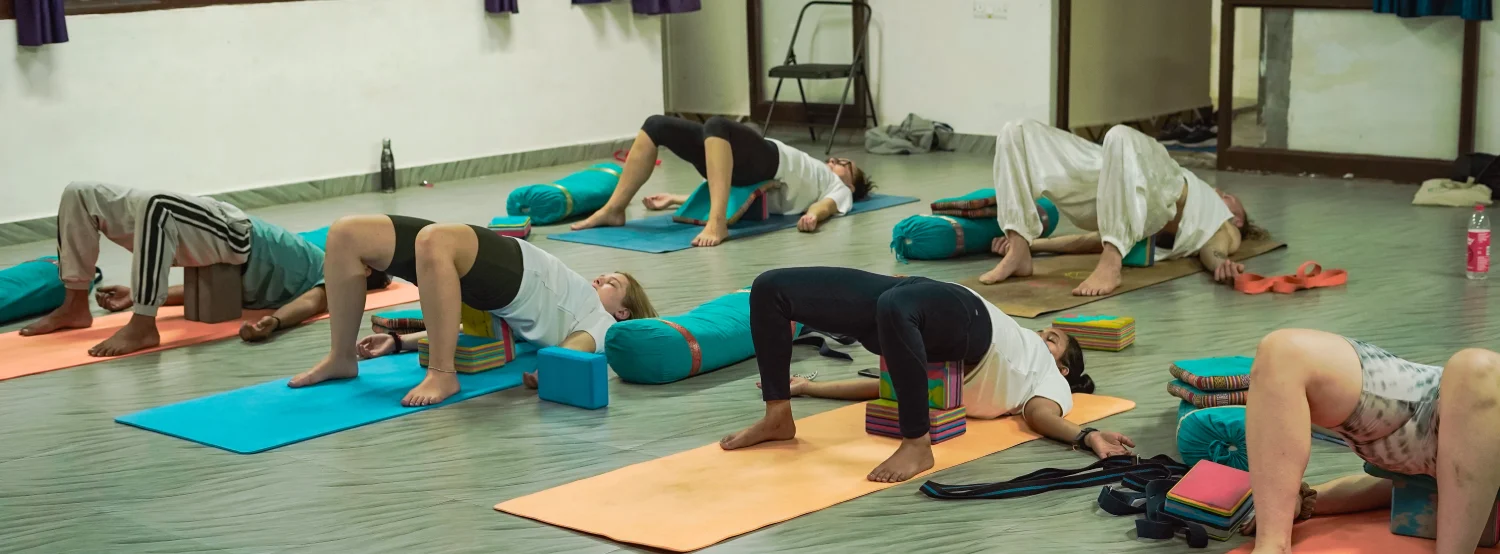
Yin Yoga generally uses longer-held, mostly passive poses. You usually work with relaxed muscles and allow gravity and time to create a deeper experience of the posture. The practice tends to be quiet and deliberately slow.
Vinyasa Yoga is more dynamic. You coordinate movement with breathing and often transition from one posture to another in a continuous sequence. A class may include standing poses, balancing postures, Sun Salutations, backbends, twists, and transitions.
Neither approach is automatically “better.” They train different qualities.
| Aspect | Yin Yoga | Vinyasa Yoga |
|---|---|---|
| Pace | Slow | Moderate to fast |
| Typical holds | Several minutes | Often shorter |
| Movement | Limited between poses | Continuous transitions |
| Main experience | Stillness and sustained sensation | Movement and breath |
| Physical demand | Can be subtle but intense | Usually more active |
| Flexibility focus | Strong emphasis | Developed alongside movement |
| Strength demand | Lower overall | Often higher |
| Energy | Quiet and inward | Active and flowing |
| Beginner suitability | Accessible with guidance | Accessible with modifications |
One important point: “slow” does not mean “easy.” A Yin pose held for several minutes can create a strong sensation, especially when you’re unfamiliar with staying still.
Likewise, Vinyasa is not simply exercise. Breath awareness, concentration, sequencing, and mindful movement remain important parts of the practice.
For a broader perspective on yoga and its development, you can also explore Britannica.
Yin Yoga vs Vinyasa Yoga Comparison for Flexibility, Strength and Mobility
When you compare Yin Yoga and Vinyasa, your physical goals matter more than the popularity of either style.
Yin Yoga and flexibility
Yin Yoga gives you more time to remain in a position. Instead of immediately moving into the next pose, you stay, breathe, observe sensations, and make small adjustments when appropriate.
This can make Yin particularly appealing if your practice goal includes exploring flexibility and learning to tolerate stillness.
However, you should not interpret intense sensation as proof that you’re becoming more flexible. A stronger sensation does not automatically mean better progress.
Props can be useful. A bolster, block, blanket, or cushion can reduce unnecessary strain and help you stay in a position without forcing your body.
Vinyasa Yoga and strength
Vinyasa usually asks you to support your body through repeated transitions and weight-bearing postures.
Depending on the sequence, you may repeatedly work through:
- Plank variations
- Chaturanga-style transitions
- Downward-Facing Dog
- Lunges
- Warrior poses
- Balancing postures
- Core-focused movements
That can make Vinyasa feel more physically demanding than a typical Yin session.
You may also develop better movement coordination because you’re continuously connecting breath, posture, and transition.
Mobility is not the same as flexibility
This distinction matters.
Flexibility describes how much movement is available at a joint or through a particular tissue. Mobility also involves your ability to actively control that available range.
A practice combining controlled movement, strength, awareness, and appropriate stretching may therefore serve a different purpose from simply spending longer in passive positions.
Research on yoga is also broader than any single style. Recent systematic reviews have found potential benefits across physical and psychological outcomes, but the evidence varies by population, intervention, and study design. PubMed
So rather than asking which style provides “the most benefits,” ask which qualities you actually want to develop.
Yin Yoga vs Vinyasa Yoga: Which One Is Better for Beginners?
There is no universal beginner choice because “beginner” can mean different things.
You might be new to yoga but already physically active. In that case, a beginner-friendly Vinyasa class may feel manageable.
You might also be flexible but uncomfortable with sustained physical effort. Yin could introduce you to a completely different challenge.
Or perhaps you spend much of your day sitting and want a practice that gives you both movement and recovery. A combination may make more sense than choosing only one.
Choose Yin Yoga if you want:
- A slower practice
- More time to observe your body
- Longer-held postures
- A quieter class environment
- A stronger emphasis on stillness
- An opportunity to explore flexibility gradually
Choose Vinyasa if you want:
- Continuous movement
- Breath-led sequences
- More active physical work
- Variety from class to class
- Opportunities to develop strength and coordination
- A practice that feels energetic
If you’re completely new, don’t judge either style from one difficult class. The teacher, sequencing, pace, room temperature, class duration, and your own condition can dramatically change your experience.
A sensible approach is to try both at an introductory level and notice how your body feels during and after each session.
Yin Yoga vs Vinyasa Yoga for Stress, Energy and Daily Practice
Your choice can also depend on what you need from your practice at a particular time.
Imagine finishing a long day feeling mentally overloaded. A quiet Yin session may appeal to you because it gives you fewer transitions and more opportunities to slow down.
Now imagine waking up feeling sluggish before a busy day. A dynamic Vinyasa practice may feel more suitable because it gives you continuous movement and active breathing.
This does not mean Yin is always relaxing or Vinyasa is always energizing. Your response depends on the sequence, teacher, duration, intensity, and your own state.
Yoga research has explored stress, anxiety, depression, and emotional wellbeing, with reviews reporting potential benefits while also highlighting differences in study quality and intervention methods. The evidence supports viewing yoga as a complementary wellness practice rather than assuming a particular style will produce the same result for everyone.
The practical lesson is simple: don’t chase a promised outcome. Pay attention to how consistently you can practice and whether the style fits your needs.
You can also combine the two.
For example, you might practice Vinyasa two or three times a week and include a shorter Yin session on a recovery day. That gives you a mixture of active movement and slower, sustained postures.
If your goal is eventually to teach yoga, understanding these distinctions becomes even more useful because different students will respond to different class structures.
How to Choose Between Yin and Vinyasa in Rishikesh
Rishikesh gives you an unusual environment for exploring yoga because you can encounter many approaches within a relatively small area.
But don’t choose a class simply because the word “Rishikesh” appears in the title.
Look at the actual class description.
Ask yourself:
What do I want from this session?
If you want a slower practice after travelling, a Yin-oriented session may suit you.
If you want active movement and physical practice, Vinyasa may be more appropriate.
If you’re staying in Rishikesh for several weeks, you don’t have to choose just one. Your practice can change according to your schedule and energy.
You can also explore related practices such as meditation, pranayama, yoga philosophy, sound-based practices, and different asana approaches.
If you’re planning a longer stay specifically around yoga, researching the structure of a program before arriving can help you avoid choosing based only on attractive photographs or generic promises.
For example, someone considering teacher training can review a structured 100-hour Yoga Teacher Training in Rishikesh to understand how intensive study differs from simply attending individual classes.
And if you’re travelling alone, practical preparation matters too. This guide on solo women yoga retreat safety in India covers considerations that can be useful before planning a retreat.

A Practical Weekly Combination of Yin and Vinyasa
You don’t have to turn your yoga practice into an either-or decision.
A balanced week could look like this:
Monday — Vinyasa
Use a moderate flow to work on movement, coordination, and active strength.
Tuesday — Rest or gentle mobility
Give yourself space to recover.
Wednesday — Vinyasa
Choose a sequence that challenges your balance, core, and transitions without forcing intensity.
Thursday — Yin
Slow down and spend more time with sustained postures.
Friday — Rest
Recovery is part of training.
Saturday — Vinyasa or mixed practice
Choose according to your energy rather than following a rigid plan.
Sunday — Yin, meditation, or complete rest
Use the day to slow down and assess how your body feels.
You don’t need six or seven yoga sessions each week. Consistency matters more than creating an impressive schedule that you cannot maintain.
If you’re training to become a teacher, the principle becomes even more important: learn to distinguish between useful challenge and unnecessary strain.
An intensive 200-hour Yoga Teacher Training in Rishikesh can expose you to a broader foundation of yoga practice, teaching methodology, anatomy, philosophy, and related subjects.
For a deeper look at how an intensive program can feel from a student’s perspective, you can also explore this 200-hour YTT weekly student-life guide.
If You Want to Explore Yoga in Rishikesh
If you’re considering structured yoga study in Rishikesh, we offer programs that can help you explore yoga beyond a single class, including teacher training and shorter retreat formats.
For a shorter introduction, our 5-day Yoga Retreat in Rishikesh can be a practical option when you want dedicated time for practice without committing to a full teacher-training course.
The important thing is to choose based on your actual objective.
If you want personal practice, you don’t necessarily need teacher training.
If you want to teach professionally, attending occasional drop-in classes may not provide the structured education you need.
And if you’re simply curious about different practices, give yourself permission to experiment before deciding what style belongs in your long-term routine.
FAQs About Yin Yoga vs Vinyasa Yoga
Is Yin Yoga easier than Vinyasa Yoga?
Not necessarily. Yin is usually slower and involves less continuous movement, but holding a posture for several minutes can create a challenging physical and mental experience.
Vinyasa tends to be more active and may demand more cardiovascular effort, muscular endurance, coordination, and balance.
Difficulty depends on the class and your own body rather than the name of the style.
Can you do Yin Yoga and Vinyasa Yoga on the same day?
Yes, provided the overall workload is appropriate for you.
Some practitioners prefer active movement first and slower practice later. Others separate the sessions to keep the purpose of each practice clear.
You don’t need to combine them simply because you can. If your body is tired, recovery may be more useful than another session.
Which style is better for flexibility?
Yin places greater emphasis on longer-held, relatively passive postures, so it may be attractive if flexibility work is one of your goals.
However, flexibility varies between individuals, and forcing a deeper position is not a reliable measure of progress.
Your teacher should help you understand appropriate intensity rather than encouraging you to chase maximum range.
Is Vinyasa good for beginners?
Yes, when the class is genuinely beginner-friendly.
A beginner Vinyasa class should give you enough explanation to understand basic transitions and provide modifications when movements are unfamiliar.
If you cannot comfortably follow the pace, choose a slower class rather than treating difficulty as something you must push through.
Should you learn Yin Yoga before Vinyasa?
No fixed order is necessary.
You can begin with either style. If you have never practiced yoga, try introductory classes in both and compare how you respond.
If you’re planning formal yoga education, understanding multiple approaches can be more useful than becoming attached to one style too early.
Conclusion: Which Yoga Style Fits You?
This yin yoga vs vinyasa yoga comparison comes down to what you want your practice to develop.
Yin gives you more time, stillness, and sustained postures. Vinyasa gives you movement, breath-led transitions, and a more active physical experience.
You don’t have to declare one style your permanent choice.
Try both. Notice how your body responds. Pay attention to your energy, recovery, concentration, and consistency. Then build a practice that you can realistically maintain.
If you’re ready to experience yoga in Rishikesh through a structured program, explore our 200-hour Yoga Teacher Training in Rishikesh and take the next step toward a deeper understanding of yoga practice and teaching.