Student Life 200-Hour YTT Week Schedule: A Real Week in Rishikesh
Student life during a 200-hour YTT week schedule can look very different from a normal holiday in Rishikesh. You may wake before sunrise, practise for hours, study anatomy and philosophy, teach your classmates, and still find yourself sitting beside the Ganga at sunset wondering how the day moved so quickly.
That contrast is why a 200-hour yoga teacher training is worth understanding before you enrol. You are learning how practice, teaching skills, discipline, self-study, and community fit together. Your week can feel demanding, but it should still leave room for rest, reflection, and experiencing Rishikesh.
This guide gives you a realistic picture of what one week can feel like. You will see how mornings, classes, meals, study periods, practice teaching, free time, and weekends can fit together, what changes as your confidence grows, and why your daily routine matters as much as the certificate.
Student Life During a 200-Hour YTT Week Schedule: What Your Days Really Look Like
A typical training week is less about one spectacular class and more about repetition with purpose. You build a rhythm. Early practice teaches you to arrive before your mind starts negotiating with the alarm. Classroom sessions then give language and structure to what you have experienced physically.
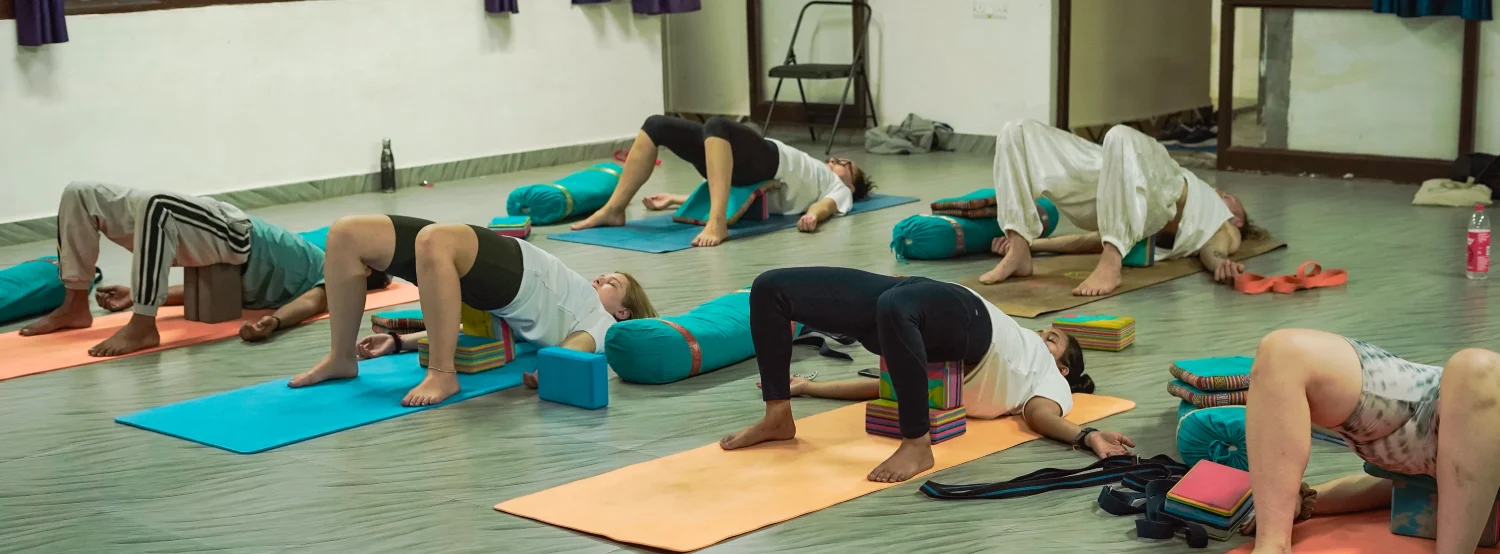
A representative weekday might begin around 5:30 or 6:00 a.m., followed by cleansing, hydration, personal preparation, and a morning yoga or meditation session. Breakfast comes next, giving you time to recover before theory classes.
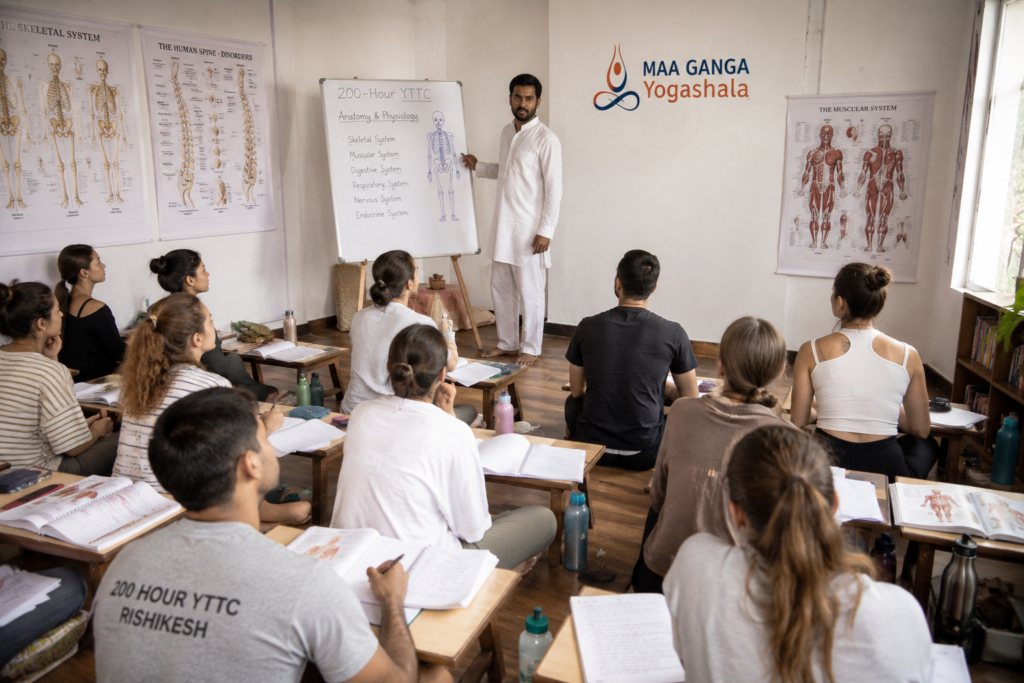
Late morning may be devoted to anatomy, physiology, yoga philosophy, teaching methodology, alignment, sequencing, or related subjects. After lunch, you may return for another lecture, practical session, or teaching practice. Evening meditation, pranayama, chanting, or a reflective activity can close the formal training day.
The exact timetable varies by school, season, faculty, and course design. Yoga Alliance standards also distinguish instructional hours from activities such as homework, reading, personal practice, and public classes, so you should never assume every hour of your day automatically counts toward the 200 training hours. Yoga Alliance states that RYS 200 programs have defined instructional-hour requirements and limits on daily instructional hours. Yoga Alliance RYS 200 hours guidance Yoga Alliance RYS 200 hours guidance
The practical lesson is simple: ask for the actual weekly schedule before booking. A credible school should explain when you study, practise, teach, eat, rest, and complete assessments.
A Realistic 200-Hour YTT Weekly Routine in Rishikesh
Your first week may feel harder than you expect, not necessarily because every class is physically intense, but because your attention is being trained all day. You are learning new terminology, adjusting to an early schedule, meeting people from different countries, and often living away from your usual routines.
Monday to Wednesday: Building the Foundation
Early-week days are usually about establishing rhythm. Morning practice may combine asana, pranayama, meditation, mantra, or other foundational techniques. In class, you begin connecting the practice with principles you can eventually explain to another person.
Anatomy can change the way you see familiar postures. Instead of simply trying to make a pose look correct, you begin asking what the joints are doing, where movement is coming from, and how different bodies may require different approaches.
Philosophy can feel equally different from a normal yoga class. You may discuss concepts that ask you to examine your habits, attention, values, and relationship with practice. That means your notebook becomes important. Write down questions, not just definitions.
By Wednesday, you may notice fatigue. That is not a sign that you are failing. It is a reminder that recovery is part of learning. Eat enough, drink water, sleep consistently, and avoid turning every free evening into another sightseeing mission.
Thursday and Friday: From Student to Teacher
As the week progresses, teaching methodology often becomes more practical. You may practise giving instructions, demonstrating postures, observing alignment, offering modifications, and creating a sequence with a clear intention.
This is where many students discover that knowing a pose and teaching a pose are different skills. When you practise alone, you can move intuitively. When you teach, your words need to be precise enough for another person to understand without copying your body blindly.
You may also begin short teaching assignments with classmates. Expect awkward moments. You might speak too quickly, forget the next cue, over-explain, or become distracted by your own performance. Those mistakes are useful because they reveal what you need to practise.
If you want a deeper look at the teaching side of the course, our guide to teaching methodology in a 200-hour YTT explores why this part of training matters.
Saturday and Sunday: Practice, Recovery, and Rishikesh
Weekend arrangements differ widely. Some programs keep substantial training hours on both days, while others provide a lighter schedule or dedicated time for assignments, self-practice, and rest.
If you have free time, use it deliberately. A quiet walk through Tapovan, a visit to the Ganga, gentle personal practice, journaling, or an early night can be more valuable than trying to see every attraction.
You can also use one free period to understand Rishikesh as a yoga destination rather than treating it as a tourist backdrop. The atmosphere around the river, temples, ashrams, cafés, and practice spaces can become part of your learning environment.
For a practical overview of what to consider before travelling, how to book your first yoga retreat in India can help you think through preparation, expectations, and logistics.
What You Actually Study During a Typical Week
A 200-hour program should feel broader than a sequence of physically demanding yoga classes. The goal is to build enough foundational understanding for you to practise responsibly and begin teaching with appropriate preparation.
Your week may include several connected areas:
- Asana practice and technique
- Pranayama and meditation
- Anatomy and physiology
- Yoga philosophy and humanities
- Teaching methodology
- Sequencing and class planning
- Observation and practice teaching
- Ethics and professional conduct
- Self-study, reflection, and assessment
The exact curriculum depends on the registered school and its program structure. Yoga Alliance describes RYS 200 as foundational training covering areas such as techniques, anatomy, philosophy, and professional development.
The important point is integration. Anatomy becomes useful when you teach alignment. Philosophy becomes useful when you consider why and how you teach. Meditation becomes more meaningful when you notice your reactions under pressure.
For example, you might spend the morning learning a breathing technique, then study respiratory mechanics, and later discuss how you would explain the practice to beginners. That connection turns separate subjects into one skill set.
You should also expect homework. Reading, journaling, sequence writing, revision, and preparation for teaching assessments can take energy after formal classes end. Do not plan your course as if every evening will be free.
If anatomy is a weak area for you, prepare before arriving. Our resource on yoga anatomy, muscles, joints, and safe alignment can give you useful background before the training becomes intensive.
What Your Free Time Really Looks Like
One of the biggest mistakes students make is imagining that a 200-hour YTT is half intensive course and half Rishikesh holiday. It usually does not work that way.
Your free time is valuable because your brain needs a break from constant learning. You may have a few hours between sessions, but those hours can disappear quickly after eating, showering, doing laundry, reviewing notes, and preparing an assignment.
A useful approach is to divide free time into three categories.
Recovery time: Sleep, quiet sitting, gentle walking, hydration, and unstructured rest. Protect this first.
Study time: Review class notes while the material is still fresh. Ten focused minutes can be more useful than rereading an entire notebook a week later.
Exploration time: Visit the river, explore local streets, meet classmates for a simple meal, or experience a cultural activity. Keep it moderate during intensive training weeks.
You do not need to become antisocial. Community is part of the experience. Shared meals and conversations often help international and Indian students learn from one another. But you also do not need to attend every outing.
A good rule is to ask yourself one question each evening: “What would make tomorrow’s practice better?” Sometimes the answer is studying for thirty minutes. Sometimes it is putting your phone away and sleeping.
Why Rishikesh Makes the Weekly Routine Different
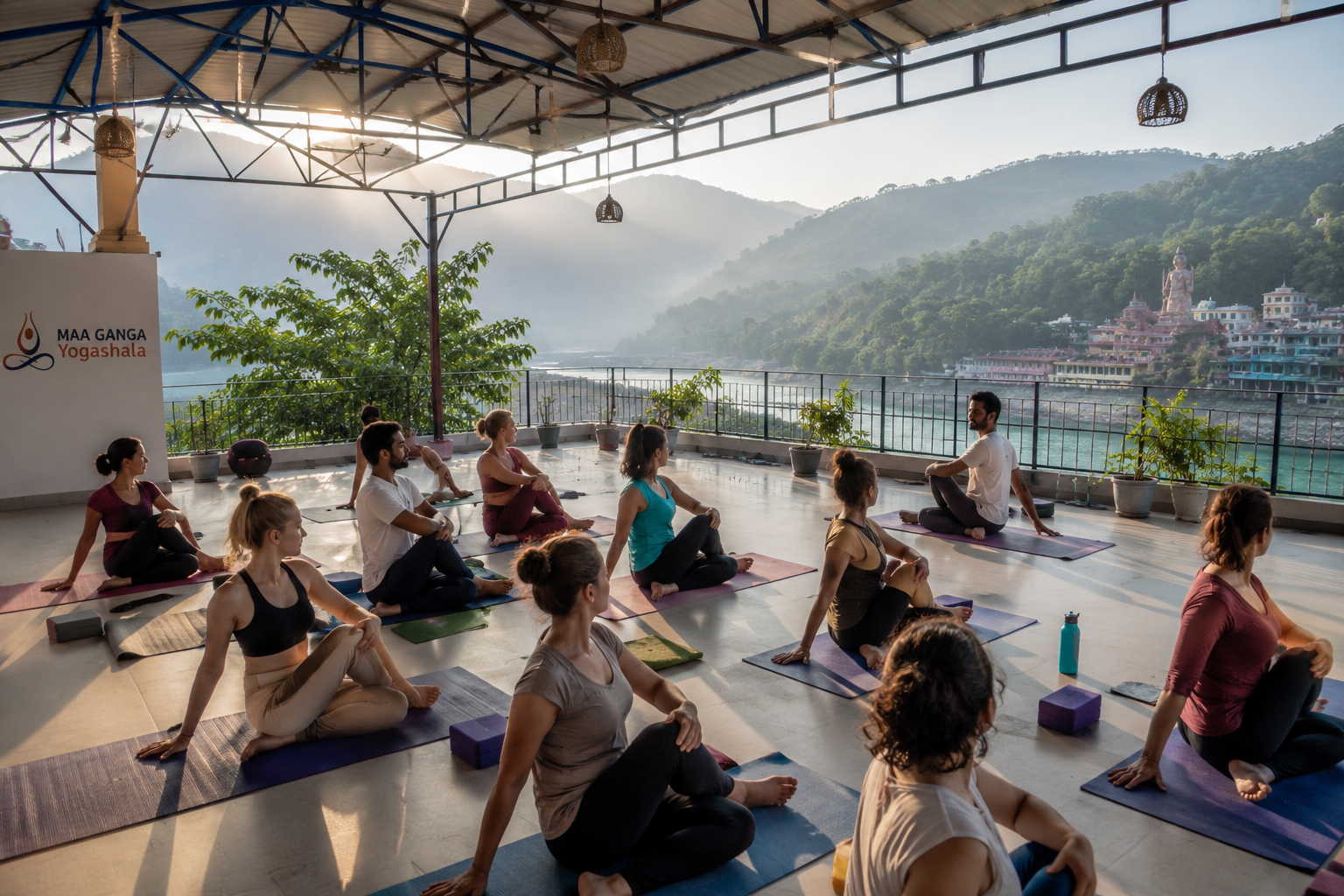
Rishikesh changes the context around your training. You are not studying yoga in an ordinary classroom with the rest of your life happening unchanged outside the door. The river, Himalayan foothills, local spiritual traditions, and long-standing yoga culture create a setting where practice can become part of your daily environment.
Tapovan is particularly convenient for students because daily life can be built around training. You can often walk between classes, meals, accommodation, cafés, shops, and riverside spaces instead of spending hours commuting.
The Ganga can also become a natural pause point. After a difficult anatomy class or teaching assessment, sitting quietly near the river may give you the mental distance needed to process what you learned.
At the same time, do not romanticize Rishikesh. It is a living Indian town, not a retreat bubble. Traffic, crowds, weather, construction, unfamiliar food, different routines, and occasional noise are all part of real life here.
That is actually useful preparation for teaching. Yoga does not happen only in perfect studios. Learning to stay attentive when your surroundings are imperfect is a practical skill.
If the spiritual side of the location interests you, you can explore the spiritual significance of the Ganga River in Rishikesh before your arrival.
How to Make Student Life Easier Without Losing the Experience
The best students are not necessarily the most flexible or athletic. They are usually the ones who manage their energy and remain curious.
Start with sleep. If classes begin early, late-night socializing will catch up with you quickly. You do not need perfect sleep every night, but you should treat consistent rest as part of your training rather than a luxury.
Pack practically. Comfortable clothing, a reliable yoga mat if your school does not provide one, reusable water bottle, notebook, pens, basic toiletries, and weather-appropriate layers will cover most needs. Keep your luggage manageable.
Eat simply enough to support the schedule. Heavy meals immediately before practice are unlikely to make early sessions comfortable. Official Ministry of Ayush yoga guidance recommends practising on an empty or light stomach and emphasizes gradual, comfortable practice rather than forcing the body. Ministry of Ayush yoga guidance Ministry of Ayush yoga guidance
Most importantly, stop comparing yourself with classmates. One person may have ten years of yoga experience. Another may be stepping onto a mat seriously for the first time. Your job is not to win the training. Your job is to learn.
If you are nervous about physical requirements, our guide on the myth that yoga teacher training requires exceptional flexibility can help you set more realistic expectations.
A Week Can Tell You More Than a Brochure
By the end of a full week, you should have a clearer sense of whether teacher training suits you. You may discover that you love anatomy but struggle with public speaking. You may enjoy meditation more than asana. You may realize that teaching children, beginners, private clients, or group classes interests you in different ways.
That information is valuable.
A good 200-hour YTT should not simply make you feel busy. It should make your understanding more precise. You should gradually become better at observing movement, explaining concepts, structuring classes, receiving feedback, and reflecting on your own practice.
You should also know what the school expects from you. Ask about attendance, assessments, teaching practice, accommodation, meals, timings, days off, faculty experience, and what happens if you miss a session.
If certification is one of your goals, understand the credential rather than assuming “200 hours” means the same thing everywhere. Yoga Alliance says teachers can obtain the RYT 200 credential after completing a 200-hour teacher training registered with Yoga Alliance.
The certificate matters, but the capability you build during those weeks matters more.

Considering Your 200-Hour YTT in Rishikesh?
If you want to experience this rhythm in Tapovan, Rishikesh, our 200-Hour Yoga Teacher Training in Rishikesh is designed for students who want structured training alongside the atmosphere of the Ganga and Himalayan foothills.
We also understand that not everyone wants to begin with a full 200-hour commitment. If you want a shorter introduction, our 100-Hour Yoga Teacher Training in Rishikesh can be a useful alternative to explore.
If you prefer a shorter immersive experience before or after teacher training, our 5-day yoga retreat in Rishikesh offers another way to experience structured yoga time in the region.
The important thing is to choose the format that matches your actual goals, available time, and readiness. Do not enrol simply because Rishikesh sounds appealing. Choose a course because its curriculum, schedule, teaching approach, and expectations make sense for you. You can also explore Maa Ganga Yogashala to compare the available programs.
FAQs
Is a 200-hour YTT in Rishikesh very intense?
Yes, it can be demanding. You may have early mornings, multiple learning sessions, physical practice, assignments, and teaching assessments. The challenge is often mental as well as physical. A consistent sleep schedule and realistic expectations make a major difference.
How many hours a day do you study during YTT?
There is no single universal daily timetable. Each school structures its program differently, and instructional hours have specific requirements. Your day may include formal classes plus homework, personal practice, meals, and rest. Ask the school for a sample weekly timetable before enrolling.
Do you need to be flexible to complete a 200-hour YTT?
No. Flexibility can help with some postures, but teaching requires much more than range of motion. Observation, communication, anatomy, sequencing, safety, and the ability to adapt practices are all important.
What should you do on your day off in Rishikesh?
Prioritize recovery first. You can take a gentle walk, spend time near the Ganga, explore Tapovan, journal, do light personal practice, or have a relaxed meal with classmates. Avoid filling every free hour with travel.
Can you teach yoga after a 200-hour YTT?
A 200-hour training is generally the foundational pathway for beginning your teaching journey, but completing a course does not automatically make you an excellent teacher. You still need practice, observation, feedback, ethical judgment, and continued learning.
Conclusion: Your Week Is Part of the Training
Student life during a 200-hour YTT week schedule is not simply a timetable of yoga classes. It is a repeated cycle of practice, study, teaching, feedback, rest, and reflection. Some days will feel energizing; others may leave you tired and questioning whether you can keep up.
That is normal.
The real value comes from learning how to respond. You learn to prepare when you are tired, teach when you are nervous, listen when you are corrected, and return to the mat without needing every session to feel perfect.
Rishikesh adds a distinctive setting to that process, but the setting alone will not create a good teacher. Your consistency will.
If you are ready to experience that rhythm for yourself, explore our 200-Hour Yoga Teacher Training in Rishikesh, review the course details carefully, and choose a training schedule you can genuinely commit to.