Accommodation During Yoga Teacher Training Rishikesh: Everything You Need to Know
INTRODUCTION
Finding the right accommodation during yoga teacher training Rishikesh is one of the most critical decisions you will make for your physical and mental recovery. You are about to embark on an intense, month-long journey of early morning asana practices, heavy anatomy lectures, and deep meditation sessions. Returning to a safe, quiet, and comfortable room at the end of the day is absolutely non-negotiable for your success.
Many students arrive in India with completely different expectations about housing, plumbing, and climate control. The reality of living in the Himalayan foothills is beautiful, but it requires preparation and a clear understanding of local standards. You need a space that supports your learning while keeping you healthy and rested.
This guide breaks down exactly what you can expect from your living situation while studying in the yoga capital of the world. We will cover room types, essential amenities to verify, and practical tips for making your stay comfortable. Read on to ensure your housing supports your growth rather than hindering it.
Types of Accommodation During Yoga Teacher Training Rishikesh
When you book your course, you will quickly notice that housing styles vary wildly across different schools. Some institutions offer traditional ashram-style living, while others provide boutique hotel standards. Understanding these differences helps you set realistic expectations.
Traditional ashram rooms are highly spartan, focusing strictly on simplicity and detachment. You will typically find a basic bed, a small desk, and very minimal furnishings. This encourages you to spend more time outward, connecting with the community and focusing entirely on your spiritual studies.
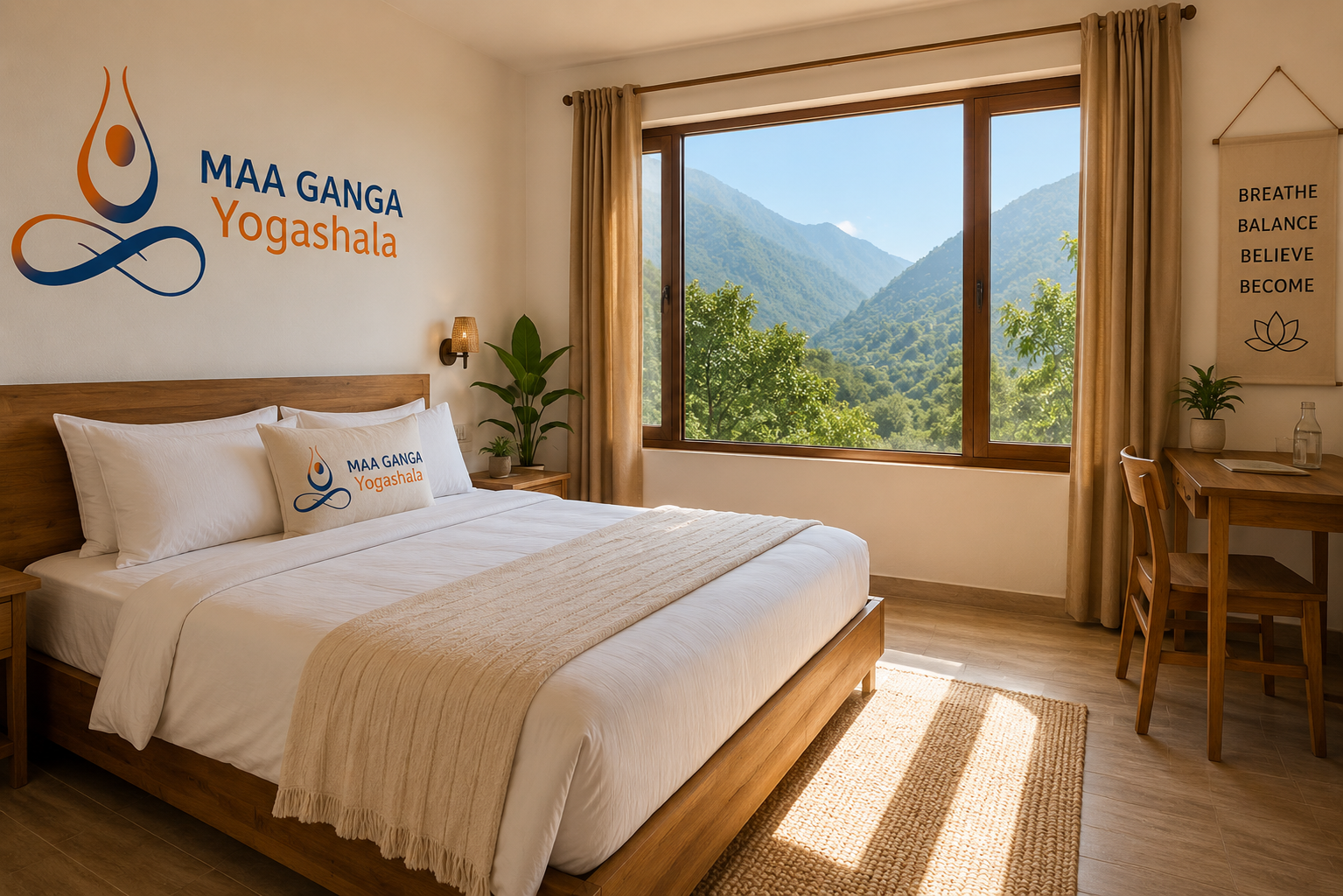
Modern yoga schools, especially those catering to international students, have upgraded their facilities significantly. These properties blend traditional Indian hospitality with western comforts. You can usually expect thicker mattresses, modern bathroom fixtures, and dedicated study areas right in your room.
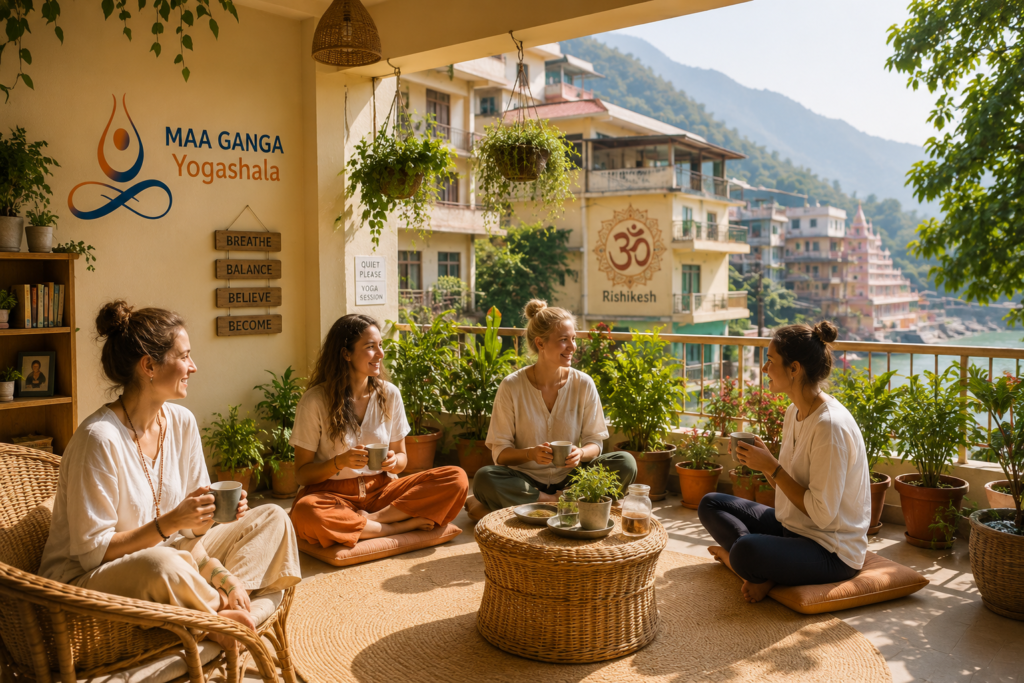
Location also plays a massive role in the type of housing you experience. Schools located high up in Tapovan often offer quieter environments and stunning mountain views. As noted by Wikipedia, the geography of the region is defined by the steep Himalayan foothills meeting the Ganges.
No matter which style you choose, your room will become your sanctuary. If you are preparing for a foundational course, such as a 100-Hour Yoga Teacher Training in Rishikesh, selecting a comfortable space will help you ease into the intense schedule without overwhelming your nervous system.
What to Expect from Your Accommodation During YTT in Rishikesh
The transition to living in India can be a shock if you are not mentally prepared for the local environment. Cleanliness standards in reputable schools are generally very high, with staff sweeping and mopping rooms regularly to keep dust at bay.
However, the surrounding environment is wild and vibrant. You will hear temple bells ringing at dawn, street dogs barking at night, and the constant hum of life outside your window. Earplugs are an absolute necessity for light sleepers wanting to guarantee a full night of rest.
Monkeys are another daily reality of living in this region. You must learn to keep your windows and doors locked at all times when you are not in the room. Leaving a window cracked open is an open invitation for a macaque to enter and inspect your snacks.
The emotional toll of an intensive course requires a safe space to decompress. You will be tearing down old habits and building new physical limits daily. Having a quiet corner to journal and reflect is vital, which you can read more about in our guide on the Emotional Experience Yoga Teacher Training India: 7 Best Truths.
Indian Plumbing and Bathroom Realities
Bathrooms in India function a bit differently than in the West, and adapting quickly will make your stay much smoother. Most schools now offer western-style sit-down toilets, but you will almost always find a health faucet (bum gun) installed next to it.
Hot water is usually provided via a localized electric geyser mounted on the bathroom wall. You need to turn the switch on about 15 minutes before you plan to shower. Once the tank is empty, the water turns cold, so long, luxurious hot showers are rarely an option.
Toilet paper is not meant to be flushed down the drain, as the local plumbing infrastructure cannot handle it. You must throw all paper waste into the provided dustbin to avoid causing severe blockages in your building.
Shared vs. Private Rooms: Making the Right Choice
Almost every school offers you the choice between a private room and a shared twin room. This decision impacts both your budget and your daily experience, so you must weigh the pros and cons carefully.
Shared rooms are excellent for building immediate connections and keeping course costs down. Having a roommate means you always have a study partner for anatomy quizzes or someone to practice teaching cues with. It fosters a deep sense of camaraderie right from day one.
The downside to sharing is the lack of complete privacy. If your roommate has different sleep habits, snores, or wants to chat when you are socially drained, it can add friction to your experience. You must establish clear boundaries early on to maintain a healthy dynamic.
Private rooms offer you complete control over your space, your schedule, and your energy. If you are an introvert or easily overstimulated by constant social interaction, paying the extra fee for a private space is highly recommended.
When you enroll in a comprehensive program like a 200-Hour Yoga Teacher Training in Rishikesh, the workload is immense. Having a silent, empty room to return to allows you to process the day’s lectures without any external distractions.
Essential Amenities You Must Verify Before Booking
Not all housing is created equal, and you must read the fine print before placing your deposit. The first thing you need to check is the Wi-Fi reliability. While most schools advertise internet access, the connection in the mountains can fluctuate wildly during storms.
Power cuts are a normal part of life in northern India, especially during peak summer or heavy rains. Reputable schools install heavy-duty power backups or generators to ensure fans and lights stay on. Always ask if the school has a reliable generator before booking.
Climate control is another massive factor depending on the month you visit. If you travel between May and July, air conditioning is absolutely essential to sleep safely. If you visit in December or January, you need thick blankets or a room heater, as the buildings lack central heating.
Access to clean, filtered drinking water must be available 24/7 on the premises. Hydration is critical when you are sweating through four hours of asana daily. Your school should have an RO (Reverse Osmosis) filter station where you can refill your bottle safely.
For a deeper understanding of how the climate affects your stay and what to prepare for, explore our insights on the Yoga Rishikesh Monsoon Season: 7 Best Reasons to Visit.
Packing for Your Room: What Schools Provide vs. What You Need
Yoga schools generally provide all the basic furnishings: a bed, pillows, sheets, and blankets. Housekeeping will change your linens on a scheduled basis, usually once a week. You do not need to pack heavy sleeping bags unless you plan to trek in the high Himalayas afterward.
However, you should absolutely bring your own high-quality bath towel and a smaller hand towel for sweat during practice. Many schools provide basic towels, but they can be thin and take a long time to dry in the humid months.
Bring a universal power adapter with surge protection. The voltage in India is 230V, and power spikes happen frequently. Protecting your laptop and phone from electrical surges will save you from an expensive disaster during your trip.
A sturdy combination padlock is highly recommended for securing your valuables. While schools are generally very safe, you will likely have a wardrobe or a locker in your room. Using your own lock provides an extra layer of peace of mind while you are out at lectures.
Safety and preparedness naturally extend beyond your room. If you are traveling alone and want comprehensive guidelines on securing your space and navigating the area, read our Solo Women Yoga Retreat India Safety: 9 Best Proven Rules.
Daily Schedule and Respecting the Housing Rules
Living in a yoga school is not like living in a standard hotel; it is an environment designed to foster discipline. Most institutions enforce a strict curfew, usually around 9:30 PM or 10:00 PM. The gates will lock, and you are expected to be in your room resting.
Silence hours are commonly enforced from the evening until after breakfast the next morning. Mauna (the practice of silence) helps preserve your energy and keeps the housing block peaceful. You must respect your neighbors by keeping phone calls and music to a minimum.
Dietary rules often extend into your private space as well. The vast majority of schools prohibit the consumption of meat, eggs, alcohol, and tobacco anywhere on the premises. Sneaking these items into your room is a fast way to get expelled from the program.
These rules align with the ethical guidelines set by international bodies. Organizations like Yoga Alliance expect schools to maintain an environment that promotes traditional yogic values, cleanliness, and mutual respect among all practitioners.
Why Rishikesh? / Why This Matters
Choosing to study here means immersing yourself in an environment charged with centuries of spiritual history. The housing in Tapovan and Laxman Jhula places you right at the edge of the sacred Ganges river, surrounded by forested hills.
The air quality, the frequency of the chanting from nearby temples, and the community of like-minded seekers create an atmosphere you cannot find anywhere else in the world. Your room becomes the anchor point from which you explore this incredible valley.
When you step out of your door, you are instantly connected to a network of organic cafes, Ayurvedic clinics, and ancient meditation caves. The physical location of your housing dictates how easily you can access these life-changing resources on your days off.
Even a short stay can shift your perspective dramatically. If you are not ready for a full month-long commitment, stepping into this environment through a 3 Days Yoga Retreat in Rishikesh allows you to experience the profound peace of waking up in the Himalayas.
Finding Your Home Away From Home
Settling into a new country requires an environment where you feel deeply supported and inherently safe. At Maa Ganga Yogashala, we understand that your physical comfort directly impacts your ability to absorb the ancient teachings.
Our campus is designed to provide the perfect balance between traditional yogic discipline and modern comforts. If you are considering training in Rishikesh, Maa Ganga Yogashala offers clean, secure, and peaceful housing specifically tailored to the needs of dedicated practitioners.
FAQs
Do I need to bring my own toilet paper to the school?
Most modern yoga schools provide a starter roll of toilet paper upon arrival. However, you will need to purchase your own from local pharmacies or supermarkets once it runs out. It is very cheap and widely available in Tapovan.
Is it safe to leave my laptop and passport in my room?
Yes, it is generally very safe, but common sense must prevail. Most rooms feature a locking cupboard or safe. Always bring your own padlock, lock your door when you leave, and never leave cash sitting openly on your bed.
Can I do my laundry at the accommodation?
Most schools offer a paid laundry service where staff will wash, dry, and iron your clothes for a small fee. You can also hand-wash your smaller items in your bathroom; just bring a travel clothesline to hang them in your room.
What if I want to arrive a few days before my course starts?
Arriving early is a brilliant strategy to beat jet lag. You can often book extra nights directly with your school. If you are looking for a gentle introduction to the area before the intense study begins, consider reviewing our Weekend Yoga Retreat Rishikesh Beginner: 5 Best First Steps.
Conclusion + Strong CTA
Your accommodation during yoga teacher training Rishikesh is far more than just a place to sleep; it is your personal sanctuary for integration, study, and healing. By understanding the local realities of plumbing, climate, and community living, you set yourself up for a deeply successful educational journey. Embrace the simplicity, respect the environment, and allow the unique energy of the Himalayas to support your physical and mental transformation.
Ready to begin? Explore our 5 Days Yoga Retreat in Rishikesh to experience our beautiful campus, and take the first step toward your ultimate yoga journey today.