7 Best Ways to Create Yoga Sequence After Teacher Training
Introduction
Learning to create yoga sequence after teacher training is often the most exciting yet challenging hurdle new instructors face. You spent weeks mastering alignment, philosophy, and anatomy.
Now, you stare at an empty mat with sixty minutes of silence to fill. It feels daunting.
The transition from student to teacher requires a shift in perspective. You are no longer just practicing; you are guiding others through a physical and emotional journey.
Many new teachers overcomplicate their flows, thinking they need highly acrobatic transitions to impress their classes. The reality is much simpler.
Great classes rely on logic, anatomical safety, and a clear energetic arc. Once you understand the blueprint, planning becomes second nature.
This guide will break down exactly how to structure your classes safely and effectively. You will learn the formulas that top instructors use every day.
The Foundation to Create Yoga Sequence After Teacher Training
Every successful class requires a solid, predictable structure. When you set out to create yoga sequence after teacher training, you must understand the standard energetic arc.
This arc mimics the natural rhythm of the nervous system. You begin quietly, build intensity, reach a climax, and then slowly return to stillness.
Skipping these phases can leave students feeling physically jarred or energetically scattered. Start by dividing your sixty-minute class into distinct, manageable blocks.
A standard template allocates five minutes to grounding, ten minutes to warm-up, and twenty minutes to heat-building standing postures. The remainder covers balance, floor work, and final rest.
By using this time-blocking method, you eliminate the panic of running out of poses. You always know where you are in the roadmap.
Safety is your absolute priority during this planning phase. Institutions like Yoga Alliance emphasize that anatomical safety must dictate your transitions, never just aesthetics.
Keep your foundation simple. A strong, basic sequence taught with confidence will always outperform a complex, confusing sequence taught with hesitation.
Essential Components of Intelligent Sequencing
Once you have your time blocks, you need to fill them with purposeful movements. Intelligent sequencing requires every pose to prepare the body for the next.
Start your warm-up by moving the spine in all six directions. Flexion, extension, lateral bending on both sides, and twisting are non-negotiable elements of early class preparation.
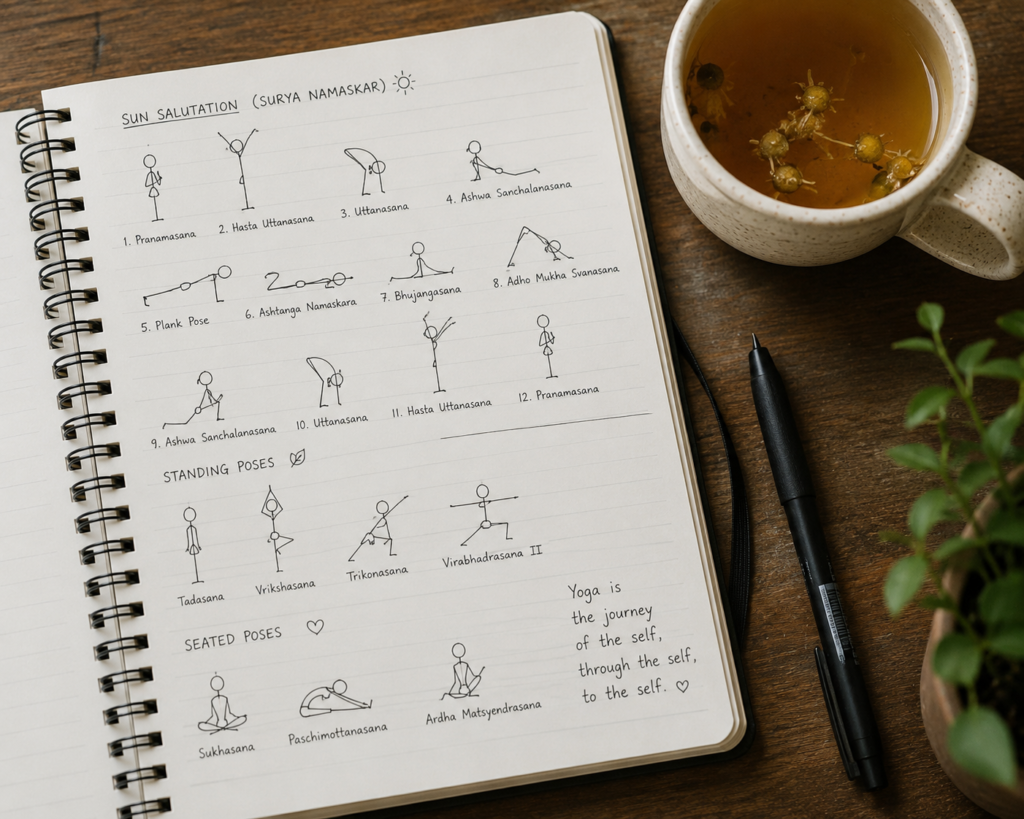
If you are teaching a standard Vinyasa class, Sun Salutations (Surya Namaskar) are your best tool for building foundational heat. They link breath to movement instantly.
From there, move into your standing series. Group your standing poses by their hip orientation.
Keep externally rotated poses like Warrior II and Triangle together. Keep neutrally rotated poses like Warrior I and Crescent Lunge in their own distinct grouping.
Flipping back and forth between internal and external hip rotation is harsh on the joints. This is a crucial aspect of Yoga Class Sequencing Principles Teacher Training.
Remember to weave counter-poses into your flow naturally. If you spend five minutes doing deep forward folds, follow up with a gentle backbend to neutralize the spine.
Your sequencing will improve dramatically when you focus on these anatomical rules. Discovering the realities of Teaching Yoga After 100 Hour Certification: Top 5 Truths will remind you that simplicity is your greatest asset.
Understanding Peak Pose Methodology
The peak pose method is the most popular way to structure a Vinyasa class. This approach builds the entire class around one challenging posture.
If you want to create yoga sequence after teacher training that feels cohesive, pick your peak pose first. Let us say your chosen peak is Bakasana (Crow Pose).
You must ask yourself what muscles need to be strong, and what muscles need to be open to achieve this shape safely. Crow Pose requires core strength, hip flexion, and triceps engagement.
Therefore, your warm-up should include Boat Pose (Navasana) for the core. You should include plenty of Chaturangas to activate the arms and shoulders.
Deep squats like Malasana are necessary to open the hips for the proper knee-to-tricep connection. By reverse-engineering the peak pose, your class practically writes itself.
Researching human anatomy through resources like PubMed can deepen your understanding of how muscle groups interact. This scientific backing keeps your students safe from repetitive stress injuries.
Once the peak is achieved, the physical intensity must drop immediately. The body has worked hard and requires deep, passive stretching to recover.
Move directly into seated forward folds, gentle twists, or hip openers. Never place a peak pose at the very end of class right before Savasana.
Adapting to Different Skill Levels
You will rarely teach a room full of students at the exact same skill level. A great teacher provides a skeleton sequence and offers layers for everyone.
Always teach to the beginner first. Establish the foundational pose firmly before inviting advanced students to take it deeper.
For example, when cueing Tree Pose, start by placing the foot on the ankle with toes on the floor. Only then should you offer the calf or inner thigh options.
Using props is a sign of an advanced, educated teacher. Actively cue blocks and straps throughout your sequence, normalizing their use for every student in the room.
When you notice the class struggling with a transition, you must be willing to abandon your written plan. Reading the room is a skill that takes time to develop.
If everyone is breathing heavily and losing form, insert a spontaneous Child’s Pose. Your sequence is a map, but the students’ energy is the terrain you are actually navigating.
Developing this intuition often requires further study and immersion. Many find that completing a 100-Hour Yoga Teacher Training in Rishikesh helps sharpen their observational skills immensely.
Why Rishikesh? / Why This Matters
Where you learn to sequence matters just as much as what you learn. India remains the undisputed heart of traditional yoga philosophy and methodology.
Rishikesh offers an environment stripped of Western commercial distractions. Here, you learn that a sequence is not a workout routine, but a moving meditation.
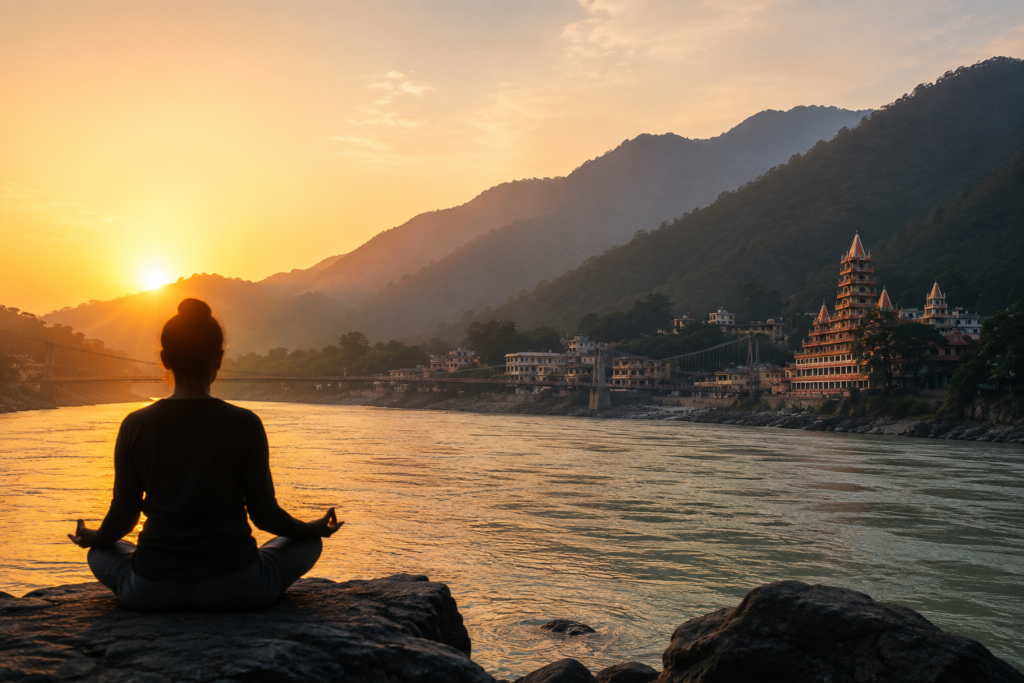
The energy of the Ganges and the Himalayas influences the way you approach the practice. You begin to sequence from a place of spiritual grounding rather than physical ego.
Immersing yourself in this culture accelerates your growth as a teacher. You witness authentic practices that emphasize pranayama and meditation just as heavily as asana.
Even a short stay can completely reset your teaching perspective. A 5 Days Yoga Retreat in Rishikesh provides the perfect pocket of time to refine your voice and reconnect with your inner student.
Stepping away from screens and studio pressures allows your creativity to return. You will find immense value in the stillness, much like the benefits explored in Digital Detox Yoga Retreat Rishikesh: 5 Proven Real Joys.
Soft CTA Section
If you are looking to deepen your sequencing skills and build lasting confidence, returning to the source of yoga can be life-changing.
Immersing yourself in a supportive, authentic environment accelerates your growth immensely.
If you are considering training in India, Maa Ganga Yogashala offers comprehensive programs designed to turn your knowledge into confident teaching.
FAQs
How long should it take to plan a yoga sequence?
At first, writing a single sequence might take you an hour or two. You will spend time researching poses and verifying anatomical safety.
As you gain experience, this time will drastically reduce. Eventually, you will be able to outline a solid class in fifteen minutes.
Should I write my sequence down or memorize it?
Writing it down is highly recommended for your first year of teaching. Keep a small notebook near your mat as a safety net.
You do not need to read from it constantly, but having it nearby reduces anxiety. Over time, muscle memory and intuition will take over.
What if I forget my sequence while teaching?
Every teacher forgets their sequence at some point. If your mind goes blank, simply instruct the class to move into Downward Facing Dog or Child’s Pose.
Take three deep breaths, glance at your notes, and resume. Your students will just think they are getting a deep, intentional pause. For more strategies on handling classroom nerves, explore New Yoga Teacher Confidence After Training: 7 Best Tips.
Conclusion + Strong CTA
Learning to create yoga sequence after teacher training is a skill that evolves over your entire career. Focus on simplicity, anatomical logic, and the energetic arc of the practice.
Remember that your students come to your class for your unique energy, not for a flawless acrobatic performance. Trust the foundation you built during your training and allow your sequences to reflect your authentic voice.
By practicing these formulas, planning will shift from a stressful chore into a joyful creative process.
Ready to begin? Explore our 200-Hour Yoga Teacher Training in Rishikesh and take the first step toward mastering your craft today.