

Questions before enrolling 100 hour YTT India: Your Complete Guide to Choosing the Right Program
Are you compiling a list of questions before enrolling 100 hour YTT India? It is completely normal to feel a mix of intense excitement and slight overwhelm when choosing your first foundational yoga course.
This short but rigorous program sets the stage for your entire teaching journey and personal practice. Knowing exactly what to ask ensures you find a school that truly aligns with your goals, physical abilities, and spiritual aspirations.
You will discover exactly which inquiries separate a mediocre retreat from a profoundly educational experience. Going abroad for training requires emotional and financial commitment. You deserve absolute clarity before booking your flight to the Himalayas.
Asking the right things prevents unexpected surprises regarding food, accommodation, and daily schedules. It protects your investment and ensures your safety in a foreign country.
By the end of this guide, you will have a rock-solid checklist of inquiries to send to any potential yoga school. Let us explore the fundamental details you must clarify before stepping onto the mat.
Why Asking questions before enrolling 100 hour YTT India Matters Deeply
Jumping into a training program without proper vetting is a common mistake for eager practitioners. You might assume all schools offer the exact same experience, but the reality is vastly different.
Every ashram and yogashala has its own unique atmosphere, disciplinary rules, and lineage. Clarifying your doubts upfront ensures your chosen environment supports your specific learning style.
Some schools focus heavily on intense physical asana, while others prioritize spiritual meditation and deep philosophy. You need to know which balance you are walking into.
Furthermore, verifying a school’s credentials protects the legitimacy of your eventual certification. You should always ask if the school is registered with Yoga Alliance, as this guarantees international recognition.
Without this basic verification, you might complete hours of grueling practice only to receive a certificate you cannot use professionally. Your time and energy are too valuable to risk on unverified institutions.
Asking direct questions also establishes a relationship with the school’s administration before you arrive. How they respond to your emails reveals their level of organization and care for their students.
If they give vague, dismissive answers, consider it a massive red flag. A reputable school will welcome your curiosity and provide transparent, detailed responses.
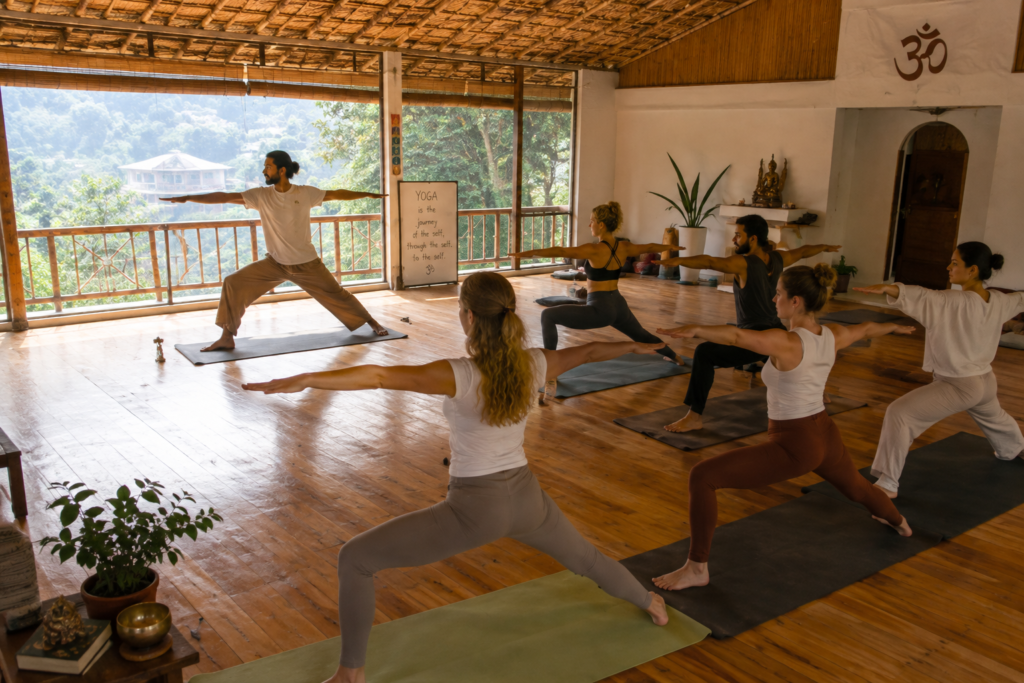
Core questions before enrolling 100 hour YTT India: Curriculum and Syllabus
The very first area you must investigate is the actual educational content of the course. A foundational course should cover a wide spectrum of yogic sciences, not just physical postures.
You should explicitly ask for a detailed breakdown of their daily syllabus and module distribution. How many hours are dedicated to anatomy, philosophy, and teaching methodology?
Understanding the curriculum ensures you will not be subjected to a glorified fitness class. You want a comprehensive education that dives into alignment, breathwork, and injury prevention.
For a clear example of what a high-quality syllabus looks like, review the standard 100-Hour Yoga Teacher Training structure. This will give you a baseline to compare against other schools.
Additionally, inquire about the style of yoga being taught as the primary discipline. Is it traditional Hatha, dynamic Ashtanga Vinyasa, or a hybrid approach?
You need to ensure your physical body is prepared for the specific style they emphasize. If you want a deeper dive into how classes are structured, explore these helpful course structure insights.
Finally, ask about the examination and evaluation process at the end of the course. Will there be a written test, a practical teaching exam, or continuous assessment?
Knowing how you will be graded relieves performance anxiety and helps you focus on genuine learning.
Understanding the Teaching Style and Language Barriers
The quality of your education relies entirely on the expertise and communication skills of your teachers. You have every right to ask for the biographies and qualifications of the lead instructors.
How many years have they been practicing, and where did they receive their own training? Authentic Indian teachers often bring generations of traditional wisdom that you simply cannot find elsewhere.
However, deep knowledge is only useful if it can be effectively communicated to you. Since you are traveling to India, you must confirm the primary language used in the shala.
Are the classes taught in clear, accessible English, or is a translator required? For more clarity on this crucial topic, read about the language of instruction in Indian ashrams.
You should also ask about the student-to-teacher ratio during asana alignment classes. If a class has forty students and only one teacher, you will not receive personalized corrections.
A smaller class size guarantees that your individual physical limitations and questions will be addressed safely.
Do not hesitate to ask if the teachers remain available for questions outside of scheduled class hours. A supportive teacher who offers guidance during self-study hours drastically improves your overall experience.
Accommodation, Food, and the Daily Schedule
Your living conditions will massively impact your ability to focus and absorb information during training. Therefore, detailed questions about room and board are absolutely non-negotiable.
Ask for actual, recent photos of the rooms, bathrooms, and common areas, rather than relying on outdated website galleries. Do you have the option for a private room, or is shared accommodation mandatory?
You also need to clarify if there is hot water, Wi-Fi access, and proper ventilation in the dormitories. For a comprehensive look at what to expect, check out this guide on accommodation details during your stay.
Next, turn your attention to the food provided by the school’s kitchen. Ask if they serve a traditional sattvic diet, and if they can accommodate specific allergies or vegan preferences.
The schedule itself is another major factor you must deeply understand before committing your funds. Ask to see a sample daily timetable from morning wake-up to evening lights-out.
You need to know if you will have any designated rest days or free time to explore the local culture. A schedule that runs strictly from 5:00 AM to 9:00 PM with zero breaks leads straight to burnout.
If you are a solo traveler, you must also prioritize questions about the security of the neighborhood. Research the area’s reputation, perhaps starting with general regional information on Wikipedia.
For highly specific advice on staying secure, review these essential rules for solo women yoga retreat safety.
Clarifying Hidden Costs and Post-Course Support
Financial transparency is a hallmark of a trustworthy and ethical yoga institution. You must ask explicitly what is included in the tuition fee and what requires extra payment.
Are course manuals, yoga mats, and cleansing kits provided, or do you need to purchase them upon arrival? Knowing these details helps you budget accurately for your entire trip.
You should also inquire about airport transfers and whether they are included in your package. Arriving in a bustling Indian airport can be daunting; having a pre-arranged taxi brings immense peace of mind.
Furthermore, ask if the school offers weekend excursions or optional therapies at an additional cost. Many students love supplementing their training by booking restorative sound healing sessions on their days off.
Beyond the financial aspects, ask what happens after the closing ceremony is finished. Does the school offer post-course mentorship, or do they simply hand you a certificate and wave goodbye?
A great school provides ongoing support, alumni networks, and guidance as you transition into teaching.
Ask if they allow graduates to return for further training at a discounted alumni rate. This indicates that the school values long-term relationships over quick financial transactions.
Why Rishikesh? / Why This Matters
Choosing a location for your training is almost as important as choosing the school itself. Rishikesh is globally recognized as the Yoga Capital of the World, offering an unmatched spiritual atmosphere.
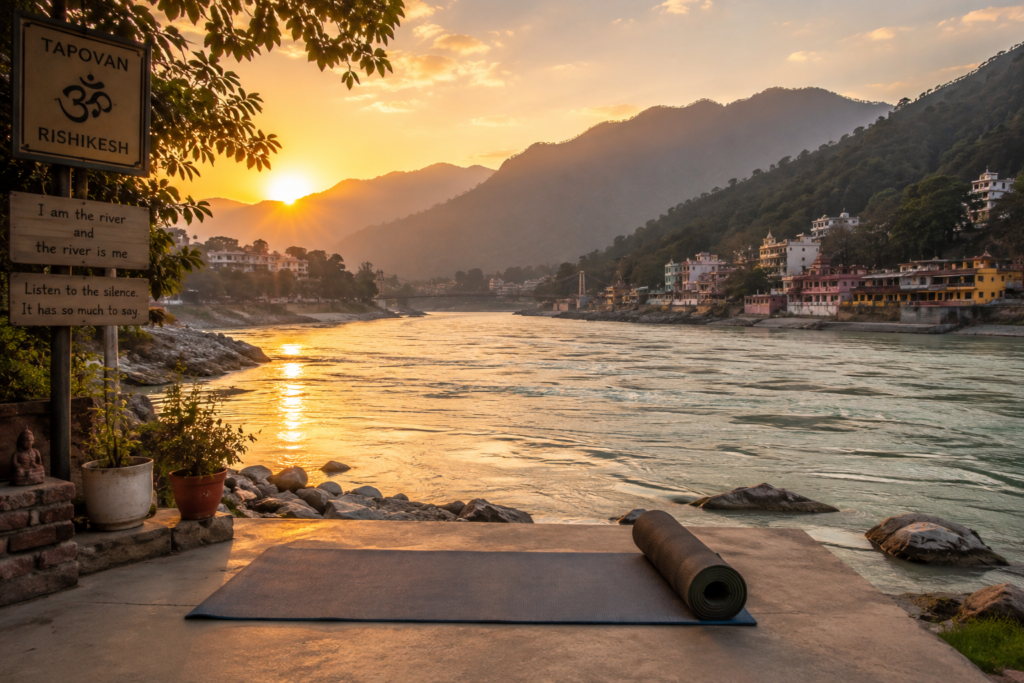
Practicing on the banks of the sacred Ganga River provides an energetic backdrop that simply cannot be replicated. However, the sheer volume of schools here makes your preliminary questions even more vital.
Because the town is saturated with options, you must filter out the commercialized businesses from the authentic ashrams. Asking targeted questions helps you pierce through clever marketing and find genuine traditional teachings.
You want a school that respects the ancient roots of yoga while providing safe, modern amenities for international students.
Taking the time to investigate protects you from the disappointment of landing in a noisy, disorganized environment. When you find the right fit, Rishikesh will offer you the most profoundly shifting experience of your life.
You will connect with like-minded seekers from across the globe and immerse yourself in daily devotion. To see an example of a deeply rooted, authentic space, explore this trusted Yoga Alliance USA certified yoga school.
Soft CTA Section
Navigating the ocean of options in India can feel incredibly daunting for a first-time visitor. We understand the hesitation and the overwhelming desire to make the absolute perfect choice for your journey.
If you’re considering training in Rishikesh, Maa Ganga Yogashala offers transparent communication and authentic teachings to ease your mind.
You can browse our main page at https://maagangayogashala.com/ to see our beautiful shala by the river. We actively encourage our prospective students to ask us every single question on their minds before booking.
FAQs
What is the most important question to ask a yoga school?
You must ask for proof of their current Yoga Alliance certification to ensure your diploma holds international value. Without this, your ability to register as a teacher globally may be severely restricted.
Should I ask about the physical intensity of the program?
Yes, absolutely. You need to know how many hours of active asana practice occur daily to ensure your body can handle the load safely.
How do I know if the accommodation is safe and clean?
Ask the school for unedited, recent video tours of the rooms and bathrooms. You can also request to speak with recent alumni about their direct experiences with the living conditions.
Is it normal to ask about the food menu?
It is highly recommended to ask about the diet, especially if you have sensitive digestion or specific allergies. A proper sattvic diet is crucial for sustaining your energy during long days of training.
What if a school refuses to answer my detailed questions?
If a school is evasive, slow to reply, or refuses to provide syllabus details, walk away immediately. Transparency is the bare minimum requirement for any institution claiming to teach yogic ethics.
Conclusion
Compiling your list of questions before enrolling 100 hour YTT India is your best defense against disappointment. By demanding clarity on curriculum, teachers, food, and hidden costs, you take full control of your educational journey.
Never feel like an inconvenience for seeking thorough answers; a reputable school will respect your dedication and diligence. Your foundational training is a sacred investment in your future, and it deserves careful, conscious planning.
When you ask the right things, you pave the way for a truly magical and transformative Himalayan experience. Ready to begin your journey with a school you can trust implicitly?
Explore our 200-Hour Yoga Teacher Training in Rishikesh and take the first deeply informed step today.