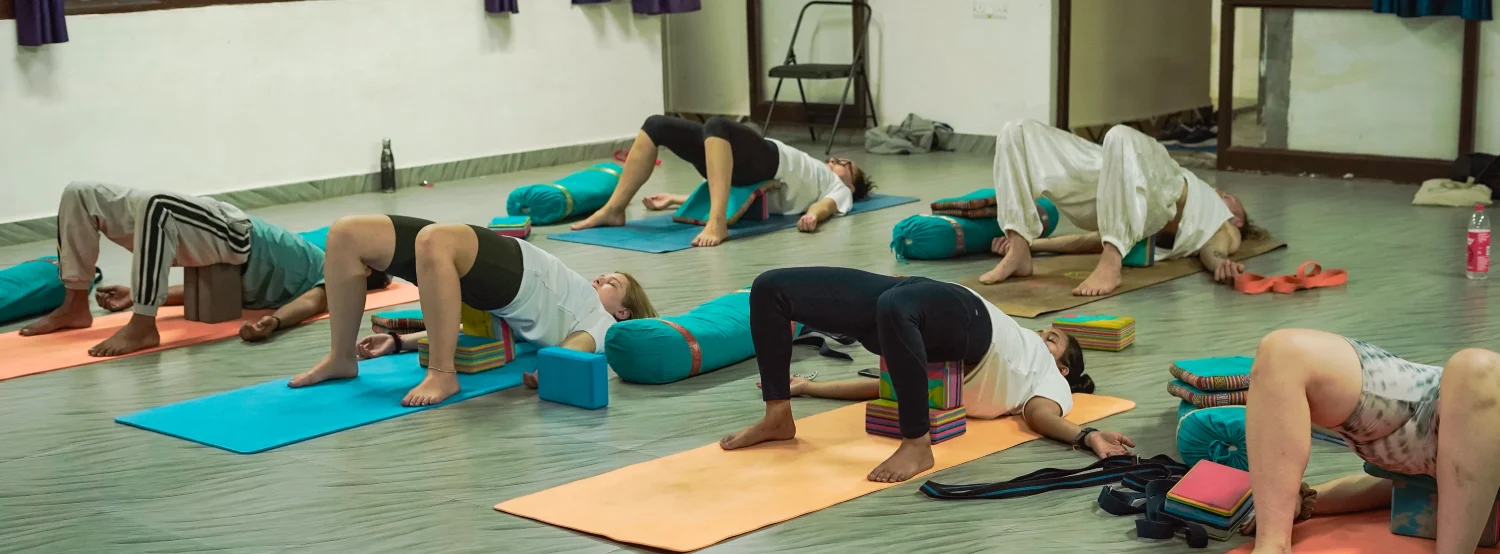
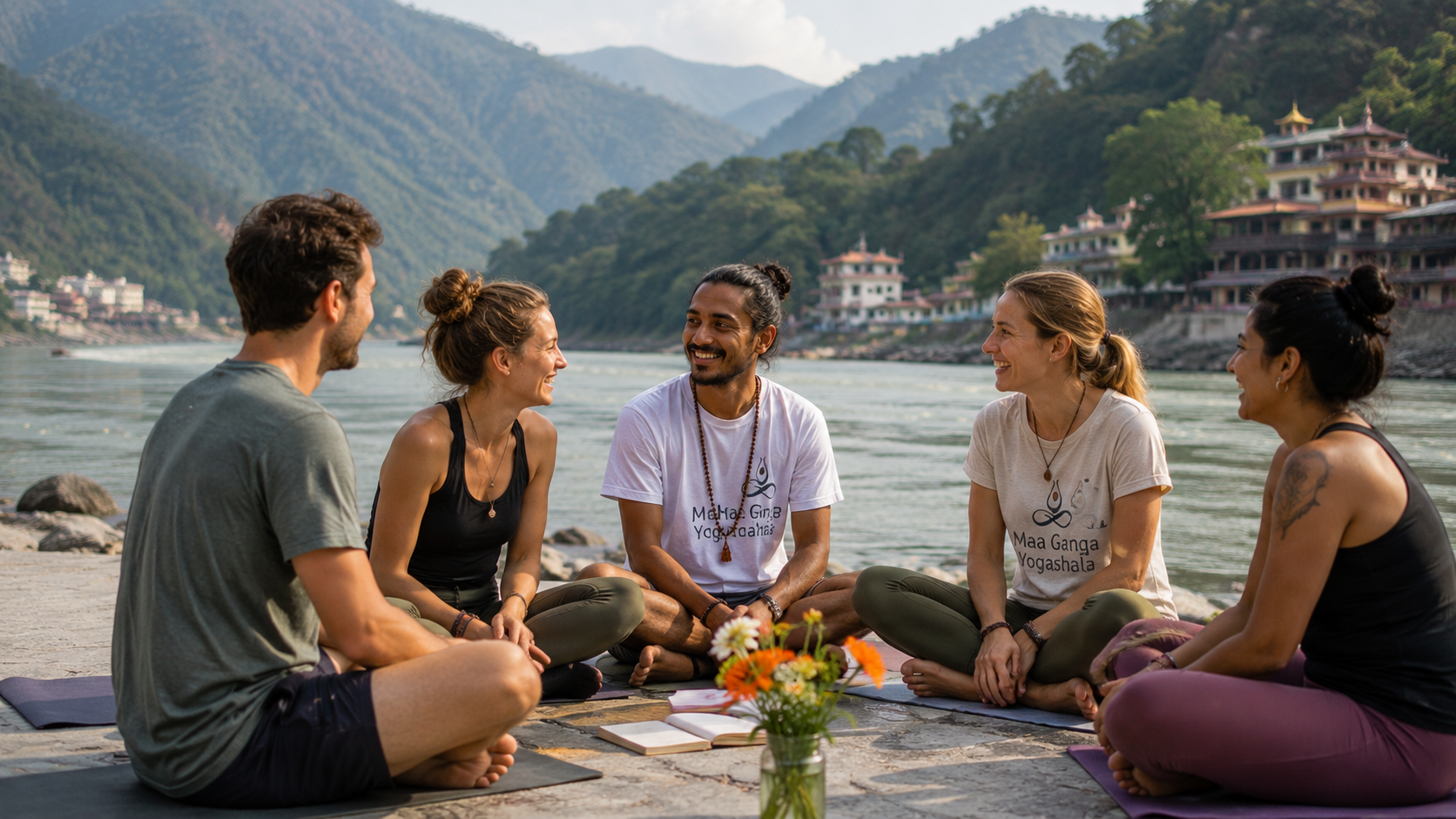
Small Group Yoga Teacher Training Benefits: Why Batch Size Truly Matters
Exploring the real small group yoga teacher training benefits requires looking beyond glossy brochures and evaluating how you actually learn on the mat. When you commit your time and energy to studying in India, you expect an environment that nurtures your physical and mental growth. Massive classes packed with dozens of students often leave individuals feeling lost in the crowd.
You deserve an environment where your instructors know your name, understand your specific body mechanics, and care about your progress. True mastery of ancient yogic arts happens through direct transmission from teacher to student. Intimate settings foster this authentic connection, allowing you to absorb complex concepts without feeling rushed.
Understanding these dynamics early on completely changes your educational trajectory. Whether you struggle with specific asanas or want to dive deeply into the spiritual texts, lower student-to-teacher ratios ensure your voice is always heard. This focused approach accelerates your learning curve in ways crowded halls simply cannot match.
Unlocking Core Small Group Yoga Teacher Training Benefits
When you step into a smaller classroom, the entire dynamic shifts from a mass lecture to a collaborative workshop. Your instructors hold the space specifically for your growth, ensuring that no question goes unanswered. You receive immediate, personalized feedback during every single session.
This level of detailed attention remains one of the most critical intimate yoga teacher training advantages you can secure. Organizations like Yoga Alliance maintain rigorous standards for certification globally. However, the actual quality of your education depends heavily on how much individual coaching you receive during those required contact hours.
Large groups force teachers into a generalized instruction model where they cue for the average practitioner. In contrast, smaller batches allow for highly customized cues that address your specific physical imbalances. If you want to understand how this structured yet highly personal environment plays out day by day, exploring the 200 Hour YTT Duration Timeline: Best 23-Day Ultimate Guide offers incredible perspective.
The Power of Immediate Correction
You build muscle memory rapidly during intensive courses. If you practice a posture incorrectly for three weeks, unlearning that bad habit takes months of grueling effort.
Intimate classes mean your teacher spots your misaligned hips in Warrior II immediately. They adjust you on the spot, preventing faulty movement patterns from taking root in your nervous system.
Building Vocal Confidence
Teaching requires finding your authentic voice and commanding a room with grace. Speaking up in a room of forty strangers feels incredibly intimidating for most beginners.
When you practice cueing in front of five or six peers, that anxiety melts away. You feel safe making mistakes, laughing them off, and trying again.
Mastering Teaching Methodology in an Intimate Setting
Knowing how to perform an advanced backbend differs entirely from knowing how to safely teach it to a beginner. The art of instruction requires breaking down complex movements into digestible, actionable steps. You must learn to read a room, adapt your sequencing on the fly, and manage the energetic flow of your students.
In smaller batches, your instructors dedicate significant time to dissecting these pedagogical skills. You spend hours actively practicing your cueing, sequencing, and hands-on adjustments. Instead of just observing the lead teacher, you step into the role of the guide constantly.
This frequent practice is essential for internalizing the principles discussed in resources like the Yoga Teaching Methodology TTC: 7 Best Proven Truths. You receive nuanced feedback on your tone, pacing, and vocabulary from both your mentors and your peers. This continuous loop of action and constructive critique builds unshakeable confidence on the mat.
Refining Hands-On Adjustments
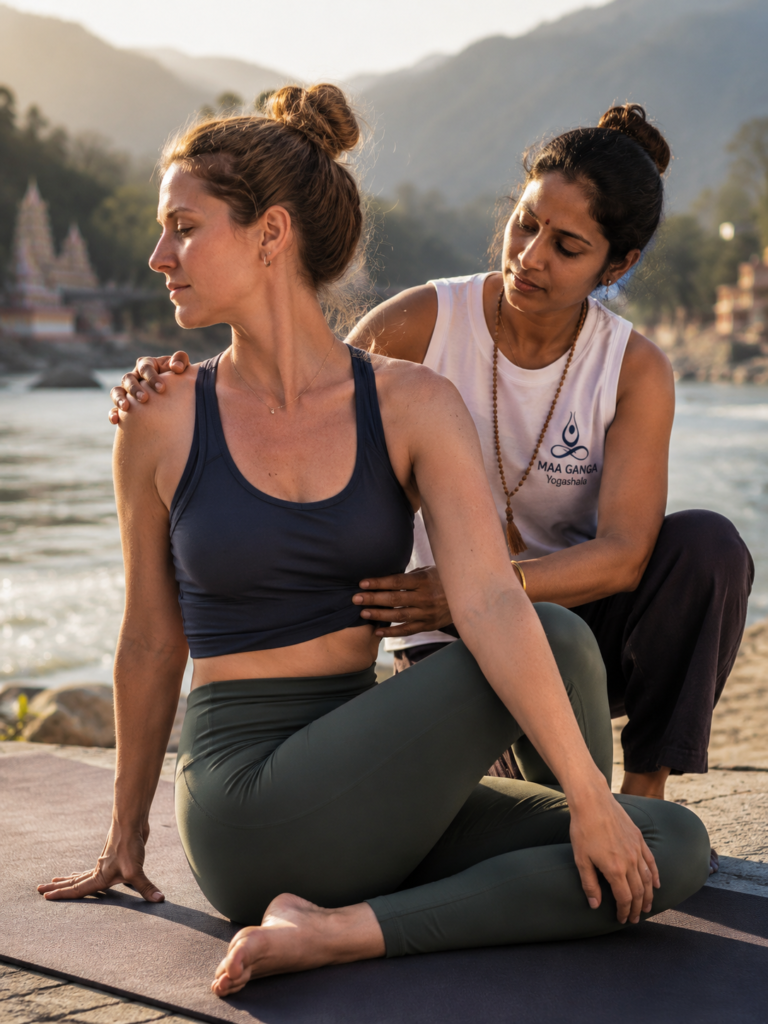
Touching another human being to correct their posture requires immense sensitivity, anatomical knowledge, and clear consent. You cannot learn this effectively by just watching a demonstration.
Small classes give you the dedicated time required to practice these adjustments under strict supervision. Your teachers guide your hands, ensuring you apply the correct pressure and directional force.
Developing Intelligent Sequencing
Creating a flow that safely opens the body for a peak pose takes strategic planning. You must understand counter-poses, energetic trajectories, and anatomical warm-ups.
With fewer students, your mentors can review your class plans line by line. They point out exactly where a transition feels clunky or where a specific muscle group needs more preparation.
Prioritizing Injury Prevention and Anatomical Focus
Your physical safety must always remain the absolute highest priority during any intensive physical program. Practicing four to six hours of physical postures daily places immense strain on your joints, ligaments, and central nervous system. When teachers supervise too many bodies at once, critical alignment errors slip through the cracks, leading to preventable injuries.
Smaller class sizes provide a robust safety net for your physical practice. Mentors monitor your fatigue levels and suggest intelligent modifications before you push yourself into dangerous territory. Research published across medical literature platforms like PubMed consistently demonstrates that individualized movement correction significantly lowers orthopedic injury rates.
This anatomical vigilance becomes especially vital when you start exploring challenging arm balances and deep inversions. Your instructors can safely spot you, ensuring your cervical spine remains protected. Many dedicated practitioners choose to establish these safe parameters early by enrolling in a 100-Hour Yoga Teacher Training in Rishikesh to build a flawless foundational practice.
Understanding Your Unique Biomechanics
No two skeletal structures look exactly the same. What feels like a deep, safe hip opener for your peer might cause severe impingement in your own joints.
Intimate settings allow teachers to assess your specific range of motion. They teach you how to adapt the classical poses to fit your body, rather than forcing your body to fit an aesthetic ideal.
Managing Nervous System Regulation
Intensive courses often trigger emotional releases and deep physical fatigue. Pushing through exhaustion blindly leads to burnout.
Mentors in smaller batches notice when your energy dips. They guide you toward restorative variations, teaching you the invaluable skill of listening to your body’s subtle signals.
Diving Deeper Into Yoga Philosophy and Energetics
The physical postures represent only a tiny fraction of the overarching yogic path. True education demands a rigorous exploration of ancient philosophy, subtle energy systems, and advanced breathing techniques. Reading the Yoga Sutras of Patanjali requires open dialogue, debate, and personal reflection.
In crowded lecture halls, these philosophical discussions often devolve into passive note-taking. You listen, you write, but you rarely get the chance to interrogate the concepts. Small group environments transform these philosophy hours into vibrant, intellectual incubators. You ask the difficult questions about applying these ancient ethical codes to your modern life.
This environment naturally encourages the exploration of complementary modalities that balance your energetic body. You feel supported enough to dive into profound internal work, similar to the deeply meditative states achieved during Sound Healing. The space feels safe enough for total vulnerability.
Exploring the Subtle Body
Understanding the chakras, nadis, and pranic flow requires deep internal awareness. These concepts often feel incredibly abstract when first introduced.
Your teachers have the time to guide you through specific meditative exercises to actually feel these energetic shifts. You move beyond theoretical knowledge into direct, personal experience.
Mastering Pranayama Techniques
Advanced breathwork forcefully alters your blood chemistry and nervous system state. Practicing these techniques incorrectly causes dizziness, anxiety, or hyperventilation.
Close supervision ensures you practice breath retention safely. Your teachers monitor your rhythm, your facial tension, and your recovery rate meticulously.
Building Genuine Confidence for Your Future Career
Graduating with a certificate means nothing if you feel terrified to stand in front of a room and lead a class. Imposter syndrome strikes almost every new graduate. The antidote to this fear is a profound sense of preparation and a deep understanding of your own capabilities.
Intimate learning environments systematically dismantle this self-doubt. Because you receive constant, constructive feedback throughout the course, you know exactly where your strengths lie. You graduate with a clear understanding of your unique teaching style, rather than just acting as a carbon copy of your lead instructor.
This personalized mentorship also provides invaluable insights into the business side of the industry. You have the opportunity to discuss your specific goals and get tailored advice on navigating your Yoga Teacher Career After 200 Hour TTC: 7 Best Steps. Your teachers become lifelong mentors, heavily invested in your long-term success.
Finding Your Niche
Not everyone is meant to teach fast-paced Vinyasa classes. You might discover a profound talent for Yin, restorative practices, or trauma-informed movement.
Smaller groups allow teachers to recognize these unique talents within you. They encourage you to lean into your specific passions and develop a specialized teaching voice.
Cultivating Lasting Professional Networks
The people you train alongside become your first professional network. Sharing this intense, vulnerable experience creates bonds that last a lifetime.
When the group is small, these connections run incredibly deep. You graduate with a supportive global family ready to share resources, refer clients, and offer advice.
The Importance of High-Quality Interaction
When comparing different educational formats, the level of interaction dictates the depth of your retention. Passive learning yields temporary memorization. Active, engaged learning rewires your brain and fundamentally changes how you process information.
Intimate batch sizes guarantee high-quality interaction every single day. You never have to fight for your teacher’s attention or wait in a long line to ask a clarifying question about an assignment.
This intense focus is one of the primary reasons students often debate the merits of different formats, as thoroughly detailed in the Online vs In Person 200 Hour YTT: The Ultimate Comparison. While digital formats offer convenience, the immediate, tactile feedback of an intimate, in-person setting remains unparalleled for serious practitioners.
Why Rishikesh? / Why This Matters
Practicing on the exact soil where sages have meditated for thousands of years provides a background resonance you simply cannot replicate anywhere else. The entire city of Rishikesh operates on a rhythm entirely dedicated to spiritual growth and self-inquiry.
Combining this powerful geographical location with an intimate class setting creates the ultimate incubator for your personal evolution. You strip away the distractions of massive tourist crowds and focus entirely on the ancient teachings. The environment supports deep introspection, while your small group provides the necessary grounding.
This powerful combination guarantees an education rooted in authentic tradition rather than commercialized fitness trends. You absorb the true essence of the practice directly from the source, protected within a tight-knit community of dedicated seekers.
Your Trusted Guide in India
If you’re considering training in Rishikesh, Maa Ganga Yogashala offers the dedicated mentorship and authentic environment you require. We intentionally limit our batch sizes to ensure your education remains highly personal, safe, and profoundly impactful.
Our experienced mentors guide you through every phase of this demanding journey, prioritizing your individual growth above all else. Discover how a supportive, intimate environment shapes your practice at Maa Ganga Yogashala.

FAQs
Why are small classes significantly better for beginners?
Fewer students mean the instructor can seamlessly customize modifications specifically for your current flexibility, strength levels, and unique anatomical structure. You never feel left behind.
Do smaller groups cover the exact same curriculum?
Yes. You learn the exact same mandatory syllabus, but you benefit from significantly deeper philosophical discussions and far more practical, hands-on teaching time.
Will I get enough actual teaching practice?
Absolutely. Smaller batches guarantee you spend considerably more time actively leading classes, refining your cues, and receiving direct feedback rather than just observing others teach.
How does batch size affect injury prevention?
With fewer bodies in the room, your lead teachers can constantly monitor your physical alignment. They catch subtle errors immediately, greatly reducing joint strain and preventing long-term orthopedic issues.
Does a smaller group help with networking?
Yes. Sharing an intensive learning space with fewer people creates incredibly powerful, lifelong bonds. You connect deeply with peers who quickly become your trusted professional support system globally.
Conclusion
Experiencing the definitive small group yoga teacher training benefits firsthand completely alters your trajectory as a future instructor. You graduate equipped with genuine confidence, pristine physical alignment, and a deep, highly practical understanding of ancient philosophy. This focused, highly personalized approach ensures you never feel like just another face in a crowded hall.
Ready to begin your authentic journey? Explore our 200-Hour Yoga Teacher Training in Rishikesh and take the first decisive step toward teaching with absolute clarity today.