Sound Healing for Children: Is It Safe and What Are the Benefits?
Sound healing for children benefits safety can seem like a simple question until you watch a child react to a loud gong, a singing bowl, or even a soft repeated tone. One child may become calm and curious; another may cover their ears and want to leave. That difference matters.
Sound-based practices can create a quiet space for breathing, attention, and relaxation, but children are not simply small adults. Their age, sensory preferences, hearing sensitivity, medical needs, and ability to communicate discomfort all affect whether a session is appropriate.
If you are a parent, teacher, or practitioner, you need more than claims that certain frequencies “heal” the body. You need practical guidance: what sound healing for kids actually involves, what benefits are reasonably supported, how to keep a session comfortable, and when you should avoid or modify it.
This guide focuses on gentle, child-centered use of sound in yoga and relaxation settings. It also separates promising benefits from claims that have not been firmly established by clinical research.
Sound Healing for Children: What Does It Actually Mean?
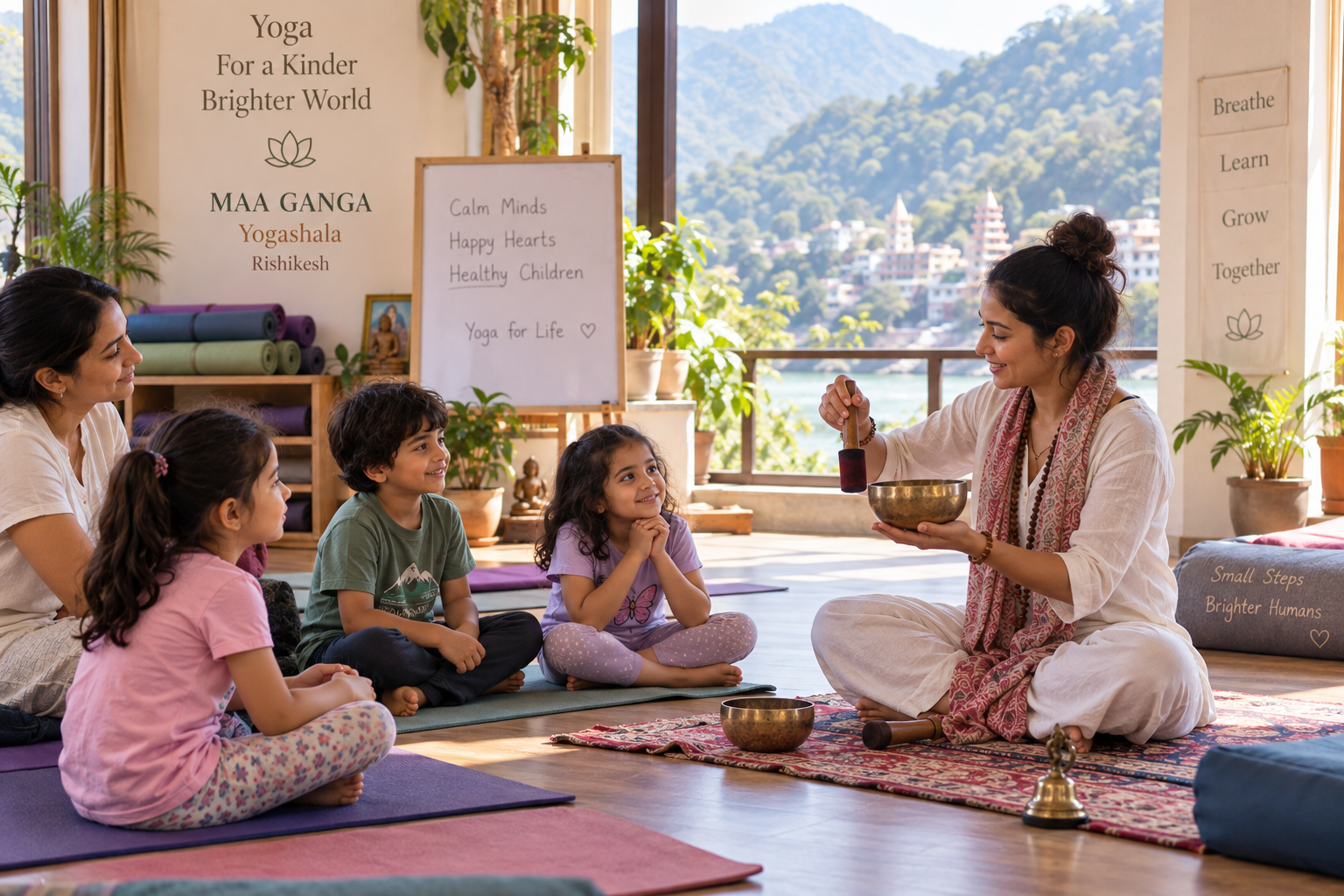
Sound healing for children usually refers to using sound intentionally during relaxation, meditation, yoga, breathwork, or quiet group activities. A session might include soft singing bowls, gentle percussion, humming, chanting, recorded music, or simple breathing exercises accompanied by sound.
That is different from claiming that a particular frequency can treat a disease. Scientific evidence around music-based interventions in children is more developed than evidence for “sound healing” as a standalone medical treatment. Recent research has found that music-based approaches can help with anxiety or distress in some pediatric settings, but results vary by intervention, age group, and outcome.
For example, a 2026 systematic review and meta-analysis of 17 randomized trials involving 1,871 children and adolescents found that perioperative music was associated with lower anxiety and pain, while the authors rated the certainty of evidence as low to very low because of heterogeneity, risk of bias, and imprecision. That is useful evidence for music as a supportive tool, not proof that singing bowls or specific frequencies can medically “heal” children. (PubMed)
You can therefore think of sound as a relaxation tool rather than a replacement for pediatric care. If your child has anxiety, sleep difficulties, hearing concerns, developmental needs, or a medical condition, sound practices should complement—not replace—appropriate professional support.
For teachers, this distinction is especially important. Yoga Alliance recognizes specialized children’s yoga training that considers child development and age-appropriate teaching. Its standards for Registered Children’s Yoga Schools address developmental stages from ages 2–15 and appropriate teaching applications. Learn more about Yoga Alliance. (Yoga Alliance)
Sound Healing for Kids: Is It Safe?
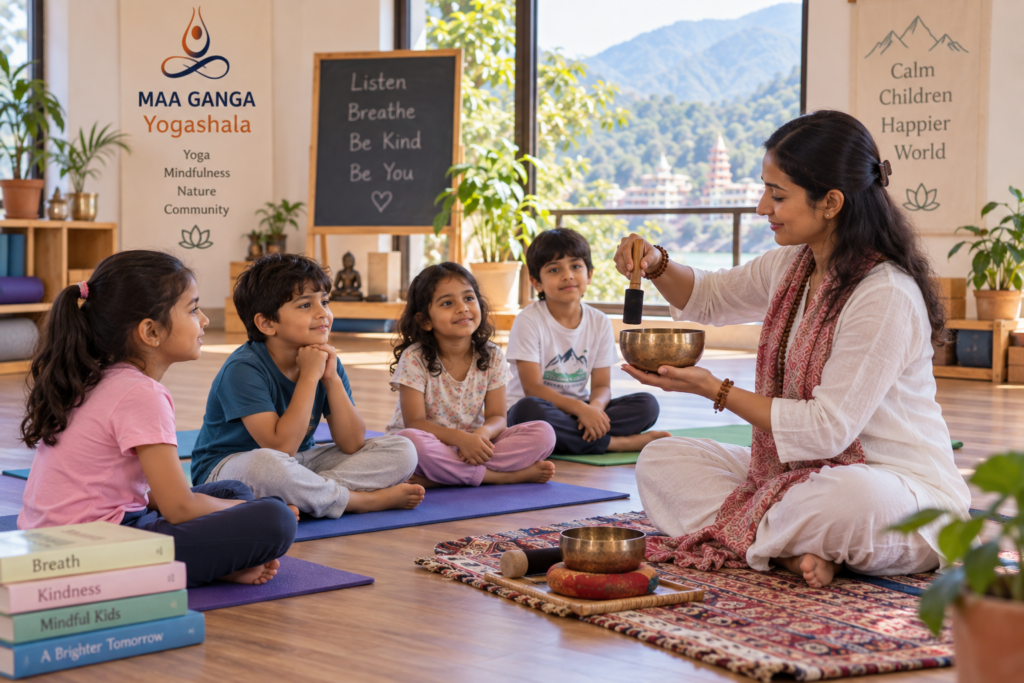
For many healthy children, gentle sound activities can be introduced safely when the volume is comfortable, the session is optional, and a responsible adult is watching the child’s response. Safety, however, depends less on the label “sound healing” and more on how the practice is delivered.
A singing bowl placed close to a child’s ear is very different from a bowl played softly several feet away. A loud gong in a small room is different from quiet humming. Headphones at high volume are different from a teacher singing at a comfortable level.
Use these practical rules:
- Keep the volume low enough that you can speak normally without shouting.
- Never place a vibrating instrument directly against a child’s head or body without appropriate professional guidance.
- Do not force a child to close their eyes, stay still, chant, or remain in the room if they are uncomfortable.
- Let children choose distance from instruments and give them a clear way to pause or leave.
- Avoid sudden loud sounds, especially for children who are sensitive to noise.
- Keep sessions shorter for younger children and extend them only if they remain comfortable.
- Ask parents or guardians about relevant hearing, neurological, developmental, or sensory concerns before a structured session.
You should also watch the child’s behavior rather than assuming silence means relaxation. Covering the ears, becoming unusually agitated, withdrawing, crying, repeatedly asking when the sound will stop, or showing visible distress are reasons to reduce the sound or stop the activity.
Children with known hearing problems, sound sensitivity, seizure disorders, significant sensory processing difficulties, or other relevant medical concerns may need individualized advice before participating. A pediatrician or appropriate specialist can help determine whether a particular activity makes sense.
The safest principle is simple: the child should remain in control of their comfort.
Potential Benefits of Gentle Sound Practices for Children
The most realistic benefits are related to relaxation, attention, emotional regulation, and enjoyment—not guaranteed medical treatment.
1. A calmer transition into relaxation
Children often move quickly from school, play, screens, or conversation into another activity. A predictable sound can create a clear transition. A few minutes of soft humming, gentle music, or a simple bowl tone may signal that it is time to slow down.
Research on pediatric music interventions suggests that music can reduce distress or anxiety in some contexts. A randomized study of children aged 4–6 undergoing immunization found differences in coping and distress behaviors when music therapy was used compared with standard care. (PubMed)
That does not mean every child will relax with sound. Some children find repetitive tones distracting. The useful question is not “Does sound calm children?” but “Does this child become more comfortable with this sound?”
2. Supporting attention and mindful listening
Sound can give children a concrete object for attention. Instead of telling a restless child to “clear your mind,” you can invite them to notice one sound from beginning to end.
For example, ask them to listen for the moment a soft tone becomes quieter. Then ask what they noticed in their body or breathing. This turns mindfulness into something observable rather than abstract.
3. Encouraging breathing and body awareness
Humming and gentle chanting naturally create a longer exhalation than ordinary speech. When used comfortably, this can make breathing practice more engaging for children.
The Ministry of Ayush’s children’s yoga guidance also includes music as a way to create a positive, soothing environment and encourage awareness of how music affects the mind. (Y-Break)
The goal should be awareness, not forcing a particular breathing pattern. If a child becomes dizzy, uncomfortable, or anxious, stop the exercise and return to normal breathing.
4. Creating a shared group experience
Sound can also work socially. A group humming exercise, simple call-and-response, or quiet listening activity can give children a common rhythm without requiring advanced yoga skills.
This can be particularly useful in a family yoga class, where different ages may have different attention spans. The activity can remain playful rather than becoming a long meditation session.
5. Making relaxation more engaging
Children often respond better to an activity than to an instruction. “Listen like a detective and tell me when the sound disappears” is more concrete than “Relax.”
That does not make sound inherently therapeutic. It simply makes a relaxation exercise easier to understand and participate in for some children.
If you want to understand how sound practices are discussed beyond children’s settings, our guide to sound healing and chronic pain research explains what current evidence can—and cannot—support.
How to Make a Child-Friendly Sound Session Safer
A good session begins before the first sound. Consider the child’s age, personality, environment, and previous response to noise.
Choose the sound carefully
Start with the quietest practical option. Soft voice, humming, gentle music, or a lightly played instrument is easier to adjust than a large gong. If you use singing bowls, create distance and strike them gently.
Avoid building a session around dramatic sound effects. The aim is comfort and attention, not intensity.
Give children control
Explain what will happen before you begin. You can say, “I will make one soft sound. You can listen, cover your ears, move farther away, or tell me to stop.”
This simple choice can reduce anxiety because the child knows they are not trapped.
Keep the first session short
Five to ten minutes may be enough for a younger child. You can always stop earlier. If the child enjoys the activity and remains settled, you can gradually explore longer sessions.
Do not use duration as a measure of success. A relaxed three-minute activity is more useful than a twenty-minute session that leaves a child overstimulated.
Watch the room, not just the instrument
A quiet instrument can still become overwhelming in a small reflective room. Consider the room size, distance between children, background noise, and whether children have an easy exit.
If several children are present, do not assume they all have the same sensory tolerance. Offer different positions in the room and let children observe without participating.
Keep therapeutic claims modest
If you are teaching yoga, avoid telling parents that sound healing can cure anxiety, ADHD, autism, trauma, sleep disorders, or other conditions. Those are medical claims that require evidence and appropriate professional expertise.
A better description is: “This is a gentle relaxation and mindful-listening activity that some children may enjoy.”
That wording is both safer and more honest.
Why Rishikesh? Why This Matters for Family Yoga
Rishikesh is strongly associated with yoga, meditation, chanting, and traditional Indian sound practices. That makes it an interesting setting for families and practitioners who want to experience sound in a broader yoga environment.
But the location does not automatically make every sound practice suitable for children. The same safety principles apply in Rishikesh as anywhere else: appropriate volume, qualified instruction, age-appropriate methods, informed parental consent, and respect for individual sensory needs.
If you are visiting with children, you may also be exploring a wider wellness itinerary. A short practice can be easier to fit into travel than a long training schedule, especially when your child is adapting to a new climate, food, time zone, and daily routine.
You can also pair gentle sound work with age-appropriate relaxation practices rather than treating it as a standalone “healing” treatment. For adults traveling with children, understanding how to choose a suitable retreat is useful; our guide to booking a yoga retreat in India for the first time covers practical questions you can ask before committing to a program.
For teachers, Rishikesh can also be a place to deepen your understanding of yoga teaching. If you are comparing sound approaches, our guide comparing binaural beats and singing bowls explains some practical differences between the two.
A Gentle Way to Explore Sound Healing in Rishikesh
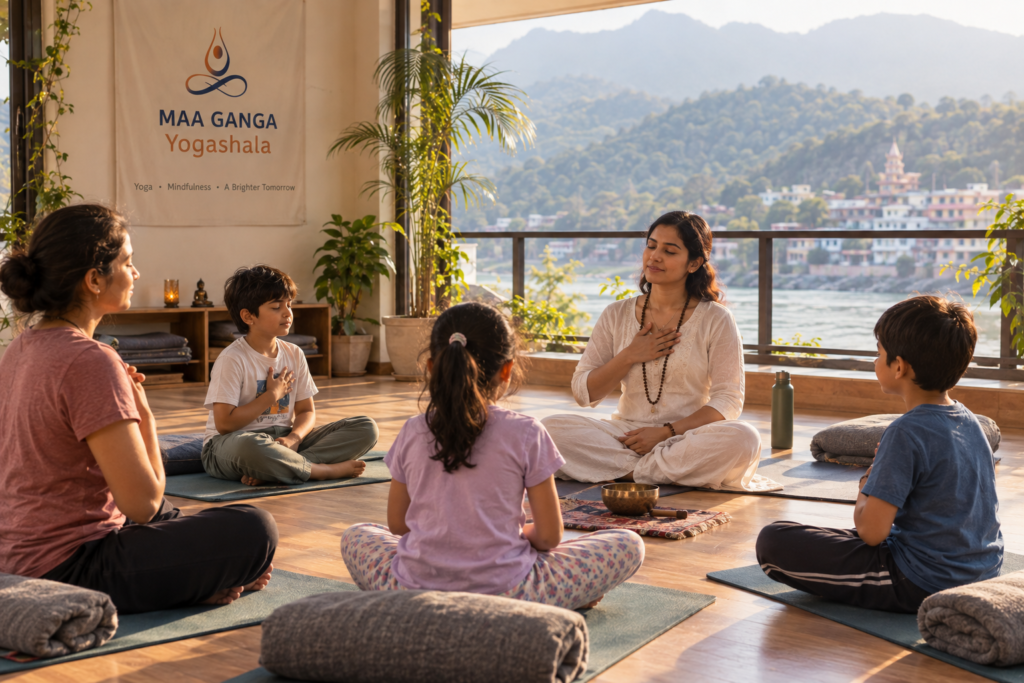
If you are considering sound practices as part of your own yoga education or wellness experience in Rishikesh, we offer structured yoga and relaxation experiences; our 3-day yoga retreat in Rishikesh can be a compact way to begin.
For parents, remember that an adult sound-healing session is not automatically a children’s session. Ask about age suitability, sound levels, group size, supervision, and what happens if a child becomes uncomfortable before booking.
You may also choose a shorter wellness experience rather than a teacher-training program. A compact retreat can give you space to explore yoga and relaxation while traveling, without committing to a full teacher-training schedule.
If you are planning deeper study as an adult practitioner, our 100-hour yoga teacher training in Rishikesh provides a more structured learning format. The key is to choose the experience that matches your actual goal rather than assuming a longer program is automatically better.
FAQs About Sound Healing for Children
Is sound healing safe for children?
Gentle, age-appropriate sound activities can be suitable for many children when volume is comfortable and participation is voluntary. Safety depends on the child’s individual needs and the way the session is conducted. It should not be presented as a substitute for medical or psychological care.
What age can children start sound-based relaxation?
There is no single universal starting age. Younger children usually need shorter, simpler, more playful activities, while older children can follow longer mindful-listening or breathing exercises. Developmental stage matters as much as chronological age.
Can singing bowls be used with children?
They can be used cautiously in some settings, but the instrument should not be played loudly or directly next to a child’s ears. Start gently, keep distance, explain what will happen, and stop if the child shows discomfort.
Can sound healing help childhood anxiety?
Sound and music-based interventions may help reduce distress or anxiety in some circumstances, but the evidence does not justify promising a guaranteed effect for every child. Recent pediatric research supports music as a potentially useful adjunct in some settings, while also highlighting limitations in the evidence. (PubMed)
If a child’s anxiety is persistent, severe, or interfering with daily life, professional assessment is more appropriate than relying on sound practices alone.
Should parents stay during a child’s sound session?
For younger children or first-time sessions, having a trusted parent or caregiver nearby is sensible. It gives the child reassurance and allows an adult to notice discomfort quickly. A responsible teacher should welcome reasonable parental involvement rather than treating it as an interruption.
Conclusion: Use Sound Gently, Not as a Cure
Sound healing for children benefits safety is best understood through a practical lens: sound can support relaxation, mindful listening, emotional comfort, and enjoyable yoga experiences, but it is not a guaranteed treatment for childhood health problems.
Start quietly. Keep sessions short. Give children control. Watch their response. Most importantly, separate evidence-based relaxation benefits from exaggerated claims about frequencies or “healing” effects.
If you want to explore sound practices in Rishikesh for your own learning, our sound healing program in Rishikesh is a natural place to begin. If your goal is broader yoga education, you can also explore our 200-hour yoga teacher training in Rishikesh.
Choose curiosity over hype, and safety over intensity. That approach gives you—and the children you teach—the best chance to experience sound as a calm, respectful part of yoga practice.