Sound healing space home setup: How to Create a Calm, Effective Practice Area
Imagine having a small corner of your home where the room feels quieter before you even strike a bowl. A sound healing space home setup does not need expensive instruments, a huge room, or a perfect spiritual aesthetic; it needs intention, comfort, and sensible acoustics.
Your goal is to create an environment where sound can be experienced without constant interruptions. In this guide, you will learn how to choose the right location, arrange mats and instruments, manage lighting and sound, select practical tools, and build a simple routine. You will also see how a home practice compares with learning sound healing in a dedicated setting, especially if you want to develop skills beyond personal relaxation.
1. Choose the Right Location for Your Sound Healing Space Home Setup
The best location is not necessarily the most beautiful corner of your home. It is the place where you can remain undisturbed, sit or lie comfortably, and hear subtle sounds without competing noise.
Start by checking three things: noise, floor stability, and ventilation. A room facing a busy road may look ideal but can make quiet practices frustrating. A bedroom, study, enclosed balcony, or spare corner can work if you can control interruptions.
Make the room acoustically comfortable
You do not need studio-grade acoustic treatment. Soft furnishings can reduce harsh reflections and make bowls, chimes, drums, or your voice sound more pleasant. Rugs, curtains, cushions, upholstered furniture, and bookshelves can all help.
Avoid turning the room into a completely dead acoustic box. Some natural resonance is part of the experience. The aim is clarity and comfort, not laboratory perfection.
Keep your main practice area away from rattling windows, loose shelves, noisy fans, and appliances that cycle on and off. Before buying anything, sit quietly in the room for five minutes. Notice traffic, neighbours, plumbing, pets, and electrical hum.
For background on yoga’s broader philosophical and practical context, the Yoga Alliance website can also help you understand how yoga education is structured internationally.
2. Build a Simple Home Sound Healing Space Without Overspending
A useful home setup can be surprisingly simple. You do not need ten instruments just because a social-media video shows ten instruments.
Begin with one primary instrument that you can learn to play confidently. A singing bowl is a practical choice because it can produce sustained tones and does not require a large setup. You might later add chimes, a small gong, tuning forks, a frame drum, or other instruments according to your interests.
If you are comparing different sound practices, the guide on binaural beats vs singing bowls healing can help you think about where acoustic instruments fit into your routine.
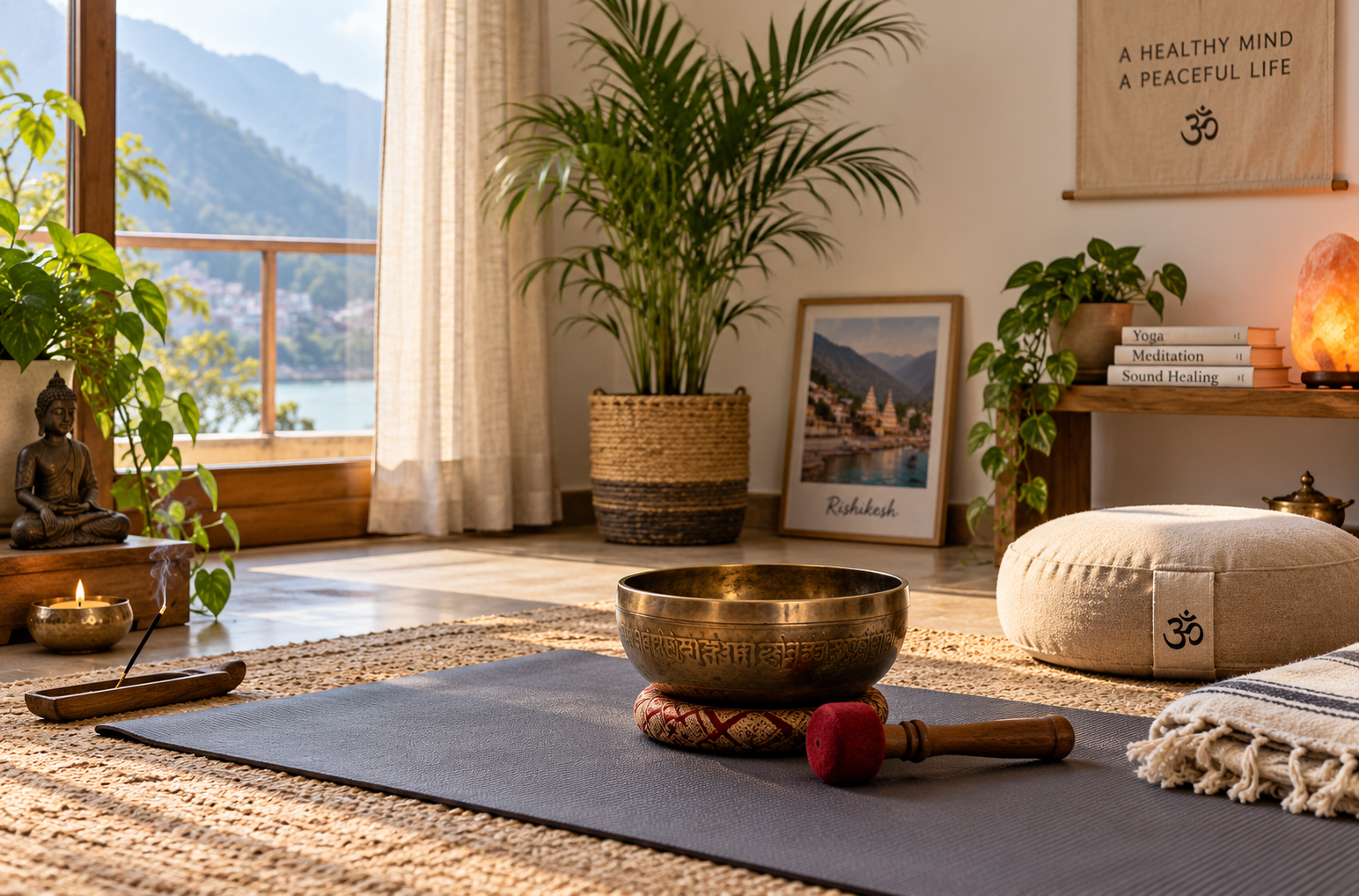
Your basic setup can include:
- A comfortable yoga mat or floor cushion
- One singing bowl or another primary instrument
- A small cushion or stand for the instrument
- A blanket for relaxation and warmth
- A timer or simple clock placed out of direct view
- Soft, adjustable lighting
- A small table or shelf for organised storage
- Water nearby, especially during longer sessions
Place the main instrument where you can reach it without twisting or stepping over participants. If you practice lying down, keep instruments outside the path where your hands, feet, or blanket could knock them over.
Avoid clutter. Too many objects can make the room feel like a storage area rather than a practice space. A clean floor and one clearly defined instrument area are often more effective than elaborate decoration.
Natural materials can make the space feel grounded, but do not buy décor simply to make photographs look spiritual. Spend your money first on comfort, reliable instruments, and learning how to use them safely.
3. Arrange Instruments, Lighting, and Seating for Better Practice
Once the room is selected, think about how sound travels through your space. Your position relative to walls and furniture can change what you hear.
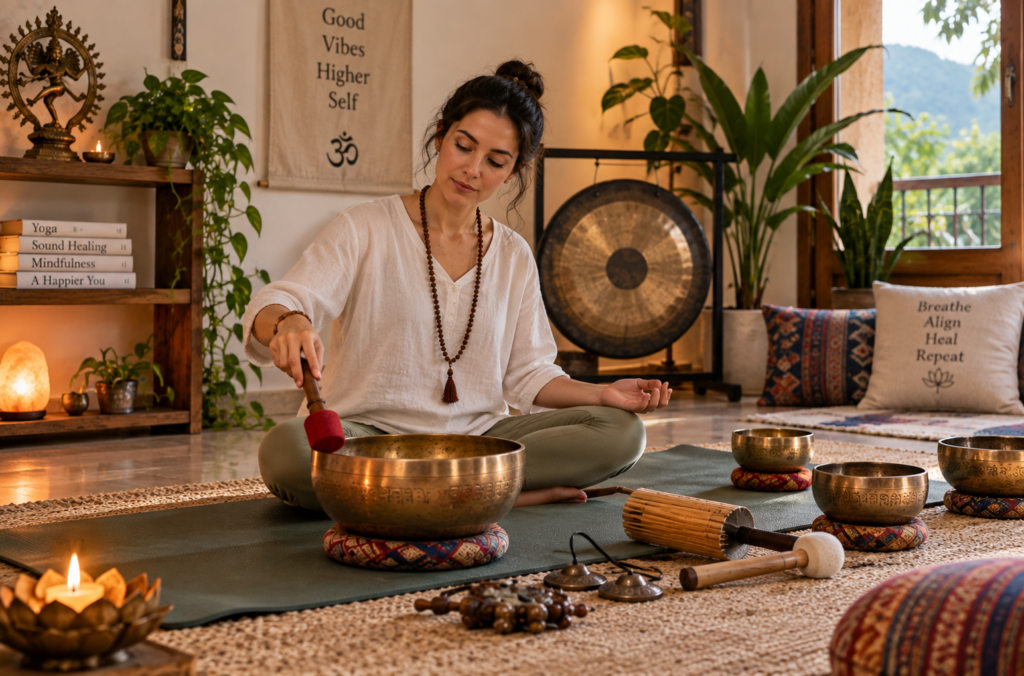
For personal practice, place your mat in a position where you can sit upright or recline without hitting furniture. Keep your primary instrument slightly in front and to the side of your dominant hand. This gives you enough room to strike or play it naturally.
If you are practicing with another person, leave enough space between mats for safe movement. Instruments should have a stable home rather than being placed on the floor where someone can accidentally kick them.
Use lighting to support attention
Bright overhead lighting can feel clinical during a quiet sound session. A softer lamp or indirect light is usually more comfortable. Daylight can work beautifully during morning practice, while warmer low-level lighting may suit an evening session.
Candles can be part of a personal ritual, but they are optional. If you use an open flame, keep it away from curtains, mats, blankets, clothing, and anyone who may become deeply relaxed. Battery-powered candles remove that fire risk.
You should also consider temperature. A sound session can involve lying still for twenty or thirty minutes, and people often feel cooler when they are relaxed. Keep a blanket within reach.
Sound healing is not a substitute for medical diagnosis or treatment. If you are interested in what research actually says about sound and pain, see our overview of sound healing and chronic pain research and use it as a starting point for asking sensible questions. If you use it alongside healthcare, keep the roles clear and avoid promising that a particular frequency or instrument will cure a condition. For evidence-based biomedical research, PubMed is a useful place to check published studies rather than relying on dramatic online claims.
Protect the listening experience
Turn phone notifications off. Close unnecessary browser tabs. Silence smart speakers and other devices. If you live with family or roommates, agree on a quiet period before you begin.
You are not trying to create silence at all costs. You are creating enough consistency that your attention can stay with the sound.
4. Create a Safe and Repeatable Sound Healing Routine
A beautiful room will not automatically create a meaningful practice. Your routine matters more.
Start with a short session of around 10 to 15 minutes. Sit comfortably, take a few slow breaths, and notice the room before making sound. This brief pause helps you distinguish between external noise and the sound you intentionally introduce.
Then use your chosen instrument slowly. Give each tone enough time to fade before creating the next one. Listen to the beginning, middle, and end of the sound instead of rushing from one strike to another.
You can build a simple sequence:
- Arrive and settle for two or three minutes.
- Take several comfortable breaths without forcing them.
- Play a few gentle tones with clear pauses.
- Spend several minutes listening rather than actively playing.
- Finish with a minute of ordinary silence.
- Sit up slowly and note how you feel.
Keep the volume moderate. Louder does not mean more healing. Strong impacts close to the ears can be uncomfortable, particularly for people who are sensitive to sound.
If you plan to use sound in sessions for other people, your responsibility becomes greater. Ask about comfort, hearing sensitivity, personal boundaries, and whether the participant wants touch or close-proximity instruments. Never assume that a person wants an instrument placed close to their body.
A useful home practice also includes reflection. After each session, write one or two sentences about the instrument used, approximate duration, volume, and how you felt afterward. Over time, this helps you identify what actually supports your practice instead of relying on vague expectations.
If yoga is part of your routine, you can pair sound with gentle movement, breathwork, or relaxation. However, keep the session coherent. You do not need to combine every wellness technique in one sitting.
Why Rishikesh? Why Learn Sound Healing in a Dedicated Setting?
Rishikesh offers a distinctive environment for anyone interested in yoga, meditation, and sound-based practices. The combination of yoga schools, retreat spaces, spiritual traditions, and the natural setting around the Ganga can make it easier to spend several days focusing on practice rather than squeezing it between household responsibilities.
A home sound healing space is excellent for consistency, but it has limitations. You may not know whether your instrument technique is producing the sound you intend. You may also have questions about session structure, instrument selection, group facilitation, or how to adapt a practice for another person.
That is where in-person learning can add value. If you are deciding between learning alone and working with others, our comparison of group and private sound healing sessions can help you think through the differences. You can observe how an experienced practitioner positions instruments, controls volume, creates transitions, and holds a calm environment. You also get immediate feedback instead of trying to correct every technique through videos.
Rishikesh can also be useful if you want to combine sound work with broader yoga education. A retreat may suit you if you mainly want immersion and personal practice, while teacher training is more appropriate when you want a structured educational path. If you want a shorter immersion, a 3-day yoga retreat in Rishikesh can provide dedicated time for yoga and reflection.

A Practical Home Setup Checklist Before Your First Session
Before you start, walk through the room as if you were a guest entering it for the first time.
Check that:
- The floor is clear and stable.
- Your mat is large enough for the practice.
- Instruments cannot easily roll, tip, or fall.
- Lighting can be adjusted without leaving the practice area.
- Your phone is silenced and out of reach.
- Windows and doors can be managed for reasonable privacy.
- A blanket and water are available.
- The room temperature is comfortable.
- You know how loudly you intend to play.
- You have a clear beginning and ending for the session.
If your practice grows, upgrade gradually. Your next purchase should solve a real problem. If the room is too reverberant, improve the soft furnishings. If you cannot play comfortably, adjust your seating. If you are unsure about an instrument, take a lesson before buying several versions of it.
This approach saves money and keeps your practice grounded.
Learn More with Maa Ganga Yogashala
If you want to explore sound healing in a broader yoga setting, we invite you to learn more about Maa Ganga Yogashala and its practice-focused programs.
For a focused introduction, our sound healing program in Rishikesh can give you dedicated time to explore instruments, listening, and guided practice.
FAQs About a Home Sound Healing Space
What do you need for a basic sound healing space at home?
You mainly need a comfortable place to sit or lie down, one suitable instrument, moderate lighting, and enough quiet to listen without constant interruptions. A yoga mat, blanket, and simple storage are useful additions.
How big should a home sound healing room be?
There is no universal minimum size. For personal practice, a small room with enough floor space for your mat and safe movement is sufficient. If you work with other people, allow extra room around each participant and your instruments.
Which instrument should you buy first?
Choose the instrument you genuinely want to learn rather than buying a large collection immediately. A singing bowl is a common starting point because it is compact and versatile, but your best first instrument depends on the type of sound practice you want to develop.
Can you combine yoga and sound healing at home?
Yes. You can place sound at the beginning or end of a yoga, breathing, or relaxation session. Keep the sequence simple and pay attention to how your body and attention respond rather than assuming that more techniques will produce a better result.
Is a home setup enough to learn professional sound healing?
It can support personal practice, but it is not the same as guided education. If you want to work with other people, structured training can help you develop instrument technique, session planning, communication, and appropriate safety boundaries.
Conclusion: Turn Your Space Into a Consistent Practice
A sound healing space home setup does not have to look like a retreat centre. The strongest setup is usually the one you can use consistently: a clear floor, comfortable mat, carefully chosen instrument, manageable lighting, controlled interruptions, and enough time to listen.
Start small. Learn one instrument well. Keep the volume comfortable. Give sounds space to fade. Most importantly, separate personal relaxation from medical claims and professional practice.
If you are ready to deepen your understanding in Rishikesh, explore our 200-hour Yoga Teacher Training in Rishikesh and take the next step toward a broader yoga foundation. If sound healing is your main interest, you can explore that focused option before choosing your path.
Your home can be the place where the practice begins. The next step is learning how to use it with greater skill, clarity, and intention.