
Sound Healing Trauma PTSD Healing: Understanding the Mind-Body Connection
Have you ever felt a deep, physical resonance in your chest when a loud drum beats? That involuntary physiological reaction is the foundation of how sound healing trauma PTSD healing works to release deeply stored emotional pain. When you experience severe stress, your logical mind often becomes overwhelmed, leaving your physical body to absorb the shock.
Traditional talk therapy remains highly valuable, but it frequently struggles to reach these non-verbal layers of distress. Cognitive approaches require you to articulate your pain, which can sometimes trigger a secondary stress response. Acoustic therapy bypasses the conscious mind entirely, communicating directly with your nervous system.
You do not have to forcefully dig up painful memories to experience relief. Through the strategic application of specific acoustic frequencies, you can gently coax your body out of a state of chronic defense. By allowing stable external vibrations to interact with your internal systems, you give your body permission to process what it has been holding onto.
The human body is largely composed of water, making it a highly conductive medium for vibrational waves. When these waves travel through your tissues, they initiate a subtle cellular massage that disrupts stagnant energy. This biological interaction is the gateway to profound, lasting recovery.
The Physics Behind Sound Healing Trauma PTSD Healing
To understand how this practice works, you must first look at your body as a complex network of vibrating frequencies. Every organ, bone, and tissue possesses a natural resonant frequency when in a state of health. Trauma physically disrupts this harmony, causing certain areas of the body to vibrate at discordant rates.
When you introduce the pure, stable frequencies of singing bowls or tuning forks, a principle called entrainment occurs. Entrainment is a physics phenomenon where a weaker, chaotic vibration naturally syncs with a stronger, rhythmic one. Sound healing trauma PTSD healing leverages this principle to retune your dysregulated biological systems back to their natural state.
Extensive clinical literature available through databases like PubMed explores how specific sound frequencies directly impact neurochemistry. The waves alter the electrical activity within your brain, creating measurable shifts in your physical state.
Your brainwaves transition from the high-alert beta frequencies associated with anxiety into slower alpha and theta frequencies. Theta states are particularly crucial for recovery, as they represent the deeply relaxed threshold between waking and sleeping. In this state, your body halts the production of stress hormones like cortisol and adrenaline.
How Sound Healing Trauma PTSD Healing Rewires the Brain
Chronic stress physically alters the structure of your brain over time. The amygdala, your brain’s threat-detection center, becomes hyperactive and overly sensitive to harmless stimuli. At the same time, the prefrontal cortex, responsible for logical reasoning, becomes suppressed.
Vibrational therapy helps interrupt this destructive neurological loop. As the soothing acoustics wash over you, the amygdala receives a physical signal that the immediate environment is safe. This sensory input allows your nervous system to stand down from its defensive posture.
With the threat response deactivated, blood flow gradually returns to the prefrontal cortex. This shift allows you to process emotions with greater clarity and less reactivity. Over time, consistent exposure to therapeutic acoustics can help permanently lower your baseline anxiety levels.
The process of rebuilding these neural pathways takes patience, but the acoustic support makes it far less exhausting. You are essentially using sound to train your brain how to relax again. To dive deeper into the specific physiological metrics of this process, read about the Sound Healing Anxiety Stress Reduction Science: 5 Best Facts.
Somatic Experiencing: Releasing the Issues in Your Tissues
Trauma does not just live in your memories; it is actively stored within your physical structure. The fascia, a web of connective tissue surrounding every muscle and organ, is highly sensitive to emotional shock. When you experience fear, this tissue contracts and tightens as a protective mechanism.
If the stress cycle is never completed, that physical contraction becomes chronic. This trapped kinetic energy often manifests as unexplained tension, chronic pain, or digestive issues. Vibrational resonance penetrates this dense fascial tissue in ways that manual massage cannot always achieve.
As the sound waves ripple through your body, they create micro-vibrations that encourage the fascia to soften. This softening allows the trapped emotional energy to finally dissipate safely. You might experience this release as sudden warmth, tingling, or even a spontaneous emotional response like crying.
These physical releases are entirely normal and indicate that the therapy is working effectively. You are safely completing the stress cycle that was interrupted during the original traumatic event. Understanding this mind-body link is a core component of the Emotional Experience Yoga Teacher Training India: 7 Best Truths.
The Role of the Vagus Nerve in Vibrational Recovery
The vagus nerve is the superhighway of your parasympathetic nervous system, responsible for your “rest and digest” functions. It runs from your brainstem down through your vocal cords, heart, lungs, and digestive tract. A toned vagus nerve is essential for emotional regulation and resilience.
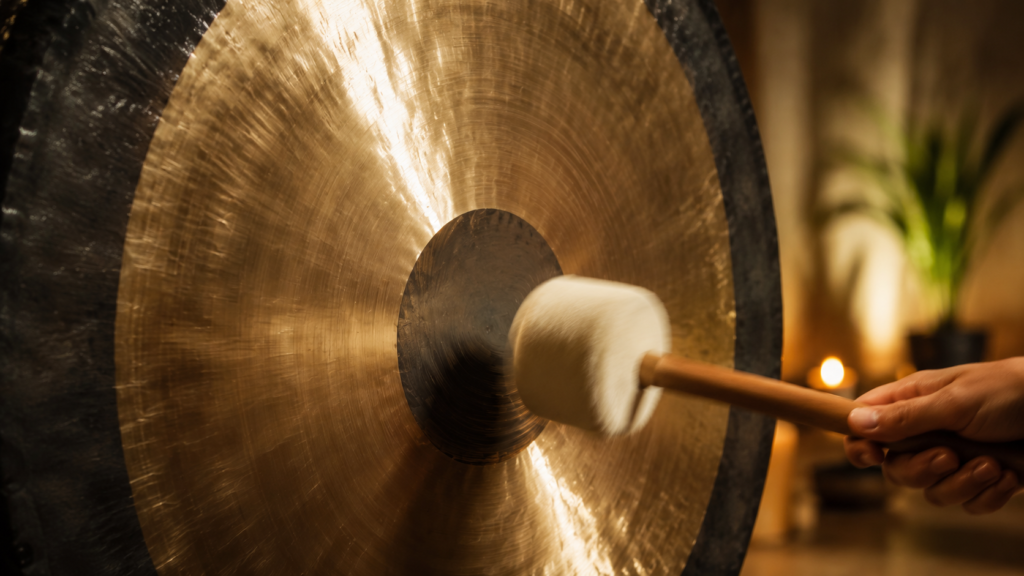
Sound therapy is one of the most effective ways to stimulate and tone this crucial nerve pathway. Because the vagus nerve connects directly to the inner ear, specific acoustic frequencies can act as a direct massage for the nerve. Low-frequency sounds, like those produced by large gongs or deep chanting, are particularly effective.
When the vagus nerve is stimulated by these vibrations, it sends a cascade of calming signals throughout your entire body. Your heart rate slows down, your blood pressure drops, and your breathing deepens naturally. This biological shift is the exact opposite of a panic attack.
By regularly engaging in this type of nervous system conditioning, you increase your vagal tone over time. A higher vagal tone means you can recover from stressful situations much faster in your daily life. You become more adaptable and less easily overwhelmed by external triggers.
Integrating Acoustic Therapy with Traditional Modalities
Healing from severe stress is rarely a linear journey, and relying on a single approach is often insufficient. Combining acoustic therapy with mindfulness, conscious movement, and breathwork creates a highly robust framework for recovery. The vibrations prepare your physical body, making it significantly more receptive to other practices.
For example, when your nervous system is deeply relaxed by a sound bath, entering a meditative state becomes much easier. Major regulatory bodies like the Yoga Alliance increasingly acknowledge the value of integrating complementary therapies into wellness education. The synergy between these practices accelerates profound shifts.
Pairing sound therapy with intentional breathing techniques multiplies the calming effect on your nervous system. The breath acts as an anchor while the sound waves do the clearing work. For insights into how breathwork functions alongside holistic therapies, explore the Pranayama Teacher Training Importance: 7 Proven Realities.
When you combine these ancient tools, you build a sustainable foundation for long-term emotional resilience. You transition from merely surviving your triggers to actively regulating your own physiological state.
Understanding the Energetic Anatomy of Grief
Ancient yogic science views emotional distress as energetic stagnation within the subtle body. When a distressing event occurs, it often blocks the natural flow of prana, or life force energy. These blockages most frequently occur within the lower energetic centers, severely impacting your sense of safety.
Acoustic therapy specifically targets these energetic hubs to clear blockages and restore natural harmony. Different bowls and instruments are tuned to specific frequencies that correlate directly with individual energy centers. By playing these specific notes, practitioners can help dissolve localized energetic congestion.
Using targeted frequencies for structured chakra balancing allows energy to move freely through your system once again. As the pathways clear, you often feel lighter, more grounded, and deeply connected to your physical body. It bridges the gap between the physical symptoms and the energetic root cause.
This approach honors the complexity of human suffering by addressing the unseen layers of your anatomy. It provides a comprehensive healing model that respects both biological science and ancient energetic wisdom.
Why Rishikesh? / Why This Matters
The environment you choose for your recovery journey plays a massive role in your overall success. Attempting to heal while remaining in the exact environment that triggers your stress is incredibly difficult. You need physical and energetic distance to truly allow your nervous system to reset.
Rishikesh sits directly on the sacred banks of the Ganga River, surrounded by the grounding energy of the Himalayas. This location provides a naturally high-vibrational atmosphere that effortlessly amplifies therapeutic practices. The entire region is steeped in centuries of focused spiritual practice.
Stepping away from your daily responsibilities allows your defensive barriers to finally drop. Immersing yourself in a dedicated, supportive environment offers the focused time needed to absorb the benefits of vibrational therapy. Participating in a 5 Days Yoga Retreat in Rishikesh provides the perfect container for this deep restorative work.
The clean mountain air, the sound of the flowing river, and the supportive community all contribute to profound somatic safety. Your body recognizes the tranquility of the environment and responds by accelerating the healing process.
Supportive Spaces: Finding Your Healing Environment
If you feel called to explore these gentle modalities, having guided, professional support makes all the difference. Navigating emotional release requires a container of absolute safety and deep understanding. Maa Ganga Yogashala provides exactly this kind of authentic sanctuary.
If you are considering training in Rishikesh, Maa Ganga Yogashala offers dedicated sound healing programs designed to nurture your nervous system. Our experienced teachers understand the delicate nuances of somatic release and hold space without judgment.
We approach every student with the understanding that trauma recovery is highly individual. There is no rushed timeline here; you are encouraged to move entirely at your own pace. We provide the tools, the knowledge, and the supportive atmosphere for you to reclaim your inner peace.

Frequently Asked Questions
Can acoustic therapy replace traditional medical treatment for severe distress?
While vibrational therapy is an incredibly powerful complementary approach, it should never fully replace professional medical or psychiatric care. It works best when integrated into a broader, comprehensively managed recovery plan. Always consult with your primary healthcare provider before making changes to your treatment.
Do I need prior meditation experience to benefit from a sound bath?
Absolutely no prior experience is necessary to receive the full benefits of this practice. You simply lie down in a comfortable position, close your eyes, and allow the frequencies to wash over you. It requires zero active mental effort on your part.
What should I expect to feel during my first session?
Experiences vary widely, but most people report feeling deeply relaxed, as if hovering between wakefulness and sleep. You might feel physical sensations like tingling or warmth, or you may experience a sudden, gentle release of emotion. All of these reactions are normal and highly beneficial.
How often should I participate in vibrational therapy for lasting results?
Consistency builds better neurological results over time, but even a single session can provide immediate relief for an overactive nervous system. Listening closely to your body will dictate the best frequency for your ongoing personal practice.
Conclusion: Take the Next Step
Sound healing trauma PTSD healing is far more than just a relaxing wellness trend; it is a profound application of acoustic science. By allowing pure vibrational frequencies to reset your nervous system, you open the door to genuine somatic release. You do not have to carry the weight of past distress in your tissues forever.
You hold the inherent power to gently rewrite the energetic and biological imprints left by pain. By leaning into these ancient acoustic tools, you give your body the ultimate permission to rest, recalibrate, and heal. The journey toward inner peace begins the moment you decide your nervous system deserves a break.
Ready to begin? Explore our 200-Hour Yoga Teacher Training in Rishikesh and take the first step today.