Yoga Alliance RYT 200 Certification: The Complete Blueprint
INTRODUCTION
Securing your Yoga Alliance RYT 200 certification is the most critical milestone for anyone serious about teaching professionally. It is the global benchmark that separates casual practitioners from educated, safety-conscious guides.
You might be wondering if you are physically or mentally ready for such an intensive program. The truth is, this credential demands dedication, but it rewards you with profound personal growth.
Studios around the world actively look for this specific registry mark when hiring new talent. It proves you have invested the time to understand alignment, anatomy, and ancient philosophy properly.
By the end of your training, you will possess the confidence to sequence classes and modify postures for diverse body types. This guide breaks down exactly what to expect from the curriculum and how to prepare for the journey ahead.
The Foundation of Your Yoga Alliance RYT 200 Certification
A Yoga Alliance RYT 200 certification serves as the industry standard for foundational teaching methodology. It ensures that regardless of where you study, your education covers the essential pillars of practice.
The governing body, Yoga Alliance, established these guidelines to protect students and elevate the profession globally. They require schools to follow a strict hour-by-hour breakdown of specific educational categories.
When you enroll in an approved program, you are not just paying for a retreat. You are entering a rigorous academic and physical environment designed to test your limits.
The credential proves you have spent a minimum of 200 contact and non-contact hours mastering the discipline. This gives studio owners peace of mind knowing you can lead a safe, effective class.
Many aspiring teachers feel overwhelmed by the sheer volume of information required at the beginning. However, the curriculum is carefully paced to build your knowledge logically from the ground up.
If you are debating between different program lengths, comparing a 100-hour and 200-hour program can help clarify your path. The 200-hour option remains the universally accepted starting point for professional instruction.
Ultimately, this foundational training shifts your perspective from being a student to becoming a leader in the wellness space.
Core Curriculum of a Yoga Alliance RYT 200 Certification
The syllabus for your Yoga Alliance RYT 200 certification is densely packed with theoretical and practical knowledge. You will spend roughly half of your time on techniques, training, and direct physical practice.
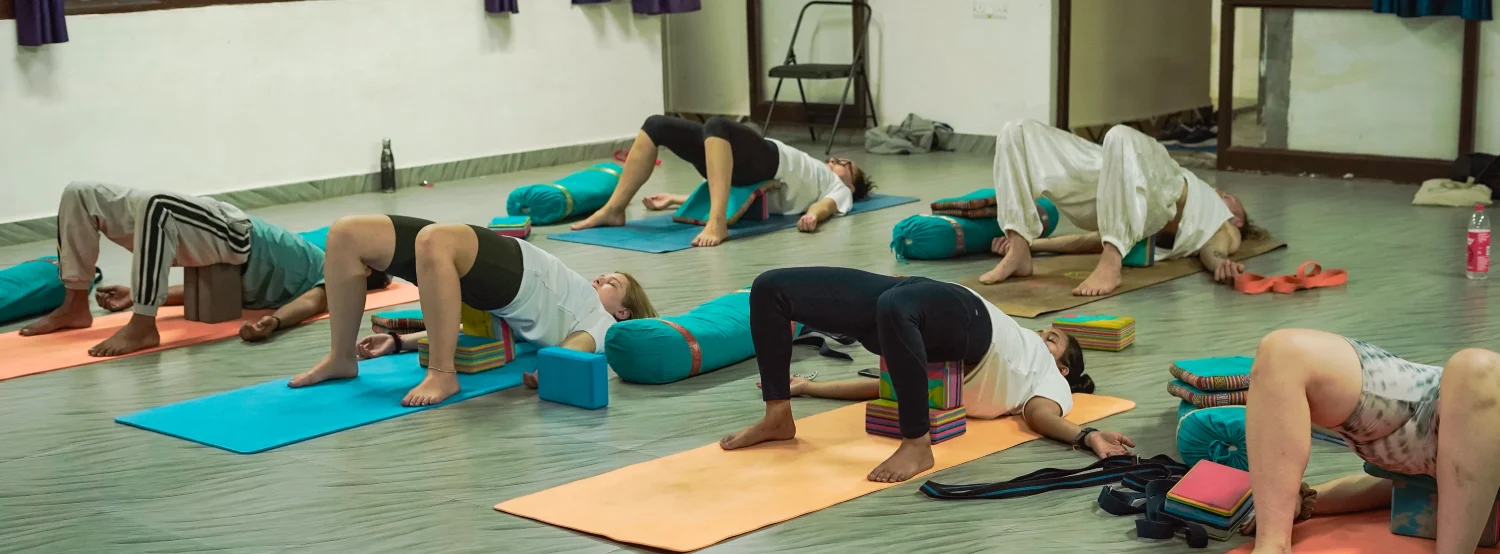
This includes breaking down traditional asanas, learning proper breath control (pranayama), and exploring various meditation styles. You will dissect poses to understand their energetic benefits and physical contraindications.
Teaching methodology is another massive component of the standard curriculum. You will learn how to use your voice effectively, pace a class, and demonstrate postures without exhausting yourself.
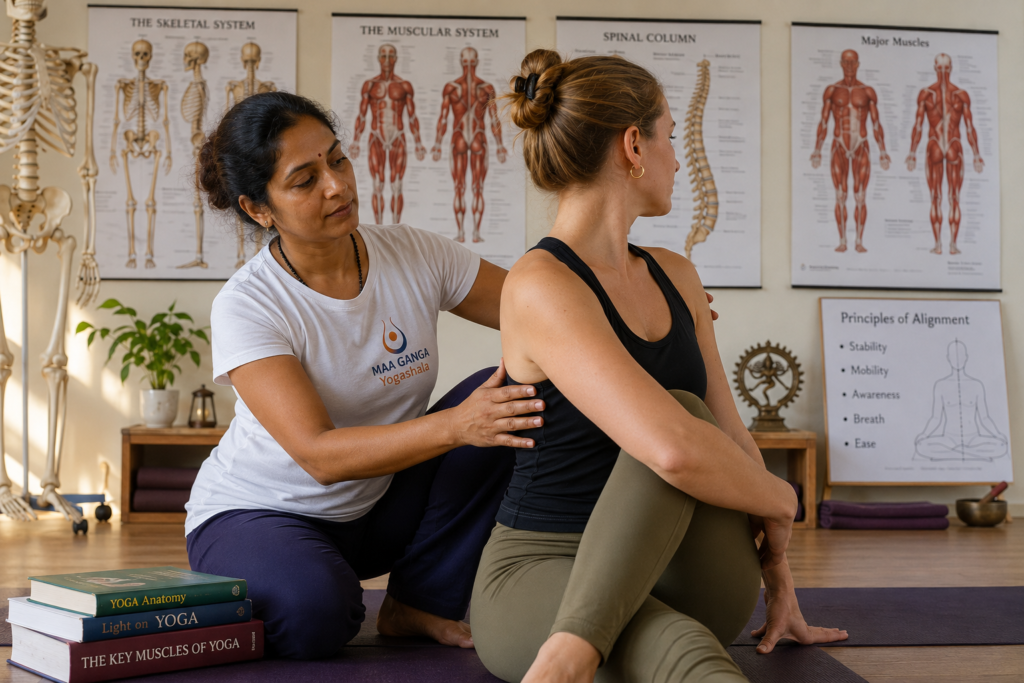
Instructors will teach you the art of hands-on adjustments and verbal cueing. Knowing how to guide a student verbally is often more powerful than physically moving their body.
You will also practice teaching in small groups, which helps eliminate stage fright early on. Receiving constructive feedback from peers and lead trainers is where the most significant growth happens.
Understanding the difference between Hatha and Ashtanga disciplines will allow you to sequence classes that respect traditional lineages. You learn to honor the roots of the practice while adapting it for modern bodies.
By graduation day, you will have a ready-to-teach sequence memorized and the skills to improvise safely.
Anatomy, Biomechanics, and Safe Alignment
Anatomy is often the most challenging, yet crucial, part of the 200-hour syllabus. You must understand how the human body moves to prevent injuries in your future students.
Your trainers will cover the skeletal system, muscular engagement, and the mechanics of the spine. You will learn why certain bodies physically cannot achieve specific postures due to bone compression.
This biomechanical awareness allows you to offer intelligent modifications rather than forcing a student into a shape. It builds immense trust between you and the people attending your classes.
Beyond physical anatomy, you will study subtle anatomy, including the chakra system and nadis (energy channels). Understanding how physical movement impacts energetic blockages is a hallmark of a well-rounded teacher.
This holistic approach ensures you are treating the student as a complete entity, not just a physical body.
The Deep Personal Transformation
Physical stamina is only one part of the journey; the mental transformation is equally demanding. Many students experience profound emotional releases during their month-long immersion.
Practicing intensely every day breaks down ego barriers and forces you to confront limiting beliefs. You will likely shed old habits and discover a resilience you never knew you possessed.
Living in a close-knit community of fellow seekers provides a mirror for your own personal development. You support each other through muscle soreness, fatigue, and moments of self-doubt.
Building a consistent self-practice, known as Sadhana, is one of the most valuable takeaways from the course. You learn that your ability to teach directly reflects the depth of your personal discipline.
This inward journey is vital for becoming a certified yoga teacher in India or anywhere else. You cannot pour from an empty cup, and this training fills your reservoir of self-awareness.
The emotional intelligence you develop will make you a far more empathetic and intuitive instructor.
Integrating Ancient Yogic Philosophy
Yoga is far more than physical exercise, and the philosophy module proves this immediately. You will study ancient texts, primarily the Yoga Sutras of Patanjali, to understand the mind.
The Eight Limbs of Yoga offer a comprehensive ethical and psychological framework for living a balanced life. You will explore concepts like Ahimsa (non-violence) and Satya (truthfulness) in the context of modern society.
These philosophical discussions often spark the deepest paradigm shifts among teacher trainees. You begin to realize that the physical postures are merely tools to prepare the body for meditation.
Integrating these ancient teachings into your daily routine elevates your practice from a workout to a spiritual discipline. It gives your future classes depth, meaning, and a sense of rooted tradition.
Daily Life Inside an Ashram Training
A typical day in a residential 200-hour program is highly structured and incredibly demanding. Your day usually begins before sunrise with traditional cleansing techniques (shatkarmas) and pranayama.
This is immediately followed by a rigorous two-hour physical practice, usually Ashtanga or dynamic Vinyasa. By breakfast, you will have already completed more physical work than most people do all day.
Mid-day sessions are heavily focused on lectures, covering anatomy, philosophy, and alignment workshops. You will sit with manuals and notebooks, absorbing decades of collective wisdom from your lead trainers.
Afternoons often include a restorative or Hatha practice, focusing on stillness, deep stretching, and teaching methodology. You might also explore complementary modalities, like traditional sound healing practices, to expand your toolkit.
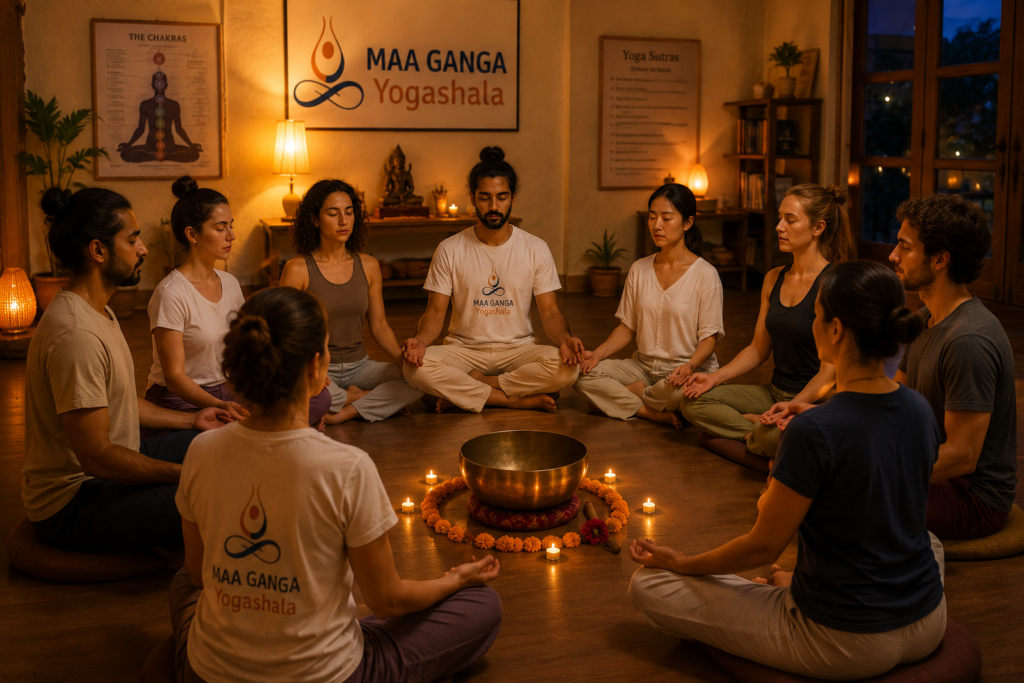
Evenings are reserved for meditation, chanting, or satsang (spiritual discourse) before an early bedtime. The schedule is intentionally intense to immerse you completely in the yogic lifestyle without outside distractions.
Proper physical and mental preparation steps before arriving will help you adapt to this rigorous daily rhythm much faster.
While it feels exhausting at times, this disciplined routine is the crucible where great teachers are forged.
Why Rishikesh? / Why This Matters
Choosing the right location for your education is just as important as the curriculum itself. Rishikesh holds an unmatched vibrational energy that accelerates your learning process.
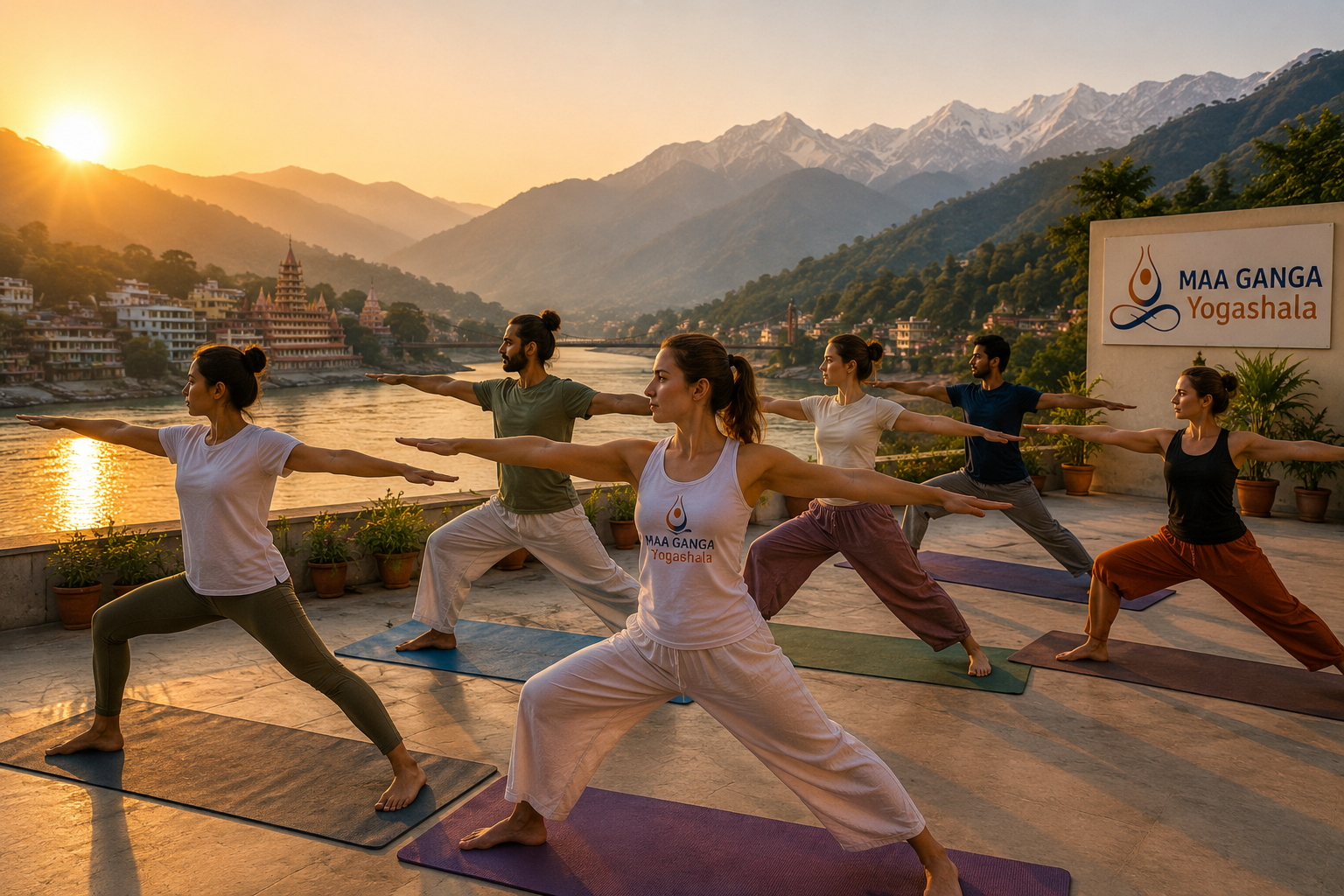
Nestled in the foothills of the Himalayas, this city has been a sanctuary for sages and seekers for millennia. Practicing on the banks of the sacred Ganges River connects you to a lineage of authentic spiritual tradition.
The environment naturally encourages introspection, stripping away the noise of modern urban living. Understanding why practicing yoga in Rishikesh shifts your perspective requires experiencing the daily temple bells and chanting firsthand.
The Indian government, through the Ministry of Ayush, heavily promotes and preserves the authenticity of these traditional practices. Studying here ensures you receive knowledge that hasn’t been diluted by western fitness trends.
You are not just learning from a manual; you are absorbing the culture, the diet, and the devotion of the Indian people. This cultural immersion adds an invaluable layer of authenticity to your future teaching voice.
When you graduate in Rishikesh, you carry a piece of the world’s spiritual capital back home with you.
Preparing for Your Journey
Embarking on a month-long immersion requires careful consideration and a commitment to your own growth. Finding a school that aligns with your values and respects traditional teachings is crucial.
If you are looking for an authentic, highly-rated environment, Maa Ganga Yogashala offers a sanctuary for dedicated students. Our curriculum is designed to challenge you physically while nurturing you spiritually.
For those who want a shorter immersion before committing to a full month, a 5-day intensive retreat provides a perfect introduction to our teaching style. We ensure every student receives personalized attention and guidance.
We invite you to explore our highly-rated yoga school and discover the difference a traditional ashram setting makes.
FAQs
Do I need to be highly flexible to take a 200-hour course?
No, advanced flexibility is not a prerequisite for becoming a great teacher. You only need a consistent practice, an open mind, and the willingness to learn safe biomechanics.
Can I teach immediately after completing the certification?
Yes, once you receive your certificate, you are legally and ethically qualified to begin teaching basic classes. Many graduates start by guiding friends and family to build confidence.
What is the difference between contact and non-contact hours?
Contact hours are spent in the physical presence of a lead trainer during lectures and practice. Non-contact hours involve independent study, reading assignments, and homework outside the studio.
Should I bring my own yoga mat to India?
While schools provide equipment, bringing your own mat ensures hygiene and a familiar grip during intense sessions. It also serves as a comforting piece of home during your rigorous training.
Conclusion
Earning your Yoga Alliance RYT 200 certification is a profound commitment that forever alters the trajectory of your life. It provides the structured knowledge, ethical grounding, and physical discipline required to lead others safely.
You will leave the program not just with a certificate, but with a renewed sense of purpose and a global family. The challenges you face during the course become the very strengths you rely on as an instructor.
If you feel the calling to deepen your practice and share this ancient wisdom, the time to act is now. Explore our 200-Hour YTT in Rishikesh and take the ultimate step toward your new career today.