Hatha vs Ashtanga Yoga: Key Differences Every Student Should Know
The debate between Hatha vs Ashtanga yoga often confuses practitioners standing at the absolute beginning of their physical wellness journey. You unroll your mat, seeking mental clarity and strength, only to find yourself lost in conflicting advice.
Selecting the right practice shapes your entire relationship with your body and your nervous system. This guide breaks down the precise mechanics, history, and physical applications of both powerful styles.
We are exploring far more than just stretching techniques. We are looking at two distinct maps for human transformation. By the end of this guide, you will know exactly which path aligns with your current goals.
The Historical Roots of Hatha vs Ashtanga Yoga
Understanding where these ancient practices originate helps you deeply respect their distinct methodologies. Both systems trace their profound lineage back to India. Yet, they evolved to serve entirely different physiological and spiritual requirements.
Hatha is widely considered the foundational umbrella term for all physical yoga. As a specific practiced style, it has deep roots in balancing the body’s subtle and opposing energies. The word translates to sun (ha) and moon (tha).
This represents the deliberate harmonization of the sympathetic and parasympathetic nervous systems. Historically, ancient sages practiced Hatha to prepare their physical vessels for grueling hours of meditation. They needed a system that systematically opened the hips and lengthened the spine.
They required a method to clear energy blockages without exhausting their physical bodies. Early texts like the Hatha Yoga Pradipika detail not just postures, but deep internal cleansing techniques known as shatkarmas.
Conversely, Ashtanga Vinyasa was popularized in the 20th century by Sri K. Pattabhi Jois. It was heavily influenced by his teacher, T. Krishnamacharya, in Mysore. Ashtanga was originally designed for young, highly energetic students.
It demands fierce discipline, cardiovascular endurance, and relentless physical commitment. Ashtanga translates to the “eight-limbed path,” referencing the classical philosophy outlined in Patanjali’s Yoga Sutras.
While both styles honor these eight limbs, Ashtanga’s physical expression is decidedly more rigorous. It was built specifically to burn away internal impurities through heavy sweat and unbreakable focus.
When you step into a studio today, you are stepping directly into these two distinct historical streams. One asks you to slow down completely. The other demands you keep moving and stoke an internal fire.
Pacing and Structure: A Tale of Two Rhythms
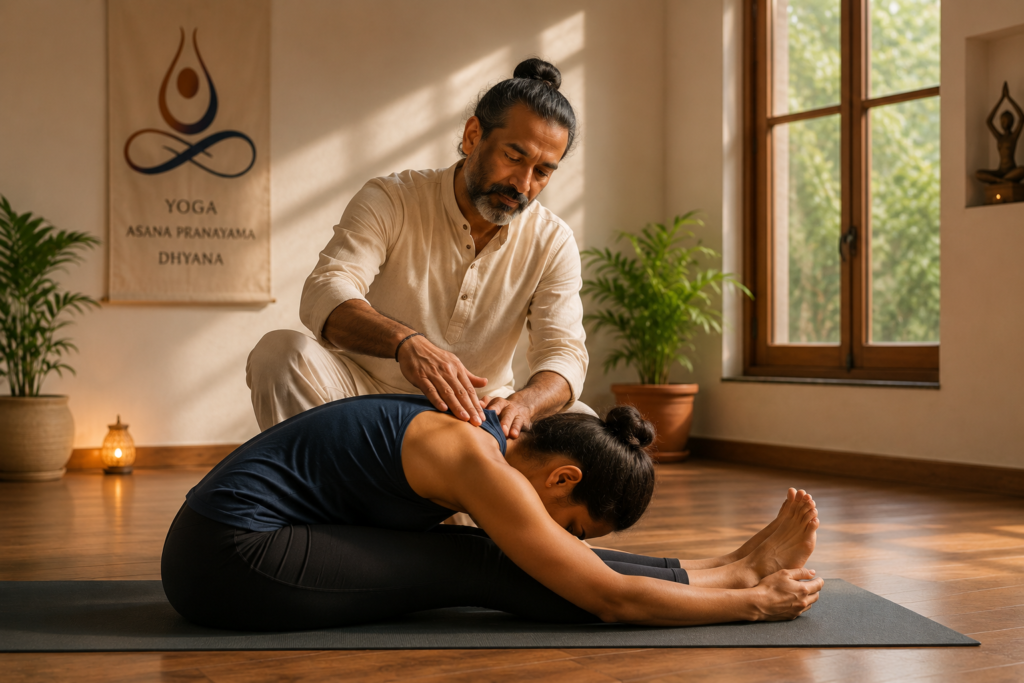
The most immediate difference you will notice on the physical mat is the speed of movement. Hatha asks you to linger, explore, and soften into the resistance. You enter a posture, settle into the precise alignment, and hold it.
These holds can last for several breaths, or sometimes up to a few minutes. This sustained pressure gives your connective tissue time to release safely. It also gives your active mind time to observe the physical resistance without panicking.
You might spend an entire 90-minute class breaking down the mechanics of a single peak pose. The sequence changes every single time. It is entirely dependent on the teacher’s specific intention for that day’s class.
Ashtanga is the polar opposite regarding structure. It is a strictly set sequence of postures. You practice the exact same poses, in the exact same chronological order, every single time you practice.
There is no pausing the class to workshop a difficult pose. You simply flow through the posture to the best of your current physical ability and keep moving forward.
The transitions between the poses—the vinyasas—are treated as equally important as the poses themselves. This continuous, unbroken movement builds intense cardiovascular heat. You will sweat profusely, which is a deliberate mechanism to detoxify the muscles.
The Anatomy of a Hatha Sequence
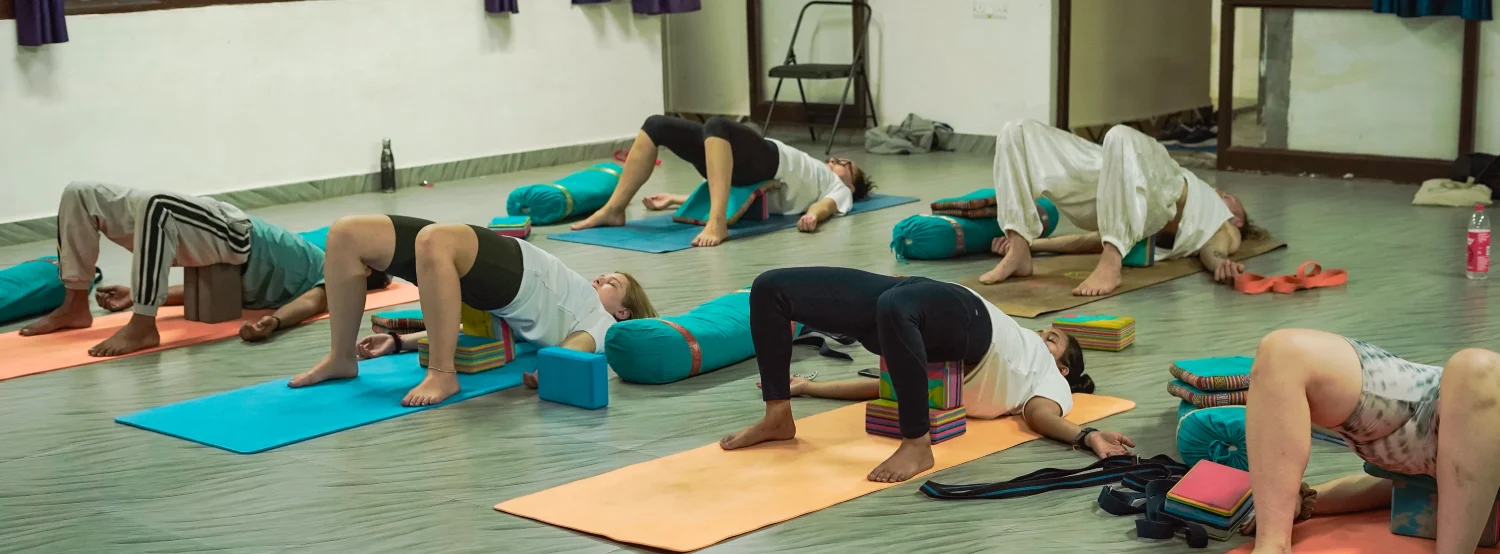
A typical Hatha class begins with deeply grounding breathwork to center your mind. You slowly warm up the major joints before moving into standing and balancing postures. Because you hold poses much longer, your stabilizing muscles work incredibly hard.
There is a massive emphasis on precise, safe physical alignment. Teachers frequently use props like blocks, bolsters, and straps to ensure your joints remain protected. It is a deeply therapeutic approach to movement.
If you are dealing with corporate burnout or chronic fatigue, this pacing allows your nervous system to down-regulate. It pushes you into a state of deep rest and digest.
For those exploring Yoga for Stress and Anxiety Beginners, this slower, highly adaptable pace is consistently recommended by wellness professionals.
The Demands of the Ashtanga Primary Series
Ashtanga begins immediately and aggressively with Sun Salutations A and B to build instant fire. From there, you move seamlessly into a rigorous standing sequence. This is followed by complex seated postures, all linked by jump-backs and jump-throughs.
The Primary Series is traditionally known as Yoga Chikitsa, meaning yoga therapy. However, it is therapy achieved through intense, relentless physical exertion. You do not wait for the teacher to guide your breath.
Your breath strictly dictates the pace of your own movement. The absolute predictability of the sequence eventually becomes a profound moving meditation. You never have to think about what comes next.
Because the sequence is memorized, your active mind can turn entirely inward. Many dedicated practitioners find this strict, uncompromising discipline incredibly liberating.
Breath and Energy: How Hatha vs Ashtanga Yoga Moves Prana
Breath is the vital bridge between your physical body and your nervous system. Both styles prioritize breath control, but they utilize it differently to achieve specific physiological outcomes.
In Hatha, you will actively explore a wide, varied menu of pranayama techniques. A teacher might pause the physical movement entirely to guide you through Nadi Shodhana (alternate nostril breathing). This physically balances the brain’s left and right hemispheres.
They might introduce Kapalabhati (skull-shining breath) to energize you, or Sitali (cooling breath) to rapidly lower your body temperature. The breath is used as a tool to manipulate your energy state deliberately.
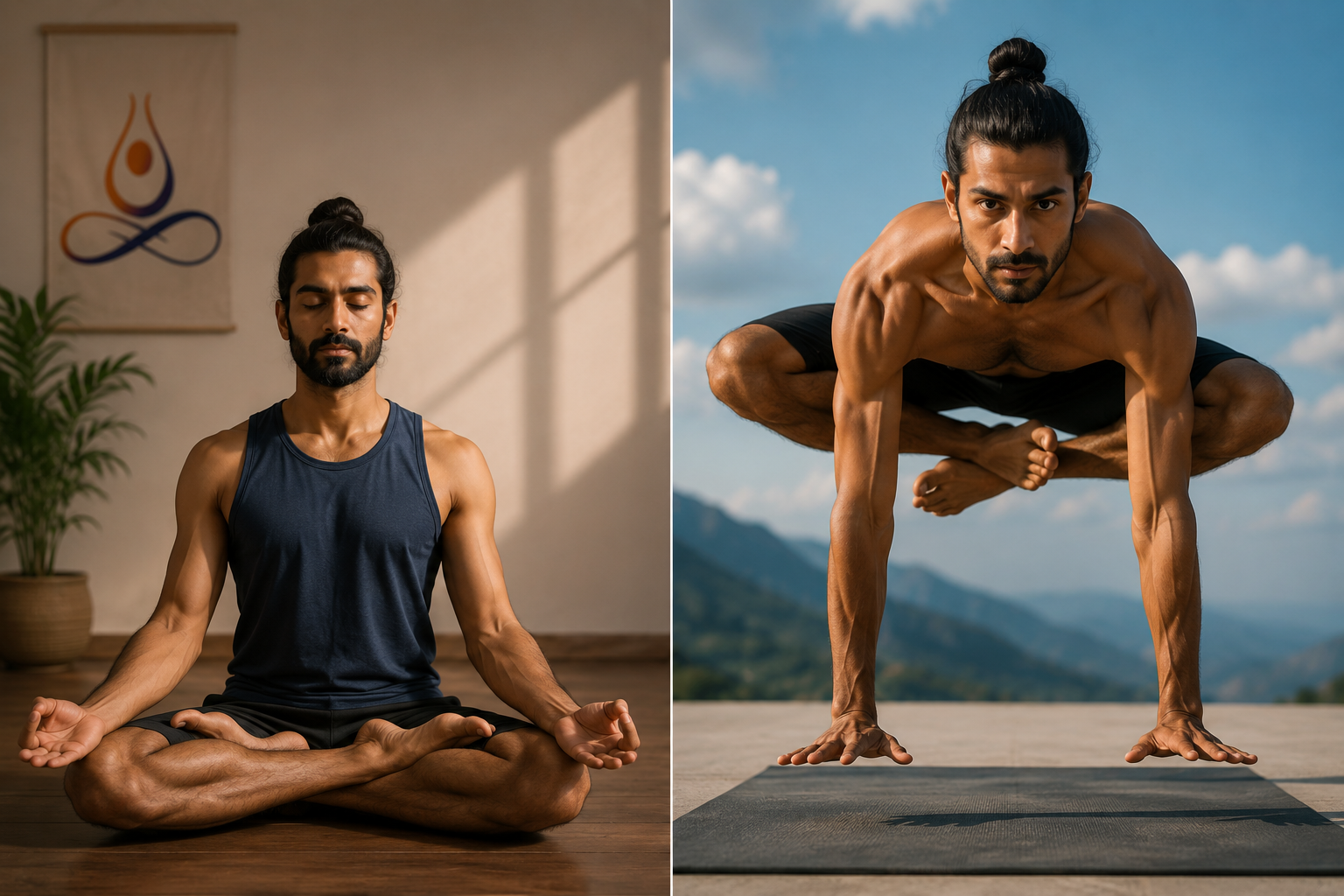
Ashtanga relies almost exclusively on Ujjayi pranayama—often called the victorious breath. This involves maintaining a slight, deliberate constriction at the back of the throat. It creates an audible, oceanic sound as air passes through.
You must maintain this specific, rhythmic breathing technique from the very first Sun Salutation to the final resting pose. Ujjayi acts as an internal metronome and traps massive amounts of heat inside the body.
Alongside Ujjayi, Ashtanga places non-negotiable importance on the Bandhas, or internal energetic locks. Engaging the pelvic floor (Mula Bandha) and the lower abdomen (Uddiyana Bandha) provides vital core stability.
This deep internal lifting mechanism is exactly what allows advanced practitioners to execute gravity-defying movements safely. While Hatha also acknowledges these locks, Ashtanga demands their constant, unbroken engagement.
If you want to understand how deep these energetic and anatomical practices truly go, exploring Is Yoga Teacher Training Worth It? provides a clear picture of the curriculum involved.
Which Practice Supports Your Unique Body?
You must honestly evaluate your current physical condition, mental state, and long-term goals before committing to a lineage. There is no universally superior style of movement. There is only the style that serves your specific nervous system best today.
If you are actively recovering from a physical injury, Hatha is incredibly forgiving. It allows you to modify heavily without feeling left behind. You can take water breaks, skip complex poses entirely, and utilize heavily propped variations.
It builds foundational muscular strength without spiking your stress hormones or cortisol levels. It is the perfect entry point for building body awareness safely.
Conversely, if you possess a high degree of physical energy, Ashtanga will meet your intensity perfectly. If you struggle with a restless, hyperactive mind or crave a highly structured athletic challenge, this is your path.
The strict, demanding routine quickly reveals your physical imbalances and mental roadblocks. However, it requires healthy, stable joints—particularly in the shoulders, wrists, and knees—to safely execute the repetitive vinyasa transitions.
Many serious students who want the absolute best of both worlds choose an immersive training environment. They want to experience both lineages under expert supervision before deciding.
Choosing the Best Yoga School in Rishikesh ensures you are guided by masters who understand the demanding anatomical requirements of both ancient traditions.
Why Rishikesh? The Ultimate Ground for Your Practice
Your physical location fundamentally alters your learning experience and your ability to focus. Practicing in a loud, commercial gym in a bustling western city feels entirely different from practicing at the absolute source.
Rishikesh is not just a popular tourist destination; it is a profound energetic amplifier. Situated directly on the banks of the sacred Ganges River, the geography itself promotes deep introspection.
You are surrounded by the ancient Himalayan foothills. The air here is steeped in centuries of unbroken spiritual dedication and daily ritual.
When you practice here, you are entirely removed from your daily digital distractions. You are immersed in a culture that genuinely respects the strict discipline of yoga above all else.
Scientific research, including extensive clinical studies on yoga, continually highlights the benefits of immersive environments. Natural, spiritually significant locations drastically lower sympathetic nervous system arousal.
This environment allows for significantly deeper physical and psychological healing. Furthermore, studying here ensures your education is rooted firmly in authentic, untainted tradition.
Schools certified by Yoga Alliance must uphold rigorous, international educational standards. This guarantees you learn the philosophy, safe anatomy, and correct methodology exactly as they were meant to be taught.
Finding Your Flow With Us in Tapovan
If you are ready to stop guessing and start exploring these traditions deeply, Maa Ganga Yogashala provides a dedicated sanctuary. Located directly on Badrinath Road in the peaceful area of Tapovan, our shala overlooks the sacred waters.
Whether you want to establish a slow, grounding routine or safely challenge your physical limits, our expert teachers guide you. We ensure you understand the subtle nuances of every single posture.
For those seeking a short but incredibly powerful nervous system reset, our 3 Days Yoga Retreat in Rishikesh offers the perfect introduction. It allows you to experience these distinct styles in a highly supportive, nourishing setting.
Frequently Asked Questions About Hatha vs Ashtanga Yoga
Can an absolute beginner safely start with Ashtanga?
Yes, but it requires deep patience and a specific environment. A traditional Mysore-style Ashtanga class actually caters exceptionally well to absolute beginners.
In a Mysore room, the teacher gives you only a few basic poses to memorize. You practice them at your own pace until you build the strength to add more.
However, a fast-paced, led Ashtanga class might feel overwhelmingly fast for someone who does not yet know the basic physical postures.
Which style is better for improving overall flexibility?
Both styles improve flexibility significantly, but they do so through entirely different physiological mechanisms. Hatha improves flexibility through long, slow, static stretching.
This allows the muscle fibers and deep fascia to relax and lengthen over a longer period of time. Ashtanga improves flexibility primarily through internal heat.
The continuous, rigorous movement warms the muscles deeply. This makes them much more pliable and allows you to safely move into deeper expressions of the poses without tearing tissue.
Is Hatha yoga considered a real ‘workout’?
It depends entirely on the specific teacher and the sequence. While it is generally much slower, holding standing postures like Warrior II for three full minutes demands immense muscular endurance.
Your legs will shake, and your core will burn. It might not spike your heart rate like a heavy cardio session, but it builds serious, functional full-body strength.
If you want a more traditional, sweat-inducing physical workout, Ashtanga is the much clearer choice.
How do I know when I am physically ready for teacher training?
You absolutely do not need to be able to perform advanced acrobatics or deep backbends to join a program. You simply need a dedicated, consistent daily practice and a highly genuine desire to learn.
The training itself is specifically designed to safely deepen your physical capabilities over several weeks.
If you are feeling deeply overwhelmed by city life and want to prepare mentally first, joining a Yoga Retreat for Stress Relief is an excellent, low-pressure stepping stone.
Can I practice both styles simultaneously during the week?
Yes, and many modern practitioners highly recommend this balanced approach. You can easily utilize the intense heat of Ashtanga three days a week to build cardiovascular strength.
You can then use the slow, methodical holds of Hatha on your active recovery days. This prevents repetitive strain injuries and keeps the nervous system perfectly balanced.

Conclusion: Step Onto the Mat
The choice between Hatha vs Ashtanga yoga is never a binding lifetime contract. Many deeply dedicated yogis weave both ancient systems into their weekly lives. They utilize one for deep recovery and grounding, while relying on the other for mental discipline and physical heat.
The most important step you can take right now is simply beginning the physical work. Allow your body to fully experience the slow, therapeutic holds. Then, allow it to experience the fierce, moving meditation of a flow sequence.
Listen closely to how your nervous system responds to each distinct method. Your body will clearly tell you what it needs to heal.
Ready to totally transform your daily practice and deepen your understanding of these traditions? Explore our 200-Hour Yoga Teacher Training in Rishikesh and take the very first step toward mastery today.