Yoga Philosophy Modern Practice Importance: Why It Truly Matters Today
Understanding yoga philosophy modern practice importance is the missing key for anyone feeling stuck on their physical yoga journey. Have you ever stepped off your mat feeling physically stretched but mentally just as exhausted as before? You are not alone in this experience. Countless practitioners eventually hit a plateau where physical shapes alone no longer provide the peace they seek.
This is exactly where the ancient texts come in to bridge the gap. The roots of this discipline were never meant to be confined to a rubber mat for sixty minutes a day. They were designed as a comprehensive, holistic lifestyle guide. When you integrate these teachings, your entire perspective shifts.
You begin to see your daily challenges through a completely different lens. Traffic jams, stressful meetings, and personal conflicts become opportunities to practice your true discipline. By diving deeper into the mental and energetic aspects, you unlock a profound level of resilience. This guide will show you exactly how to apply these ancient truths to your modern life.
The Core of Yoga Philosophy Modern Practice Importance
To truly grasp yoga philosophy modern practice importance, you must look beyond the studio mirrors and athletic wear. The original practitioners in India did not have climate-controlled rooms or specialized props. They had their minds, their breath, and a deep desire to understand the human condition.
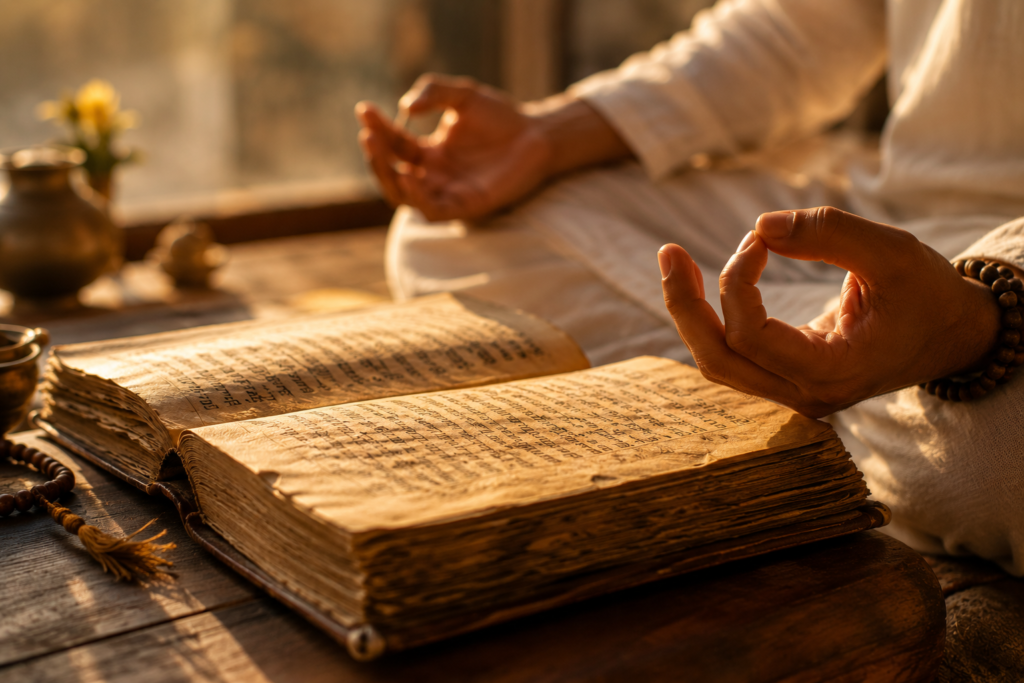
The ancient sage Patanjali compiled the Yoga Sutras over two millennia ago. This foundational text serves as the ultimate psychological manual for navigating life. It outlines a systematic path to reduce suffering and increase baseline joy. When you study the Sutras, you realize that modern stress is not actually a new problem at all.
Human beings have always struggled with attachment, ego, and fear. The ancient sages simply mapped out the cure long before modern psychology existed. Institutions like Yoga Alliance actively emphasize the study of these texts in accredited training programs worldwide. Recognizing this history grounds your physical efforts in something deeply significant.
Exploring the Yamas: Ethical Guidelines for Today
The first limb of Patanjali’s eightfold path is the Yamas, which are outward ethical observances. These principles dictate how you interact with the world around you. Ahimsa, or non-violence, is the most critical foundation. In our fast-paced era, this doesn’t just mean avoiding physical harm.
It means practicing non-violence in your thoughts toward yourself when you make a mistake. It means speaking kindly to customer service workers and reducing your environmental impact. Satya, or truthfulness, challenges you to live authentically rather than projecting a fake image on social media.
Asteya, non-stealing, goes beyond physical theft. It involves not stealing someone else’s time by being chronically late, or stealing their energy through constant complaining. Brahmacharya encourages the wise use of your vital energy, protecting yourself from burnout. Aparigraha, non-attachment, teaches you to let go of physical clutter and emotional baggage. Mastering these ethics is heavily emphasized in Teacher Training Ethics, as they form the bedrock of a safe practice.
The Niyamas: Personal Disciplines for Inner Peace
While the Yamas focus outward, the Niyamas turn your attention inward. These are personal observances that cultivate self-discipline and inner strength. Saucha translates to purity or cleanliness. Today, this means keeping your living space tidy, eating nourishing foods, and consuming positive media.
Santosha means contentment, which is radically rebellious in a culture driven by constant consumption. It challenges you to find deep gratitude for exactly where you are right now. Tapas, or fiery discipline, is the determination that gets you on your mat when you would rather sleep in. It is the grit required to break bad habits.
Svadhyaya is self-study, encouraging you to read sacred texts and observe your own mental patterns without judgment. Knowing Sanskrit Yoga Teacher Training Essential Terms helps greatly when navigating these concepts. Finally, Ishvara Pranidhana is surrender to a higher power, teaching you to release control over outcomes. You do your best work and trust the process.
Asana and Pranayama: Beyond the Physical Postures
The third and fourth limbs are Asana (posture) and Pranayama (breath control). In the context of ancient wisdom, Asana was simply meant to prepare the body to sit comfortably for meditation. It was never about achieving a photo-worthy handstand.
Today, Asana helps you release physical tension trapped in your tissues. When you pair this movement with Pranayama, the magic truly happens. Your breath is the direct remote control to your nervous system. By consciously slowing your inhales and exhales, you shift from fight-or-flight into rest-and-digest mode.
Clinical studies found on platforms like PubMed repeatedly demonstrate that breathwork significantly lowers cortisol levels. This mind-body regulation is why therapies like Sound Healing are becoming so popular for stress relief. The physical body and the subtle energy body must be treated together for genuine healing.
Pratyahara and Dharana: Finding Focus in a Distracted World
In an age of constant smartphone notifications, the fifth and sixth limbs are incredibly relevant. Pratyahara is the withdrawal of the senses. It does not mean shutting down completely, but rather consciously choosing what you let into your mind.
Taking a break from screens allows your nervous system to reset entirely. Dharana is the practice of single-pointed concentration. When your senses are quieted, you can finally focus on one thing at a time. This is the exact opposite of modern multitasking, which often leaves you feeling scattered and unproductive.
You can practice Dharana by fully focusing on your breath, a mantra, or even the task of washing dishes. This intense focus trains your brain to stay present. By mastering these two limbs, you reclaim your attention span from the endless scrolling of the modern world.
Dhyana and Samadhi: The Ultimate Goal of Practice
When Dharana (concentration) is sustained uninterrupted, it flows naturally into Dhyana (meditation). You cannot force meditation; you can only create the right conditions for it to occur. It is the state where the meditator and the object of meditation become one.
Understanding 200-Hour Yoga Teacher Training can provide you with practical tools to cultivate this state. Over time, consistent Dhyana leads to Samadhi, the eighth and final limb. Samadhi is total absorption, enlightenment, and profound bliss.
While Samadhi might seem like an unreachable goal for a busy professional, experiencing even brief moments of this clarity is life-changing. It reminds you that you are fundamentally connected to something much larger than your daily to-do list. This realization brings immense comfort and perspective.
The Science Behind the Ancient Wisdom
Modern science is finally catching up to what yogic sages knew thousands of years ago. Neuroplasticity proves that you can physically rewire your brain through consistent mindfulness practices. When you apply philosophical principles daily, you strengthen the neural pathways associated with calm and compassion.
Simultaneously, you weaken the pathways linked to anxiety and reactivity. This is not just esoteric theory; it is verifiable biology. Practices rooted in ancient wisdom activate the vagus nerve, which dictates your body’s relaxation response.
By prioritizing philosophy alongside physical movement, you are quite literally upgrading your nervous system. You become less reactive to triggers and more responsive to the present moment. This scientific validation makes the ancient texts even more compelling for skeptical modern minds.
Integrating Ancient Wisdom into Your Daily Routine
You do not need to move to a Himalayan cave to live like a yogi. Integration starts with small, intentional choices throughout your day. Begin your morning with five minutes of conscious breathing before checking your phone.
Practice Ahimsa by choosing a plant-based meal, or practice Santosha by writing down three things you are grateful for. When you feel overwhelmed at work, apply Pratyahara by closing your eyes and tuning out the office noise for sixty seconds.
These micro-practices compound over time. The goal is not perfection, but rather a consistent return to awareness. Every time you catch yourself reacting out of anger and choose patience instead, you are actively doing yoga. The real practice always happens off the mat.
Overcoming Common Challenges in Modern Yoga Practice
One of the biggest hurdles today is the commercialization of the practice. It is easy to feel inadequate if you do not have the right activewear or cannot perform advanced acrobatics. Returning to the philosophy instantly cures this imposter syndrome.
The texts remind you that flexibility of the mind is far more important than flexibility of the hamstrings. Another common challenge is finding the time to practice. When you realize that everything can be yoga—from how you drive to how you listen to your partner—the excuse of “no time” vanishes.
You begin to treat your entire life as the laboratory for your spiritual growth. If you feel disconnected, removing yourself from your usual environment can reset your habits. A Digital Detox Yoga Retreat is an excellent way to break negative cycles and dive back into the core teachings.
Why Rishikesh? The Perfect Place to Deepen Your Practice
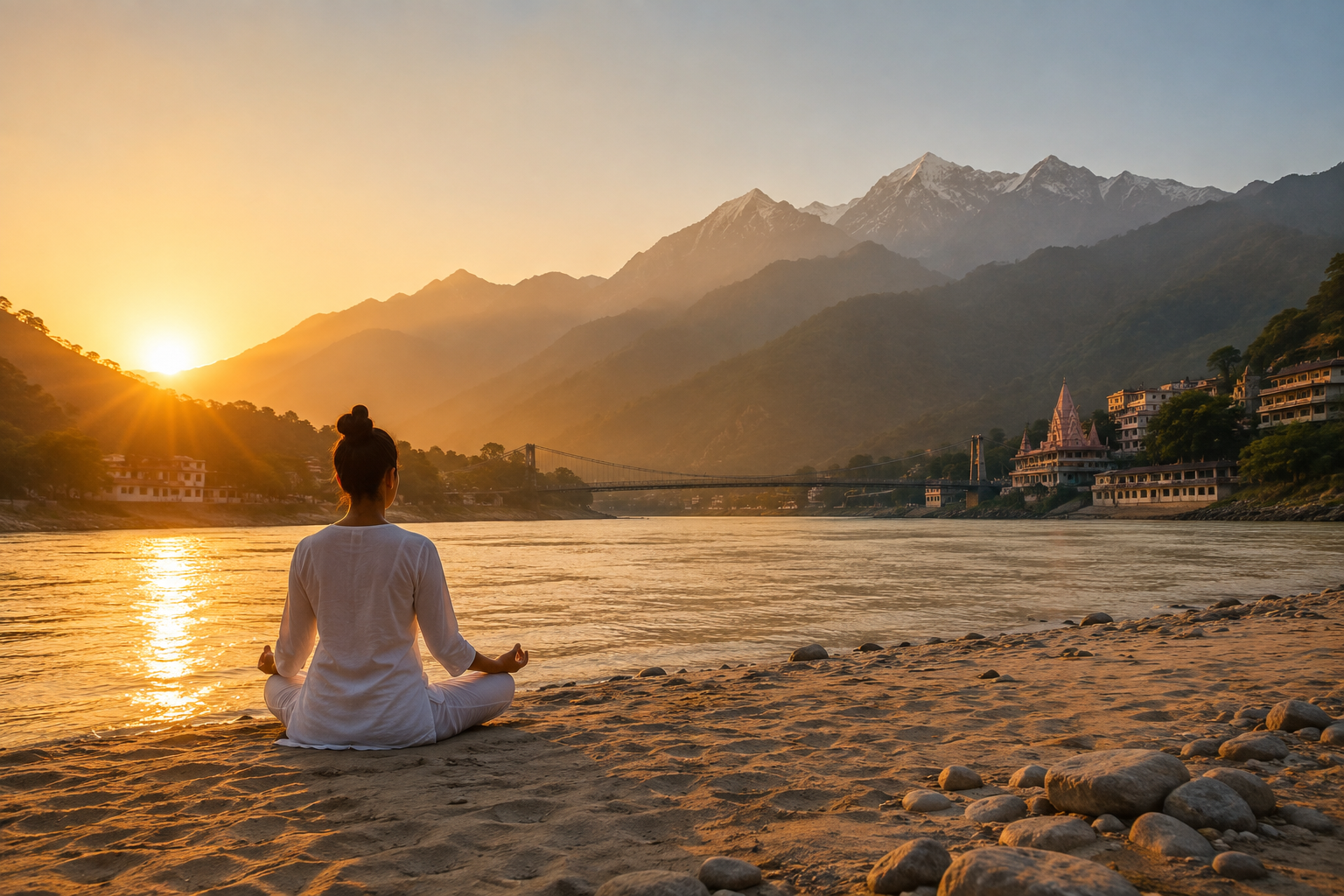
There is a reason spiritual seekers have flocked to Rishikesh for centuries. Nestled in the foothills of the Himalayas and sitting on the banks of the sacred Ganges River, the environment itself is highly charged with spiritual energy. The distractions of the modern world naturally fall away here.
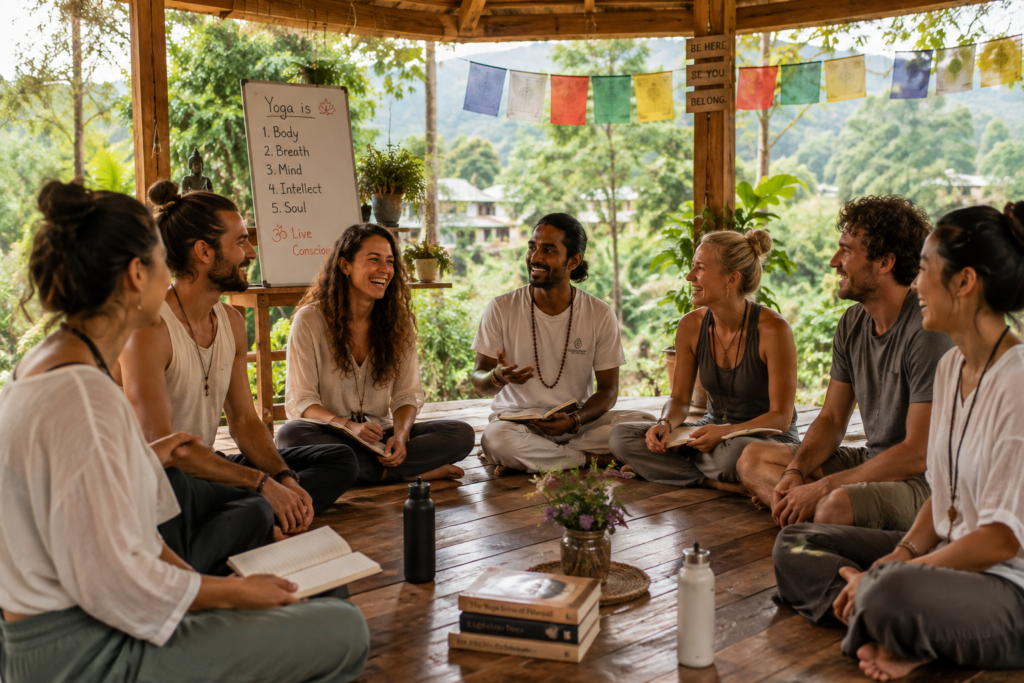
When you study in Rishikesh, you are surrounded by a community of like-minded individuals who share your values. You learn from teachers who have lived these philosophies for generations, not just read about them in a weekend workshop.
The air is cleaner, the pace of life is slower, and the connection to the divine feels palpable. Whether you come for a short stay or a comprehensive training, the energy of this city deeply accelerates your personal growth. It is the ideal setting to turn intellectual understanding into lived experience.
Embark on Your Journey with Maa Ganga Yogashala
If you are considering training in Rishikesh, our doors at /-are always open to guide you on this transformative path. We believe that physical movement must always be paired with deep spiritual understanding. Our curriculum is designed to make ancient texts accessible, practical, and highly relevant to your life today.
We provide a safe, nurturing environment where you can explore the depths of your own mind. From comfortable accommodations to authentic teachings, every detail is handled so you can focus entirely on your growth. Immersing yourself here allows you to disconnect from daily stress and reconnect with your true essence.
For those looking for a shorter reset, our 5 Days Yoga Retreat provides the perfect introduction to this lifestyle. You will experience daily classes, meditation, and philosophy discussions that will leave you feeling completely renewed.
Frequently Asked Questions
Is philosophy necessary for beginners?
Yes, it builds a safe, grounded mental foundation before you advance physically. Understanding the “why” behind the movements prevents injury and burnout.
Can I practice without reading ancient texts?
You certainly can, but engaging with the philosophy deepens the overall experience immensely. It turns a simple workout into a holistic lifestyle.
Does it conflict with personal religious beliefs?
No, the philosophy serves as a secular, practical framework for mental and physical well-being. It can actually complement and deepen your own personal faith.
How do I start learning the philosophy?
Begin with the Yamas and Niyamas. Focus on integrating one ethical principle, like non-judgment or truthfulness, into your daily routine for a week at a time.
Why do teachers use Sanskrit terms?
Sanskrit is an incredibly precise language designed to describe subtle states of consciousness that English often lacks words for. Learning the terms connects you to the ancient lineage.
Conclusion: Step Into Your Authentic Practice
Embracing yoga philosophy modern practice importance elevates your life entirely, taking you far beyond the physical shapes. It offers you a timeless blueprint for navigating the complexities, stresses, and joys of modern existence. By studying the eight limbs, you transform a simple fitness routine into a profound journey of self-discovery and inner peace.
The ancient sages left us these tools because they knew we would need them. Now, it is your turn to pick them up and apply them. Ready to begin? Explore our 200-Hour Yoga Teacher Training in Rishikesh and take the first step toward a deeply meaningful practice today.