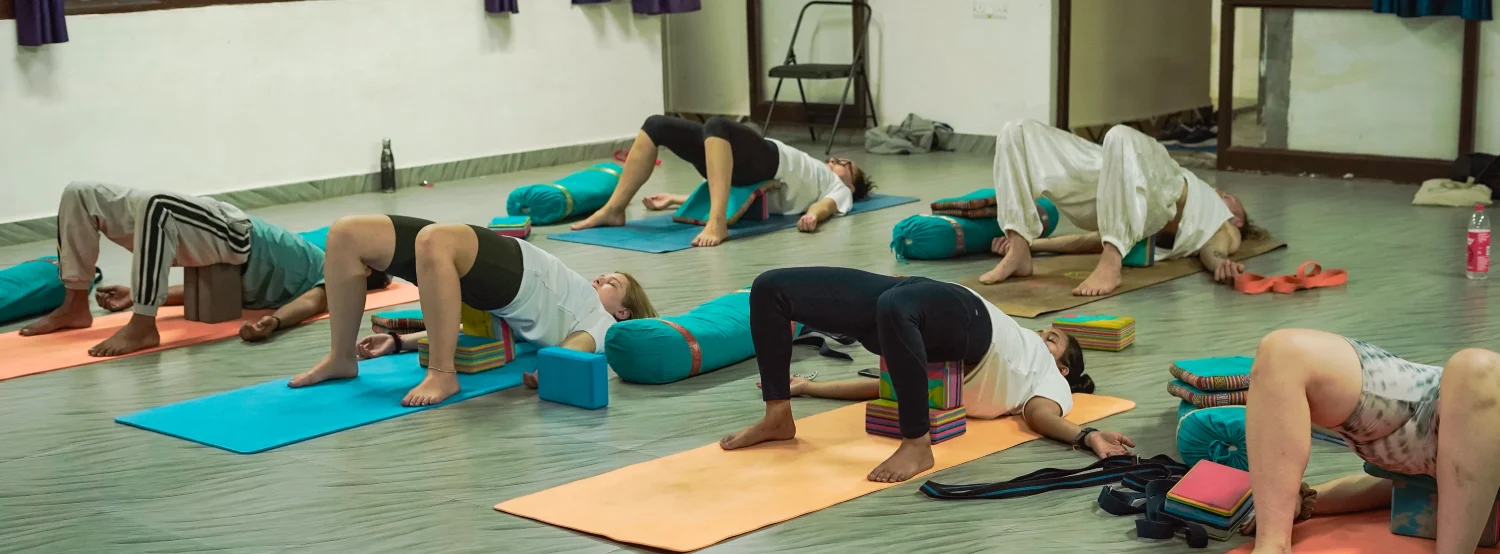
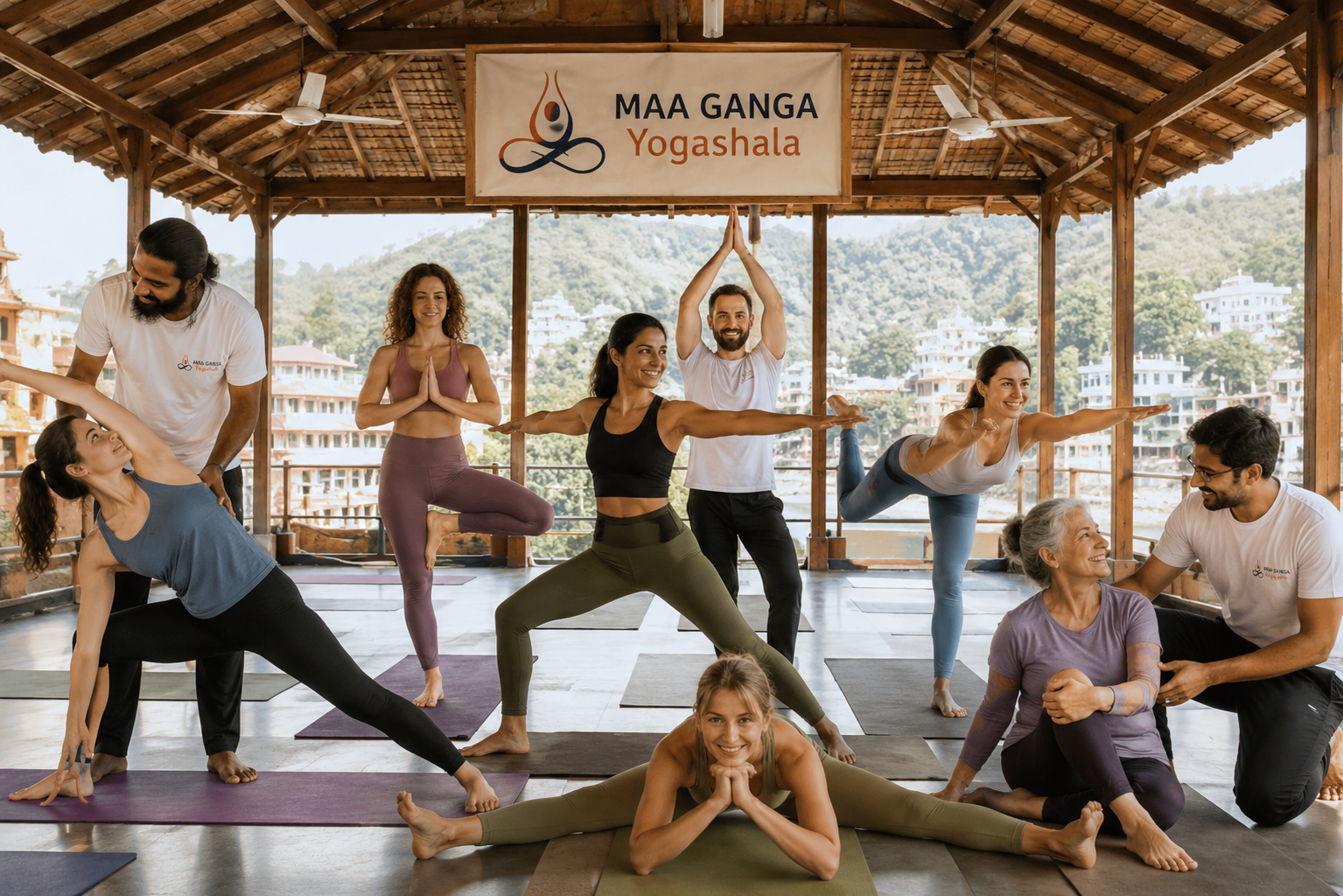
Yoga Teacher Training Flexibility Required Myth: The Ultimate Truth
Have you ever scrolled through social media, seen an instructor folded into a seemingly impossible backbend, and believed the yoga teacher training flexibility required myth was an absolute undeniable fact? You are certainly not alone in making this massive assumption about the wellness industry.
Thousands of passionate, dedicated practitioners delay their dreams of becoming certified instructors simply because they cannot touch their toes or drop effortlessly into a full split. This hesitation stems from a fundamental, widespread misunderstanding of what makes a truly exceptional educator.
Teaching is fundamentally not about performing for a crowded room or showcasing your personal acrobatic abilities to gain validation. It is entirely about guiding other humans safely through their own deeply personal physical and spiritual journeys.
You will soon discover exactly why rigid hamstrings, tight shoulders, or stiff hips hold absolutely zero bearing on your ability to lead a profound, life-changing class. We are going to permanently dismantle the unrealistic expectations surrounding physical perfection within the modern community.
Prepare to learn how your unique anatomical structure, with all its inherent limitations, is actually your greatest asset in a professional teaching environment. By the end of this guide, you will understand exactly why breath awareness and empathy outweigh physical range of motion every single time.
Unpacking the Yoga Teacher Training Flexibility Required Myth
The core of the yoga teacher training flexibility required myth originates from modern, aesthetics-driven fitness culture rather than ancient spiritual traditions. Historically, physical postures represented just one tiny fraction of the broader eight-limbed path toward enlightenment and inner peace.
Today, glossy magazine covers and highly curated digital feeds create a completely false narrative about what a “real yogi” must look like. You absolutely do not need to mimic these highly edited, extreme ranges of motion to validate your personal practice or your teaching ambitions.
When you investigate the foundational guidelines established by respected global governing organizations, extreme physical mobility is never mandated. The primary focus of these certification bodies remains firmly rooted in student safety, professional ethics, and effective teaching methodology.
You can verify these stringent curriculum standards directly by reviewing the official Yoga Alliance guidelines for foundational teacher training. They prioritize a comprehensive, working understanding of human biomechanics over the arbitrary ability to execute advanced asanas flawlessly.
Your physical stiffness actually provides a incredibly powerful, hands-on opportunity to learn about body mechanics and muscular resistance firsthand. A student who actively struggles with a pose learns exactly how to break that specific movement down into accessible, digestible steps.
Instructors who possess natural hypermobility often find it incredibly difficult to explain the subtle internal mechanics of a deep muscular stretch. They have never felt the physical roadblocks that the vast majority of their future everyday students will inevitably experience.
The Anatomy Behind the Movement
Believing that you must be extraordinarily limber ignores the undeniable scientific reality of individual skeletal variation and bone structure. Every single human body features a completely unique pelvic shape, joint depth, and connective tissue composition that dictates movement.
No amount of aggressive stretching will ever change the fundamental shape of your femur bone or the depth of your hip sockets. Some dedicated individuals will never safely achieve a full lotus pose due to natural bone-on-bone compression, and that is entirely normal.
A high-quality, comprehensive certification program teaches you to recognize these unchangeable anatomical realities within yourself and your future students. You will learn exactly how to differentiate between muscular tension, which can be gently stretched, and skeletal compression, which cannot be altered.
This critical anatomical knowledge allows you to guide your students safely away from chronic injury and toward functional, sustainable movement patterns. Instead of forcing diverse bodies into a predetermined, aesthetic shape, you learn to adapt the ancient practice to the modern individual.
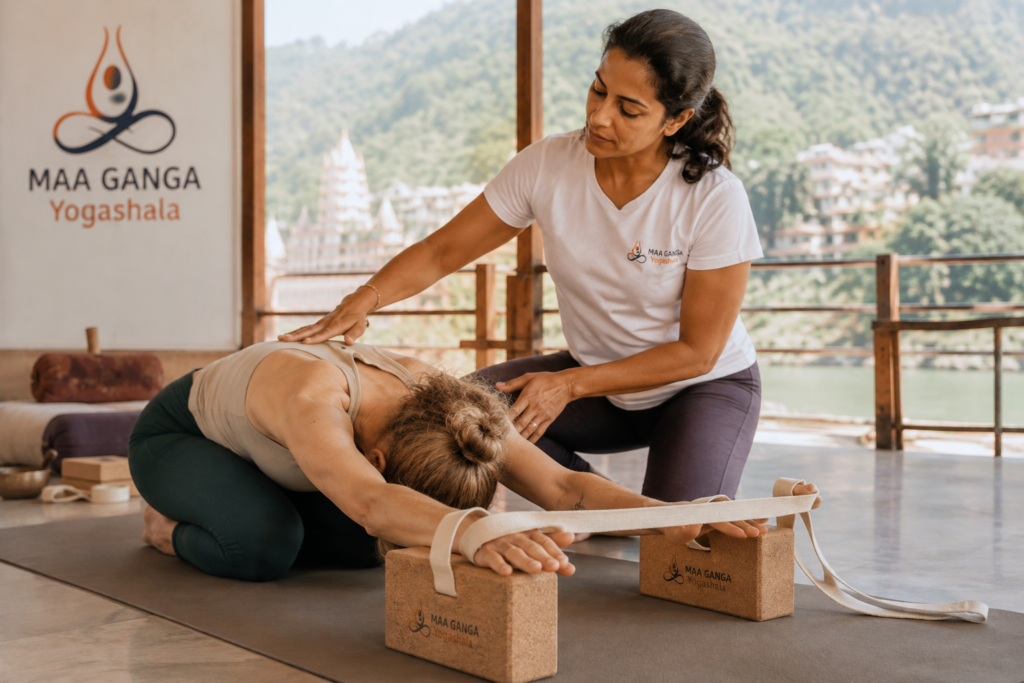
This adaptive, intelligent approach requires a deep, practical understanding of props, structural modifications, and safe hands-on guidance. To master these crucial pedagogical skills, you must study how to support wildly different body types safely during a dynamic class.
You can explore our comprehensive breakdown on Yoga Adjustments Assists Teacher Training to understand this nuanced, vital art form. True mastery lies in observing a student’s struggle and offering the exact physical modification they need to find stability and ease.
The Psychological Barrier of Physical Expectations
Imposter syndrome strikes almost every aspiring wellness educator before they even book their flight or purchase their required reading materials. You might constantly worry that future students will aggressively judge your tight shoulders or your inability to hold a freestanding handstand.
This pervasive fear is entirely normal, but it remains deeply rooted in ego rather than the true, humble spirit of the practice. The most beloved, successful instructors globally are rarely the ones who can bend the furthest or balance on their hands the longest.
They are the compassionate teachers who create a safe, fiercely welcoming space where every single student feels seen, heard, and supported. When you show up authentically, openly acknowledging your own physical limitations, you grant your students silent permission to do the exact same.
Vulnerability is a highly magnetic leadership quality that builds immediate, lasting trust and deep rapport within your classroom community. A teacher who laughs when they lose their balance teaches a far more valuable lesson than a teacher who demands absolute physical perfection.
Students are desperately seeking safe spaces to unravel their daily stress, not intimidating environments that make them feel inadequate. By releasing your own physical insecurities, you actively dismantle the toxic performance culture that keeps so many beginners away from the mat.
Your primary job is to hold space for transformation, nervous system regulation, and self-discovery, not to act as a flawless fitness model. Shifting your mindset from physical performance to energetic service will instantly cure the anxieties keeping you from pursuing your certification.
What You Actually Need to Succeed in YTT
If extreme mobility is completely unnecessary, what specific character traits do you actually need to thrive in an intensive certification course? First and foremost, you need an incredibly open mind and a genuine, humble willingness to become an absolute beginner all over again.
You must possess the internal discipline to show up for early morning meditation, study complex philosophy, and practice teaching daily. Physical stamina is indeed important for enduring long, demanding days of learning, but this endurance is entirely different from being flexible.
You need the mental fortitude to sit with emotional discomfort during intensive breathwork and deep, revealing self-inquiry sessions. A profound curiosity about human anatomy, psychology, and biomechanics will serve your career far better than a deep seated forward fold.
The global medical community increasingly recognizes the powerful therapeutic benefits of mindful, breath-led movement over extreme, aggressive stretching. Extensive research available via PubMed highlights how consistent, gentle physical practice radically improves overall nervous system health and resilience.
You are training to become an expert facilitator of nervous system regulation, not an Olympic gymnastics coach aiming for a gold medal. Your ability to sequence a class intelligently ensures your students leave the room feeling chemically balanced, grounded, and deeply rejuvenated.
Understanding exactly how to build a dynamic class logically is a core, non-negotiable component of your professional educational journey. For a deeper look into structuring these powerful sequences, explore our detailed article on Vinyasa Fundamentals 100 Hour YTT.
How to Prepare Your Body for Certification Safely
Rather than aggressively forcing your hamstrings into submission before your course begins, you should focus on building a consistent, sustainable routine. The most effective preparation involves stepping onto your mat daily, even if it is just for twenty minutes of gentle, mindful movement.
Consistency trains your nervous system to feel safe in various postures, which naturally and safely increases mobility over an extended period. Pushing your body past its current limits in a frantic attempt to prepare will only result in painful inflammation and potential injury.
Focus your pre-course energy on building foundational core strength and joint stability, as these elements prevent injury during intensive physical training. Strong, stable joints are vastly more important for a long, healthy teaching career than hyper-mobile, unstable ligaments ever will be.
Begin familiarizing yourself with basic Sanskrit terminology and fundamental pose names, as this will drastically reduce your cognitive load during lectures. Taking the time to understand the structural purpose of basic poses will give you a massive advantage when studying teaching methodology.
Practice sitting comfortably on the floor for extended periods, as you will spend many hours absorbing lectures and engaging in seated meditation. Use cushions, bolsters, and blocks to support your spine and hips during these long, vital periods of theoretical study.
Your body is already perfectly equipped to handle the demands of a high-quality educational program exactly as it exists right now. Approach your preparation with radical self-compassion, focusing on holistic wellness rather than arbitrary physical benchmarks.
Overcoming the Fear of Not Being “Good Enough”
If you still feel intensely hesitant about committing to a rigorous month-long intensive course, you can always safely test the waters first. Immersing yourself in a shorter, specialized program allows you to experience the authentic ashram lifestyle without feeling overwhelming academic pressure.
Taking a brief step away from your daily routine helps you discover if the immersive environment truly aligns with your personal goals. Consider joining a structured, highly supportive short-term program like our 5 Days Yoga Retreat in Rishikesh.
This gentle, welcoming introduction helps you build immediate confidence and realize that the community genuinely celebrates personal progress over physical perfection. You will very quickly see that your international peers come in absolutely all shapes, sizes, ages, and physical ability levels.
Surrounding yourself with a diverse group of practitioners instantly shatters the illusion that everyone else is a highly advanced acrobat. You will bond over shared struggles, sore muscles, and the incredibly beautiful challenge of learning to quiet the chaotic modern mind.
Letting go of the deeply ingrained “not good enough” narrative is arguably the first real, permanent lesson of your professional teaching journey. Once you accept yourself completely, you unlock the powerful ability to help your future students do the exact same thing.
The Role of Breath, Mind, and Energy Over Asana
Western boutique studios often heavily prioritize the physical (asana) practice, tragically neglecting the other seven vital limbs of traditional yogic science. A genuine, authentic teacher training course dives incredibly deep into pranayama (breathwork), dhyana (meditation), and complex energetic anatomy.
You will spend countless hours learning exactly how life force energy (prana) moves through the body’s subtle, invisible energetic channels (nadis). These profound, ancient energetic practices require absolutely zero physical flexibility to master, embody, or teach effectively to the general public.
In fact, many highly advanced, experienced yogis transition completely away from intense physical exertion as they deepen their internal, meditative practice. They discover that controlling the wild fluctuations of the mind is vastly more challenging and rewarding than simply touching the floor.
Your comprehensive curriculum will explore various holistic, therapeutic modalities that beautifully complement the standard physical postures taught in modern studios. You might unexpectedly find yourself deeply drawn to ancient therapeutic practices that rely entirely on sound vibration and deep internal listening.
For instance, exploring specialized, powerful fields like Sound Healing can easily become a massive, defining part of your unique teaching identity. Your calming voice, your grounded presence, and your ability to guide a deep meditation are your most powerful tools for transformation.
Students often vividly remember the way your class made their nervous system feel long after they completely forget the specific poses you taught. Cultivating this profoundly calming, fiercely grounded presence is the true, undeniable hallmark of an advanced, master-level practitioner.
How Limitations Make You a Better Teacher
Let us permanently reframe your physical tightness from a perceived embarrassing weakness into your absolute most valuable, sought-after teaching asset. When you have to mentally and physically fight for every single millimeter of space in a pose, you learn the biomechanics intimately.
You know exactly which muscles are actively engaging, which tissues are resisting, and how to use the breath to find a subtle release. This hard-earned, intensely personal bodily awareness translates directly into highly precise, incredibly effective, and deeply relatable verbal cues for your students.
A naturally limber, hyper-mobile teacher might simply instruct a class to “fold forward,” leaving stiff, frustrated students feeling confused and inadequate. You, however, will instinctively know to cue bending the knees, tilting the pelvis forward, and aggressively using blocks to bring the floor closer.
Your students will immediately recognize, consciously and subconsciously, that you truly understand their daily physical struggles on a deeply personal level. This powerful shared experience fosters deep, unwavering loyalty and keeps grateful students returning to your specific classes week after week.
Building a sustainable, highly profitable career in this competitive industry requires strong interpersonal skills and emotional intelligence, not just physical prowess. You must learn exactly how to market your unique, highly accessible approach to attract the specific clientele who desperately need your guidance.
To understand exactly how to build this professional business foundation, explore our expert insights on Yoga Business Skills After TTC. Embrace your stiff hamstrings entirely; they are quietly shaping you into an incredibly effective, empathetic, and highly sought-after professional educator.
Why Rishikesh is the Perfect Place for Authentic Learning
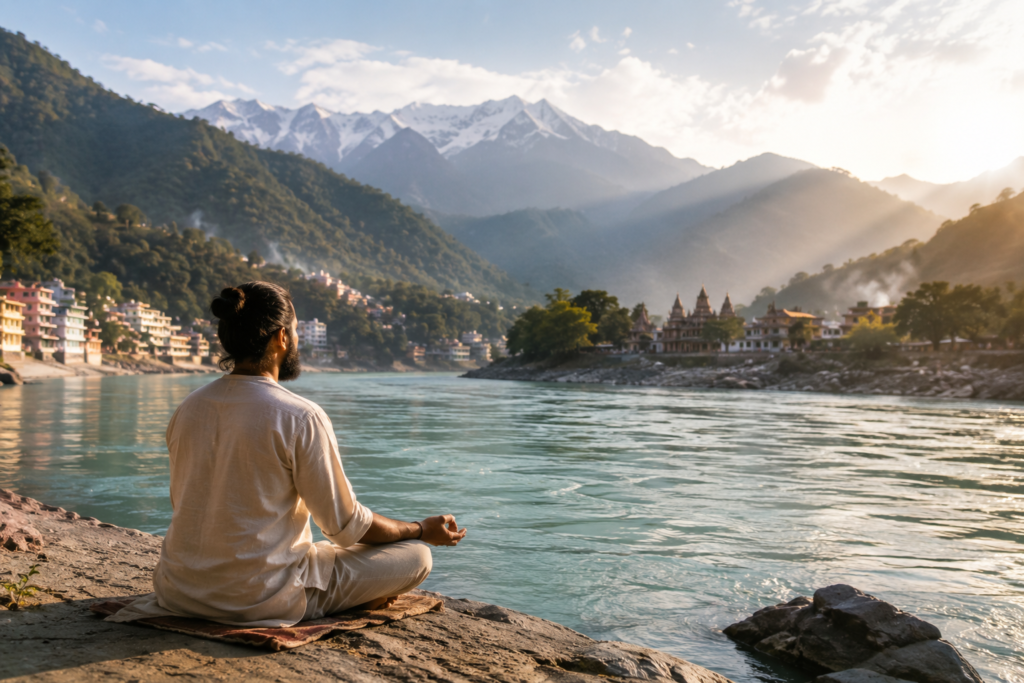
There is a distinct, incredibly powerful reason why thousands of dedicated seekers travel to the Yoga Capital of the World every single year. Rishikesh offers a vibrant environment steeped in thousands of years of spiritual history, completely removed from modern Western aesthetic pressures.
Practicing daily on the pristine banks of the sacred Ganga River instantly shifts your entire focus from outward physical appearance to inward spiritual experience. The traditional, highly respected masters here do not care in the slightest if you can perform a flawless, magazine-ready scorpion pose.
They care intensely about your devotion, your mental discipline, and your humble willingness to sit with yourself in absolute, unbroken silence. This profound cultural shift instantly and permanently dissolves the toxic anxiety associated with physical performance and aesthetic perfection.
You are constantly surrounded by fellow students from across the globe, all dealing with their own unique physical limitations and emotional blockages. The shared daily experience of early morning chanting, intense philosophy lectures, and communal meals builds an unbreakable, lifelong support system.
If you are planning your transformative journey and feeling overwhelmed by the logistics, thorough preparation is the key to a stress-free arrival. Read our complete, detailed breakdown on How to Book Yoga Retreat India First Time for essential travel insights and safety tips.
Arriving fully prepared and relaxed allows you to surrender completely to the profound transformational process waiting for you in the Himalayas. In Rishikesh, the fragile ego is slowly dismantled, leaving only the pure, burning desire to learn and deeply connect with your truest self.
Finding Your Path Forward
Realizing that physical perfection is completely unnecessary immediately opens the door to incredible, unprecedented personal and professional growth. The absolute hardest step of this entire process is simply giving yourself full permission to begin the journey exactly as you are today.
You desperately need an educational environment that honors traditional, ancient teachings while providing modern, accessible, and scientifically backed anatomical instruction. If you’re considering training in Rishikesh, Maa Ganga Yogashala offers a deeply supportive, completely non-judgmental space for absolutely every body type.
Our highly experienced, compassionate teachers focus entirely on creating intelligent modifications that work for your specific skeletal structure and muscular tension. We believe that a grounded, emotionally intelligent approach to education creates the most effective, inspiring future leaders in the global wellness community.
Your educational journey is uniquely yours, and our comprehensive curriculum is specifically designed to help you rapidly discover your authentic teaching voice. The world is waiting for your unique perspective, and our dedicated team is here to support you every single step of the way.
FAQs
Do I need to be able to do a handstand to pass YTT?
No, advanced inversions, heavy arm balances, and acrobatic movements are absolutely not required to successfully complete a standard global certification program. Your curriculum focuses heavily on safe alignment, intelligent sequencing, teaching methodology, and deeply understanding foundational, accessible postures.
Will a teacher training course actually improve my flexibility?
Yes, practicing dynamic asanas twice daily for several consecutive weeks will naturally and safely increase your physical mobility over time. However, this physical progression is viewed simply as a natural byproduct, not the primary, driving objective of the intensive educational course.
How do I handle teaching students who are more flexible than me?
You learn exactly how to carefully observe their bodies and cue them safely into deeper physical variations using your advanced anatomical knowledge. You absolutely do not need to physically demonstrate the deepest expression of a complex pose to teach it safely and effectively.
Is it safe to take a TTC if I have a history of physical injuries?
Yes, provided you have medical clearance from a professional and communicate openly with your lead instructors before the course officially begins. A good program will actually teach you how to modify the practice to heal and protect your specific previous injuries.
Conclusion
The pervasive yoga teacher training flexibility required myth has tragically discouraged far too many potential guides from sharing their incredible light. We have thoroughly and permanently dismantled the toxic idea that you must be a performing contortionist to understand the mechanics of the human body.
Your unique physical challenges, tight muscles, and structural limitations are the exact tools you need to become a compassionate, highly relatable instructor. By focusing entirely on breathwork, traditional philosophy, and intelligent anatomical sequencing, you offer something far deeper than mere physical exercise.
The wellness industry does not need more performative acrobats; it desperately needs authentic, grounded teachers who truly understand real bodily struggles. It is finally time to drop the heavy insecurities and step onto the mat with absolute confidence in your current physical reality.
Ready to begin? Explore our 100-Hour Yoga Teacher Training in Rishikesh and take the first step today.