Yoga Teacher Training Personal Transformation Freedom: How Teacher Training Changed Your Relationship with Freedom
Yoga teacher training personal transformation freedom can begin with a surprisingly uncomfortable question: what if freedom is not having fewer responsibilities, but having a healthier relationship with your choices? When you enter serious yoga teacher training, you may expect stronger asana, better teaching skills, and a deeper understanding of philosophy. You may not expect to rethink what independence actually means.
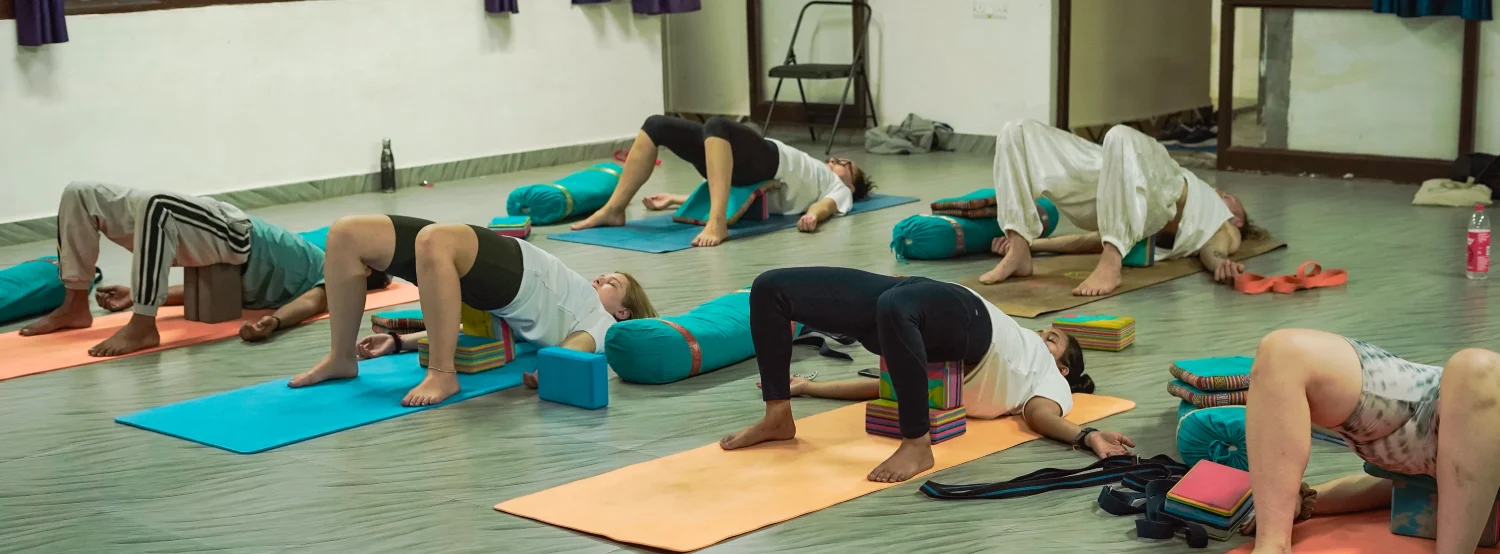
A residential training can interrupt your normal routines. You wake early, practice before the city fully wakes, study anatomy and philosophy, teach in front of others, eat at set times, and spend days around people with different backgrounds. That structure can feel restrictive at first. Yet it can also reveal how much of your everyday life is driven by habit, distraction, approval, or fear.
This article explores how teacher training can reshape your relationship with freedom, responsibility, confidence, and self-direction. You will also see why Rishikesh can make that process feel especially vivid, what to look for in a training program, and how to decide whether a longer residential course fits your goals.
Yoga Teacher Training Personal Transformation Freedom Starts With Choice
Freedom is often described as the ability to do whatever you want. In practice, that definition breaks down quickly. If you cannot keep a promise to yourself, manage your attention, or make a decision without constantly seeking approval, having unlimited options does not necessarily feel liberating.
Yoga teacher training can give you a different framework. Instead of asking, “What can I do?” you start asking, “What do I choose, and why?” That small shift can change how you approach practice, work, relationships, and future plans.
A structured day gives you repeated opportunities to make conscious choices. You decide whether to show up fully for the morning session. You decide whether to listen when your body needs modification. You decide whether to practice teaching even when your voice feels uncertain. You decide whether feedback is something to defend against or something to learn from.
That is where personal transformation becomes practical. It is not about becoming a completely different person in a few weeks. It is about noticing patterns that were previously automatic and creating a little more space between impulse and action.
The philosophy component can support this reflection. Yoga is not only physical exercise; it includes ideas about attention, discipline, self-study, and ethical conduct. Yoga Alliance also describes yoga as a practice involving movement, breath, self-discovery, and connection. Explore Yoga Alliance for broader information about yoga education and the teacher pathway.
If you want to explore the practical side of this process, a structured 200-hour yoga teacher training in Rishikesh can give you enough time to study, practice, receive feedback, and gradually become more comfortable making decisions for yourself.
How Teacher Training Changes Your Relationship With Independence
Independence becomes clearer when you stop treating it as isolation. A strong teacher does not need to know everything alone. You can ask questions, accept correction, learn from peers, and still remain responsible for your choices.
From external approval to internal feedback
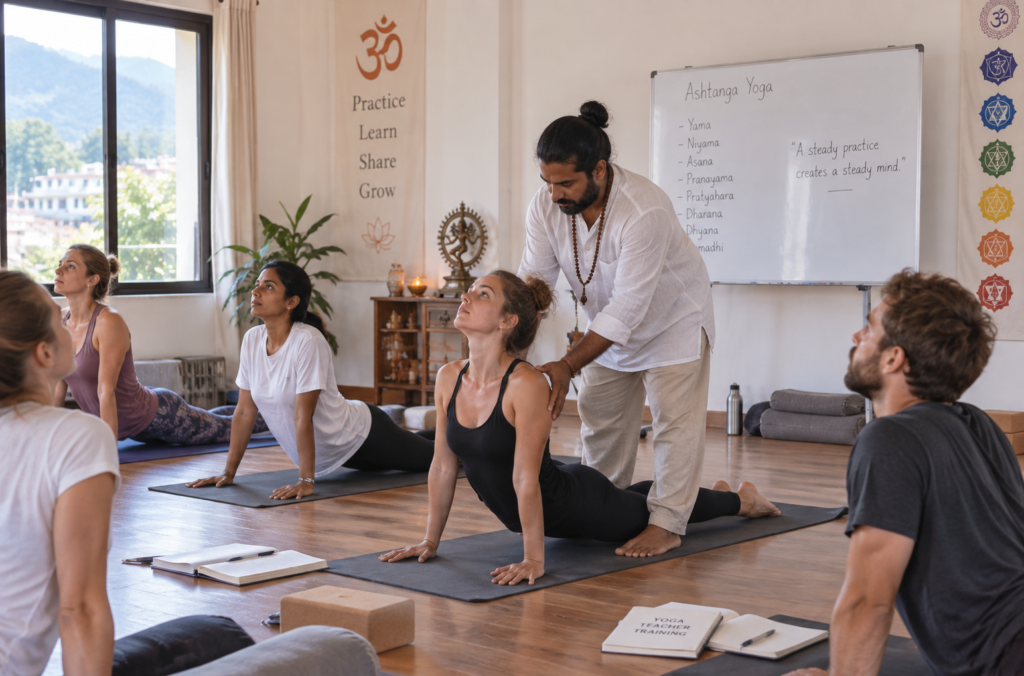
Many practitioners quietly measure themselves through other people: “Was my pose good enough?” “Did the teacher like my sequence?” “Did everyone think I taught well?” Teacher training exposes this habit because teaching requires feedback.
At first, feedback can feel personal. With practice, you learn to separate your identity from a specific performance. A cue may need improvement without meaning you are a bad teacher. Your balance may be unstable without meaning your practice is failing. You can be a beginner at something without turning that fact into a judgment about yourself.
This is a useful form of freedom. You become less dependent on constant reassurance and more capable of observing your own work honestly.
Structure can create more freedom, not less
A residential schedule may look restrictive from the outside. There are classes, study periods, meals, assignments, practice teaching, and rest. Yet predictable structure can reduce decision fatigue.
When you know when to practice and when to study, you have fewer small decisions competing for attention. That can leave more mental energy for meaningful questions: What kind of teacher do you want to become? What boundaries do you need? What kind of work suits your values? Which habits do you want to keep after training ends?
This is one reason a teacher-training environment can feel different from a casual workshop. A weekend can inspire you. A sustained routine gives you repeated evidence about your own behavior.
If you are considering a shorter commitment, a 100-hour yoga teacher training in Rishikesh can be a way to explore structured study without assuming that every practitioner needs the same training path.
The Real Personal Transformation Happens Outside the Yoga Mat
The most useful changes often appear in ordinary situations. You may become more comfortable saying no, communicating clearly, planning your time, or handling a difficult conversation without immediately reacting.
Learning to trust your own decisions
Teacher training places you in situations where there is no perfect answer. You may need to adapt a posture for a student, change a sequence because the room feels different, or explain an idea in simpler language.
You cannot outsource every decision to your instructor. Guidance matters, but eventually you must interpret the situation yourself. That repeated practice can strengthen practical judgment.
For a new teacher, this is especially important. Teaching safely means recognizing your scope, knowing when to modify, and understanding when a student needs another kind of professional support. Independence is not doing everything yourself. It is knowing what you are responsible for and acting accordingly.
Becoming comfortable with being uncomfortable
Freedom also grows when discomfort stops controlling every decision. You may feel nervous before your first teaching assessment. You may struggle with a posture. You may miss home during residential training. You may feel awkward speaking in front of a group.
Avoiding every uncomfortable situation keeps your world small. Facing manageable discomfort, reflecting on it, and learning from it can expand your range of action.
That does not mean pushing through pain or ignoring genuine limits. A mature practice includes rest, modification, and boundaries. The goal is not to prove that you can tolerate everything. The goal is to become better at distinguishing useful challenge from unnecessary strain.
Research and public health discussions around yoga are broad, and evidence varies by outcome and study design. For a wider Indian government perspective on yoga and related systems, you can consult the Ministry of Ayush.
If your interest in independence includes becoming a teacher, practical preparation matters as much as inspiration. Learning sequencing, anatomy, communication, observation, and class planning gives you tools you can use when the situation is no longer predictable.
Freedom After Certification: What Actually Changes?
Certification itself does not automatically make you independent. The certificate can mark completion of training, but your relationship with freedom depends on what you do with the skills afterward.
You might teach studio classes, work privately with clients, teach online, organize retreats, continue studying, or simply use the training to deepen your personal practice. None of these paths is mandatory.
For some people, the biggest change is professional. A career that once felt fixed may begin to look more flexible. You may realize that your skills can travel with you. You may also discover that teaching is not the career you expected, and that realization is useful rather than disappointing.
For others, independence is more personal. You may stop waiting for the “perfect” time to make a change. You may become more willing to travel alone, build a daily practice, or create boundaries around work and rest.
If you want to explore the professional side after training, our resources on how to market yourself as a yoga teacher and teaching your first yoga class with more confidence can help you think beyond the certificate.
Why Rishikesh Can Make This Shift Feel More Real
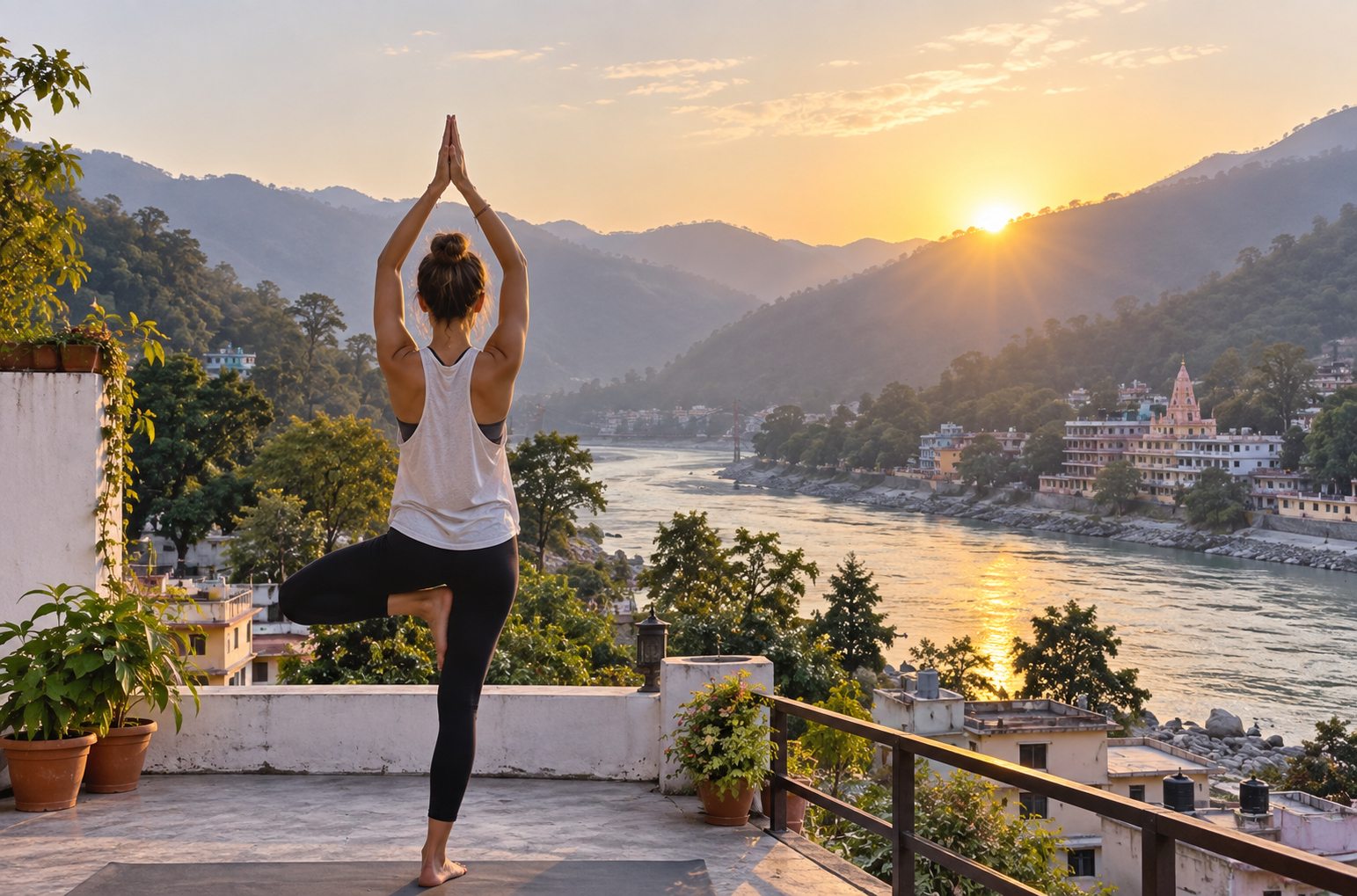
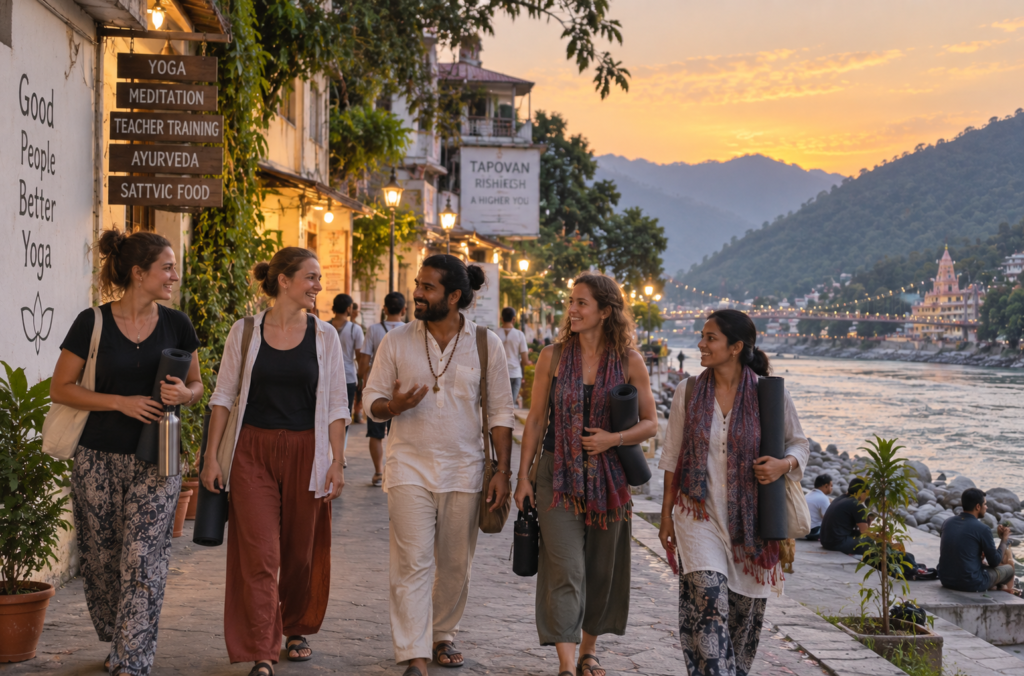
Rishikesh changes the context around your practice. In Tapovan, daily life can place you close to yoga schools, teachers, cafes, local streets, temples, the Ganga, and the foothills of the Himalayas. You are not simply attending a class and returning immediately to the same routine.
That change of environment can create psychological distance from familiar obligations. Your normal job, social expectations, commute, and household routines are temporarily elsewhere. This does not magically solve personal problems, but it can make them easier to observe.
There is also a practical lesson in living somewhere new. You have to navigate unfamiliar streets, different food habits, new classmates, different accents, and a new daily rhythm. International students may experience an especially sharp adjustment, while Indian practitioners may notice their own country from a different perspective when studying alongside people from abroad.
If you are comparing formats before booking, this guide to booking your first yoga retreat in India can help you think through timing, expectations, and practical preparation.
You can also explore a shorter 5-day yoga retreat in Rishikesh if you want to experience the environment before committing to a longer training schedule.
Choosing a Training That Supports Real Freedom
Not every course will create the same experience. If independence is important to you, look beyond photographs and promises. Ask how much supervised teaching you will actually do, how feedback is handled, what the daily schedule looks like, and how the curriculum balances practice with theory.
A useful checklist includes:
- Teaching practice: You should have opportunities to plan and deliver classes, not only watch demonstrations.
- Feedback: Find out whether instructors observe your teaching and give specific corrections.
- Anatomy and safety: Look for practical instruction on alignment, modifications, contraindications, and responsible teaching.
- Philosophy: Consider whether the program gives you space to understand yoga beyond physical postures.
- Daily structure: A realistic schedule should include practice, study, meals, teaching work, and sufficient rest.
- Community: A supportive group can help you learn without making you dependent on constant approval.
You should also check credentials and course details directly rather than assuming that every “yoga certification” has the same meaning. Yoga Alliance maintains a directory and explains its Registered Yoga School and Registered Yoga Teacher designations for people researching teacher education.
The right question is not simply, “Will this course transform me?” That promise is impossible to guarantee. A better question is, “Will this environment give me enough practice, knowledge, feedback, and reflection to do more of my own thinking?”
A Practical Path From Training to Greater Independence
Personal change becomes easier to retain when you plan for life after the course. Before you leave Rishikesh, write down a few behaviors you can realistically continue at home.
You might choose a 30-minute morning practice three days a week. You could schedule one weekly study session for anatomy or philosophy. If teaching interests you, you could offer a small class to friends or begin assisting an experienced teacher.
Keep the commitments measurable. “I will live more mindfully” is vague. “I will practice for 30 minutes on Monday, Wednesday, and Saturday” gives you something you can actually evaluate.
It also helps to protect the independence you developed during training. If you return to a busy job, do not assume you need to recreate the entire residential schedule. Keep the pieces that genuinely help: regular practice, deliberate rest, honest self-review, and clear boundaries.
A Gentle Way to Begin With Maa Ganga Yogashala
If you want to study yoga in Rishikesh with a structured residential format, we offer teacher-training and retreat options designed around different levels of time and commitment. You can explore our yoga programs in Rishikesh and compare the format that fits your current goals.
If your main aim is to develop teaching skills while exploring greater independence, our 200-hour yoga teacher training in Rishikesh is the most directly relevant option to investigate.
You do not need to arrive with a perfectly defined future. You do need enough curiosity to study honestly, enough discipline to practice consistently, and enough openness to discover that your original plan may change.
FAQs About Yoga Teacher Training and Freedom
Can yoga teacher training really change your personality?
It can influence habits, confidence, self-awareness, and decision-making, but there is no guaranteed personality change. The effect depends on your engagement with practice, feedback, reflection, and the environment around you.
Do you need to become a yoga teacher to experience personal transformation?
No. Teacher training can provide a structured environment for growth, but you can also develop self-awareness through regular yoga practice, retreats, meditation, study, and other forms of disciplined reflection.
Is a residential yoga course better for independence than a weekend workshop?
They serve different purposes. A residential course gives you more repeated exposure to practice, study, community, and teaching. A weekend workshop can be more suitable when you want focused learning without a major time commitment.
How can you avoid becoming dependent on a yoga teacher?
Use teachers as guides rather than as permanent decision-makers. Learn the principles behind what you are taught, ask questions, understand safety boundaries, and gradually practice making informed choices yourself.
What should you bring home from teacher training besides a certificate?
Bring practical skills: a sustainable personal practice, teaching experience, better observation, clearer boundaries, useful study habits, and the ability to reflect on your choices without constantly relying on outside approval.
Conclusion: Freedom Becomes a Practice
Yoga teacher training personal transformation freedom is not really about escaping responsibility. It is about becoming more capable of choosing your responsibilities consciously. When you learn to listen to your body, examine your habits, accept useful feedback, teach with care, and make decisions without constant external approval, freedom becomes something you practice rather than something you wait to receive.
Rishikesh can provide a powerful setting for that process because changing your environment changes the questions you notice. But the lasting work happens after the course, when you return home and decide which lessons deserve a place in ordinary life.