Teaching First Yoga Class Tips Nervousness: Your Ultimate Guide to Overcoming Fear
Have you ever stood outside the studio doors, heart pounding, wondering if you are truly ready to guide a room full of expectant students? Finding reliable teaching first yoga class tips nervousness solutions is the single most common quest for newly certified instructors. You are certainly not the only one feeling that sudden wave of impostor syndrome just moments before rolling out your mat.
Even the most revered gurus and seasoned guides once stood exactly where you are standing right now. That initial rush of adrenaline is entirely normal, and it simply means you care deeply about the practice and the people you are about to lead. Acknowledging these physical sensations is the first step toward transforming anxious energy into grounded presence.
This guide breaks down practical, actionable strategies to calm your racing mind and stabilize your physical energy. You will learn how to channel that nervous anticipation into a powerful, magnetic teaching presence. By the time you finish reading, you will possess the mental tools necessary to step in front of your students with unwavering self-belief. Grab your notebook, take a deep breath, and prepare for a beautiful debut.
Understanding the Root of Teaching First Yoga Class Tips Nervousness
To overcome the overwhelming sensations before your debut, you must first understand why they happen. Seeking teaching first yoga class tips nervousness is a proactive step toward mastering your internal landscape. Anxiety often stems from a deep desire to be perfect, coupled with the vulnerability of being observed.
Physiologically, your body cannot distinguish between the excitement of a new opportunity and the threat of physical danger. The sympathetic nervous system activates, flooding your system with cortisol and adrenaline. Your breath becomes shallow, your palms sweat, and your mind races with worst-case scenarios. Acknowledging this biological response strips away its power over your mental state.
Research indexed on PubMed consistently shows that recognizing and labeling emotional states significantly reduces the amygdala’s fear response. When you feel that tightness in your chest, simply label it silently to yourself. Tell your mind that this is just energy preparing your body to be alert and entirely present in the room.
Shift your perspective immediately from performing to serving. You are not there to execute a flawless routine for an audience of strict critics. You are there to hold space for individuals who simply want to move, breathe, and heal their bodies. Taking the focus off your own performance instantly relieves the heavy pressure of perfectionism.
Preparation: The Ultimate Cure for New Yoga Teacher Nervousness
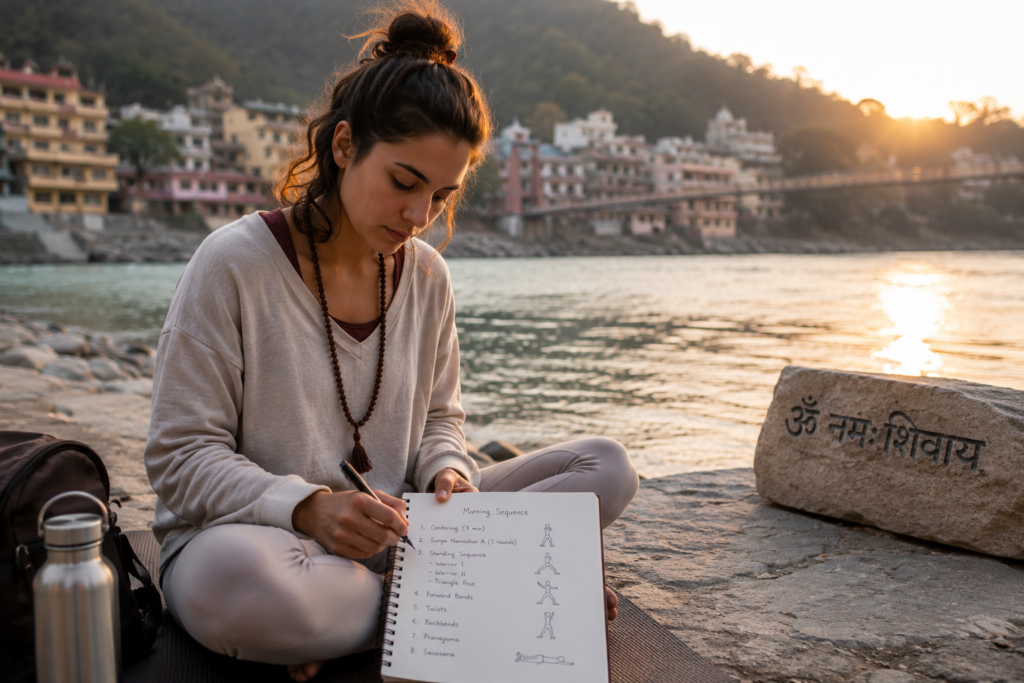
The most effective antidote to anxiety is thorough, meticulous preparation. When you know your sequence inside and out, your muscle memory takes over even if your mind momentarily goes blank. Write down every single posture, transition, and breath cue you plan to use on a notepad.
Rehearse your entire class out loud multiple times before the actual day arrives. Speak to an empty room as if it were packed with eager students waiting for your guidance. Hearing your own voice project across the space builds immense confidence and reveals any awkward physical transitions. You will quickly discover which verbal cues sound natural and which ones feel forced.
Always plan a slightly shorter sequence than the allotted time for your studio session. It is incredibly common for new instructors to speak much faster than usual when feeling stressed. If you finish your planned sequence early, you can seamlessly guide them into an extended, deeply restorative Savasana.
Familiarize yourself with the environment well before the session begins to eliminate variables. Arrive at the studio at least thirty minutes early to set up the lighting, test the music, and arrange the props. For deeper vocabulary confidence, exploring the Sanskrit yoga teacher training essential terms: 5 Best Joys can refine your cueing language immensely.
Grounding Techniques for the Minutes Before Class
The final fifteen minutes before your students arrive are crucial for setting your internal baseline. This is the exact window where the mind tends to panic most aggressively and create doubt. Retreat to a quiet space, even if it is just a corner of the lobby, and close your eyes.
Practice Sama Vritti, or equal breathing, to stabilize your autonomic nervous system quickly. Inhale for a count of four, hold for four, exhale for four, and hold empty for four. This rhythmic pattern signals to your brain that you are entirely safe and in control. Guidelines supported by Yoga Alliance consistently emphasize that maintaining personal grounding practices is fundamental to effective teaching.
Engage in physical grounding by pressing the four corners of your feet firmly into the earth. Visualize strong roots extending from your soles deep into the ground, anchoring your entire body. Shake out your hands, roll your shoulders back, and physically release the tension trapped in your fascia.
Set a clear, highly simple intention for the session ahead. It does not need to be profound, overly spiritual, or deeply philosophical. Your intention could simply be to guide safely, to smile genuinely, or to stay present with your own breath. Return to this simple anchor whenever you feel flustered or disconnected during the physical flow.
Embracing Mistakes During Your Sequence
One of the greatest fears haunting new instructors is making a glaring mistake in front of a full room. You might confuse your left and right, skip a posture on one side, or completely blank on a transition. Understand right now that mistakes are entirely unavoidable for everyone. How you handle the stumble matters far more than the error itself.
If you lose your place, simply guide your students into Adho Mukha Svanasana (Downward-Facing Dog) or Balasana (Child’s Pose). These resting postures give you a few valuable moments to consult your notes and gather your thoughts. Your students will simply think they are getting a well-deserved, intentional break in the physical flow.
Do not apologize profusely if you mix up a verbal cue or forget a pose entirely. A simple, lighthearted correction is all that is needed to move the energy forward smoothly. Laughing at yourself demonstrates genuine authenticity and makes you far more relatable to the people in the room.
Remember that the people attending your class are intensely focused on their own bodies and struggles. They are not scrutinizing your every word or waiting eagerly for you to fail. For deeper insights on building fail-safe classes, reading through Vinyasa Fundamentals 100 Hour YTT: Best Guide to Master Flow can help you craft highly intuitive sequences.
Building Authentic Connections with Your Students
The energy in the room shifts dramatically when you view your students as collaborators rather than critics. Make a concerted effort to greet every single person as they walk through the studio door. Ask for their names, inquire about any acute injuries, and learn a bit about their experience level.
During the practice, step off your mat and move intentionally around the physical space. Teaching while walking allows you to observe alignment safely and offer verbal adjustments from different angles. It also prevents you from getting stuck in your own physical practice, keeping your focus entirely on their experience.
Use highly inclusive language that invites exploration rather than demanding strict, rigid obedience. Phrases like “invite your breath,” “explore this shape,” or “if it serves you today” deeply empower your students. This collaborative language immediately relieves the pressure on you to be the absolute authority in the room.
End the session by genuinely thanking them for sharing their time, focus, and energy. Make yourself fully available after class to answer questions, discuss modifications, or simply chat. Building these small interpersonal relationships ensures they will return because you made them feel genuinely seen and valued.
Managing Impostor Syndrome After Certification
Graduating from your training program is a massive achievement, yet it often triggers a sudden wave of self-doubt. You might look at your printed certificate and wonder if you truly know enough to guide others safely. Impostor syndrome constantly whispers that you are not flexible enough or experienced enough to hold the title of teacher.
Remind yourself constantly that you do not need to know everything to share something highly valuable. You only need to be one step ahead of the person you are actively trying to help. Your unique life experiences, your distinct voice, and your personal struggles make you highly relatable and trustworthy.
Continual learning is the absolute best defense against pervasive feelings of internal inadequacy. Stay fiercely dedicated to your personal physical practice and remain a humble student of the discipline. When you approach teaching from a place of open curiosity rather than rigid authority, the heavy pressure vanishes.
If you want to dive deeper into dismantling these common internal roadblocks, the right perspective changes everything. Reviewing the Best Yoga Teacher Training Flexibility Required Myth Busted offers profound reassurance for new guides worried about advanced physical postures. Focus on your capacity for deep empathy rather than extreme physical flexibility.
Why Rishikesh? / Why This Matters
There is a profound reason why genuine seekers and aspiring teachers flock to the foothills of the Himalayas. Rishikesh is universally recognized as the yoga capital of the world, carrying an energetic resonance that transforms practices instantly. The entire atmosphere here is deeply saturated with centuries of devotion, focused meditation, and ancient physical wisdom.
Practicing and studying in this specific environment accelerates your internal growth in ways a modern city studio simply cannot replicate. The sacred Ganges river flows directly through the heart of the town, offering a constant, beautiful reminder of purification. Waking up daily to the sound of distant temple bells anchors your nervous system in profound, unshakeable tranquility.
When you learn to teach here, you absorb a traditional, highly authentic approach to the discipline that transcends mere physical fitness. This incredible depth of understanding naturally dispels surface-level anxieties about cueing, timing, or sequencing. You begin to understand that you are passing down an ancient lineage, not just leading an exercise class.
Immersing yourself in this culture deeply connects you to a global community of like-minded, dedicated individuals. You share meals, personal struggles, and major breakthroughs with people who truly understand your unique path. Discovering events like the International Yoga Day Rishikesh Retreat: 5 Best True Joys showcases exactly why this location remains the ultimate destination.
Nurturing Your Growth With Expert Guidance
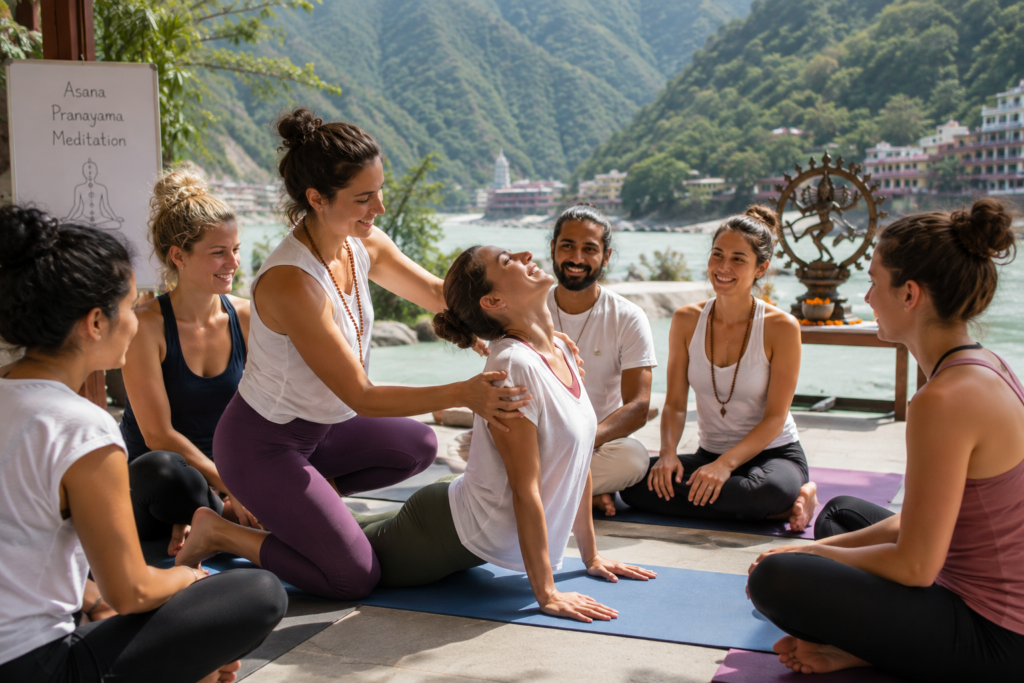
Taking the vital leap from dedicated practitioner to confident guide requires the right environment and unwavering support. Surrounding yourself with highly experienced mentors who understand the psychological hurdles of teaching makes all the difference. You need a safe space where questions are encouraged, mistakes are viewed as lessons, and your unique voice is nurtured.
If you are considering training in Rishikesh, Maa Ganga Yogashala offers exactly that kind of transformative, holistic foundation. We focus intensely on teaching methodology, ensuring you leave not just with a certificate, but with practical commanding skills. Our experienced guides walk you through every critical step of sequence building, voice modulation, and severe anxiety management.
We firmly believe that every single nervous beginner has the potential to become an extraordinary, deeply impactful instructor. Providing a safe, highly nurturing container for your personal evolution is our absolute highest priority as educators. When you learn alongside a deeply supportive community, the paralyzing fear of judgment naturally dissolves entirely.
Explore our comprehensive 100-Hour Yoga Teacher Training in Rishikesh to build a rock-solid foundation of confidence. Alternatively, joining a rejuvenating 5 Days Yoga Retreat in Rishikesh provides the perfect gentle introduction to this sacred environment.
FAQs
Is it normal to feel physically sick before teaching a class?
Yes, severe butterflies or slight nausea are highly common physiological reactions to an intense adrenaline spike. Focus entirely on deep belly breathing and physical grounding exercises to regulate your nervous system before stepping into the studio.
How do I remember my entire sequence without constantly looking at my notes?
Do not be afraid to keep your notebook directly near your mat during your first few months of classes. Over time, practicing the sequence in your own body builds deep muscle memory, heavily reducing your reliance on written cues.
What if a student asks a difficult question I do not know the answer to?
Be completely honest and openly admit that you are not entirely sure of the correct answer right now. Tell them you will thoroughly research the topic and get back to them next week with accurate information. Authenticity builds far more lasting trust than pretending to possess all the answers.
How do I fill the awkward silence if the room feels too quiet?
Silence is actually highly valuable in a physical practice; you do not need to fill every second with talking. Allow your students ample space to focus on their own breath and internal experience without constant, draining verbal interference.
Can I still be a highly effective teacher if I cannot do advanced poses?
Absolutely. Great teaching is entirely about guiding others safely, not demonstrating flawless, highly acrobatic feats of strength. Understanding how to queue effectively and modify for different body types is far more important than achieving a perfect handstand.
Conclusion: Stepping Onto the Mat With Confidence
Overcoming the initial hurdles of teaching first yoga class tips nervousness is a monumental milestone in your journey. Every single time you stand at the front of the room, you build a thicker skin and a deeper well of self-trust. The intense anxiety will eventually fade entirely, replaced by a profound joy in witnessing your students evolve and heal.
Give yourself abundant grace as you navigate these early, vulnerable days of your new teaching career. You have done the hard work, you have absorbed the vital knowledge, and now it is simply time to share your light. The world desperately needs compassionate, highly authentic guides who teach from the heart rather than from the ego.
Take a deep breath, trust your meticulous preparation, and step boldly into your hard-earned power. Ready to begin your growth and master the art of instruction alongside experienced mentors? Explore our 200-Hour Yoga Teacher Training in Rishikesh and take the very first step toward your true calling today.