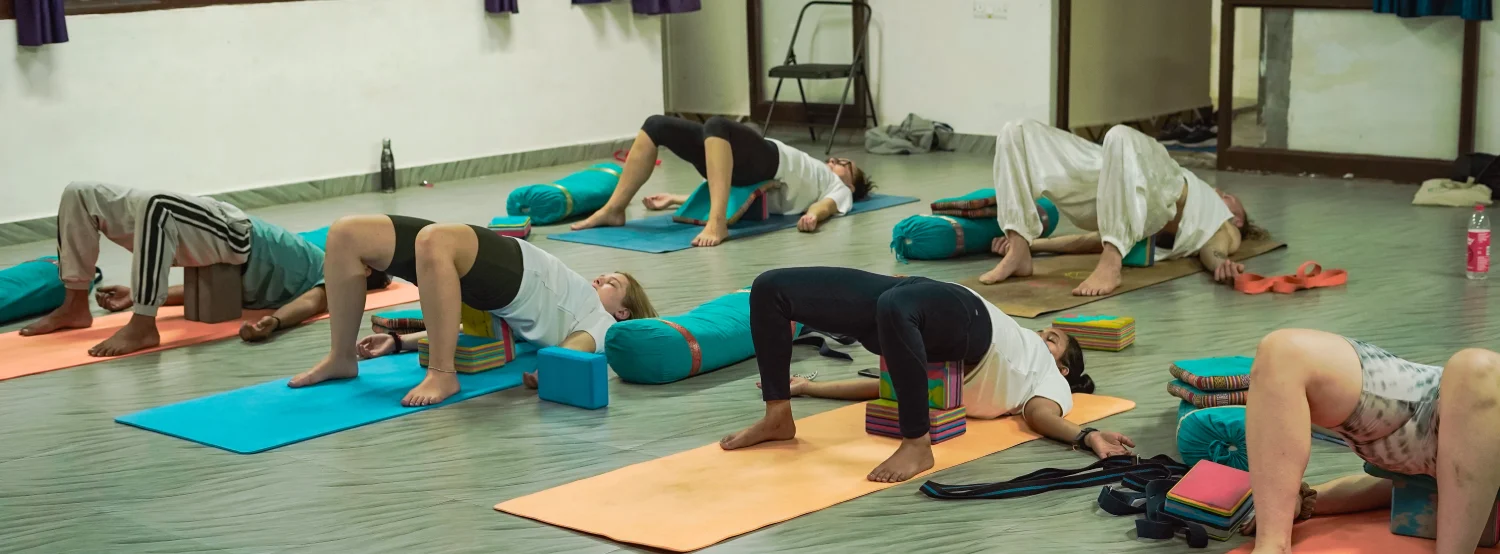

Yoga TTC Rishikesh September Best Time: Why September Is the Sweet Spot
Have you ever planned a yoga teacher training around the weather, only to discover that the season changes the entire feel of your stay? Yoga TTC Rishikesh September best time is worth considering because September sits between the heavier monsoon period and the clearer months that follow.
September does not mean perfect weather every day. You can still experience rain, humidity and cloudy mornings, but conditions generally begin shifting toward a more workable post-monsoon rhythm. For a residential course, that transition matters because practice, walking, rest and local exploration all depend on the season.
This guide covers September weather, training benefits, packing, month-to-month trade-offs and the practical checks you should make before booking.
Yoga TTC Rishikesh September Best Time: What the Post-Monsoon Shift Feels Like
September is best understood as a transition month rather than a guaranteed dry season. The southwest monsoon is usually weakening, but rain has not necessarily disappeared. That distinction is important if you are choosing a residential yoga course.
For you, the biggest benefit can be the balance between outdoor freshness and workable training conditions. After weeks of rainfall, the surrounding landscape can look intensely green, while temperatures gradually become more manageable than during the hottest part of the pre-monsoon summer. Roads and paths can still become wet, and a sudden shower can change your plans, so flexibility remains part of the experience.
The timing also matters for your daily routine. A yoga TTC often asks you to wake early, attend several sessions, study anatomy or philosophy, practise teaching and maintain enough energy to recover. Weather that is merely tolerable for a holiday may feel very different when you are following a structured timetable for several weeks.
Before enrolling, check the school’s current schedule, accommodation arrangements and weather expectations rather than relying on a generic claim that September is always ideal. Yoga Alliance provides information about yoga teacher training standards and registered schools. You can explore the official Yoga Alliance website for current information.

Why September Can Work So Well for a Rishikesh Yoga Teacher Training
The strongest case for September is not that it has flawless weather. It is that several useful factors can line up at once.
First, the landscape can feel exceptionally fresh after the monsoon. If you spend time walking near the Ganga or through Tapovan, you may notice greener surroundings and a softer atmosphere than during the driest months.
Second, you can get a useful balance between focused study and life outside the classroom. You still have opportunities to explore cafés, local markets, temples and riverside areas, but the month does not have to feel like a sightseeing trip. That matters when your main purpose is learning.
Third, September can suit people who dislike extreme heat. You may still encounter warm and humid periods, but the transition away from the most intense summer conditions can make movement, walking and recovery easier for some students.
A fourth advantage is psychological. Starting a major training course after the monsoon can feel like a clean reset. You arrive with a clear purpose, settle into a routine and use the seasonal change as a natural boundary between ordinary life and concentrated study.
That does not mean September automatically beats every other month. If your priority is the driest possible weather, another period may suit you better. If your priority is balancing training, atmosphere and post-monsoon freshness, September deserves serious consideration.
How to Prepare for September Yoga TTC in Rishikesh
Good preparation is more useful than trying to predict every shower. Pack for variability.
What to pack
Bring lightweight clothing for practice, but do not rely only on summer clothes. A thin layer can be useful for early mornings or evenings, while quick-drying fabrics are practical after rain or humid days.
Your practical list should include:
- A compact rain jacket or poncho
- Quick-drying yoga clothes
- Comfortable walking sandals or shoes with grip
- A small waterproof bag for electronics and documents
- Reusable water bottle
- Personal medicines and basic toiletries
- Light layers for cooler mornings or evenings
- Mosquito protection
- A small towel that dries quickly
Footwear deserves more attention than many first-time visitors give it. Wet paths can become slippery, particularly after heavy rain. Comfortable shoes with dependable grip are more useful than fashionable footwear during an intensive course.
You should also keep your study materials protected. If you carry notebooks, a laptop or printed course documents, use a waterproof pouch or bag. A little preparation prevents a rainy afternoon from becoming an avoidable problem.
Your training schedule should also influence how you use free time. Avoid filling every afternoon with long excursions. Recovery is part of learning. A 200-hour program can be physically and mentally demanding, and your ability to absorb teaching methodology, philosophy, anatomy and practical instruction improves when you sleep well and leave enough quiet time.
September vs Other Months: Is It Really the Best Time?
Calling September the “best” month without considering your priorities would be misleading. The better question is: best for what?
If you want the coolest and driest conditions possible, winter months may be more attractive. If you enjoy warmer weather and want to avoid winter layers, spring can work. If you are comfortable with stronger monsoon conditions and want a quieter off-season atmosphere, July or August can have its own appeal.
September sits in an interesting middle position.
For many students, the advantages include:
- Post-monsoon greenery and fresh surroundings
- A gradual move away from peak summer heat
- A good setting for a focused residential routine
- Opportunities for outdoor exploration when conditions allow
- A seasonal transition that can feel calmer than peak travel periods
The trade-off is unpredictability. You should expect the possibility of rain and humidity rather than booking with the assumption that every day will be sunny.
If your goal is a full teacher-training immersion, the quality of the school matters more than chasing one supposedly perfect calendar month. Look at the curriculum, teacher experience, accommodation, daily schedule, student support and whether the course matches your current level.
For a shorter commitment, a 5-day yoga retreat in Rishikesh can also help you experience the local rhythm before committing to a longer teacher-training program.
Why Rishikesh Matters for a September Yoga TTC
The appeal of Rishikesh is not simply that it is a famous yoga destination. Your environment can influence how you approach an intensive course.
Tapovan gives you access to a dense yoga ecosystem, while the Ganga and surrounding Himalayan landscape provide a strong sense of place. You can spend your training days focused on practice and study, then use free time for quiet walks, reflection or simple local experiences.
That combination can be especially useful when you are away from home for several weeks. A residential TTC is not just a sequence of classes. You are adjusting to a new timetable, new teachers, different food, unfamiliar classmates and a different pace of life.
September’s transitional weather can reinforce that slower rhythm. Rain may occasionally force you to cancel an outing, which is not necessarily a bad thing. Instead of treating every free hour as something that must be filled, you can use unexpected downtime for reading, journaling, resting or reviewing what you learned.
Rishikesh also has a practical advantage for international students: yoga is not treated only as a physical exercise here. Teacher training commonly brings together asana, pranayama, meditation, anatomy, teaching methodology, philosophy and lifestyle.
India’s Ministry of Ayush also maintains a dedicated national focus on Yoga and Naturopathy and publishes yoga-related resources and initiatives. You can explore the official Ministry of Ayush website for broader context on yoga in India.
Choosing the Right Yoga TTC for September
Once you decide that September fits your preferences, the next decision is more important than the month itself: choosing the right course.
Start with your objective. If you want a foundation for teaching and a substantial immersion, a 200-hour TTC may make sense. If you already have a foundation and want a shorter intensive, a 100-hour program may be more appropriate.
Look carefully at what is included. A lower headline price is not automatically better value if accommodation, meals, course materials or other essentials are excluded.
You should also examine the daily timetable. Ask how much time is spent on personal practice, teaching methodology, anatomy, philosophy, practicum and independent study. A course that promises a certificate but gives little opportunity to practise teaching is not necessarily the right choice for someone who wants to teach after graduation.
For a longer immersion, compare the details of a 200-hour yoga teacher training in Rishikesh rather than judging a course only by its promotional photos.
You can also review 200-hour YTT fees in India and what is included so you can compare the real value of different programs.
Student experience matters too. If you are nervous about teaching for the first time, read practical guidance on teaching your first yoga class and use it to assess whether your chosen program gives you enough supervised teaching practice.
Finally, check the exact September batch dates before making travel arrangements. Seasonal conditions are only one part of the decision; the actual course schedule, accommodation and arrival requirements need to fit your plans.

What Your September Daily Routine May Look Like
A useful way to think about a September TTC is not “What will Rishikesh weather be like?” but “How will the weather interact with my routine?”
Early mornings may feel fresher, while afternoons can bring rain or humidity. If you leave free time for recovery rather than constant sightseeing, that variation becomes easier to manage.
A strong routine might include:
- Early practice and meditation
- Breakfast and theory study
- Anatomy, methodology and practical work
- Lunch and recovery
- Afternoon supervised practice
- Evening reflection and enough sleep
This helps you avoid treating teacher training like a holiday with yoga added to it. It is an intensive study program in which yoga is the subject, practice and lifestyle framework.
For a shorter intensive, compare your expectations with this 100-hour YTT daily schedule guide. The exact schedule will vary by school and batch.
A Practical September Decision Checklist
Before paying a deposit, ask yourself:
- Can you handle occasional rain and humidity?
- Does the September batch fit your travel or visa timeline?
- Does the course include supervised teaching practice?
- Are accommodation, meals and course materials clearly explained?
- Does the training style match your goals?
Also check refund terms, room arrangements, dietary options and what happens if weather disrupts an outdoor activity. International students should keep some travel buffer because heavy rain can affect transport.
If you are planning beyond a foundational course, consider how teaching practice and continuing education fit into your longer-term path.
A Gentle Place to Begin: Maa Ganga Yogashala
If you want to train in Tapovan during September, choosing a school with a structured residential program can make the seasonal transition easier to manage. At Maa Ganga Yogashala, we offer teacher-training options and shorter retreats designed for students who want to practise and study in Rishikesh.
You can explore our 200-hour yoga teacher training in Rishikesh to see whether the program fits your goals.
If a full TTC is more commitment than you want right now, our 3-day yoga retreat in Rishikesh can be a shorter way to experience a yoga-focused stay before making a larger decision.
The important point is to choose based on your goals, course structure and practical needs—not simply because September sounds attractive.
FAQs About Choosing a September Yoga TTC
Is September a good month for yoga teacher training in Rishikesh?
Yes, if you are comfortable with some rain and humidity. It is a transition period with greener surroundings and conditions that can be more manageable than peak summer.
Will it rain throughout September in Rishikesh?
Do not plan for either constant rain or completely dry weather. Sudden showers are possible, so pack for wet conditions and keep plans flexible.
Is September better than July or August for a yoga TTC?
It can offer a useful middle ground because it comes later in the monsoon transition. If you prefer a quieter atmosphere and do not mind more rain, July or August may still work.
What should you pack for a September yoga TTC?
Bring quick-drying practice clothes, a rain jacket or poncho, footwear with good grip, waterproof protection for electronics, light layers and mosquito protection.
Should you choose a 100-hour or 200-hour TTC?
Choose according to your experience and goal. A 200-hour course is the more substantial foundation for a new teacher-training path; a 100-hour course can suit shorter or additional study.
Conclusion: Is September Your Sweet Spot for Yoga TTC?
Yoga TTC Rishikesh September best time is not a universal rule, but September can be an excellent compromise when you want post-monsoon greenery, focused training and a gradual move away from peak summer conditions.
Plan realistically: expect some rain, pack intelligently, protect recovery time and evaluate the school as carefully as the destination. Your experience will depend more on curriculum, teachers, practice opportunities and accommodation than on a perfectly sunny forecast.
If September fits your plans, explore our 200-hour yoga teacher training in Rishikesh, check current batch dates and choose a program that gives you enough space to learn, practise and teach.