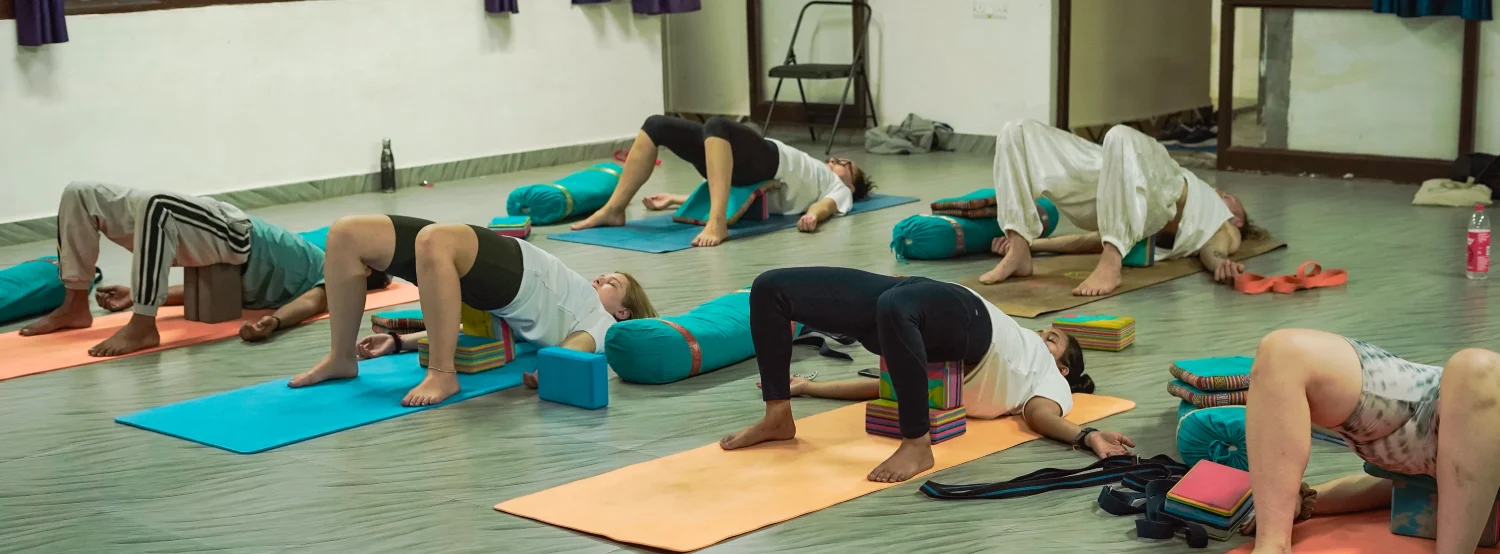
100 hour YTT vs weekend workshop comparison: Which Is Right for You?
Introduction
100 hour YTT vs weekend workshop comparison sounds like a simple choice: spend a couple of days learning yoga, or commit to a much longer training. But the real difference is not just the number of days. It is what you can realistically learn, practise, remember, and apply afterward.
If you are comparing a short workshop with a structured 100-hour yoga teacher training in Rishikesh, you are probably deciding between convenience and depth. A weekend can give you a useful taste of a method. A 100-hour program can give you enough time to build routines, receive feedback, study philosophy, and understand how different parts of yoga connect.
This comparison breaks down the practical differences without treating either option as automatically better. You will see how time, curriculum, teaching practice, commitment, cost, and your long-term goal should influence your decision.
You will also learn when a weekend workshop is the smarter choice—and when a longer residential training makes more sense.
100 hour YTT vs Weekend Workshop Comparison: What Are You Actually Buying?
The biggest mistake you can make is comparing these options only by price. You are really comparing two different learning formats.
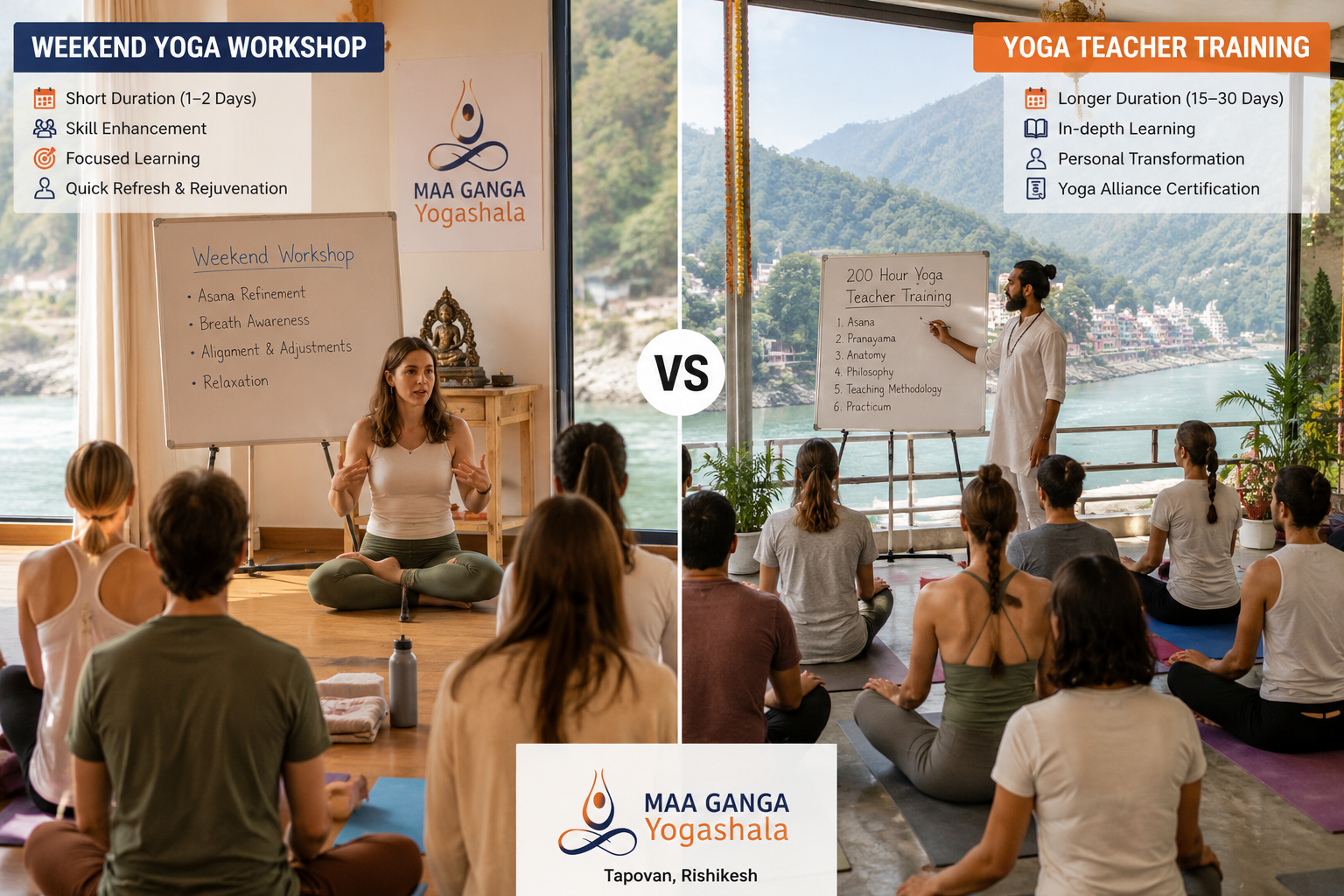
A weekend yoga workshop is usually designed around a narrow topic or experience. It might focus on alignment, meditation, pranayama, sound, restorative yoga, or a particular style. You arrive with a specific goal, spend a limited number of hours in guided learning, and leave with a concentrated introduction.
A 100-hour YTT is broader. At Maa Ganga Yogashala, the 100-hour program is presented as an 11-day foundational course covering areas such as Hatha, Ashtanga, pranayama, meditation, and yoga philosophy. That longer format gives you repeated exposure instead of a single burst of instruction.
Think about the difference this way:
- A workshop answers, “What can you learn about this topic in a short period?”
- A teacher training asks, “Can you understand, practise, and explain the foundations well enough to keep developing?”
- A retreat often asks, “Can you step away from normal routines and immerse yourself in practice for a few days?”
The distinction matters if you want more than inspiration. Repetition is important in yoga education because your body needs time to experience a technique, your mind needs time to understand it, and your teacher needs enough observation to correct you.
For anyone considering formal credentials, check the standards of the organisation behind the certificate rather than assuming every course labelled “teacher training” has the same professional value. Yoga Alliance
100 hour YTT vs Weekend Workshop: Depth, Structure, and Daily Practice
The second major difference is structure. A weekend workshop can be excellent, but its compressed schedule limits how much the instructor can revisit a subject.
Imagine you are learning pranayama. In a short workshop, you may learn the purpose of a technique, practise it under supervision, discuss precautions, and move on. In a longer training, you can return to breathing practices on multiple days, compare techniques, ask questions after practising independently, and connect pranayama with meditation and asana.
The same applies to physical practice. You may understand an alignment cue intellectually in one session, yet still struggle to apply it when your body is tired or when the pose changes. A longer course gives you more opportunities to notice that gap.
What a longer training can give you
A structured 100-hour course can provide room for:
- Regular practice rather than one isolated session.
- Progressive exposure to asana, pranayama, meditation, and philosophy.
- Time to ask questions after you have actually tried the material.
- Feedback from teachers across several days.
- A learning environment where you can observe other students and learn from their questions.
- A routine that helps you distinguish genuine understanding from the excitement of a first class.
This does not mean every 100-hour course is automatically deeper than every workshop. Curriculum quality, teacher experience, class size, assessment, and actual instructional hours matter.
You should also ask exactly what “100 hours” means at the school you are considering. Look for a clear schedule, curriculum, faculty information, assessment method, accommodation details if residential, and a transparent explanation of what the certificate represents.
Curriculum Comparison: Workshop Experience vs Foundational Teacher Training
Curriculum is where the difference becomes easiest to see.
A workshop usually has a central theme. That focus can be an advantage because you are not trying to cover too much. If you already practise yoga and want to improve one specific skill, a weekend intensive may be exactly what you need.
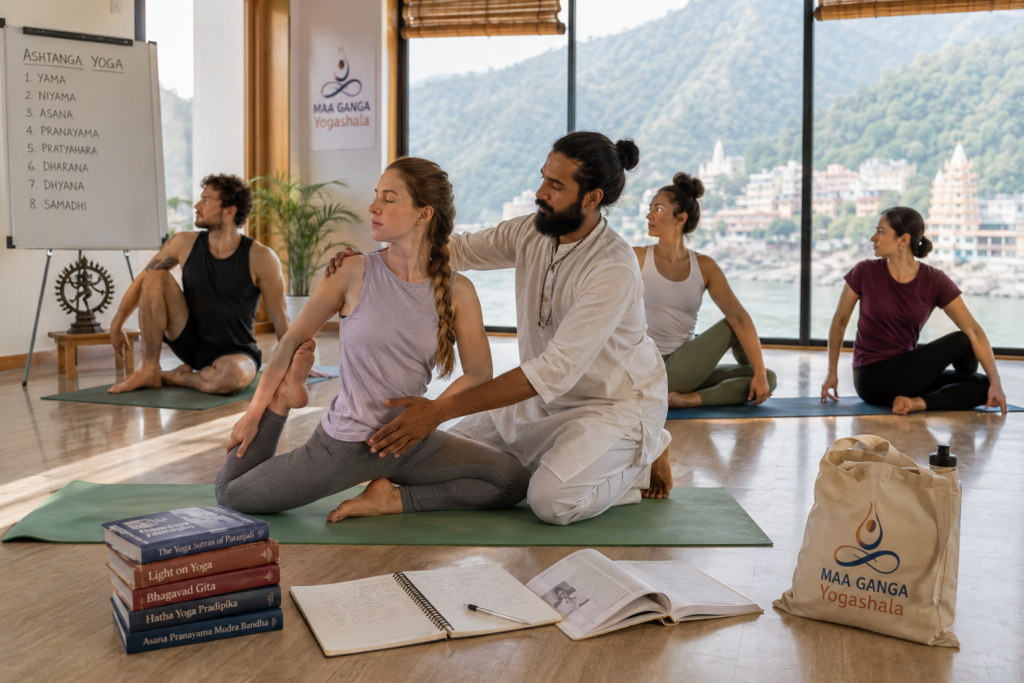
A 100-hour YTT normally spreads learning across several connected areas. Instead of treating yoga as a collection of poses, a foundational program can introduce you to practice, breathing, meditation, philosophy, and the basic principles needed to communicate what you are learning.
If you want to understand the traditional context, you may also explore subjects such as the Yoga Sutras, yogic lifestyle, or the relationship between practice and awareness. You do not need to become a scholar in 11 days. You do need enough structured exposure to start asking better questions.
Your choice should therefore follow your purpose.
Choose a weekend workshop when:
- You want to explore a specific subject before committing.
- Your schedule does not allow a longer stay.
- You already have a strong practice and want focused continuing education.
- You want a low-commitment introduction to a teacher or method.
Choose a 100-hour YTT when:
- You want a broad foundation rather than one topic.
- You want several days of consistent practice.
- You want direct feedback and structured study.
- You are considering progressing toward more comprehensive teacher education.
- You want to experience yoga training in Rishikesh rather than attending an isolated event.
If you are unsure whether you need to be highly flexible before training, challenge that assumption. Your ability to teach or understand yoga should not be reduced to how advanced your poses look. A useful training environment should help you develop awareness, safe practice, communication, and understanding. You can explore this further in our guide to the myth that yoga teacher training requires advanced flexibility.
Time, Cost, Commitment, and What Happens After the Course
Time is the most obvious difference, but commitment is the more important one.
A weekend workshop asks you to protect two or three days. A residential 100-hour YTT asks you to reorganise a larger part of your life. That may mean taking leave from work, travelling to India, adjusting to a fixed daily schedule, and spending less time on normal social routines.
The upside is that your environment supports consistency. You wake up, practise, study, eat, rest, and repeat. For many students, removing everyday distractions makes it easier to notice habits that are invisible when yoga is squeezed between work meetings and errands.
Cost should be assessed practically. Do not compare the workshop ticket with the headline price of a residential course and stop there. Calculate the complete cost: travel, accommodation, meals, local transport, course fees, and the value of your time.
A short workshop can be cheaper in absolute terms. A residential course may offer more bundled value if accommodation, meals, course materials, activities, or other services are included.
There is another important point: a certificate does not automatically make you a competent teacher. If your long-term goal is professional teaching, investigate what the program actually prepares you to do.
Yoga Alliance states that the RYT 200 credential requires completion of a 200-hour yoga teacher training registered with Yoga Alliance. A 100-hour program is therefore not the same credential as an RYT 200 pathway. Yoga Alliance credential information
That distinction can save you from an expensive misunderstanding. If your goal is personal development, a 100-hour course may be a useful foundation. If your goal is to pursue RYT 200 registration, evaluate the 200-hour route directly rather than assuming two shorter courses automatically create the same credential.
Your decision should be based on the outcome you want six or twelve months after the course, not just how attractive the schedule looks today.
Why Rishikesh Matters for a Longer Yoga Training
A weekend workshop can happen almost anywhere. Rishikesh adds a different dimension when you are willing to stay longer.
In Tapovan, you are surrounded by yoga schools, teachers, practitioners, temples, the Ganga, and the Himalayan foothills. That does not magically make a course better. The location matters because your learning continues outside the formal lesson.
You might practise in the morning, discuss philosophy over a simple meal, walk beside the Ganga, attend an evening ceremony, and return to class with a different question the next day. That rhythm is difficult to reproduce when you fly in for a single workshop and leave immediately.
The setting can also help you commit psychologically. You are not squeezing yoga into a weekend between errands. You have deliberately travelled to practise and study.
Still, do not romanticise the location. Rishikesh has many schools and many course formats. Beautiful scenery cannot compensate for weak teaching, vague curriculum, overcrowded classrooms, or unclear certification. Before booking, check the actual timetable, faculty, inclusions, student support, and what the certificate means.
If you are planning your first yoga retreat or training trip to India, practical preparation matters too. Our guide on how to book a yoga retreat in India for the first time can help you think through the decision before you pay a deposit.
For a short stay, a retreat may be a better fit. A three-day or five-day retreat gives you immersion without the academic commitment of teacher training. You can compare a 5-day yoga retreat in Rishikesh with a 100-hour YTT based on your available time and desired depth.
A Practical Decision Guide: Which Option Fits Your Goal?
You do not need the longest course simply because it sounds more serious.
If you have never attended a structured yoga program, a weekend workshop can be a smart test. You can learn how a teacher explains concepts, how your body responds to the schedule, and whether you actually enjoy studying beyond physical postures.
If you already know that you want a deeper foundation, the 100-hour format removes some of the stop-start pattern of short workshops. You get a defined beginning, middle, and end, with enough time for practice and reflection.
Use these questions before you book:
1. What do you want to be able to do afterward?
If the answer is “understand one technique better,” choose a focused workshop. If it is “build a foundation across several areas of yoga,” consider the longer training.
2. How much time can you realistically protect?
Do not book an 11-day course if you know work or family responsibilities will pull you away every other day.
3. Are you seeking personal learning or professional progression?
These are different goals. For professional teaching, investigate the credential pathway, curriculum, assessment, and recognition carefully.
4. Do you learn better through repetition?
If you need to practise something several times before it feels natural, the longer format has an obvious advantage.
5. What does the fee include?
Ask about accommodation, meals, course materials, excursions, taxes, deposits, cancellation rules, and certification.
If you are leaning toward teacher training, you may also want to read our practical guide to questions to ask before enrolling in a 100-hour YTT in India. It can help you compare schools based on substance rather than marketing language.
A Gentle Next Step: Explore 100-Hour Training in Rishikesh
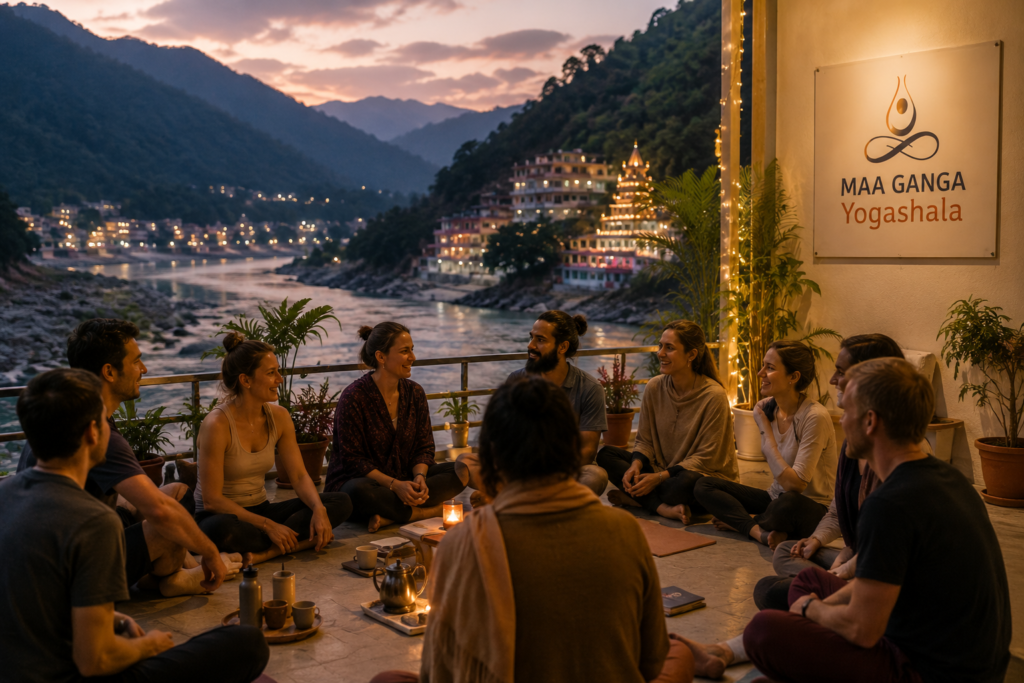
If you want more than a weekend introduction but are not ready to commit to a full 200-hour program, we offer a structured 11-day 100-hour Yoga Teacher Training in Rishikesh covering key areas of yoga.
If your goal is specifically to pursue an RYT-200 pathway, our 200-hour Yoga Teacher Training in Rishikesh is the more appropriate course to investigate.
We believe the right choice is the one that matches your current goal, available time, and desired level of commitment—not simply the course with the biggest number.
FAQs: 100-Hour YTT vs Weekend Workshop
Is a 100-hour YTT better than a weekend yoga workshop?
Not automatically. A 100-hour program is usually better for broad, structured learning, while a weekend workshop can be better for focused exploration or testing a teacher and method before making a larger commitment.
Can a weekend workshop replace a 100-hour YTT?
Usually, no. A workshop may provide valuable learning, but it is generally designed around a shorter and narrower experience. If you want the curriculum, repetition, and structure of a 100-hour program, enrol in a course specifically designed for that purpose.
Is a 100-hour YTT enough to become a Yoga Alliance RYT 200?
No. A 100-hour course should not be treated as equivalent to a 200-hour Yoga Alliance training. If RYT 200 registration is your goal, check that you are completing the required 200-hour training through an appropriate registered school.
Should you choose a retreat instead of a workshop or YTT?
Choose a retreat when your priority is immersion, rest, practice, and stepping away from normal routines rather than formal teacher education. A short retreat can be sensible if you have only a few days in Rishikesh.
What should you check before paying for a 100-hour YTT?
Look at the daily schedule, total instructional hours, curriculum, teachers, assessment, accommodation, meals, refund policy, certificate wording, and what the certificate does and does not qualify you to do. Ask direct questions if any of these details are unclear.
Conclusion: Choose the Depth That Matches Your Goal
The 100 hour YTT vs weekend workshop comparison becomes much easier when you stop asking which option is “better” and start asking which option fits your purpose.
A weekend workshop gives you speed, focus, and flexibility. A 100-hour YTT gives you more time for repetition, broader study, teacher feedback, and a consistent daily rhythm. Neither should be chosen simply because it sounds more impressive.
If you want a structured foundation and have enough time to immerse yourself in practice, explore our 100-hour Yoga Teacher Training in Rishikesh and see whether its 11-day format fits your plans.
If you already know that your goal is the professional RYT-200 pathway, investigate the 200-hour program instead. And if you only have a few days, a short retreat may give you a more realistic and enjoyable experience.
The smartest choice is not the longest course. It is the course whose depth, structure, and outcome match what you actually want next.