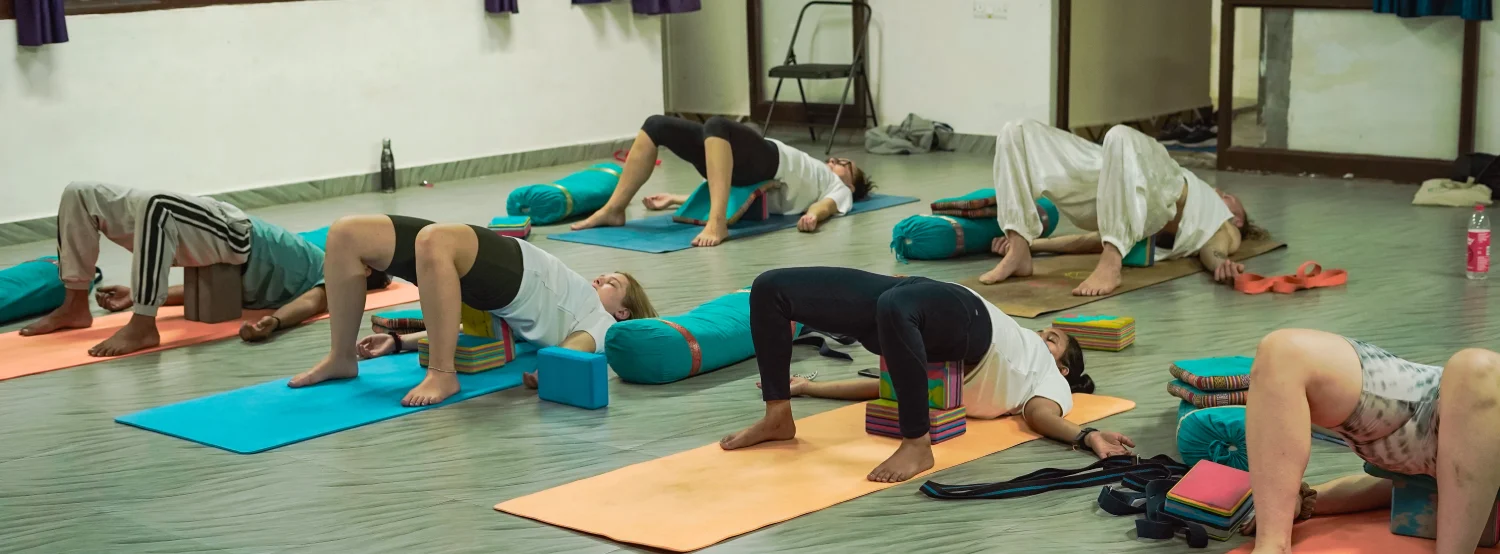

Maa Ganga Yogashala Support After 100 Hour YTT: How Your Growth Continues After Graduation
Introduction
Maa Ganga Yogashala support after 100 hour YTT is an important consideration when you are deciding what comes next after completing your first structured yoga teacher training. Graduation may give you a certificate, but it does not automatically make you a confident, experienced yoga teacher. What happens after those training days can shape your relationship with yoga for years.
Perhaps you have completed your 100-hour course in Rishikesh and returned home with new knowledge, a deeper personal practice and an interest in teaching. However, you might also have questions. Are you ready to lead a class? Should you continue with a 200-hour certification? How can you maintain your daily practice without the discipline of a residential school?
These are natural questions. Your development requires more than completing a syllabus. It involves consistent practice, reflection, teaching experience and continued learning.
Understanding the support and learning pathways available after graduation helps you make informed decisions. Here is how you can approach your next stage with confidence, whether your goal is personal development or a future in yoga teaching.
1. Understanding Support After 100-Hour Yoga Teacher Training
Completing a 100-hour yoga teacher training course is a meaningful educational milestone. However, it is important to understand what the qualification represents and what it does not.
A 100-hour programme generally introduces foundational areas of yoga, such as asana, pranayama, meditation, anatomy, philosophy and teaching methodology. You begin understanding not only how to perform yoga practices but also why different techniques are used.
After graduation, your learning moves from a structured classroom environment towards independent application.
You may need guidance with:
- Revising yoga postures and understanding their alignment.
- Developing a consistent personal practice.
- Improving your understanding of pranayama and meditation.
- Exploring basic teaching techniques.
- Identifying areas that require additional study.
- Deciding whether further certification suits your goals.
The quality of your next steps depends on how honestly you assess your abilities.
For example, knowing the sequence of a Hatha Yoga class is different from confidently teaching it to students with different physical abilities. Similarly, understanding a breathing technique theoretically is different from explaining its appropriate application.
If you are researching recognised yoga education, you can also explore Yoga Alliance to understand its registration framework and the distinctions between different teacher-training pathways.
Your graduation should therefore be viewed as a foundation rather than the final destination.

2. Building Confidence Through Consistent Personal Practice
One of the most valuable things you can do after completing your training is maintain the discipline you developed during your residential course.
During training, your schedule may include early morning meditation, asana practice, pranayama, philosophy classes and evening relaxation. Once you return home, maintaining that routine can become challenging.
Work, family responsibilities, travel and everyday distractions can interrupt your practice.
The solution is not necessarily to recreate your entire training timetable. Instead, develop a realistic routine that fits your lifestyle.
Create a sustainable weekly practice
You can begin with a simple structure:
Morning practice: 30–45 minutes
- Begin with a few minutes of quiet breathing.
- Practise joint movements and warm-up exercises.
- Include familiar Hatha Yoga postures.
- Finish with relaxation or meditation.
Additional practice: 2–3 sessions weekly
Use these sessions to explore areas that received less attention during your training. You might work on balance, flexibility, posture alignment or breathing awareness.
Weekly reflection
Maintain a yoga journal. Record which practices feel comfortable, which require improvement and what you have learned.
This approach prevents your training knowledge from becoming something you remember only occasionally.
You can also revisit your understanding of 100-Hour Yoga Teacher Training in Rishikesh to reconnect with the foundational learning areas covered during the course.
Remember, consistency is more useful than forcing yourself into an unrealistic daily schedule.
3. Developing Practical Teaching Skills After Graduation
If your intention is to become a yoga teacher, your next challenge is applying what you have learned.
A certificate does not automatically develop classroom management, communication or the ability to adapt practices for different students. These abilities improve through observation, preparation and supervised or appropriately guided teaching experience.
Start with small, manageable steps.
Practise teaching with a clear structure
You can begin by preparing a 20–30-minute beginner-friendly session.
Include:
- A short opening and breathing awareness.
- Gentle warm-up movements.
- A small selection of familiar asanas.
- Appropriate transitions between postures.
- A relaxation period.
- A short closing reflection.
Practise explaining each posture using simple language. Avoid giving too many instructions simultaneously.
For example, instead of saying, “Engage every muscle and move into the deepest expression of the posture,” explain the movement step by step and allow students to respond comfortably.
Learn to recognise individual differences
Your future students may have different levels of flexibility, strength, mobility and previous experience.
A good teacher understands that one variation cannot suit everyone.
Pay attention to:
- Comfortable movement ranges.
- Appropriate use of props.
- Clear verbal demonstrations.
- Respectful communication.
- Student feedback.
- Situations requiring professional medical advice.
For additional understanding of safe and inclusive teaching, explore teaching beginner yoga classes after 100-hour YTT.
You can also read published health and medical research through PubMed when exploring the scientific literature around physical activity, yoga and wellbeing. Remember that research findings should be interpreted carefully rather than treated as universal medical advice.
Your goal should be to become a responsible practitioner before trying to become an impressive instructor.
4. Choosing Your Next Certification and Continuing Education
After graduation, you may wonder whether you should immediately enrol in another course.
The answer depends on your personal goals, current knowledge and readiness to continue.
A 100-hour YTT can introduce you to structured yoga education, but it is important to understand the certification pathway before advertising yourself as a fully qualified professional teacher.
If you want to develop a teaching career, a 200-hour teacher-training programme is a common next educational step.
When should you consider a 200-hour YTT?
Consider continuing your education if:
- You want more comprehensive teaching methodology.
- You need additional practice teaching sessions.
- You want to study anatomy and yoga philosophy in greater depth.
- You are interested in teaching regular group classes.
- You want to pursue a recognised teacher-training pathway.
You can explore the 200-Hour Yoga Teacher Training in Rishikesh to understand the next level of structured education.
However, do not select another course simply because you feel pressure to collect certifications.
First, identify what you actually need to improve. You might benefit more from strengthening your asana practice, studying anatomy or gaining supervised teaching experience before committing to another residential programme.
Explore specialised areas of yoga
Your development does not have to follow only one direction.
Depending on your interests, you can explore:
- Restorative Yoga.
- Yin Yoga.
- Meditation.
- Pranayama.
- Yoga philosophy.
- Sound healing.
- Mindfulness practices.
Specialised learning can complement your existing knowledge, provided you understand the training requirements and scope of each discipline.
The important point is to choose education that improves your understanding rather than simply adding another certificate to your collection.
5. Why Rishikesh Matters After Your First Yoga Training
Rishikesh offers something valuable to yoga students beyond the classroom: an environment where traditional practices remain closely connected with everyday life.
Situated along the Ganga River and surrounded by the Himalayan foothills, the city attracts practitioners from India and different parts of the world.
After completing your first 100-hour training, returning to Rishikesh can provide an opportunity to reconnect with the atmosphere in which your learning began.
Reconnecting with your practice
You may remember the discipline of early morning sessions, the sound of temple bells, meditation periods and the experience of practising alongside students from different countries.
These memories can encourage you to revisit the habits you developed during training.
However, you do not need to travel back immediately to maintain your progress. You can continue practising at home and return when you have a meaningful educational or personal reason.
Exploring additional wellness experiences
Rishikesh also offers opportunities to explore different approaches to wellbeing.
For example, you might consider a short retreat to dedicate time to meditation, relaxation and personal reflection.
Maa Ganga Yogashala’s 5-Day Yoga Retreat in Rishikesh is one option to explore if you want a structured period of practice rather than immediately committing to another teacher-training course.
A shorter retreat can also help you reconnect with yoga without the academic demands of a certification programme.
The value of returning to Rishikesh lies in what you learn and practise, not simply in visiting a famous yoga destination.
6. How Maa Ganga Yogashala Can Fit Into Your Continued Learning
Choosing a yoga school is not only about the number of training hours. You should also understand the school’s educational approach, course structure, faculty experience and available opportunities for further study.
Maa Ganga Yogashala is located on Badrinath Road in Tapovan, Rishikesh, near the Ganga River and surrounded by the Himalayan landscape.
If you have completed a 100-hour programme or are considering your next educational step, it is useful to explore the school’s available programmes and identify which option matches your current requirements.
Exploring your next learning opportunity
Your next step may depend on what you want to achieve.
- For deeper teacher education: Explore the 200-hour YTT curriculum.
- For personal practice and relaxation: Consider a residential yoga retreat.
- For additional wellness knowledge: Explore sound healing and other complementary learning experiences.
- For foundational development: Revisit the subjects you studied during your 100-hour training.
You can also explore sound healing programmes if you are interested in learning about sound-based relaxation practices as a complementary area of wellness education.
If you’re considering continuing your yoga education in Rishikesh, Maa Ganga Yogashala offers structured training and retreat programmes that you can explore according to your learning goals.
Before enrolling, ask about the current course syllabus, practical teaching components, certification eligibility, faculty and any available post-graduation guidance. Confirm the details directly rather than assuming that every programme includes ongoing alumni mentorship or employment support.
This approach helps you choose your next step with realistic expectations.
7. Building a Yoga Teaching Career: What Should You Do Next?
Completing your training may create an interest in teaching, but turning that interest into a sustainable career requires preparation.
Your first objective should be to develop competence and practical experience.
Start with small teaching opportunities
You do not need to immediately establish a yoga studio or launch a full-time teaching business.
Depending on your qualifications and experience, you can explore appropriate beginner-level opportunities, such as assisting an experienced instructor, conducting practice sessions with peers or offering introductory sessions within your competence.
Always be transparent about your training level.
Develop your professional identity
If you intend to teach professionally, begin creating a simple portfolio.
Include:
- Your educational background.
- Yoga styles and subjects you have studied.
- Your personal practice experience.
- Relevant teaching experience.
- Areas in which you are continuing your education.
- Your approach to safe and inclusive classes.
Avoid presenting yourself as an expert in areas where you have limited training.
Learn how to reach potential students
Teaching skills are only one part of building a professional career.
You may also need to understand:
- Basic social media communication.
- Creating useful yoga-related content.
- Planning beginner-friendly classes.
- Communicating with prospective students.
- Building trust through consistent and honest information.
For more practical guidance, explore how to market yourself as a yoga teacher.
If you prefer teaching online, you can also explore the practical considerations involved in teaching online yoga classes after certification.
Remember that professional growth takes time. Building a reliable teaching practice is more valuable than rushing to attract students before you are ready.
8. FAQs About Life After 100-Hour Yoga Teacher Training
1. What should you do immediately after completing a 100-hour YTT?
Begin by revising your course material and maintaining a regular personal practice. Identify the areas where you need more experience, particularly teaching methodology, anatomy and posture alignment. Once you understand your goals, decide whether additional education or practical teaching experience should come next.
2. Can you teach yoga after completing a 100-hour YTT?
Your ability to teach depends on your training, competence, the type of classes you intend to conduct and the applicable certification requirements. A 100-hour course should not automatically be treated as equivalent to a full 200-hour teacher-training qualification. Be transparent about your credentials and avoid teaching beyond your competence.
3. Is a 200-hour YTT necessary after a 100-hour course?
If your objective is to pursue a more comprehensive yoga teaching pathway, a 200-hour programme is a logical next step. It generally offers broader educational coverage and more opportunities to develop teaching skills. However, your decision should depend on your goals and the specific certification framework you intend to follow.
4. How can you stay connected with yoga after returning home from Rishikesh?
Create a manageable daily or weekly practice, revisit your training notes, maintain a yoga journal and continue studying. You can also participate in local yoga communities, attend workshops and explore additional training when appropriate.
5. Does Maa Ganga Yogashala provide post-graduation career placement?
Specific alumni support, mentoring and placement arrangements should be confirmed directly with the school. Before enrolling in a programme, ask about available post-course guidance, teaching practice opportunities and any ongoing student community access. Do not assume that completing a certificate guarantees employment or teaching placements.
Conclusion: Make Your Next Step Count
Maa Ganga Yogashala support after 100 hour YTT is best understood as part of a wider commitment to continued learning, personal discipline and responsible teaching development.
Your graduation is an opportunity to apply what you have learned, recognise your strengths and identify the areas that need further attention.
Whether you want to deepen your personal practice, explore teaching opportunities or pursue a more comprehensive certification, give yourself enough time to develop genuine competence.
Do not measure your progress only by the number of certificates you collect. Measure it through your understanding, consistency, teaching ability and respect for the practice.
If you are ready to continue your education in Rishikesh, explore the 200-Hour Yoga Teacher Training at Maa Ganga Yogashala.
Review the course details, understand the curriculum and choose a learning path that supports your long-term goals.
Your 100-hour graduation is a beginning. Let your continued practice shape what comes next.