Maa Ganga Yogashala teachers faculty selection: How Our Yoga Teachers Are Chosen
Maa Ganga Yogashala teachers faculty selection is not just about finding people who can demonstrate difficult postures. If you are choosing yoga teacher training in Rishikesh, the quality of the faculty can shape what you learn, how safely you practice, and how confidently you eventually teach.
A strong yoga school needs more than impressive biographies. You want teachers who can explain technique clearly, connect practice with philosophy, observe individual students, and give useful corrections without making learning intimidating. You also want a faculty structure that matches the depth of the course rather than treating every class as a generic fitness session.
This guide explains the practical standards you should look for when evaluating a yoga faculty team, how different teaching specialities contribute to a training programme, and what makes teacher-student interaction valuable. You will also see how these principles relate to studying yoga in Rishikesh and how to evaluate a school before you pay a deposit.
Maa Ganga Yogashala Teachers Faculty Selection: What Should Matter?
When you research a yoga school, start with the teachers rather than the photographs of the campus. A beautiful location can improve your experience, but it cannot replace clear instruction.
The first thing to examine is relevant experience. A teacher may have practised yoga for many years, but teaching requires another skill set: observing students, breaking down techniques, managing different ability levels, and explaining why a practice is being taught.
Maa Ganga Yogashala presents its faculty as experienced Indian yoga teachers, including E-RYT-level teachers, and says its programmes use small classes to allow direct guidance and individual feedback. Its published course information also describes hands-on alignment and teaching-methodology work rather than practice that is limited to following an instructor.
For you, that means a useful faculty-selection checklist should include:
- Relevant yoga education and teaching experience
- A clear area of teaching expertise
- Ability to teach beginners as well as experienced practitioners
- Safe, understandable alignment instruction
- Strong communication rather than performance-focused teaching
- Willingness to observe and correct students
- Familiarity with the curriculum being delivered
- Professional conduct inside and outside class
You can also verify a school’s registration and certification claims through the official Yoga Alliance website rather than relying only on marketing language.
The important point is simple: the teacher’s job is not to make you feel impressed for 60 minutes. The job is to help you understand the practice well enough to continue it safely and intelligently after class.
How Yoga Teacher and Faculty Expertise Is Matched to the Curriculum
A good faculty team does not need every teacher to teach everything. In fact, specialisation can make a programme stronger when each teacher contributes where their knowledge is most relevant.
Imagine you are completing a 200-hour teacher training. You may study asana, pranayama, meditation, anatomy, philosophy, alignment and teaching methodology. Those subjects require different kinds of explanation.
Asana and alignment
For physical practice, you need teachers who can demonstrate an asana, explain its purpose, identify common mistakes and adapt instructions for different bodies.
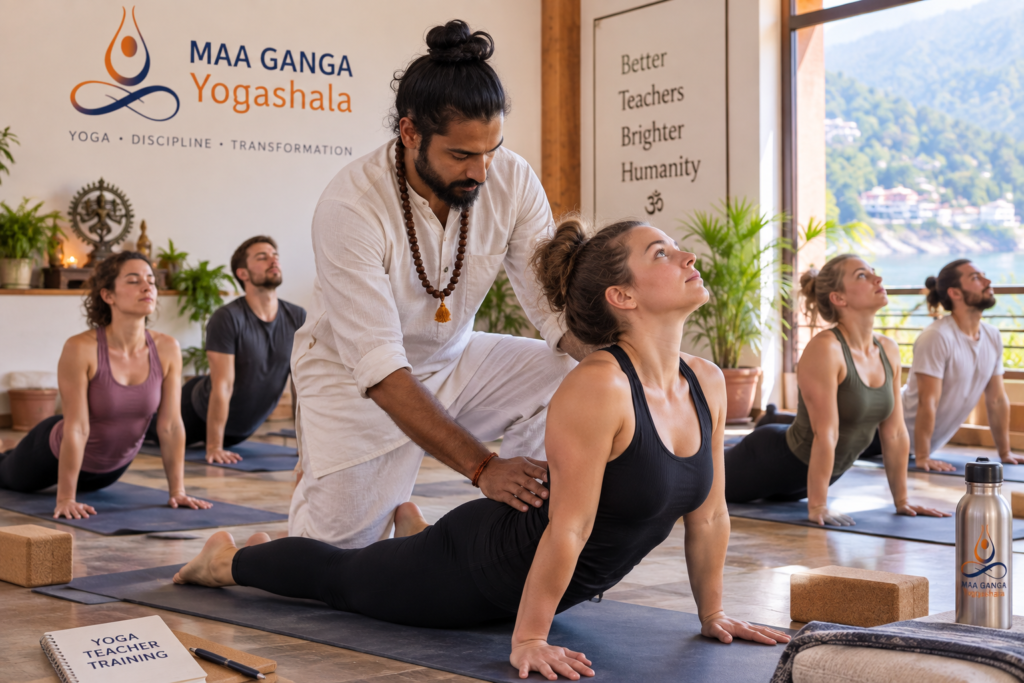
This becomes especially important when you are learning adjustments. A correction should not simply make a posture look prettier. It should help you understand stability, breathing, range of motion and safe execution.
Meditation and traditional practices
Meditation requires a different teaching approach. You need clear instructions, patience and enough understanding of the method to explain what you are actually practising rather than presenting vague ideas about relaxation.
Maa Ganga Yogashala’s published 200-hour curriculum includes meditation practices associated with the Bihar School of Yoga, alongside pranayama, philosophy and asana work.
Teaching methodology
The biggest test of a teacher-training faculty is whether teachers can teach you how to teach. Demonstrating a pose is not the same as preparing you to stand in front of ten students and give useful instructions.
You should therefore look for supervised teaching practice, feedback, sequencing guidance and opportunities to correct your own communication. A strong methodology class should make you think about what students hear, see and feel—not only what you know.
If you are already thinking about your first class, this practical guide on teaching your first yoga class with more confidence can help you understand why communication matters as much as technical knowledge.
What a Strong Yoga Faculty Team Looks Like in Practice
Faculty selection becomes meaningful only when you can see its effect inside the classroom.
A teacher can have an impressive title and still be a poor educator. Conversely, a teacher with a calm teaching style can make complicated material understandable because they know how to structure a lesson.
One useful sign is consistency. Your teachers should be able to explain the purpose of an exercise, connect it to the broader curriculum and answer reasonable questions without turning the class into a competition.
Another sign is observation. In a real training environment, students will not all have the same flexibility, strength, previous experience or confidence. If your teacher notices these differences, instruction becomes more useful.
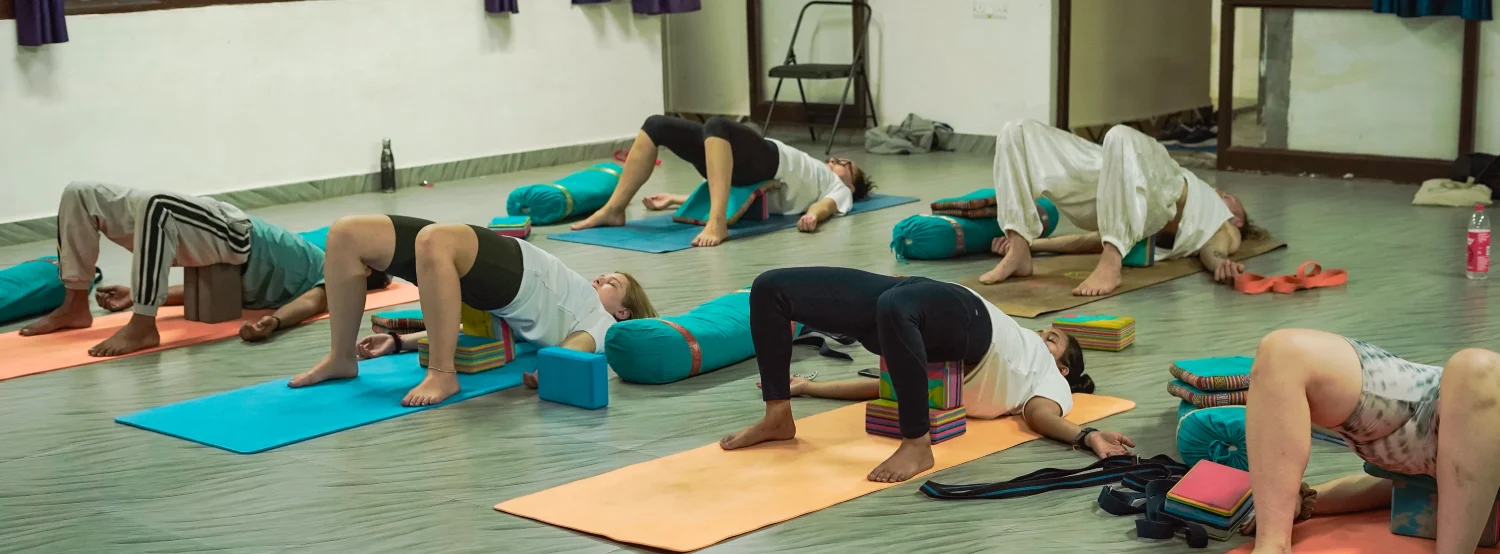
Small classes can help here. Maa Ganga Yogashala states that it deliberately keeps class sizes intimate so students receive direct attention, personalised feedback and individual adjustments.
You should also pay attention to how feedback is delivered. Useful correction is specific: “move your weight back,” “soften the knees,” or “keep the breath steady” gives you something to work with. Vague criticism does not.
For a teacher-training student, this is more than a comfort issue. You are learning a teaching habit. The way your instructors observe and communicate with you becomes a model for how you may eventually work with your own students.
That is why faculty selection should include teaching behaviour, not just certificates.
How Faculty Experience Supports Safer Yoga Education
Safety is one of the clearest reasons faculty quality matters.
Yoga is often described as gentle, but not every movement is appropriate for every person, and an instructor cannot assume that all students have identical mobility or previous injuries. Good teaching therefore involves options, observation and appropriate boundaries.
When you learn alignment, you should be taught what to watch for rather than memorising a single “perfect” shape. A teacher can show you the general mechanics while helping you understand that bodies vary.
The same principle applies to pranayama and meditation. Instruction should be clear about technique, pace and how to respond if a practice feels uncomfortable. You should never feel pressured to ignore pain or distress simply because the rest of the class is continuing.
India’s Ministry of AYUSH provides public information on traditional systems of medicine and wellness, including yoga, through AYUSH. When you research a school, use authoritative sources alongside the school’s own material so you can distinguish established information from marketing claims.
For you as a student, safer education also means asking questions before enrolment. Find out how teachers handle beginners, whether teaching practice is supervised, what the assessment process involves and how individual concerns are addressed.
A good faculty team should make it easier to ask those questions—not harder.
If you want to understand the broader academic side of a programme, you can also review Yoga anatomy, muscles, joints and alignment for teachers before deciding which training environment suits your goals.
Why Rishikesh Makes Faculty Selection Especially Important
Rishikesh gives you an unusual choice: you can study yoga in a place with a deep living yoga culture, but you can also find programmes with very different teaching standards.
That makes your research important.
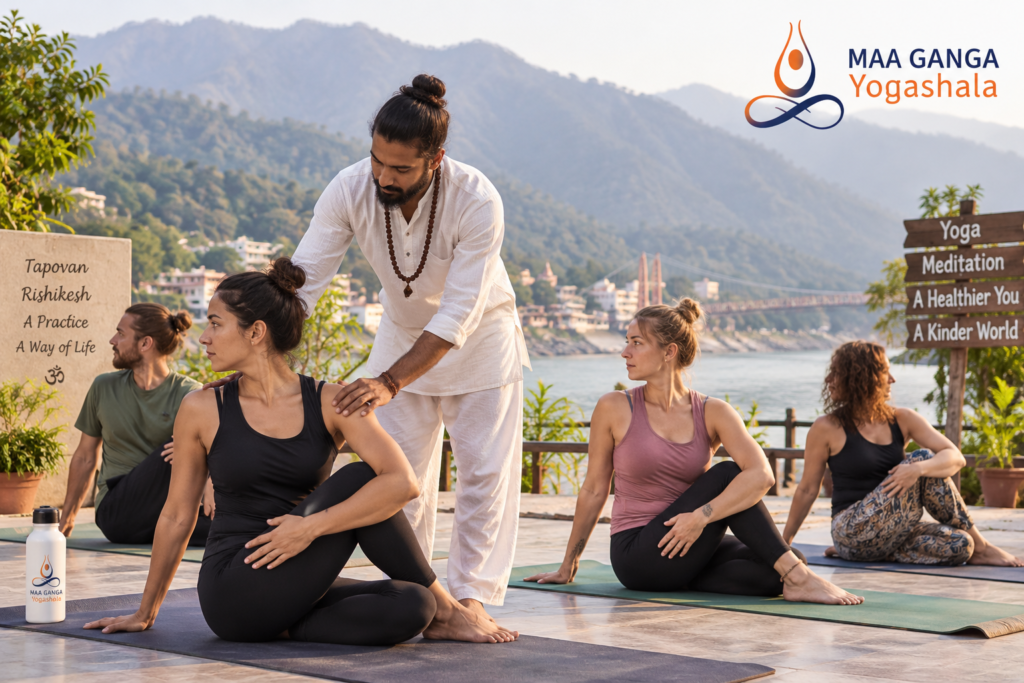
The setting can be inspiring. You may practise near the Ganga, walk through Tapovan after class, attend a Ganga Aarti or meet students from different countries. Maa Ganga Yogashala describes its Tapovan location and its international student community as part of the learning environment.
But scenery should be treated as an added benefit, not proof of educational quality.
When comparing schools in Rishikesh, look at the actual curriculum, faculty expertise, class size, teaching practice, accommodation, assessment and what certification you receive. Ask who teaches each major subject and whether the same standards apply throughout the programme.
This is especially relevant if you are travelling internationally. A course may look attractive online, yet the real value of your trip depends heavily on the teaching you receive each day.
If you are considering a shorter experience before committing to teacher training, you can compare your options through how to book a yoga retreat in India for the first time. A retreat and a teacher-training course have different purposes, so you should choose based on your actual goal.
What You Can Expect From Our Faculty Approach
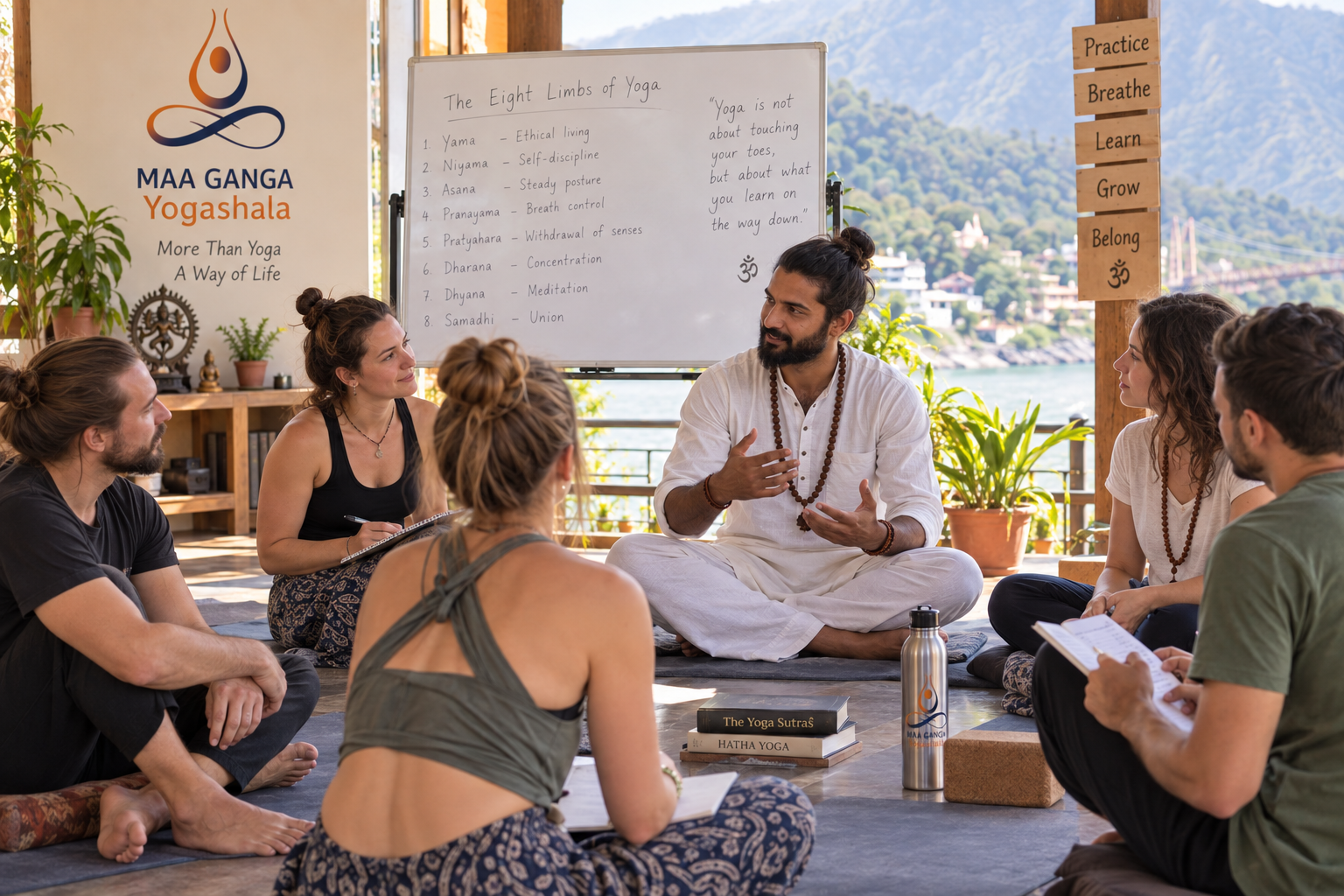
If you are considering training in Rishikesh, our approach at Maa Ganga Yogashala centres on experienced Indian teachers, small-group learning and direct guidance across the core areas of the programme. Our published 200-hour course covers asana, pranayama, philosophy, anatomy, meditation and teaching methodology, with supervised teaching practice built into the training.
We also believe faculty quality should be visible in everyday teaching: clear demonstrations, practical corrections, opportunities to ask questions and enough interaction for you to understand what you are doing.
If you want to understand the school and its programmes before choosing a specific course, explore the Maa Ganga Yogashala course overview and compare the available options.
If you want to explore the full training route, see our 200-Hour Yoga Teacher Training in Rishikesh and review the curriculum, schedule and inclusions before deciding.
For a shorter foundation, our 100-Hour Yoga Teacher Training in Rishikesh is designed as an 11-day structured programme covering core practices including Hatha, Ashtanga, pranayama, meditation and yoga philosophy.
Questions to Ask Before You Enrol With a Yoga Faculty
Before you pay a deposit, spend ten minutes checking the details that marketing pages often leave vague. The answers can tell you more about the learning environment than a long list of photographs.
Ask whether the teachers for your batch are confirmed, which subjects they handle, how much supervised teaching practice is included, and how students receive feedback. If you are a beginner, ask how the programme introduces foundational techniques before moving into more demanding practices.
You can also ask about class size. A course that promises personal attention should explain how that attention is delivered. Find out whether corrections happen individually, whether questions are encouraged and whether you will have opportunities to practise teaching while an instructor observes you.
Finally, compare the faculty approach with the rest of the programme. Your accommodation, meals and location matter, but they should support the education rather than become substitutes for it. The right questions help you judge the school on what you will actually experience in class.
FAQs About Yoga Teachers and Faculty Selection
What qualifications should yoga teachers have?
Look beyond one certificate. You should consider relevant training, teaching experience, subject expertise, communication skills and the ability to work safely with students at different levels. For a teacher-training course, experience in teaching methodology is particularly valuable.
Does a famous yoga teacher always make a course better?
Not necessarily. A recognised name can be useful, but teaching quality depends on whether the instructor can explain concepts clearly, observe students and give constructive feedback. Your goal is education, not celebrity access.
Why does small class size matter in yoga teacher training?
A smaller group can make it easier for the teacher to observe individual students, answer questions and provide personalised corrections. Maa Ganga Yogashala specifically describes small class sizes as part of its approach to direct attention and feedback.
Should you ask who will teach each subject before enrolling?
Yes. Ask for the course schedule and faculty responsibilities if they are not clearly published. You want to know who handles asana, anatomy, philosophy, meditation and teaching methodology, and whether supervised practice is included.
Is a retreat enough if your goal is to become a yoga teacher?
A retreat can introduce you to a practice environment, but it is not the same as a structured teacher-training programme. If your goal is certification and teaching skills, compare the curriculum, required hours, assessments and teaching practice rather than choosing based only on retreat atmosphere.
Conclusion: Choose the Faculty, Not Just the Destination
Maa Ganga Yogashala teachers faculty selection matters because your instructors influence much more than the quality of a single yoga class. They shape how you understand alignment, philosophy, meditation, communication and the responsibilities that come with teaching others.
When you compare yoga schools in Rishikesh, look past polished photographs and generic claims. Check who teaches, what they specialise in, how much direct feedback you receive, whether teaching practice is supervised and how clearly the school explains its curriculum.
If you are ready to turn your interest into structured training, explore our 200-Hour Yoga Teacher Training in Rishikesh. You can review the programme and decide whether the faculty approach, curriculum and learning environment match what you want from your training.