Morning sadhana 100 hour YTT Rishikesh: Why the 6 AM Practice Changes Everything
Introduction
Morning sadhana 100 hour YTT Rishikesh can teach you something that a busy day rarely does: how to give your attention to one thing at a time. At 6 AM, before messages, deadlines and distractions take over, your yoga mat becomes a place to observe your body, steady your breathing and meet your mind honestly.
If you have ever struggled to maintain a daily yoga routine, an early morning practice might sound challenging. Add an intensive yoga teacher training course in Rishikesh, and the experience becomes even more demanding. Yet this is precisely where a consistent routine can become valuable.
Morning sadhana is not simply about waking up early or completing a demanding sequence of postures. It brings together movement, breath awareness, meditation and intention, helping you approach the rest of your day with greater purpose.
In this guide, you will discover what morning sadhana involves during a 100-hour Yoga Teacher Training (YTT), why the 6 AM session matters, how to prepare for it, and what to consider before choosing a training programme in Rishikesh.
1. What Is Morning Sadhana in a 100-Hour YTT?
Sadhana refers to a regular spiritual or contemplative practice undertaken with commitment and intention. In a yoga teacher training environment, morning sadhana may combine asana, pranayama, meditation, mantra chanting and periods of silence.
The exact routine varies between schools, teachers and seasons. A 6 AM start does not mean every session must be physically intense. Some mornings may focus on movement and alignment, while others emphasise breath awareness or quiet concentration.
The purpose is consistency rather than performance.
When you practise at a scheduled time, you gradually learn to prepare yourself mentally and physically instead of waiting until you feel motivated. This discipline can be especially useful during an intensive course, when your day also includes yoga philosophy, anatomy, teaching methodology and practical assessments.
A typical morning might include:
- Arrival and settling: You prepare your mat, notice your breathing and allow yourself to become present.
- Asana practice: You explore postures, movement patterns, alignment and appropriate modifications.
- Pranayama: You practise selected breathing techniques under suitable guidance.
- Meditation or mantra: You train your attention through observation, repetition or stillness.
- Reflection: You notice how your body and mind respond without judging every experience.
Not every programme includes all these elements in one session. Before enrolling, ask the school for its current daily schedule.
For a useful introduction to yoga’s professional training framework, visit Yoga Alliance. Registration requirements and recognition depend on the particular credential and programme, so verify the details rather than assuming every 100-hour course independently qualifies you to teach.

2. Morning Sadhana and the Power of a Consistent 6 AM Routine
Why practise at 6 AM instead of postponing yoga until later? The answer is not that sunrise possesses a magical effect on every practitioner. The advantage often comes from routine, fewer competing demands and the opportunity to establish a deliberate start to the day.
When you wake, prepare and arrive at the same time, you remove one recurring decision from your schedule. You no longer need to negotiate with yourself about whether you will practise.
You build discipline through repetition
The first few mornings may feel uncomfortable. You might be sleepy, unfamiliar with the surroundings or tempted to skip the session. A predictable routine allows you to practise showing up even when your motivation changes.
That lesson extends beyond the yoga mat. You may begin approaching study, work and personal commitments with more consistency because you have experience following a reasonable schedule.
You create space before daily distractions
An early session can provide uninterrupted time for yourself. Instead of beginning the morning with notifications and other people’s priorities, you start by noticing your own physical and mental state.
This does not guarantee a stress-free day. It gives you an opportunity to respond more deliberately when challenges arise.
You learn to observe rather than compete
A structured class exposes you to different bodies, experience levels and abilities. You learn that your practice cannot be measured accurately by comparing your flexibility with the person on the next mat.
The real task is to understand your own limits, practise with awareness and respond appropriately to instruction.
A small randomized trial published in 2026 compared morning and evening yoga among young adults over four weeks. The researchers reported differences in some sleep and well-being outcomes, although the sample and intervention limit how broadly the results can be applied. You can review the study on PubMed.
The practical takeaway is simple: morning yoga may suit your routine and support well-being, but the best schedule is one you can sustain without sacrificing adequate sleep.
3. What You May Experience During Early Morning Practice
The first week of a residential yoga course can feel different from your usual routine. You are adjusting to a new bed, unfamiliar food, a group schedule and several hours of learning each day.
Morning sadhana adds another adjustment. Understanding what you might experience can help you approach the session with realistic expectations.
Physical awareness and gradual preparation
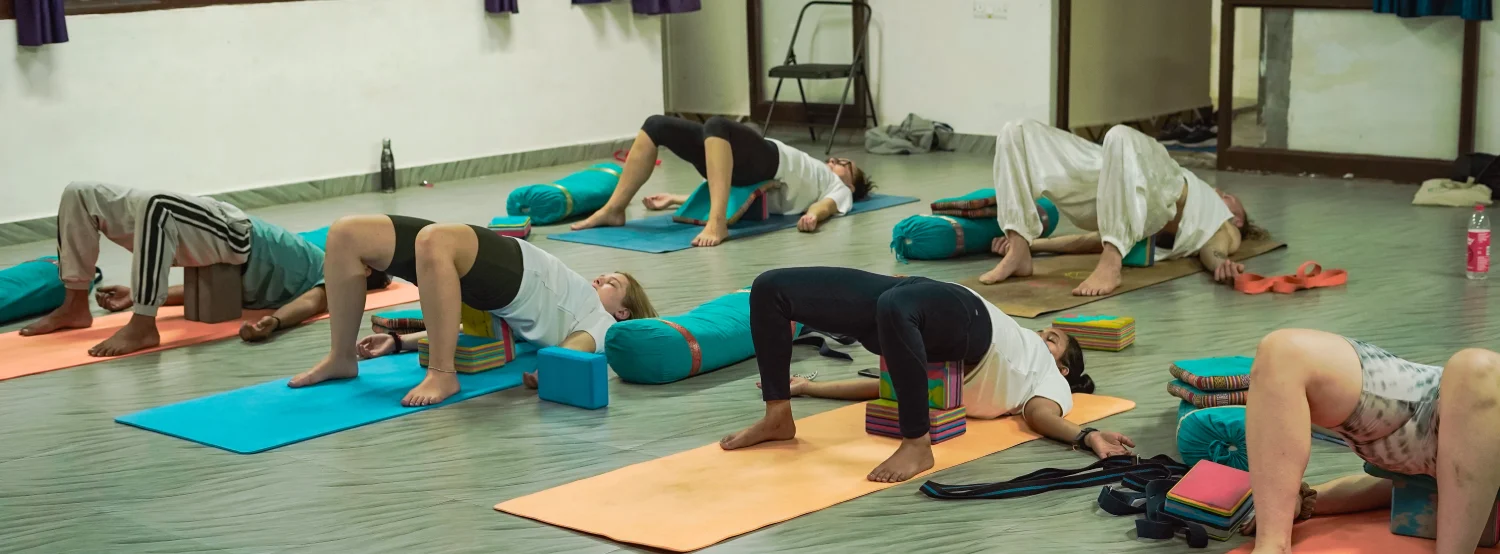
Your body may feel stiff immediately after waking, particularly if you spend long hours sitting or have travelled overnight. A teacher can guide you through suitable warm-ups and modifications before progressing into more demanding postures.
You do not need to demonstrate advanced flexibility on your first day. Focus on controlled movement, comfortable breathing and safe alignment.
If you experience sharp pain, dizziness or unusual breathlessness, stop and tell your instructor. Do not treat discomfort as proof that the practice is working.
Pranayama and attention
Pranayama introduces you to the relationship between breathing and attention. Depending on your experience and the class plan, you might learn simple breath observation, gentle regulation of the breath or selected traditional techniques.
The objective is not to force every inhalation or hold your breath for as long as possible. Appropriate instruction matters, particularly for techniques involving prolonged retention or forceful breathing.
Research offers some support for yoga-based practices and psychological well-being, but the evidence does not justify claiming that a particular morning session will cure anxiety, improve every aspect of cognition or produce identical results for everyone.
Meditation without unrealistic expectations
During meditation, your mind may wander repeatedly. You might feel restless one day and settled the next. Both are normal experiences.
Instead of trying to eliminate every thought, practise noticing when your attention wanders and gently returning to your chosen focus.
This simple process gives you a concrete skill to work with during the rest of the day.
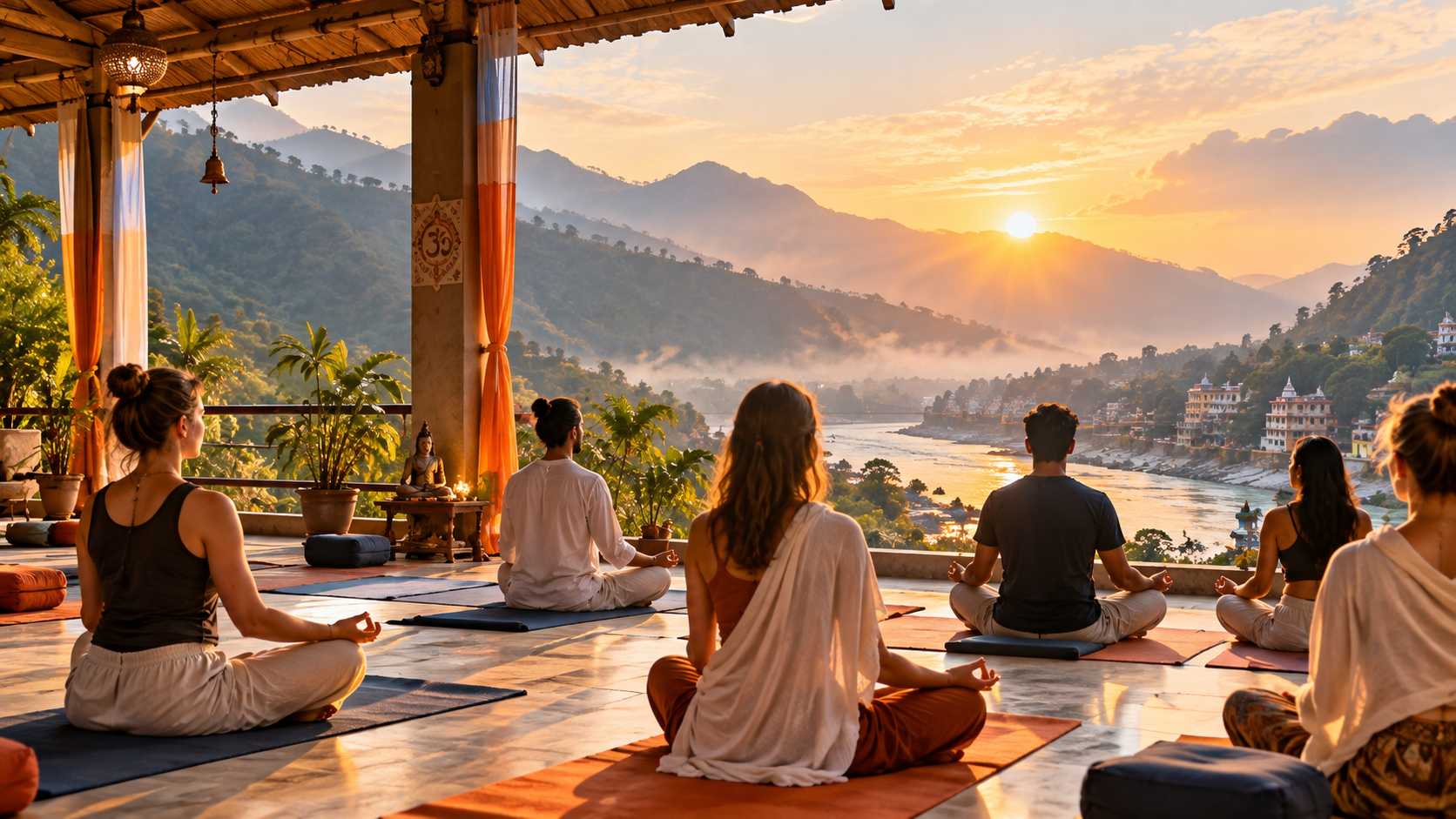
Image placement: In-Content Image 1
A natural photograph of students practising gentle asanas and seated breath awareness at sunrise, showing varied ability levels rather than staged advanced poses, would fit here.
4. How to Prepare for Your First 6 AM Sadhana
You do not need to overhaul your lifestyle overnight. A few practical changes before the course can make the transition easier.
Adjust your sleep schedule gradually. If you normally wake at 8 AM, moving directly to an early start may leave you exhausted. Shift your bedtime and wake-up time earlier over several days, allowing enough time for sleep.
Keep the previous evening simple. Prepare your practice clothes, water bottle and any required materials before going to bed. Reducing morning decisions makes it easier to arrive on time.
Eat according to your needs. Ask the school whether the session takes place before breakfast and what it recommends beforehand. Avoid experimenting with fasting or restrictive eating simply because you are attending yoga training.
Hydrate sensibly. Drink water according to your needs and the conditions. You do not need an elaborate cleansing ritual to prepare for an ordinary yoga session.
Communicate with your teacher. Share relevant injuries, mobility limitations or other factors that affect safe participation. Ask for modifications rather than copying a posture that does not suit your body.
Start where you are. If you are new to yoga, consistency and basic technique matter more than performing difficult asanas. Experienced practitioners also benefit from reviewing fundamentals instead of assuming that prior experience makes every exercise appropriate.
A useful rule is to evaluate your routine by how well you recover, concentrate and participate across the entire day, not simply by whether you managed to wake up early.
5. Why Rishikesh Makes Morning Sadhana Meaningful
Rishikesh offers a distinctive setting for yoga study. The town is associated with yoga traditions, spiritual learning and access to the Himalayan foothills, while the Ganga is central to its cultural and religious identity.
In Tapovan, the morning can offer a welcome change from the noise and demands of everyday urban life. Depending on the season and your location, you may experience cooler air, changing mountain light and the sounds of a town gradually becoming active.
However, Rishikesh is not uniformly silent or untouched. Traffic, construction, crowds and seasonal weather are part of everyday life. A meaningful practice does not depend on perfect scenery.
The setting becomes useful when it helps you establish a routine and participate in a community of learners. You may find that practising alongside students from India and other countries encourages you to question assumptions, exchange perspectives and become more attentive to different approaches to yoga.
Residential training can also separate practice time from familiar distractions. With a planned schedule, meals and classes organised around study, you have more opportunities to develop continuity than you might during an occasional drop-in session.
Before booking, consider practical factors such as accommodation, class size, teacher experience, course inclusions, weather, dietary needs and the amount of independent study required.
Choose Rishikesh because the programme fits your learning goals, not because you expect the location alone to guarantee a particular spiritual experience.
6. From Morning Sadhana to Skills You Can Use Beyond Training
A 100-hour course can provide a structured introduction to yoga study, but the value of the experience depends on what you understand and continue practising afterwards.
Morning sadhana can help you explore three habits that remain useful beyond the course.
First, you learn to prepare deliberately. Arriving with your mat ready, your attention settled and a clear intention is a repeatable skill.
Second, you develop body awareness. Recognising when to modify a posture or rest can help you practise more responsibly, both independently and in future classes.
Third, you become familiar with the difference between learning a technique and understanding it. You may perform a posture correctly one day yet still need to study its purpose, variations, limitations and appropriate teaching cues.
If you are considering teaching yoga, ask what your chosen qualification permits you to do. A 100-hour training course should not automatically be presented as equivalent to a complete 200-hour teacher-training qualification. Your professional pathway depends on the course structure, the school’s credentials and the requirements of the organisations or employers with which you intend to work.
You can explore further learning through our guide to questions to ask before enrolling in a 100-hour YTT in India.
For students who want to understand the physical foundations more deeply, studying Hatha Yoga fundamentals in a 100-hour TTC can also help connect individual postures with a more considered practice.
The goal is not to maintain a perfect morning forever. It is to understand which elements of your routine are useful and build a realistic version that continues after you return home.
7. Is a 100-Hour YTT Right for Your Practice Goals?
The right course depends on your current experience, available time and reason for studying yoga.
A 100-hour programme may suit you if you want a concentrated introduction to asana, pranayama, meditation and yoga philosophy without committing immediately to a longer training. It can also appeal to experienced practitioners who want to revisit foundations in a structured environment.
If your main goal is to explore yoga for personal development, check how much the course emphasises practice, reflection and theory. If your goal is professional teaching, investigate the qualification pathway before paying a deposit.
Ask the school these questions:
- What is the actual daily timetable, including the morning session?
- How are beginners supported, and what modifications are available?
- Who teaches asana, pranayama and philosophy?
- What is included in the advertised fee?
- What certificate is awarded, and what does it qualify you to do?
- How are attendance, assessments and successful completion handled?
The answers should be clear before you enrol. A convincing programme description is useful, but transparent policies and a realistic schedule are more important.
If you need a longer study commitment, compare the syllabus and requirements of a 200-hour Yoga Teacher Training in Rishikesh with the shorter programme before making your decision.
8. Explore Morning Sadhana at Maa Ganga Yogashala
If you are considering a structured yoga experience in Tapovan, Rishikesh, Maa Ganga Yogashala offers a 100-hour Yoga Teacher Training programme for students interested in developing their practice through guided study and regular sessions.
Before deciding, review the current curriculum, daily schedule, accommodation arrangements, fees and certification details. Ask specifically how morning sadhana is structured and whether the timetable changes with the batch or season.
A good training experience should give you room to ask questions, learn appropriate modifications and develop a consistent practice without unnecessary pressure to perform.
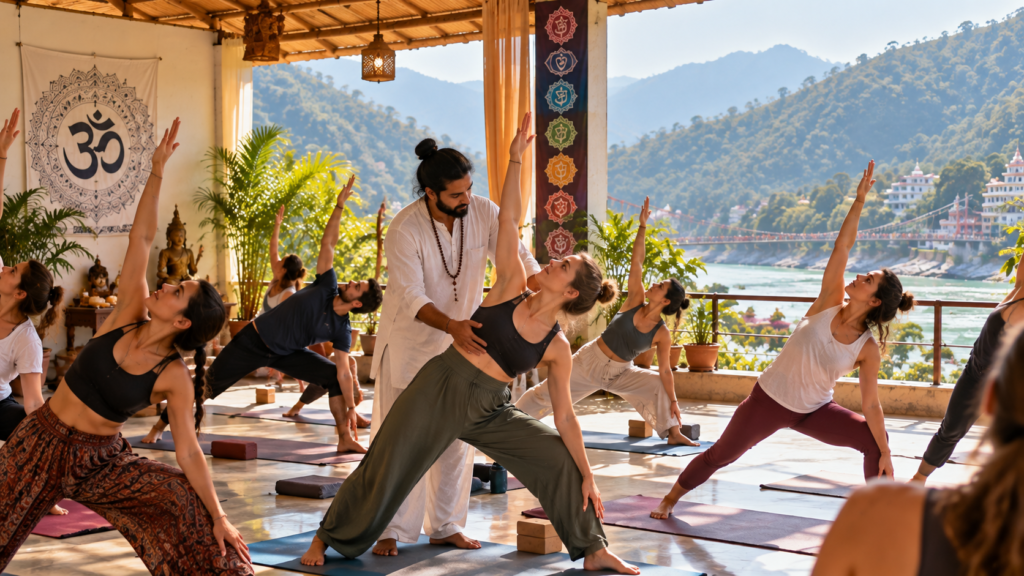
Image placement: In-Content Image 2
Use a candid image of students preparing for a guided morning session in a yoga shala in Tapovan, with natural morning light and a calm, welcoming atmosphere.
9. FAQs About Morning Sadhana in a 100-Hour YTT
Is 6 AM too early for beginners?
Not necessarily. Beginners can participate if the session is appropriately taught and they get adequate sleep. Adjust your bedtime before the course, follow the teacher’s instructions and request modifications when needed.
What should you do before morning sadhana?
Prepare your clothes and mat the night before, hydrate sensibly and follow the school’s advice about food. Arrive early enough to settle without rushing. Avoid adding unfamiliar cleansing or breathing practices without appropriate instruction.
Do you need prior yoga experience for a 100-hour YTT?
Entry requirements vary by school and batch. Some programmes welcome beginners, while others may recommend previous practice. Confirm the requirements directly and choose a course that matches your ability and goals.
Will morning sadhana improve focus and reduce stress?
Regular yoga and mindful breathing may support attention and psychological well-being. Individual outcomes vary, and a single 6 AM session is not a guaranteed treatment for stress or a medical condition.
Can a 100-hour YTT qualify you to teach yoga?
Do not assume that it does. A 100-hour course is generally a shorter training option, and its certificate may not meet the requirements for a full 200-hour teacher-training credential. Confirm the school’s recognition, course completion requirements and the expectations of your intended employer or registration organisation.
Conclusion: Make Your Morning Practice Count
Morning sadhana 100 hour YTT Rishikesh is ultimately about more than getting out of bed before sunrise. It is an opportunity to practise consistency, improve awareness of your body and breath, and learn how to approach your day with greater intention.
The 6 AM session will not always feel effortless. Some mornings you may feel focused; on others, you may be tired or distracted. What matters is learning to practise responsibly, respond to your needs and build habits you can sustain beyond the course.
If you are ready to experience structured yoga study in Tapovan, Rishikesh, explore our 100-hour Yoga Teacher Training programme. Review the schedule, ask your questions and choose a programme that supports your goals.
Your next step does not have to be dramatic. It can begin with a realistic bedtime, a prepared yoga mat and the decision to show up with attention.