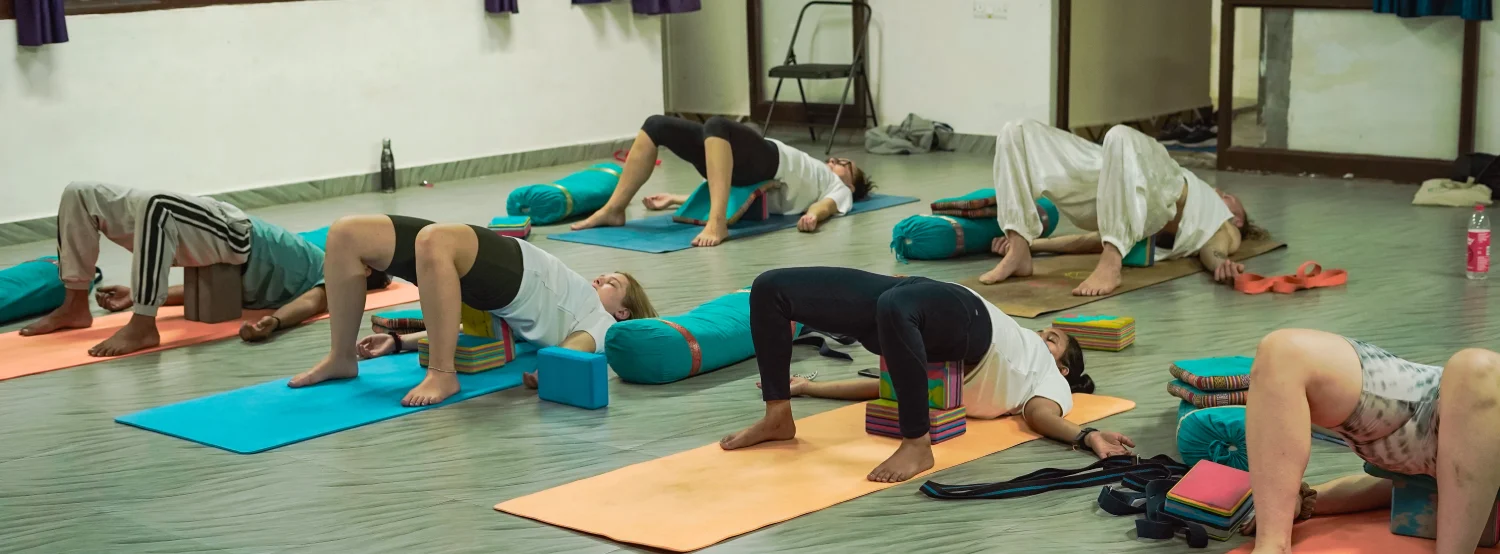
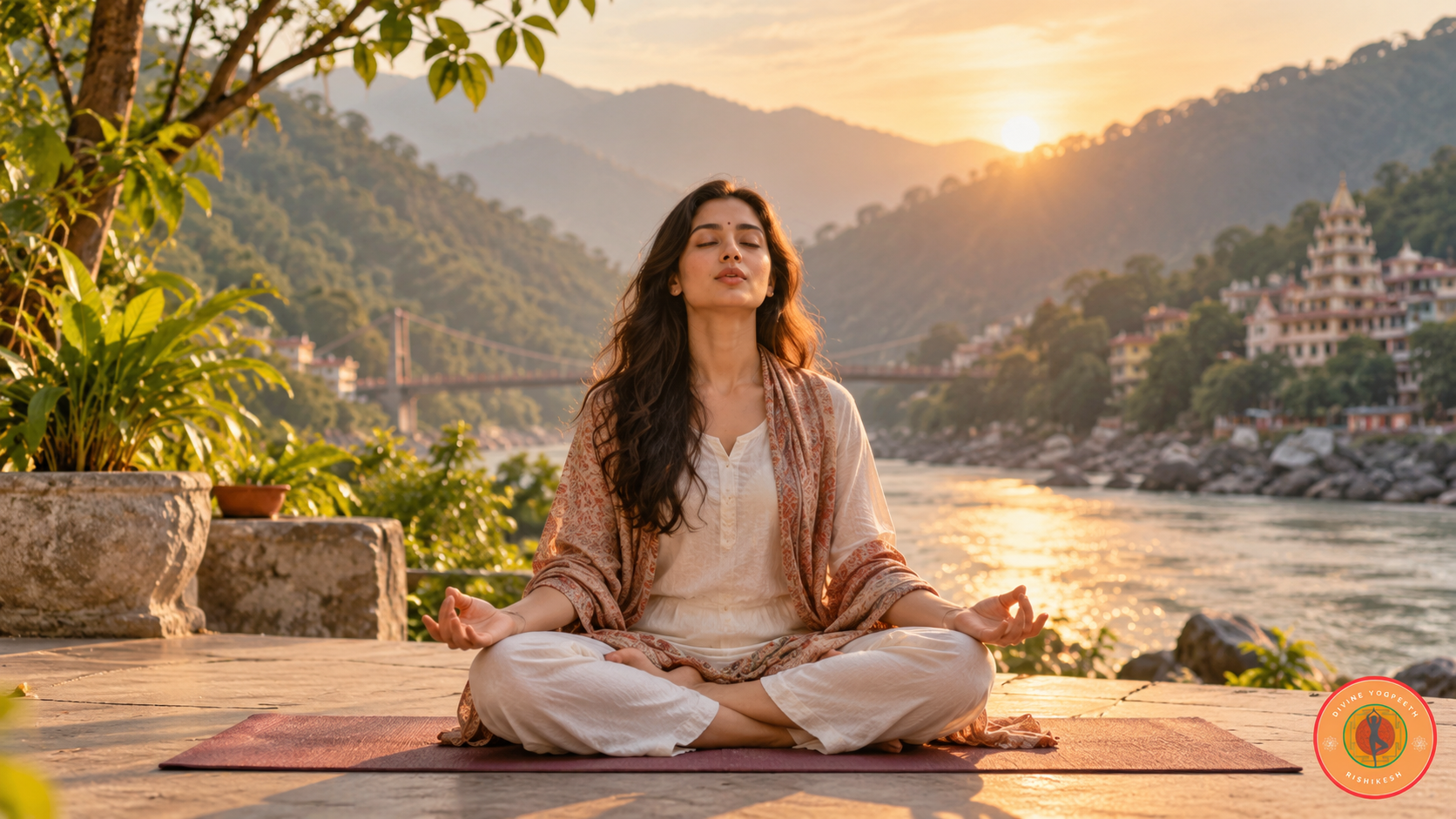
pranayama techniques 100 hour YTT: What Techniques Are Taught in Rishikesh?
Introduction
Pranayama techniques 100 hour YTT can introduce you to a side of yoga that goes far beyond physical postures. Have you ever finished a yoga session feeling that your body was active but your mind was still racing? Learning to work with your breath can help you approach your practice with greater awareness, steadiness, and control.
A 100-hour yoga teacher training course offers an opportunity to explore foundational breathing practices, understand their traditional purpose, and learn how to approach them safely. Instead of simply copying a breathing pattern, you begin to notice how posture, attention, and breathing rhythm influence your experience.
In Rishikesh, where yoga education draws on Indian philosophical traditions and contemporary teaching methods, pranayama often forms an important part of a structured learning experience. However, the techniques taught, their depth, and the time allocated to them vary between schools.
This guide explains the breathing techniques you may encounter, what you can learn from each one, how instructors introduce safe practice, and what to check before enrolling. Whether you are an Indian practitioner strengthening your foundation or an international student travelling to India, understanding the curriculum will help you choose training that matches your experience and goals.

1. What Pranayama Techniques Are Taught in a 100-Hour YTT?
Pranayama is a yogic discipline concerned with the regulation and awareness of breathing. In traditional yoga, it is connected with the broader development of attention and meditation rather than being treated simply as a collection of breathing exercises.
In a 100-hour training programme, the emphasis is generally on foundational understanding and guided practice. Depending on the school’s curriculum, you may encounter the following techniques.
Anulom Vilom: Alternate-Nostril Breathing
Anulom Vilom commonly involves breathing through one nostril at a time in an alternating pattern. Beginners are usually introduced to a comfortable rhythm before attempting more demanding variations.
You learn to coordinate your inhalation and exhalation, maintain a relaxed seated posture, and direct your attention towards the breathing process. The aim is not to force a particular sensation but to develop steadiness and awareness.
Some schools distinguish basic alternate-nostril breathing from Nadi Shodhana, a related practice that may include additional traditional instructions. Terminology and teaching methods can differ, so ask your instructor how the techniques are defined in the course.
Ujjayi Pranayama: The Ocean-Like Breath
Ujjayi is often taught as a gently controlled breath accompanied by a subtle sound created through partial narrowing of the throat. The sound should not result from straining or tightening the neck.
This technique can help you pay attention to the continuity and quality of breathing. It is also used in some yoga movement traditions to coordinate breath with physical practice.
During training, you may learn to recognise excessive effort, relax the jaw, and maintain a comfortable breathing rhythm.
Bhramari Pranayama: Humming Bee Breath
Bhramari involves producing a soft humming sound, commonly during exhalation. The vibration provides a simple point of focus, making it easier to notice the relationship between sound, breath, and attention.
You may find this practice useful when learning to settle into a quieter session. However, individual responses differ, and it should not be presented as a guaranteed treatment for anxiety, insomnia, or other medical conditions.
Sama Vritti: Equal Breathing
Sama Vritti introduces the idea of making inhalation and exhalation approximately equal in duration. A beginner might start with a natural, comfortable count rather than an ambitious target.
The educational value lies in consistency. You learn to notice when you are rushing, holding tension, or trying too hard to control the breath.
Not every 100-hour course includes all four techniques. Check the actual timetable and curriculum before assuming a specific practice is guaranteed.
2. Pranayama Breathing Exercises for Beginners: Building the Foundation
Before learning advanced breathing patterns, you need a reliable foundation. Good instruction begins with your ability to sit comfortably, breathe without unnecessary strain, and recognise when a technique is not suitable for you.
Diaphragmatic Breathing and Breath Awareness
Diaphragmatic breathing introduces awareness of how the diaphragm and other respiratory muscles contribute to breathing. You may practise while seated or lying down, depending on the instructor’s approach.
Rather than forcing your abdomen outward, you observe the movement that occurs during a comfortable breath. Your shoulders and jaw remain relaxed, and you avoid exaggerated inhalations.
Breath awareness is equally important. You learn to observe whether breathing feels smooth, shallow, hurried, or restricted without immediately trying to change it.
Posture and Preparation
Traditional pranayama instruction often uses a stable seated posture. You might sit cross-legged on a cushion, kneel with suitable support, or use a chair if that makes breathing more comfortable.
The essential point is that your position should allow you to remain steady without pain or excessive muscular effort.
A teacher may guide you through:
- Finding a comfortable, upright position.
- Relaxing the face, shoulders, and hands.
- Observing the natural breath before changing its rhythm.
- Practising for short periods before gradually extending the session.
- Returning to normal breathing between techniques.
You should also learn to recognise warning signs. Dizziness, tingling, breathlessness, chest discomfort, or unusual distress are reasons to stop the exercise and return to normal breathing. Do not treat discomfort as proof that a technique is working.
For background on organised yoga teacher education and credential pathways, consult Yoga Alliance’s official website. Its registration framework and the specific course recognition offered by an individual school are separate matters that you should verify before enrolling.
3. Advanced-Looking Pranayama Practices: Kapalabhati and Bhastrika
Some 100-hour programmes introduce more active breathing methods, while others reserve them for later training or teach only their foundational principles. These techniques require careful instruction because they are not appropriate for everyone.
Kapalabhati: An Active Exhalation Practice
Kapalabhati is commonly taught as a cleansing practice involving active, relatively forceful exhalations and more passive inhalations. It is often discussed alongside pranayama in modern yoga curricula, although traditional classifications can differ.
A qualified instructor should explain the technique, demonstrate the movement, and assess whether you are ready to practise it. The exercise should not become a competition to complete the most repetitions or maintain the fastest pace.
You should avoid practising it independently if you have not been taught the method properly. People with certain medical conditions, including some cardiovascular or respiratory conditions, may need to avoid it or obtain individual medical guidance.
Bhastrika: Bellows Breath
Bhastrika is generally associated with more active inhalation and exhalation. Because the practice can be physically demanding, it requires particular care with breathing rhythm, effort, and duration.
A beginner-level course may introduce its purpose and basic mechanics without requiring intensive rounds. Your teacher should make clear which version is being taught and whether you are ready to practise it.
Stop immediately if you feel faint, dizzy, unusually breathless, or unwell.
What About Breath Retention?
Some pranayama traditions include breath retention, known as kumbhaka. It may be introduced conceptually in a foundational course, but that does not mean every student should practise prolonged holds.
Retention changes the demands placed on the body and requires suitable preparation, individual assessment, and careful supervision. Never force yourself to hold your breath to match another student’s performance.
For general information about India’s traditional medicine and wellness policy landscape, visit the Ministry of AYUSH’s official website. Government information about traditional systems should not be interpreted as proof that a particular breathing technique treats a specific disease.
The practical lesson is straightforward: a responsible course teaches you not only what a technique involves but also when to modify it, postpone it, or leave it out altogether.
4. What Does a Typical Pranayama Class Look Like?
A pranayama session in teacher training is more than a teacher demonstrating a breathing pattern while students imitate it. A structured class usually combines preparation, guided practice, observation, and reflection.
The exact sequence depends on the instructor, school, and training level, but a session may include the following stages.
1. Settling and posture: You establish a stable position, relax unnecessary tension, and become aware of your natural breathing.
2. Breath observation: You notice the duration and ease of your inhalation and exhalation without trying to control every detail.
3. Guided technique: Your instructor introduces one breathing method, explains its purpose, and demonstrates the appropriate rhythm.
4. Individual practice: You practise for a manageable period while the instructor observes your posture, effort, and response.
5. Rest and integration: You return to normal breathing and notice how you feel before moving on.
6. Questions and reflection: You discuss the technique’s purpose, common errors, modifications, and precautions.
A school may combine pranayama with asana, meditation, mantra, or yoga philosophy. The important question is whether the schedule provides enough time to understand and practise each technique rather than rushing through a long list.
For a clearer picture of how foundational physical practices fit into a training programme, explore our guide to Hatha yoga fundamentals in a 100-hour TTC.
You can also review the questions to ask before enrolling in a 100-hour YTT in India, particularly if you want to understand assessment methods, teaching hours, and the balance between theory and practical learning.
5. Why Learn Pranayama in Rishikesh, India?
Rishikesh has a long-standing association with yoga, spiritual study, and the Himalayan foothills. For many students, studying here offers the opportunity to learn within an environment where yoga is part of everyday educational and cultural life.
The location alone, however, does not guarantee high-quality instruction. The value of your training depends on the teachers, the curriculum, the learning environment, and the way individual needs are addressed.
A Setting That Encourages Consistent Practice
Tapovan provides a base for yoga students who want a structured routine alongside time to explore Rishikesh. A training schedule may help you build a regular practice rather than relying on occasional classes.
Living and studying away from your usual routine can also give you space to observe your habits and develop consistency. Those benefits depend on your participation and should not be confused with automatic spiritual progress.
Learning from Direct Instruction
Pranayama can appear simple when viewed online, but small details matter. An instructor can help you distinguish comfortable effort from unnecessary strain, clarify confusing terminology, and suggest appropriate modifications.
Ask whether your course includes individual feedback, supervised practical sessions, and opportunities to discuss the techniques.
Understanding the Wider Yoga Tradition
Pranayama is one component of a broader yogic framework. Depending on the curriculum, you may also study asana, meditation, philosophy, or traditional cleansing practices.
If you are curious about the mental and emotional aspects of yoga, our article on yoga and mental health research explores the distinction between traditional perspectives and scientific evidence.
Keep your expectations realistic: learning breathing techniques may support awareness and relaxation, but it is not a substitute for medical or psychological care when that care is needed.
6. Choosing a 100-Hour Yoga Teacher Training Course at Maa Ganga Yogashala
If you are comparing yoga schools in Rishikesh, look beyond the course title and advertised number of hours. You need to understand what you will actually learn, how the classes are delivered, and whether the training matches your experience.
At Maa Ganga Yogashala, located on Badrinath Road in Tapovan, Rishikesh, you can explore our 100-hour yoga teacher training programme as a starting point for understanding the available training option.
Before committing, ask the school for its current written curriculum and confirm the following:
- Pranayama syllabus: Which techniques are taught, and how much time is allocated to each?
- Teaching approach: Are breathing exercises demonstrated, supervised, and explained in terms of safety?
- Prerequisites: Is the programme suitable for your current practice and experience?
- Daily schedule: How much time is spent on pranayama compared with asana, meditation, philosophy, and other subjects?
- Assessment: Are there practical evaluations, written assignments, or teaching demonstrations?
- Course recognition: What certificate is issued, and what eligibility or registration requirements apply to your intended next step?
A 100-hour course can be useful for developing foundations or continuing your personal study. It should not automatically be treated as equivalent to a complete 200-hour foundational teacher-training qualification.
If your longer-term goal is to teach yoga professionally, compare the 200-hour yoga teacher training programme in Rishikesh as well. Confirm the actual recognition, scope, and requirements of each programme directly with the school and the relevant registering organisation.
You do not need to choose the longest course simply because it sounds more impressive. Choose the option whose curriculum, teaching support, and learning objectives match your goals.

7. Frequently Asked Questions About Pranayama in a 100-Hour YTT
Which pranayama techniques should you expect in a 100-hour YTT?
Foundational options may include alternate-nostril breathing, Ujjayi, Bhramari, equal breathing, and breath awareness. Some schools also introduce Kapalabhati or Bhastrika. The exact selection depends on the published curriculum, so confirm it before booking.
Can you learn pranayama without previous yoga experience?
Many foundational programmes welcome students who are relatively new to structured yoga training, but entry requirements vary. You should be comfortable following basic instruction and willing to practise gradually. Ask the school whether its current course is suitable for complete beginners.
Is a 100-hour YTT enough to teach pranayama professionally?
A 100-hour course may strengthen your understanding of basic techniques, but it should not automatically be treated as sufficient professional preparation. Teaching competence also requires appropriate education, supervised practice, safety awareness, and an understanding of when students need individual guidance. Check the qualification requirements relevant to your intended teaching role.
How long should you practise pranayama each day?
There is no single duration that suits everyone. A beginner may start with a few minutes of comfortable breath awareness under suitable guidance and gradually increase practice if it remains easy and appropriate. Follow your instructor’s advice rather than copying advanced routines from the internet.
Is pranayama safe for everyone?
Not every technique is appropriate for every person. Forceful breathing and prolonged breath retention can pose risks for people with certain medical conditions. If you have cardiovascular or respiratory problems, are pregnant, or have another relevant health concern, seek individual guidance from a qualified healthcare professional before attempting demanding practices. Stop if symptoms develop.
8. Conclusion: Build Your Pranayama Foundation with the Right Training
Pranayama techniques 100 hour YTT can help you develop a more informed relationship with your breathing, improve your understanding of foundational yogic practices, and prepare for more structured study.
The real value lies in learning the method, understanding its purpose, recognising your limits, and practising with consistency. A long list of techniques means little if you cannot perform them comfortably or explain their precautions.
As you compare programmes in Rishikesh, prioritise qualified instruction, a transparent curriculum, supervised practice, and realistic learning objectives.
Ready to explore your next step? Visit Maa Ganga Yogashala’s 100-Hour Yoga Teacher Training in Rishikesh and review the course details before deciding whether it fits your practice and learning goals.