100 hour YTT vs Weekend Workshop Comparison: A Straightforward Guide
If you are trying to choose between a 100-hour yoga teacher training and a weekend workshop, the biggest question is not which one sounds more impressive. It is what you actually want to be able to do after the course. A weekend can give you a useful introduction to one topic; a 100-hour program gives you enough time to build a broader, more structured foundation.
The difference becomes especially important when you are considering Rishikesh, where yoga schools offer everything from short retreats to teacher-training programs. Your budget, available time, previous practice, and long-term plans should decide the choice—not the number printed on a certificate.
This comparison breaks down depth, time commitment, teaching preparation, certification, cost, practice, and who each option suits. You will also see where a 100-hour program fits if you are not ready for a full 200-hour teacher training.
100 hour YTT vs weekend workshop comparison: what are you actually buying?
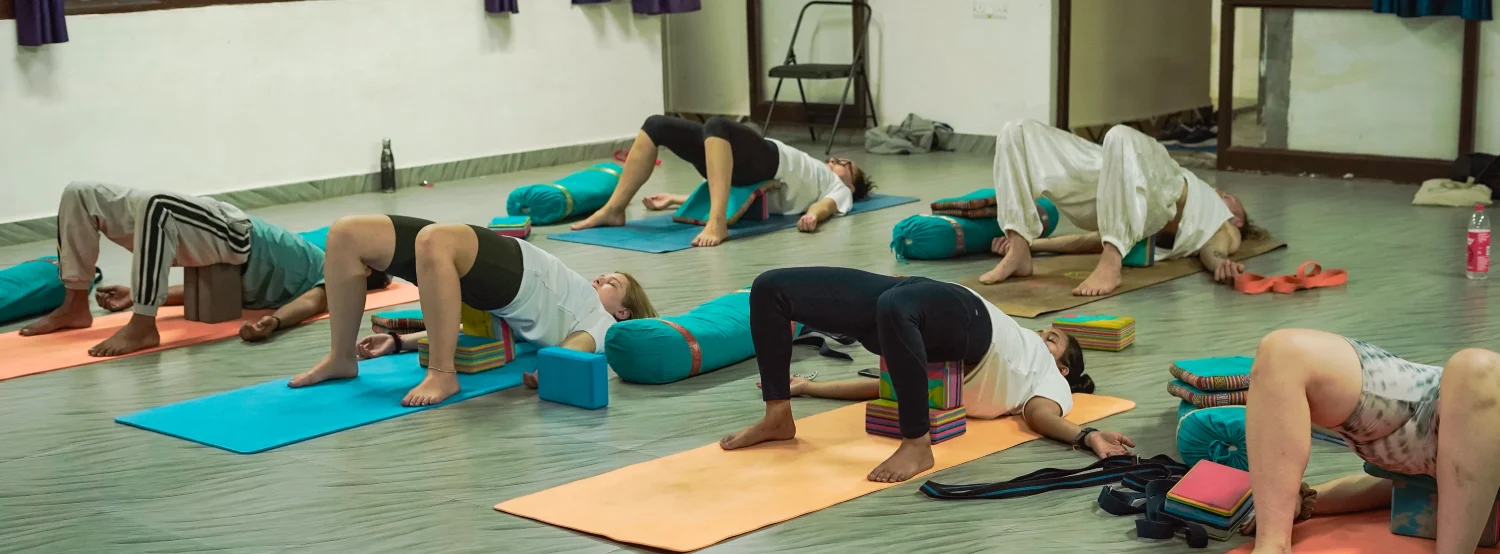
A weekend workshop is usually a focused learning experience. You might spend a few hours exploring meditation, alignment, pranayama, sound healing, inversions, anatomy, or another specific subject. That focused format can be excellent when you already know what you want to study.
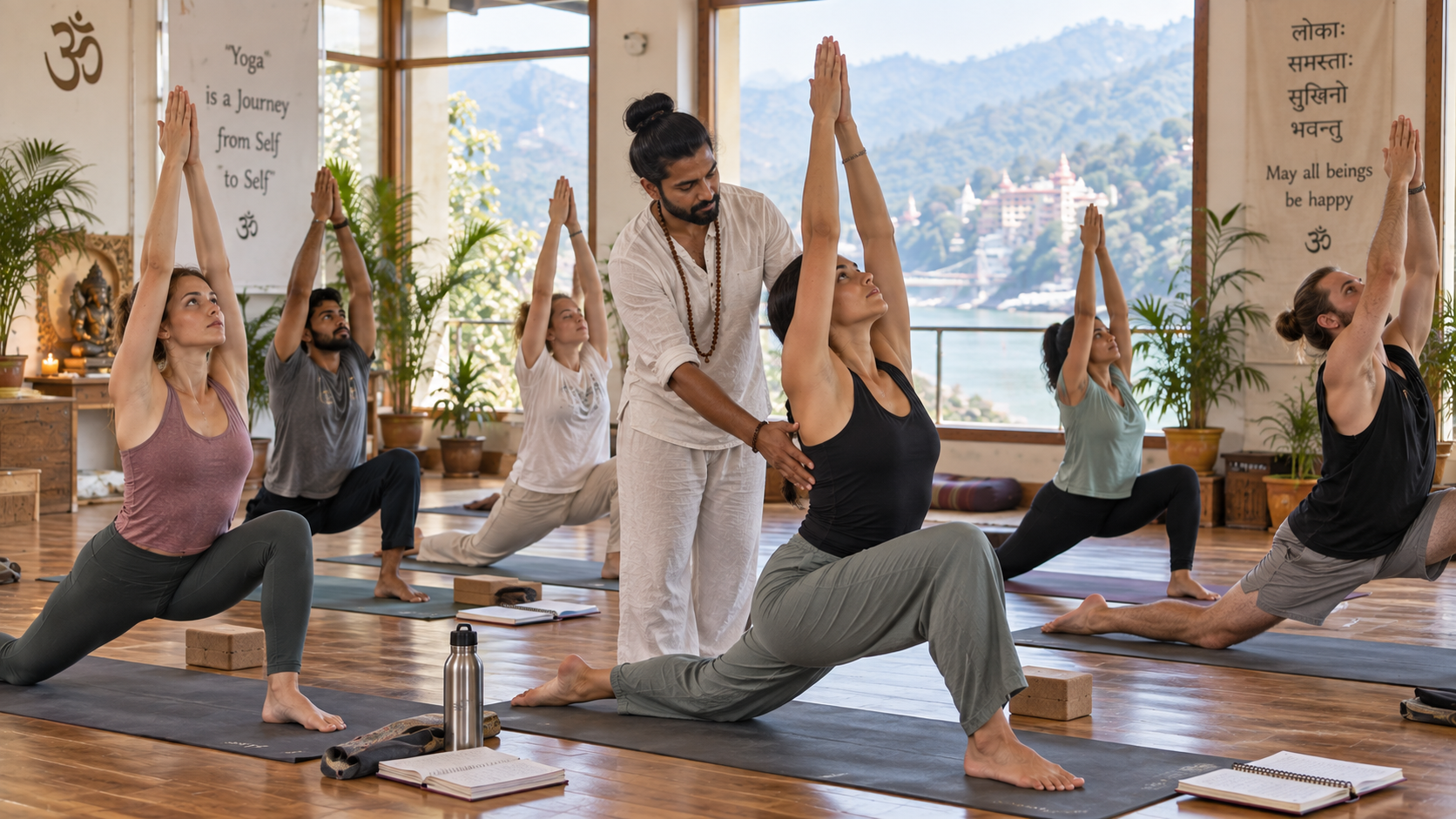
A 100-hour YTT is different because the learning is broader and more continuous. Instead of touching one subject for a day or two, you normally move through multiple areas of practice and study. Depending on the school, these can include asana practice, pranayama, meditation, yoga philosophy, anatomy, teaching methodology, sequencing, and practical teaching.
That difference in continuity matters. You get repeated exposure, feedback, and time to notice where your understanding is weak.
If you are comparing programs, do not judge them only by the word “YTT.” Ask what the hours actually contain, how much is classroom instruction, whether teaching practice is included, who teaches each module, and what certificate you receive.
Yoga Alliance distinguishes formal RYS training tracks from continuing education and other learning opportunities. Its current guidance also explains that RYS 200 training has defined standards and that a certificate from a Registered Yoga School is part of the RYT application process. Yoga Alliance is the best place to verify current credentialing information rather than relying on a school’s marketing language.
A useful rule is simple: if you want focused skill development, a weekend workshop can be enough. If you want structured immersion and a more serious foundation, a 100-hour YTT is the stronger option.
100 hour YTT vs weekend workshop: depth, practice, and feedback
The most important difference is not the certificate. It is the amount of time you spend practicing and receiving correction.
In a weekend workshop, you may learn a concept, try it several times, ask questions, and go home. That is useful, but the learning cycle is short. You have less time to discover whether you can reproduce the technique independently.
A 100-hour program gives you a longer feedback loop. You can practice the same principles across several days, revisit difficult topics, and ask questions after you have actually tried the material. For someone who wants to improve personal practice, that repetition can be more valuable than a large amount of information delivered quickly.
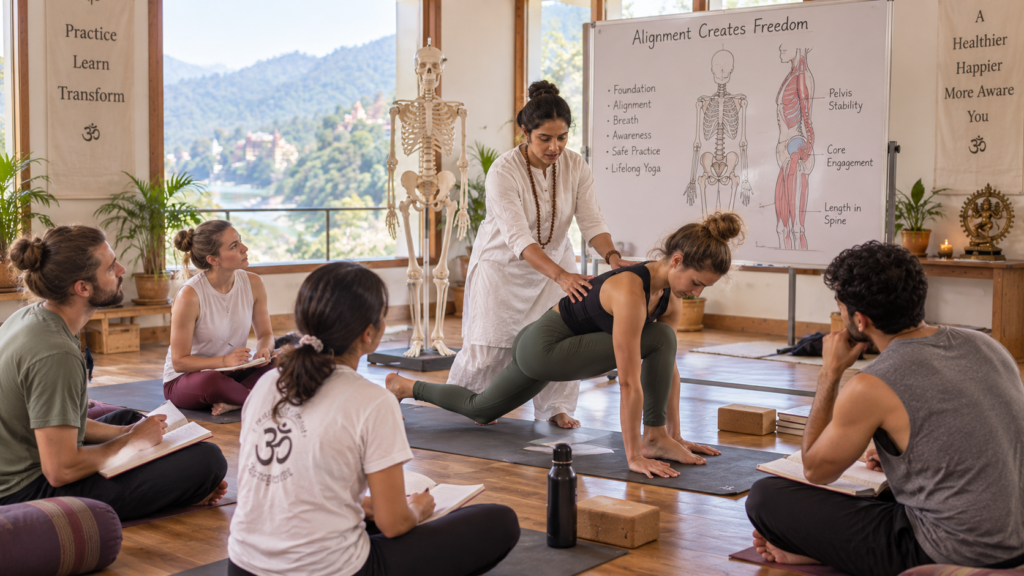
You should also look at teaching practice. A serious teacher-training environment should give you opportunities to explain, demonstrate, observe, sequence, and receive feedback. Even if you do not plan to teach professionally, these exercises can make your understanding more precise.
What happens to your personal practice?
A longer program can change the way you approach your own mat time. Instead of copying a sequence, you begin asking why a posture is included, how breath affects the practice, when a variation is appropriate, and how to modify an instruction.
That does not mean a 100-hour course automatically makes you an excellent teacher. It means you have more time to build the underlying skills.
If you are curious about what a typical intensive can look like day by day, a detailed 100 Hour YTT daily schedule in Rishikesh can help you picture the workload before you commit.
Time commitment: weekend convenience vs 100-hour immersion
A weekend workshop wins on convenience. You can often fit it around work, university, family responsibilities, or an existing travel plan. If you have only two free days, a workshop may be the realistic choice.
The problem is that convenience can become false economy if you are trying to achieve a goal that requires depth. Compressing complex subjects into a weekend does not make them easier to understand. It simply means you have less time to process them.
A 100-hour YTT requires a bigger commitment. In Rishikesh, an intensive program can involve several hours of learning and practice each day, along with assignments, self-study, rest, and adjustment to a new routine. You should expect less sightseeing time and more attention to your training.
That is not necessarily a disadvantage. If your aim is immersion, the structured schedule can help you stay consistent. You are not constantly deciding whether you will practice today; the training environment creates a rhythm.
For international students, the setting matters too. Travel time, jet lag, food, climate, accommodation, and cultural adjustment can affect how you feel during the first few days. Build recovery time into your expectations rather than assuming every hour will feel equally productive.
If you want a shorter introduction to yoga while experiencing Rishikesh without committing to intensive teacher training, a 3-day yoga retreat in Rishikesh can be a more appropriate format.
Career goals and certification: do not confuse the two
This is where many comparisons become misleading. A 100-hour certificate and a weekend workshop certificate do not automatically mean you are qualified to teach professionally.
If your goal is to become a registered yoga teacher through Yoga Alliance, the foundational RYT 200 pathway is based on completing a qualifying 200-hour training at a Registered Yoga School. Yoga Alliance describes RYT 200 as the foundational credential for new teachers. A 100-hour course should therefore not be presented to you as a replacement for the full 200-hour pathway.
A 100-hour program can still be valuable. It may help you deepen your practice, explore teaching as a possible career, or prepare you for further study. But you should ask the school exactly what the certificate represents and what it does not represent.
The same principle applies to weekend workshops. A workshop can strengthen your knowledge of anatomy, meditation, sound, sequencing, or another subject, but completing it does not by itself turn you into a professionally qualified yoga teacher.
If you are already thinking about teaching, compare your options against your end goal. Someone who wants to teach general group classes may need foundational teacher training. Someone who is already trained and wants a specialized skill may benefit more from focused continuing education.
Yoga Alliance also provides continuing-education resources for teachers who want to refine specialized skills. That distinction is useful when deciding whether your next step should be foundational training or a targeted workshop.
Cost and value: cheaper is not always better
A weekend workshop will usually cost less because it requires fewer teaching hours, fewer days, and fewer logistical resources. That makes it attractive if you are testing a subject before making a larger commitment.
But price per day can be a poor way to compare programs. A 100-hour course may include more contact with teachers, structured practice, assessments, teaching demonstrations, study materials, accommodation, meals, or other inclusions. Another program may charge more but provide less academic depth.
Instead of asking only “How much does it cost?”, compare:
- total instructional hours;
- accommodation and meals, if included;
- teacher qualifications and experience;
- class size;
- curriculum and daily schedule;
- assessment or teaching practicum;
- certificate type;
- refund and cancellation terms;
- what is actually included in the advertised price.
You should also check whether the school clearly separates instructional hours from activities such as personal practice, reading, homework, or free time. Yoga Alliance publishes specific guidance about how RYS instructional hours are counted, which is another reason to verify claims directly rather than assuming every advertised “hour” has the same meaning.
The Ministry of Ayush’s Common Yoga Protocol is another useful reference point for understanding how yoga practices can be presented in a structured Indian context. Ministry of Ayush provides official government resources on yoga and related initiatives.
Which option fits you better?
The right choice depends on what you want next, not what sounds more advanced.
Choose a weekend workshop if:
- you want to explore one specific subject;
- you have very limited time;
- you already have substantial yoga training;
- you want to test a teacher or school before joining a longer program;
- you are looking for a short learning experience during a Rishikesh trip.
Choose a 100-hour YTT if:
- you want a structured immersion without immediately committing to 200 hours;
- you want broader knowledge than a single workshop can provide;
- you want regular practice and teacher feedback;
- you are considering teaching and want to explore whether it suits you;
- you want a serious foundation for continued study.
There is also a third possibility: start with a short retreat or workshop, then decide whether a longer YTT makes sense. That can be a smart choice if you are completely new to intensive residential yoga education.
If your main interest is relaxation and recovery rather than teacher training, a 5-day yoga retreat in Rishikesh may fit your goal better than either option.
Why Rishikesh matters when choosing your yoga program
Rishikesh changes the context of your decision. You are not simply buying classroom hours; you are choosing an environment where daily life can reinforce your practice.
Tapovan gives you access to a dense yoga ecosystem, teachers, studios, retreat spaces, and a community of practitioners from India and abroad. That can make an intensive program feel more immersive than a similar schedule at home.
But do not romanticize the location. Rishikesh does not automatically make a course good. A beautiful view cannot compensate for weak teaching, vague curriculum, overcrowded classes, or unclear certification.
Look for practical evidence. Read the curriculum. Ask who teaches the core subjects. Check the daily schedule. Understand the assessment process. Ask what happens if you miss a class. Confirm accommodation standards if you are staying on campus.
Your physical and mental energy matters too. A serious program should leave enough room for sleep, meals, recovery, and reflection. More hours do not automatically equal better education.
If you are interested in the deeper cultural and spiritual context of the city, you may also enjoy this guide to the spiritual significance of the Ganga River in Rishikesh. It can help you understand why the location matters beyond tourism.
A practical decision checklist before you book
Before paying a deposit, write down your goal in one sentence. For example: “I want to understand yoga more deeply,” “I want to explore teaching,” or “I want to specialize in one technique.”
Then compare every program against that sentence.
Ask these questions:
- What exactly will I study?
- How many hours are live instruction?
- How much time is dedicated to practice and feedback?
- Who teaches the main modules?
- Is there a teaching practicum?
- What certificate will I receive?
- Does the certificate have professional or continuing-education relevance?
- What is included in the total price?
- What are the cancellation and refund rules?
- What should I realistically expect to do after completing the course?
For a 100-hour program specifically, it is worth asking about assessment and completion requirements. A course with clear standards is easier to evaluate than one that simply promises “deep transformation.”
You can also compare a school’s longer training options. For example, if your end goal is foundational teacher training, review the 200-Hour Yoga Teacher Training in Rishikesh alongside shorter programs before deciding.
If you want a more focused answer to the questions students often forget to ask, this guide on questions before enrolling in a 100-hour YTT in India is a useful checklist to keep beside you while comparing schools.
Soft CTA: explore a structured 100-hour path
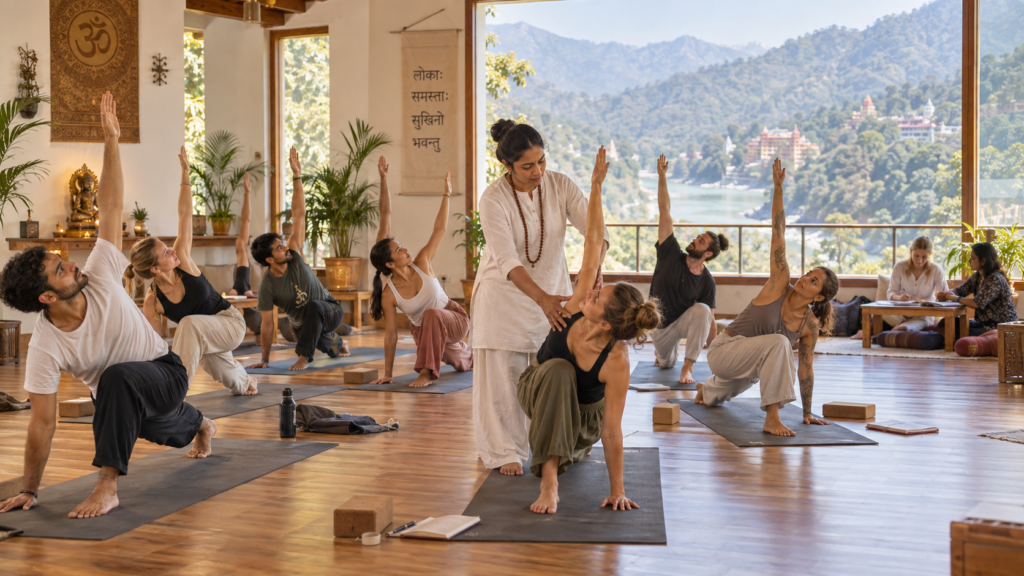
If you are considering training in Rishikesh, we offer a structured 100-hour pathway designed for students who want more depth than a short workshop can provide: explore our 100-Hour Yoga Teacher Training in Rishikesh.
FAQs
Is a 100-hour YTT better than a weekend yoga workshop?
Neither is automatically better. A 100-hour YTT is better suited to structured learning, repeated practice, and broader study. A weekend workshop is better when you want focused learning with a small time commitment.
Can a 100-hour YTT make you a Yoga Alliance RYT 200?
No. A 100-hour course should not be treated as a substitute for the foundational 200-hour training required for the RYT 200 pathway. Always verify current credential requirements directly with Yoga Alliance.
Is a weekend yoga workshop useful if you want to become a teacher?
Yes, but it should be viewed as supplementary learning unless the program itself is part of a qualifying teacher-training pathway. A workshop can help you explore a subject, but it does not automatically provide foundational teacher-training credentials.
How do you choose a good 100-hour YTT in Rishikesh?
Start with the curriculum, faculty, instructional hours, teaching practice, assessment, accommodation, and certificate details. Do not choose based only on price, photos, location, or claims about certification.
Should you choose a retreat instead of YTT?
If your main goal is rest, personal practice, meditation, or experiencing Rishikesh, a retreat may be a better fit. If your goal is structured education and deeper study, YTT is usually more appropriate.
Conclusion: choose the training that matches your next step
The clearest 100 hour YTT vs weekend workshop comparison comes down to depth versus convenience. A weekend workshop gives you a focused taste of a subject, while a 100-hour YTT gives you more time to practice, study, receive feedback, and connect different parts of yoga education.
You should not choose the longer program simply because 100 hours sounds more impressive. Choose it when you genuinely need broader study and can commit the time and energy. Choose the weekend option when you want focused learning without a major commitment.
And if teaching yoga is your long-term goal, keep the bigger pathway in view. A 100-hour course can be a meaningful step, but it should not be confused with the foundational 200-hour teacher-training route.
Ready to take the next step? Explore our 100-Hour Yoga Teacher Training in Rishikesh and see whether its structure, schedule, and learning goals match what you want from your yoga education.