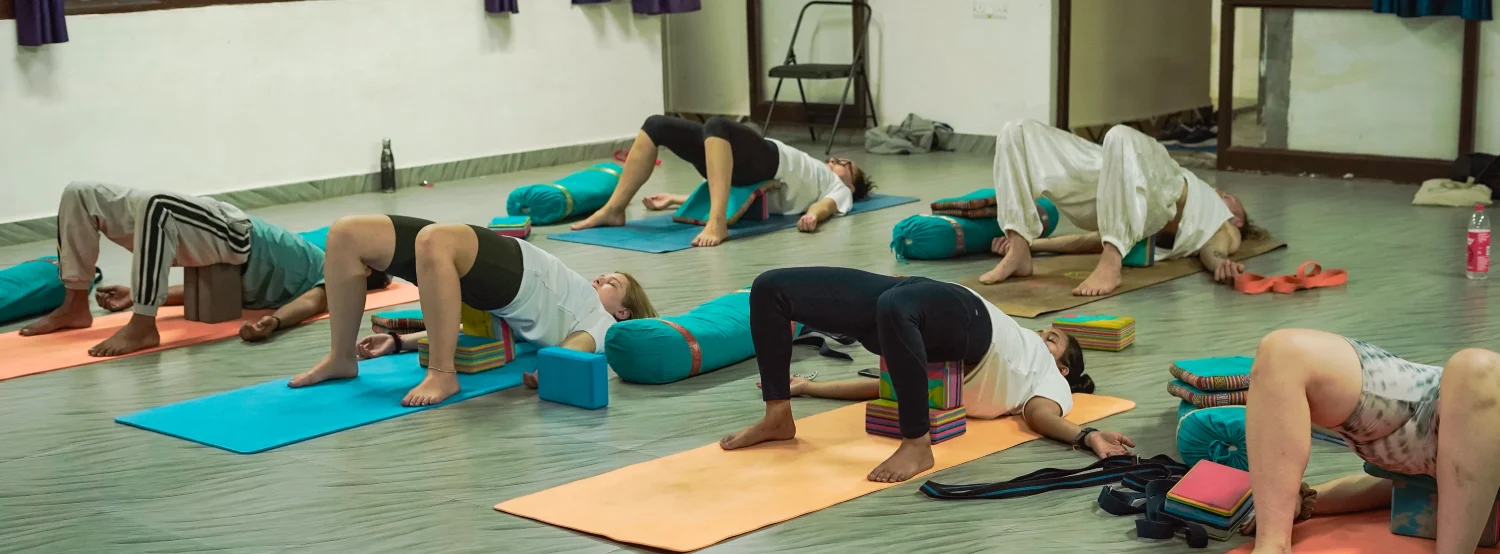

career change corporate to yoga teacher: How to Transition from Corporate Life to Yoga Teaching
Changing from a corporate career to yoga teaching can feel both exciting and frightening. If you are considering a career change corporate to yoga teacher, you are probably asking a harder question than “How do I become a yoga instructor?” You are asking whether the skills, income, identity, and stability you built in corporate life can make room for a different kind of work.
The good news is that you do not need to erase your previous career to become a credible teacher. Your communication, project management, presentation, client handling, leadership, and professional discipline can become valuable teaching skills. The harder truth is that yoga teaching is not an instant escape from workplace pressure. It is a profession that requires training, practice, ethics, patience, and often a gradual financial transition.
This guide explains how to assess your reasons, choose appropriate yoga teacher training, transfer your corporate strengths, prepare financially, gain teaching experience, and decide whether Rishikesh is the right place to begin.
Career change corporate to yoga teacher: Start with the real reason
Before you resign, get honest about what you are actually trying to change. Wanting less stress is not automatically the same as wanting to teach yoga. If you dislike your manager, commute, targets, or office culture, yoga teaching may look perfect from a distance. But teaching brings its own responsibilities: preparing classes, managing students, communicating clearly, continuing education, marketing, and building a reliable schedule.
Ask yourself three questions:
- Do you genuinely enjoy studying and practicing yoga, not just attending relaxing classes?
- Would you still want to teach if your first year brought inconsistent income?
- Are you interested in helping other people learn, rather than simply wanting to leave your current job?
A useful test is to separate the “escape” goal from the “career” goal. If your main objective is escape, take time before making an irreversible decision. If your objective is teaching, start building evidence for that decision while you still have income.
You can also explore the professional standards and registration ecosystem through Yoga Alliance. A credential does not automatically make you a great teacher, but understanding recognized training pathways can help you compare programs more intelligently.
Most importantly, do not treat a yoga certificate as a guaranteed replacement for a corporate salary. Your first goal should be competence. Your second should be teaching experience. Your third should be sustainable income.
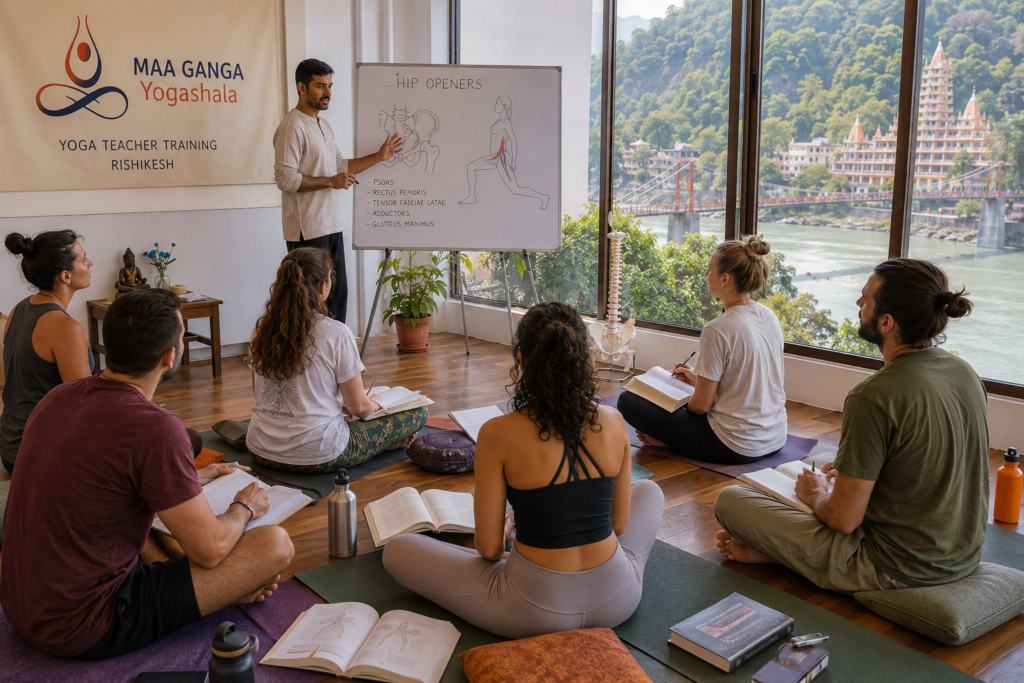
From corporate professional to yoga teacher: Turn existing skills into teaching assets
A career change does not mean starting from zero. In fact, your previous professional experience can give you an advantage if you know how to use it.
Communication becomes teaching clarity
Corporate presentations teach you to structure information. Yoga teaching requires the same skill in a more embodied form. You need to explain an action, demonstrate it, observe the student, and adjust your language when they do not understand.
A former trainer, consultant, sales professional, manager, or customer-facing employee may already understand how to read a room. That matters when ten students respond differently to the same instruction.
Project management becomes class management
A good class has a beginning, middle, and end. You need pacing, transitions, preparation, time awareness, and contingency plans. Corporate project management can make these tasks feel familiar.
Professional discipline becomes consistent practice
Yoga teaching is not only about knowing poses. You need to keep studying anatomy, sequencing, teaching methodology, ethics, observation, and your own practice. The habit of meeting professional commitments can help you build that consistency.
You should also learn where corporate habits become liabilities. A highly performance-driven mindset can make you overcorrect students or chase perfect alignment. A competitive personality can make teaching feel like proving expertise. Your new role requires observation, humility, and respect for individual differences.
If you are nervous about whether you need to be extremely flexible before training, read this guide on the myth that yoga teacher training requires exceptional flexibility. Teaching quality is not measured by how dramatically you can perform a posture.
Choosing yoga teacher training for a career transition
The training you choose should match the job you want to do. Do not select a course only because its photographs look peaceful or because it promises a fast career transformation.
For many aspiring teachers, a 200-hour teacher training is the more substantial foundation because it typically gives you more time to study yoga philosophy, anatomy, teaching methodology, sequencing, practice teaching, and related subjects. A shorter program can still be useful, particularly when you are exploring whether teaching suits you.
What to evaluate before enrolling
Look beyond the course title. Compare:
- Curriculum depth and teaching methodology
- Amount of supervised practice teaching
- Anatomy and safe alignment education
- Assessment and feedback
- Teacher experience and credentials
- Daily schedule and realistic workload
- Accommodation and student support
- Whether the course aligns with the professional registration pathway you want
If you are considering a shorter introduction, a 100-hour Yoga Teacher Training in Rishikesh can be one option to investigate. If you are ready for a more comprehensive foundation, explore the 200-hour Yoga Teacher Training in Rishikesh.
Do not assume that more hours automatically mean better teaching. What matters is what you actually learn, practice, and receive feedback on.
You should also ask what happens after graduation. Will you know how to structure a beginner class? Can you modify a posture appropriately? Can you teach without reading a script? Can you communicate boundaries and professional ethics? Can you handle a student who feels overwhelmed? Those practical questions matter more than a certificate hanging on a wall.
Building a realistic bridge from salary to yoga income
The biggest mistake in a career transition is confusing professional enthusiasm with financial readiness. Yoga can become a career, but income may take time to stabilize.
Start by calculating your minimum monthly personal expenses. Then identify how much emergency savings you would need if teaching income were initially irregular. Your transition may be safer if you do not quit immediately.
A staged approach can look like this:
- Keep your current job while researching training programs.
- Build a personal yoga practice and study basic teaching concepts.
- Complete appropriate teacher training.
- Practice teaching friends, peers, or beginner groups where appropriate.
- Start with part-time classes, workshops, studio work, or private sessions.
- Track actual monthly yoga income and expenses.
- Reduce corporate work only when your financial runway and teaching demand support it.
Your first income sources may not look glamorous. You may teach early-morning classes, substitute for another instructor, run small group sessions, or build online offerings. That is normal. A sustainable teaching career is built from repeatable value, not from one viral social-media post.
You also need business skills. Pricing, scheduling, invoicing, client communication, basic marketing, taxes, and professional boundaries are part of self-employment. Your corporate background can be a genuine advantage here.
Once you have completed training, you can also learn more about building a yoga teacher career after a 200-hour course and think beyond the first teaching job.
Why Rishikesh matters for a corporate-to-yoga transition
Rishikesh can be useful when you want immersion rather than a weekend introduction. The city gives you access to a large yoga ecosystem, teacher-training schools, retreat spaces, practitioners, and people arriving from different countries specifically to study yoga.
That environment can expose you to styles and teaching approaches that you may not encounter in your normal routine. More importantly, it can help you experience yoga as a discipline rather than as a lifestyle aesthetic.
The setting also encourages you to slow down and observe your own motivation. If you spend several weeks studying, practicing, teaching, and living with a demanding schedule, you get better evidence about whether you actually want this profession.
Rishikesh is not magic, though. Coming to India does not automatically make you a better teacher. The quality of your program, your commitment to practice, the feedback you accept, and the standards you maintain after graduation matter far more.
If the spiritual side of the city interests you, you may also want to understand the spiritual significance of the Ganga River in Rishikesh. That context can add depth to your stay without turning yoga into a tourism checklist.
For an independent overview of yoga’s broader cultural history, you can also consult Britannica. Use broad reference material as background, while relying on your training school for the practical curriculum you will actually study.
How to prepare before leaving corporate life
Preparation starts before your first day of teacher training. You can make the transition easier by testing the lifestyle rather than imagining it.
Start teaching informally only within your competence and in appropriate settings. Practice giving short instructions out loud. Record yourself teaching a simple sequence and listen back. Notice whether your explanations are precise or overloaded with words.
Build a study habit. Read, take notes, observe experienced teachers, and keep a practice journal. Pay attention to how different bodies respond to the same movement.
You should also decide what type of teacher you want to become. You might eventually work with:
- General group classes
- Beginners
- Corporate wellness programs
- Private clients
- Retreat participants
- Older adults, subject to appropriate training
- Online students
- Specialized populations, after gaining relevant additional education
Your corporate experience can even become your niche. Someone who understands workplace culture may be well positioned to teach accessible yoga to office professionals, provided the teaching is responsible and the positioning is based on genuine competence.
One useful next step is learning how to market yourself as a yoga teacher without relying on hype. Marketing should communicate a real service and clear audience, not manufacture expertise you do not yet have.
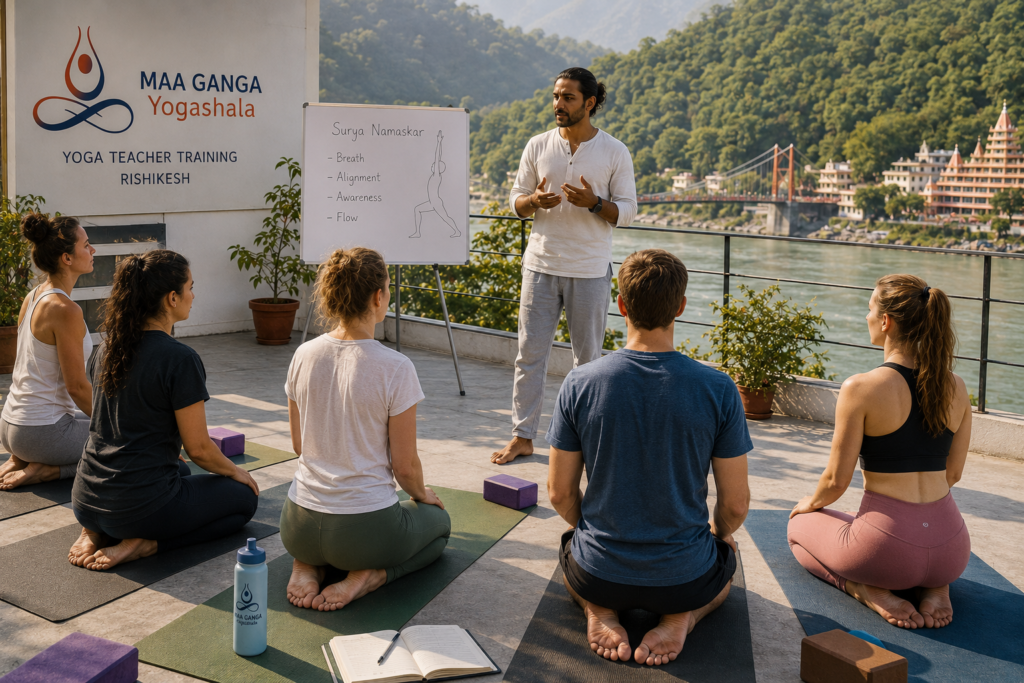
Soft step into teaching with Maa Ganga Yogashala
If you are considering training in Rishikesh, we offer a structured path through our 200-hour Yoga Teacher Training in Rishikesh, giving you a place to investigate the practical side of becoming a teacher before making the next career decision.
You can approach the training as a serious professional development step, not as a promise that a certificate will solve every career problem.
FAQs
Can you become a yoga teacher after working in corporate life?
Yes. Your previous profession does not prevent you from becoming a yoga teacher. What matters is appropriate training, your personal practice, teaching competence, ethical conduct, and your ability to work responsibly with students.
Your corporate experience can help with communication, organization, client relationships, presentation, and business administration. You still need to develop yoga-specific knowledge and teaching skills.
Do you need to quit your corporate job before yoga teacher training?
No. In many cases, quitting first is unnecessarily risky. If possible, investigate training, build savings, and create a transition plan before leaving stable employment.
A gradual transition can also reveal whether you enjoy teaching itself. If you discover that you love yoga but dislike teaching, you have learned something valuable without sacrificing your entire income source.
Is a 200-hour yoga teacher training enough to start teaching?
A 200-hour program can provide a foundational teacher-training pathway, but graduation should not be treated as the end of your education. You will still need practice, feedback, continued study, and experience.
You may also choose additional education later depending on the students and settings you want to serve. Specialized populations should never be treated as an opportunity to improvise beyond your training.
Can yoga replace a corporate salary?
It can for some people, but there is no honest guarantee. Your income will depend on location, teaching hours, pricing, experience, business skills, niche, client retention, and whether you combine multiple income streams.
Treat the first stage as building a profession. Measure actual demand and income before making a permanent financial decision.
Why choose Rishikesh for yoga teacher training?
Rishikesh offers an established yoga-learning environment and attracts practitioners and students from around the world. That can make it useful for immersive study and exposure to different approaches.
Still, location should be secondary to training quality. A beautiful setting cannot compensate for weak teaching methodology, poor supervision, or an inadequate curriculum.
Conclusion: Make the career change deliberately
A career change corporate to yoga teacher should not be treated as an escape fantasy or a one-course shortcut. It is a professional transition that becomes stronger when you preserve the useful parts of your old career while deliberately developing the skills your new profession demands.
You do not need to abandon your corporate identity overnight. Use your existing communication, organization, leadership, and business experience as foundations, then add serious yoga education, supervised teaching practice, ethical awareness, and financial planning.
If Rishikesh feels like the right environment for your next step, explore our 200-hour Yoga Teacher Training in Rishikesh and start evaluating your transition with clear expectations. Your goal should not be simply to leave one career. It should be to build a yoga teaching career you can actually sustain.