Yoga Teacher Training Group Dynamics Community: How to Thrive in Community
What happens when your yoga practice stops being private and becomes a shared commitment? Yoga teacher training group dynamics and community can shape your learning as much as the syllabus, because the people around you become your practice partners, feedback partners, and sometimes your biggest challenge.
A teacher training group brings together different ages, cultures, personalities, experience levels, communication styles, and reasons for studying yoga. You may arrive wanting stronger asana skills an=]
d leave realizing that listening, cooperation, boundaries, and empathy are equally important teaching skills.
That does not mean every group will feel effortless. Some days you may feel quieter than everyone else. You may disagree with a partner, struggle with cultural differences, or feel intimidated when another student seems more experienced. These moments are not necessarily problems to escape; handled well, they can become useful practice.
This guide explains how to understand group dynamics, build healthy relationships, manage disagreement, participate without losing yourself, and choose a training environment where community supports serious learning.
Yoga Teacher Training Group Dynamics: Why Community Shapes Learning
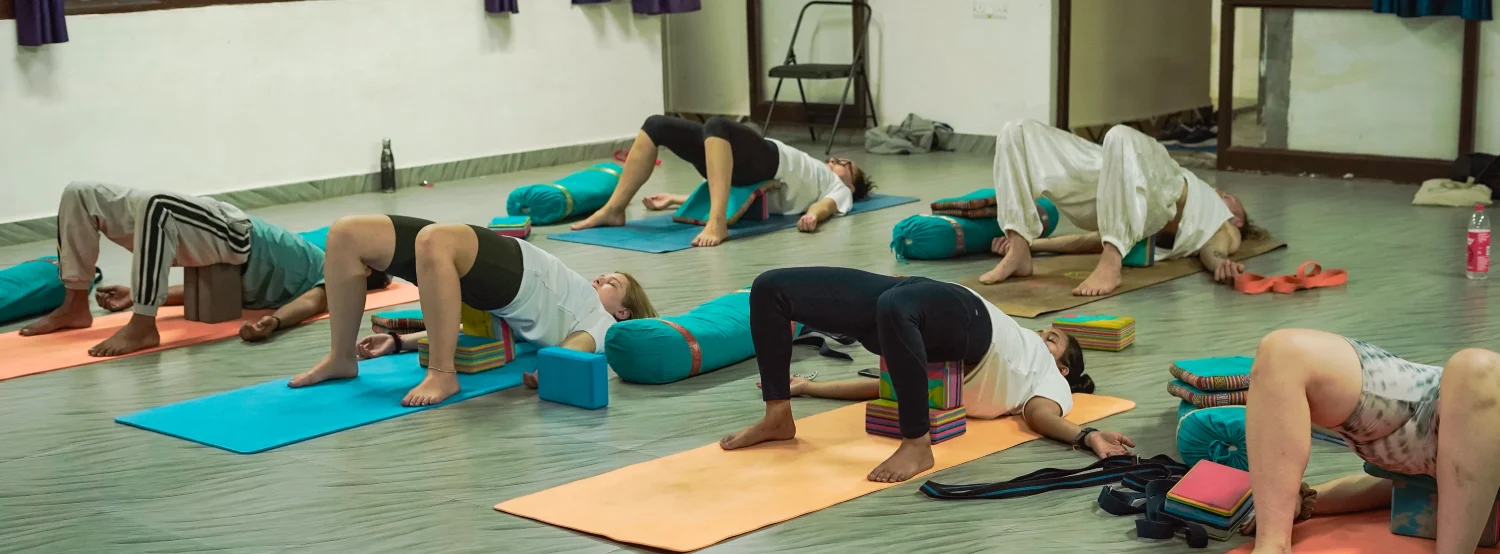
A yoga teacher training group is not simply a collection of students attending the same classes. Over several weeks, you share practice, teaching exercises, meals, discussions, assignments, feedback, and ordinary moments of fatigue. That repeated contact creates a social environment in which your habits become visible.
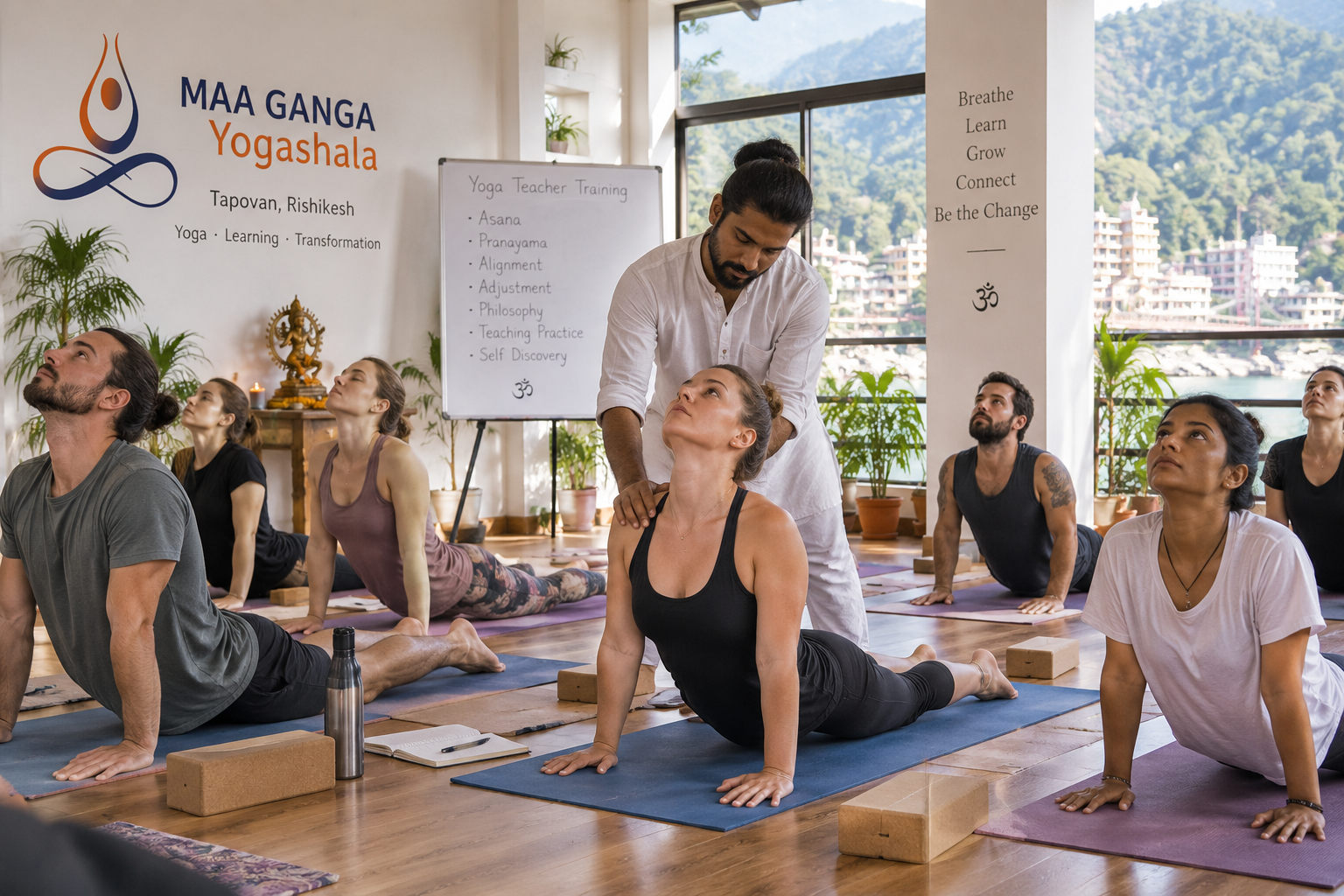
You learn through observation as much as instruction. When another student teaches a sequence, you notice how they explain movement. When someone receives correction, you see how feedback can be delivered respectfully. When a partner struggles with confidence, you learn how encouragement can be more useful than fixing.
Group learning also gives you something private practice cannot: multiple perspectives. A student from another country may interpret a philosophical idea differently from you. Someone with years of physical practice may approach alignment differently from a beginner. Listening to those perspectives can make your understanding less rigid.
The community itself can also reveal whether you are ready to teach. Teaching yoga is not only about demonstrating poses. It involves communication, boundaries, observation, adaptability, and responding to different people.
You can explore Yoga Alliance resources when comparing teacher-training pathways and standards.
A healthy group does not require everyone to become close friends. The better goal is psychological safety, mutual respect, useful feedback, and enough trust to practice imperfectly.
Building a Strong Yoga Training Community Without Losing Yourself
Community becomes valuable when participation is intentional. You do not need to become the most social person in the room. You need to become a reliable member of the learning environment.
Start by learning names. It sounds basic, but using someone’s name communicates attention. During partner exercises, ask what kind of feedback they prefer instead of assuming. If you are physically adjusting or assisting another person, respect consent and the school’s guidance.
Share space. If you are naturally confident, avoid answering every question before quieter students have a chance. If you are reserved, do not disappear completely and expect the group to understand you. Healthy community requires contribution from both outspoken and quiet students.
You can also create small rituals that make group life easier: arriving on time, helping reset the practice room, checking in with a partner, sharing useful notes, or encouraging someone after a difficult teaching assessment.
Cultural awareness matters especially in international training groups. A direct communication style may feel normal to one person and rude to another. Eye contact, personal space, humor, punctuality, and ways of disagreeing can vary significantly.
When something feels strange, pause before assigning a negative motive. Ask a neutral question. You may discover a difference in communication rather than a lack of respect.
If you are considering a 100-hour program, reviewing practical questions before enrollment can help you judge whether the learning environment matches your expectations. A useful resource is questions to ask before enrolling in a 100-hour YTT in India.
How to Participate Without Performing for the Group
There is a subtle trap in teacher training: trying to look like a “good yoga student.” You may force yourself to speak, appear endlessly positive, or hide confusion because you think confidence equals competence.
It does not.
Ask questions when you genuinely do not understand. Admit when you need clarification. Accept that your teaching voice may sound awkward at first. The purpose of practice teaching is to expose gaps while you still have support.
At the same time, avoid making every group discussion about your own experience. Community is reciprocal. Listen fully before responding, and allow someone else’s perspective to remain different from yours.
Handling Conflict and Difficult Personalities in YTT
Not every group dynamic will be comfortable. You may encounter a dominant student, a chronically negative classmate, someone who interrupts, or a partner whose teaching style clashes with yours.
The first step is to separate preference from actual harm. You do not have to like someone’s personality to work respectfully with them. A quiet student may find an energetic person exhausting, while another student may find that same energy motivating.
When there is a genuine problem, address the behavior rather than attacking the person.
Instead of saying, “You are disrespectful,” try: “When I was speaking, I felt interrupted several times. Can we take turns so I can finish my point?”
Specific language lowers defensiveness.
If a disagreement involves teaching feedback, return to the shared goal. Ask what the exercise is supposed to develop. Then compare the feedback with the stated objective rather than turning the discussion into a contest about who is right.
When You Should Speak to a Teacher
Some issues should not be handled privately between students. If you experience repeated disrespect, inappropriate conduct, boundary violations, bullying, discrimination, or behavior that makes you feel unsafe, involve a responsible teacher or program representative.
You are not required to tolerate harmful behavior in the name of being spiritual, flexible, or “part of the community.”
A mature yoga environment can hold both compassion and boundaries. You can assume good intent when appropriate while still taking harmful behavior seriously.
Conflict can also teach you something about your future teaching style. If you hope to teach after training, learning how to manage different personalities is part of becoming responsible for a room full of students.
From Classmates to Teaching Partners: Learning Through Feedback
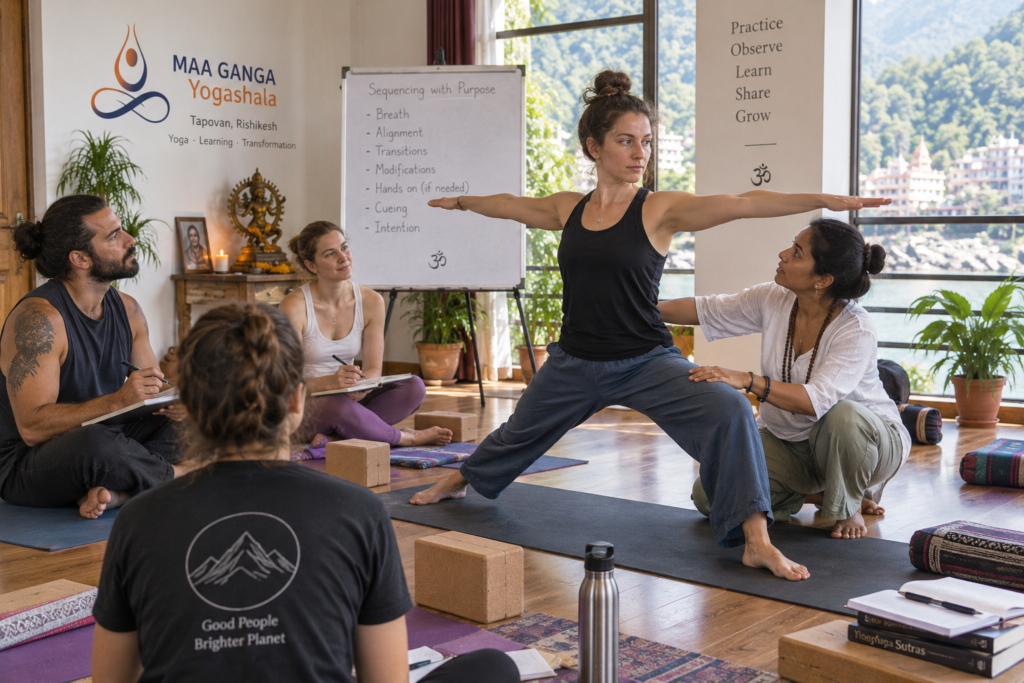
One of the most useful parts of teacher training is receiving feedback from people who have just experienced your class from the student’s side.
Do not treat every comment as a verdict on your ability. Look for patterns.
If three people say your instructions were unclear, investigate the wording. If one person dislikes your music choice, that may simply be preference. If several people felt the pace was too fast, you probably have something practical to improve.
A simple feedback process can help:
- Listen without immediately defending yourself.
- Repeat the main point to confirm you understood it.
- Ask for one specific example if the feedback is vague.
- Decide what you will test in your next practice class.
- Review whether the change actually helped.
You should also learn to give feedback responsibly. Start with what the person was trying to achieve, identify one or two useful observations, and offer a practical suggestion. Avoid turning feedback into a performance where you demonstrate how much you know.
This is particularly important in anatomy and alignment discussions. Your classmate may have a different body, history, mobility, or learning style. Avoid presenting personal preference as universal truth.
For broader official information about yoga-related initiatives in India, you can also consult the Ministry of AYUSH.
If you want to understand how teaching skills develop after foundational training, the path from 200-hour YTT to a yoga teaching career offers a useful next step.
Why Rishikesh? Why Community Matters More Here
Rishikesh can intensify the social side of teacher training because you are learning in a place where yoga study, spiritual practice, travel, and international exchange overlap.
You may share a room or dining space with people you would never meet in your normal routine. Someone from India may train beside someone from Europe, North America, Australia, or another part of Asia. That diversity can challenge assumptions you did not know you had.
The setting can also encourage you to slow down and pay attention. Time beside the Ganga, early morning practice, philosophy discussions, and evenings with classmates can make the training experience feel larger than classroom instruction.
But location alone does not create a good community. A beautiful environment cannot compensate for poor communication, unclear expectations, or disrespectful behavior. When evaluating a school, look beyond photographs.
Ask how students interact with teachers. Ask how practice teaching is organized. Ask whether students receive individual feedback. Ask what happens when a student needs support. Ask about daily schedules and opportunities for rest.
For a realistic picture of student life, a week in a 200-hour YTT schedule can help you think about how learning, practice, and community fit together.
You can also explore the best guide to Yoga Alliance RYT 200 certification before comparing programs, especially if certification is part of your decision.
Choosing a Yoga Teacher Training Community That Fits You
The right group is not necessarily the one with the most social activities. It is the one that supports the kind of learner you want to become.
Before enrolling, think about your own needs. Do you learn best through discussion or observation? Do you need frequent individual feedback? Are you comfortable in a highly international group? Do you need quiet time after intensive classes?
Then look for evidence rather than marketing language.
Useful questions include:
- How much teaching practice will you receive?
- How are students paired for practice teaching?
- How is feedback delivered?
- What support exists if group conflict occurs?
- How large are typical training groups?
- How much personal time is built into the schedule?
- What happens if your experience level differs from the rest of the group?
A strong community should help you become more independent, not more dependent on constant approval. You should be able to disagree respectfully, practice imperfectly, and leave the training with stronger judgment.
If you prefer to begin with a shorter experience before committing to teacher training, our 3-day yoga retreat in Rishikesh can be a practical way to experience a yoga environment first.
A Supportive Place to Begin Your Training in Rishikesh
If you want teacher training where community is part of the learning experience, our approach at Maa Ganga Yogashala focuses on practice, study, interaction, and the shared rhythm of training in Tapovan, Rishikesh. Explore Maa Ganga Yogashala to learn more about our training environment.
You can explore our 200-hour yoga teacher training in Rishikesh to see whether a structured training environment fits your goals.
Community also does not end when the class ends. Shared experiences can become friendships, professional connections, teaching partnerships, and a wider understanding of yoga across cultures.
For many students, that is one of the unexpected benefits of residential or immersive training: you learn to teach while simultaneously learning how to be a student among other students.

FAQs About Yoga Teacher Training Group Dynamics and Community
What are yoga teacher training group dynamics?
Yoga teacher training group dynamics describe how students communicate, cooperate, respond to feedback, handle differences, and influence one another during training. Because teacher training involves repeated practice and interaction, these relationships can directly affect your learning experience.
What if I am shy or introverted during yoga teacher training?
You do not need to become highly outgoing. Start with small contributions: introduce yourself, participate in partner work, ask questions, and offer thoughtful feedback. A healthy group should allow you to participate without forcing you to become someone you are not.
How should you handle conflict with another YTT student?
Address minor misunderstandings calmly and specifically. Describe the behavior and its effect rather than labeling the person’s character. If the issue involves repeated disrespect, safety, harassment, or serious boundary concerns, speak with an appropriate teacher or program representative.
Can group dynamics affect how well I learn to teach yoga?
Yes. Teaching requires communication, observation, adaptability, boundaries, and the ability to respond to different students. Practicing these skills with classmates gives you a low-stakes environment in which to notice habits and improve them before teaching a wider audience.
Should community be a major factor when choosing a yoga teacher training?
It should be one factor, not the only factor. Review curriculum, teaching practice, faculty, schedule, student support, credentials, accommodation, cost, and the school’s approach to safety and feedback. A friendly community cannot make up for weak training.
Conclusion: Learn to Teach by Learning to Be Part of the Group
Yoga teacher training group dynamics and community are not side issues. They are part of the practical education you receive when you learn to guide other people.
Your classmates will challenge you, support you, disagree with you, and sometimes reveal habits you cannot see on your own. If you approach those moments with curiosity, clear boundaries, honest feedback, and respect, the group becomes another training ground for your future teaching.
Rishikesh gives you a distinctive setting for that work, but your attitude still matters most. Show up prepared. Listen carefully. Speak honestly. Give feedback with care. Ask for help when you need it. And do not confuse being agreeable with being compassionate.
Ready to train in a community-oriented setting? Explore our 200-hour yoga teacher training in Rishikesh and take the next step toward becoming a more confident, grounded yoga teacher.