Create Yoga Sequence After Teacher Training: 7 Proven Steps
Learning how to create yoga sequence after teacher training is often the most intimidating challenge for a newly certified instructor. You have dedicated countless hours to mastering physical postures, understanding deep yogic philosophy, and studying human anatomy.
Yet, sitting down with a blank notebook to design a seamless, sixty-minute class can suddenly feel overwhelming. The transition from being a dedicated student to a confident guide requires a completely different skill set.
You must learn how to weave individual asanas into a cohesive, safe, and engaging physical narrative. Your students rely on your ability to prepare their bodies intelligently for complex movements while keeping their nervous systems regulated.
This comprehensive guide removes the guesswork from vinyasa class planning. We will break down the exact methodology needed to construct flows that feel intuitive and structurally sound.
By applying these specific sequencing tips for beginners, you will stop second-guessing your lesson plans. You will discover how to build classes that respect biomechanics and honor the traditional roots of the practice.
Let this framework become your trusted blueprint as you step onto the teaching podium with clarity and purpose.
How to Approach Your First Steps to Create Yoga Sequence After Teacher Training
Every powerful class begins with a singular, well-defined intention. Before you write down a single posture, decide what physical or energetic goal you want your students to achieve.
Teaching a random assortment of poses will leave your class feeling disjointed. A scattered sequence confuses the physical body and disrupts the mental focus required for a true yoga practice.
You might choose an anatomical theme, such as opening the chest and shoulders, or an energetic theme, such as grounding through the root chakra. This foundational concept will serve as the anchor for every decision you make during your yoga lesson plan creation.
Once your intention is set, evaluate the physiological requirements of that goal. If your objective is deep backbending, your warm-up must systematically target the hip flexors, quadriceps, and thoracic spine.
You must align your structural methodology with established safety standards. Maintaining the rigorous biomechanical principles established by organizations like Yoga Alliance ensures your students remain safe from injury.
Building this initial blueprint is the secret to developing lasting new yoga teacher confidence after training. When you know exactly why each pose exists in your plan, your verbal cues will naturally carry more authority.
Structuring the Flow: The Core Framework to Create Yoga Sequence After Teacher Training
A successful class follows a predictable energetic arc, much like a well-written story. You must gradually build intensity, reach a physical climax, and safely return the body to a state of rest.
The standard hatha yoga class structure begins with centering and breathwork. This critical five-minute window allows students to disconnect from their outside lives and arrive fully on their mats.
From centering, you transition into the physical warm-up. This phase should include gentle, rhythmic movements that introduce synovial fluid to the joints.
Think of cat-cow variations, gentle twists, and slow dynamic lunges. Do not rush this phase, as an inadequate warm-up severely increases the risk of muscle strain during the standing series.
Sun Salutations (Surya Namaskar) typically follow, serving as the bridge between the floor warm-up and the standing sequences. They build internal heat and synchronize the breath with movement.
After building heat, introduce your standing sequences. This is where you challenge balance, strength, and endurance. Keep your standing sequences logical, moving from closed-hip postures to open-hip postures deliberately.
Many instructors struggle with this specific phase when mastering teaching yoga after 100 hour certification. Keeping the structure simple allows you to focus on observing your students rather than remembering complex choreography.
Understanding the Anatomy of a Peak Pose
Sequencing a peak pose is a highly effective way to structure your class, provided you understand the anatomical prerequisites. A peak pose is the most challenging asana of your sequence, placed at the height of the physical arc.
If you simply drop a complex posture into the middle of a flow without preparation, your students will likely struggle or compromise their alignment. Your entire sequence leading up to this moment must systematically prepare the necessary muscle groups.
Deconstructing the Pose
Take a posture like Ustrasana (Camel Pose). To execute this pose safely, the body requires open hip flexors, stretched quadriceps, a mobilized thoracic spine, and active glutes.
Your job is to reverse-engineer this posture. You must include poses earlier in the class that address each of these specific anatomical needs.
Building the Progression
Incorporate Low Lunge (Anjaneyasana) to target the hip flexors. Add Sphinx or Cobra pose to begin awakening the spinal extensors.
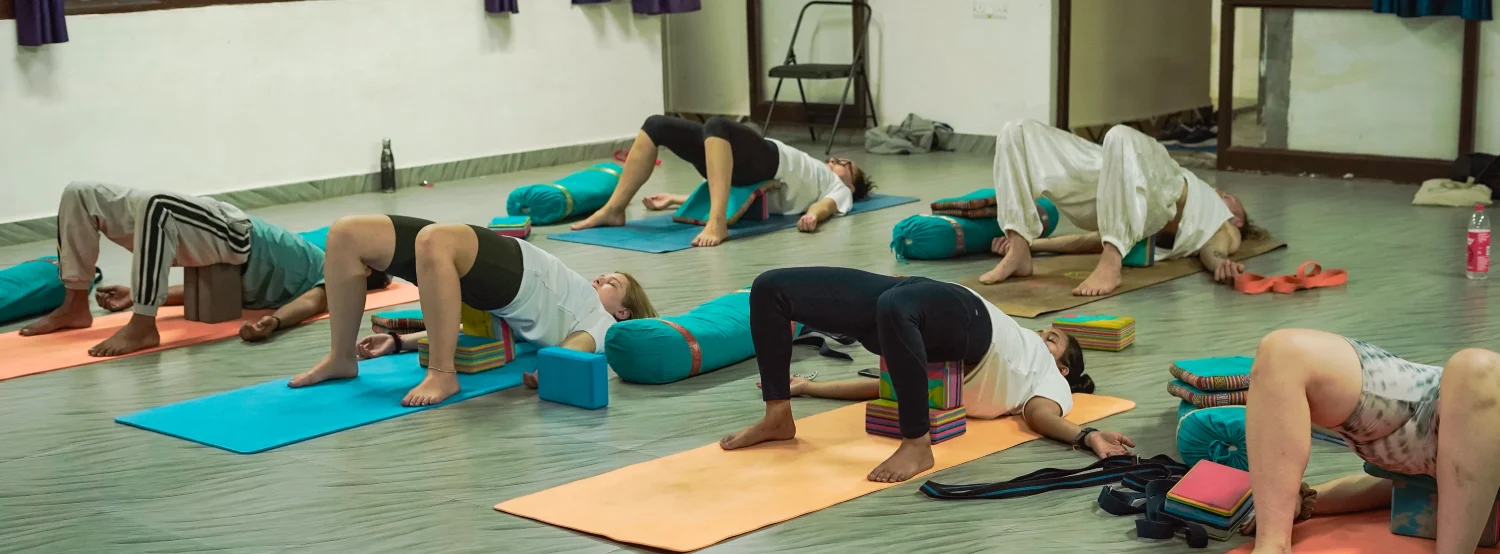
Use Bridge pose to activate the glutes and hamstrings. By the time you introduce Camel pose, the body has already rehearsed the necessary actions in safer, more accessible orientations.
The Importance of Counter Poses
Immediately after your peak pose, you must neutralize the spine. Never move directly from an extreme backbend into an extreme forward fold.
Use gentle, neutral movements like a supine twist or a soft downward dog before moving into counter-stretches. This respects the intervertebral discs and prevents sudden spasms in the surrounding musculature.
The Role of Breath, Pacing, and Nervous System Regulation
A beautifully written sequence will completely fail if the pacing is frantic or the breath is ignored. Vinyasa translates to placing in a special way, and this applies as much to breath as it does to physical limbs.
Your pacing dictates the emotional and physical experience of the room. Moving too quickly through complex transitions causes students to hold their breath and lose their physical integrity.
Research archived on platforms like PubMed consistently demonstrates that slow, controlled breathing during physical exertion drastically reduces cortisol levels. Your sequencing must leave room for full, expansive inhales and long, complete exhales.
Cue the breath before you cue the movement. Say “Inhale, reach your arms up,” rather than “Reach your arms up on the inhale.” This subtle linguistic shift trains your students to let their breath initiate the physical action.
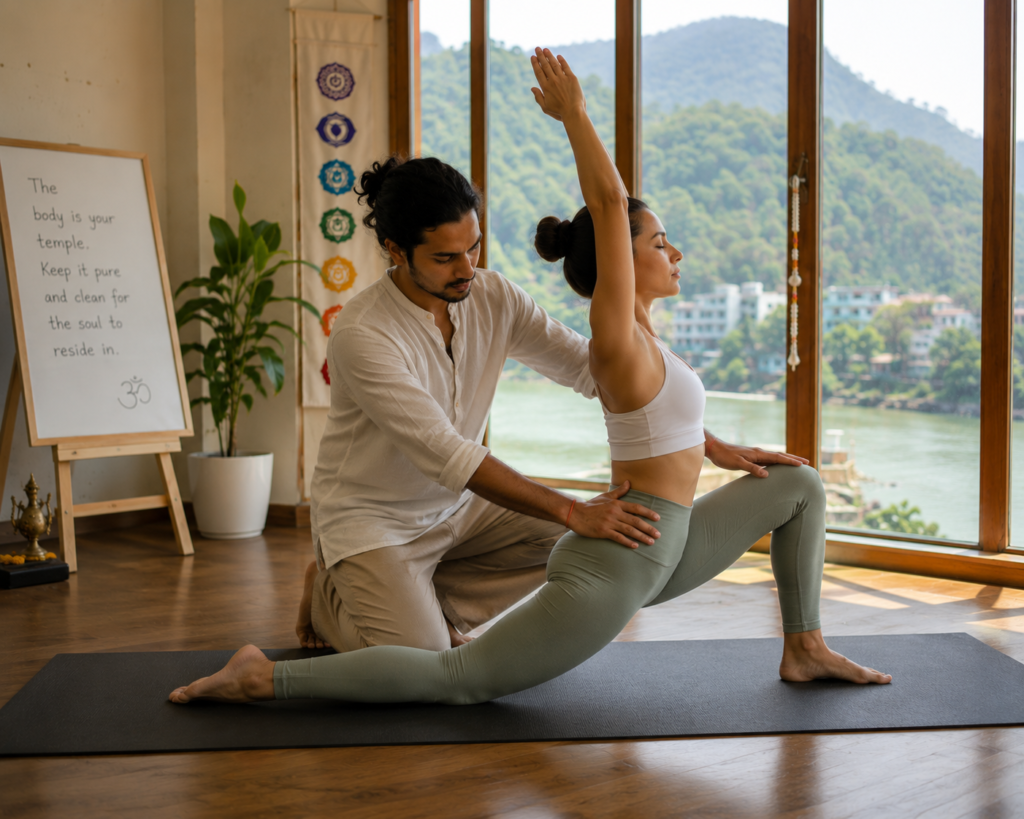
Proper pacing also allows you the necessary time to provide effective yoga adjustments and assists. If you are rushing through fifteen poses in ten minutes, you cannot safely support a student’s alignment.
Leave breathing room in your class plan. If your written sequence looks like it will take exactly sixty minutes, you have planned too much. Real-world teaching requires pauses for demonstrations, prop setup, and settling into stillness.
Essential Modifications and Accessibility in the Classroom
When you create a sequence on paper, you are imagining an idealized scenario. When you step into a live studio, you will face a diverse room with varying levels of strength, flexibility, and mobility.
Your sequence must include planned modifications for every major posture. You cannot assume that all your students can access a full bind or a deep hip rotation.
Offering modifications is not about making the class “easier.” It is about providing intelligent options so every student experiences the biomechanical intention of the pose.
If you are teaching Revolved Crescent Lunge, always offer the option to drop the back knee. This simple modification allows students with compromised balance to still receive the benefits of the spinal twist.
Actively encourage the use of props. Blocks and straps are not crutches; they are tools that bring the floor closer to the practitioner. Incorporating props seamlessly into your cues shows a high level of teaching maturity.
If you are struggling with providing variations, review resources detailing the 7 best ways to create yoga sequence after teacher training to understand how to build accessible building blocks into your flows.
Finding Your Authentic Voice as an Instructor
In your first few months of teaching, it is entirely normal to mimic the instructors who trained you. You will likely use their favorite phrases, their pacing, and their sequencing habits.
However, long-term success requires you to shed these adopted personas and find your authentic teaching voice. Your students will connect most deeply with your genuine personality.
If you have a playful nature, let that shine through in your cues. If you are deeply philosophical, weave small insights into your slower holds.
Do not force a calm, ethereal voice if that is not how you naturally speak. Forced tones sound robotic and disconnect you from the human beings in the room.
Speak clearly, project your voice from your diaphragm, and use silence strategically. You do not need to fill every moment of the class with talking. Silence allows your students to internalize their practice and connect with their own internal dialogue.
Integrating proper meditation techniques from your 200 hour YTT can help you stay grounded and present as you guide the room.

Overcoming Creative Blocks in Class Planning
Every yoga teacher experiences creative fatigue. After teaching the same schedule for months, your sequences can begin to feel stale and repetitive.
When you hit a creative wall, the worst thing you can do is try to invent entirely new, bizarre transitions. Complexity does not equal quality in yoga.
Instead of changing the poses, change your relationship to them. Teach a familiar sequence but focus entirely on a new anatomical cue, such as external shoulder rotation or engaging the pelvic floor.
You can also completely reverse your standard flow. If you normally start standing and move to the floor, try starting supine, building to standing, and finishing seated.
Taking classes from other experienced instructors is mandatory for your continued growth. You cannot output quality sequences if you are not actively inputting new physical experiences into your own body.
Keep a student mindset. When a teacher guides you into a posture in a way that feels incredible, write that transition down after class.
Why Rishikesh? / Why This Matters
Mastering the art of sequencing in Rishikesh provides an unparalleled advantage for any yoga professional. Known as the yoga capital of the world, this city breathes the ancient science of asana and pranayama.
Learning to structure a class here goes far beyond physical fitness. You are immersed in an environment that honors the spiritual and energetic roots of the practice.
The traditional knowledge systems preserved in Rishikesh teach you how to sequence not just for the physical muscles, but for the subtle energetic body. This depth of understanding separates average instructors from truly transformative teachers.
Practicing on the banks of the sacred Ganges river naturally elevates your awareness. The focus and discipline cultivated in this holy city directly translate into a calmer, more authoritative presence in the classroom.
For many, discovering how to intelligently structure a flow begins deeply during an authentic 100-Hour Yoga Teacher Training in Rishikesh. The foundational skills learned in this environment last a lifetime.
Advancing Your Practice with Maa Ganga Yogashala
If you are seeking to refine your teaching skills in an environment that respects tradition while providing rigorous modern anatomy, we are here to support your journey.
Maa Ganga Yogashala offers a sanctuary for dedicated practitioners looking to elevate their understanding of sequencing and methodology.
Whether you are looking to refresh your basic teaching skills or immerse yourself in advanced structural learning, you will find a supportive community here in Tapovan.
Take the time to explore our home page at Maa Ganga Yogashala to learn more about our philosophy and our dedication to authentic yogic education.
We also offer short-term immersions, such as our 5 Days Yoga Retreat in Rishikesh, perfect for teachers needing to disconnect and find new creative inspiration.
Frequently Asked Questions on Class Planning
How long should I spend preparing a new sequence?
When you first start, you may spend up to two hours planning a single sixty-minute class. This is normal. As you gain experience and build a mental library of transitions, your planning time will drop significantly. Eventually, you will be able to outline a solid class in fifteen minutes.
Should I write my sequence down and bring it to class?
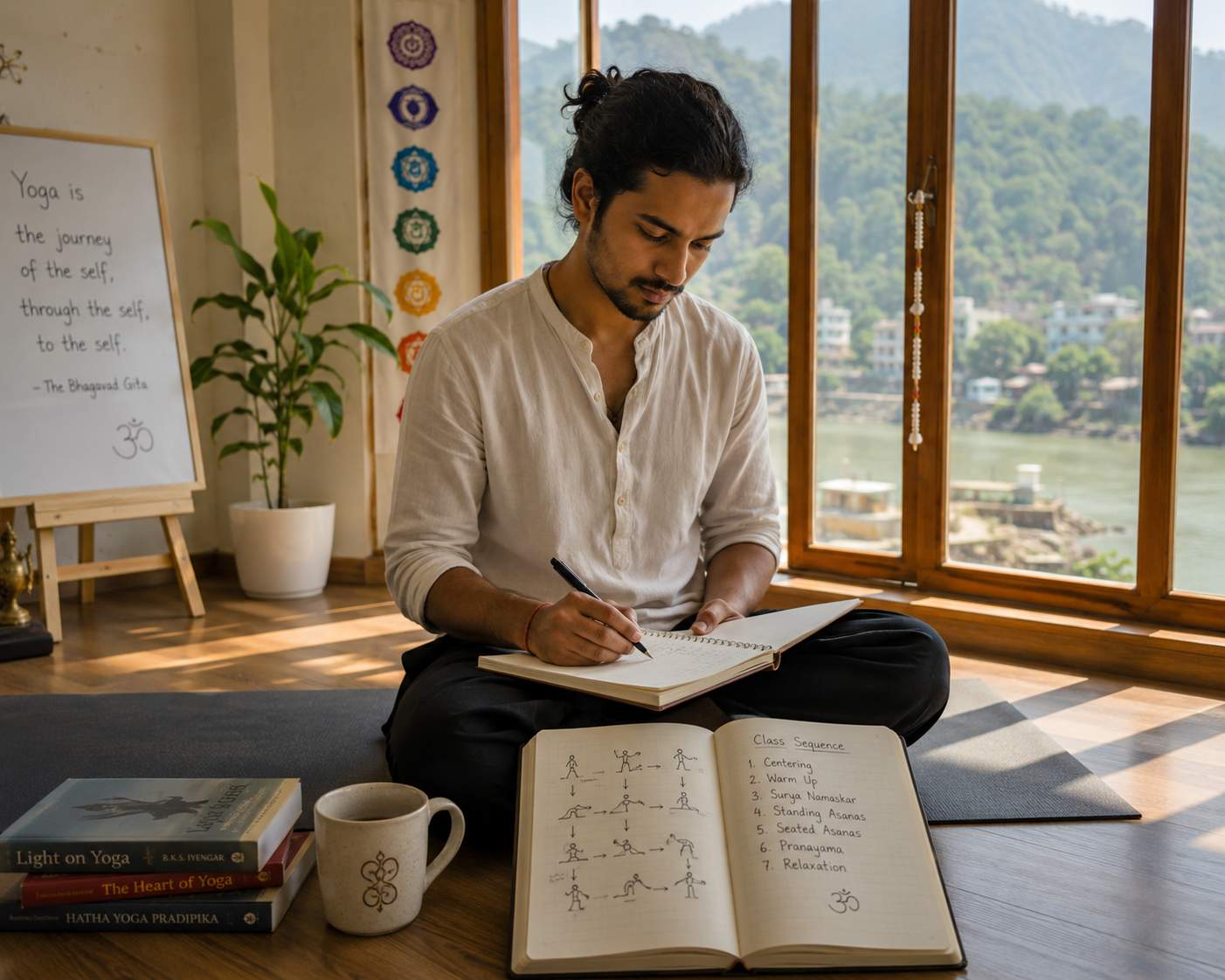
Absolutely. Bringing a small notebook to class removes the anxiety of forgetting your flow. Keep your notes simple and written in large, clear handwriting. Do not read from the notebook constantly; use it as a quick reference map to keep yourself on track.
Is it okay to teach the exact same sequence multiple times?
Yes, it is highly recommended. Teaching the same sequence for a week allows your regular students to measure their progress. It also gives you the opportunity to refine your verbal cues and observe how different bodies respond to the exact same transitions.
How do I handle a student who cannot do the peak pose?
Always offer a restorative alternative or a preliminary version of the pose. Remind the class that the peak pose is a direction, not a mandatory destination. Praise the students who choose the modification, reinforcing that listening to their body is the advanced practice.
Conclusion
Learning to create yoga sequence after teacher training is an evolving art form that requires patience, study, and constant refinement. You will make mistakes, you will occasionally confuse your left and right, and a sequence that looked brilliant on paper might fall flat in the studio.
Embrace these moments as crucial learning experiences. Keep your intentions clear, prioritize the physical safety of your students, and never lose your own connection to the breath. Your ability to craft intelligent, healing movement will grow stronger with every single class you teach.
Ready to begin your teaching journey or refine your foundational skills? Explore our 200-Hour Yoga Teacher Training in Rishikesh and take the first step toward mastering your craft today.