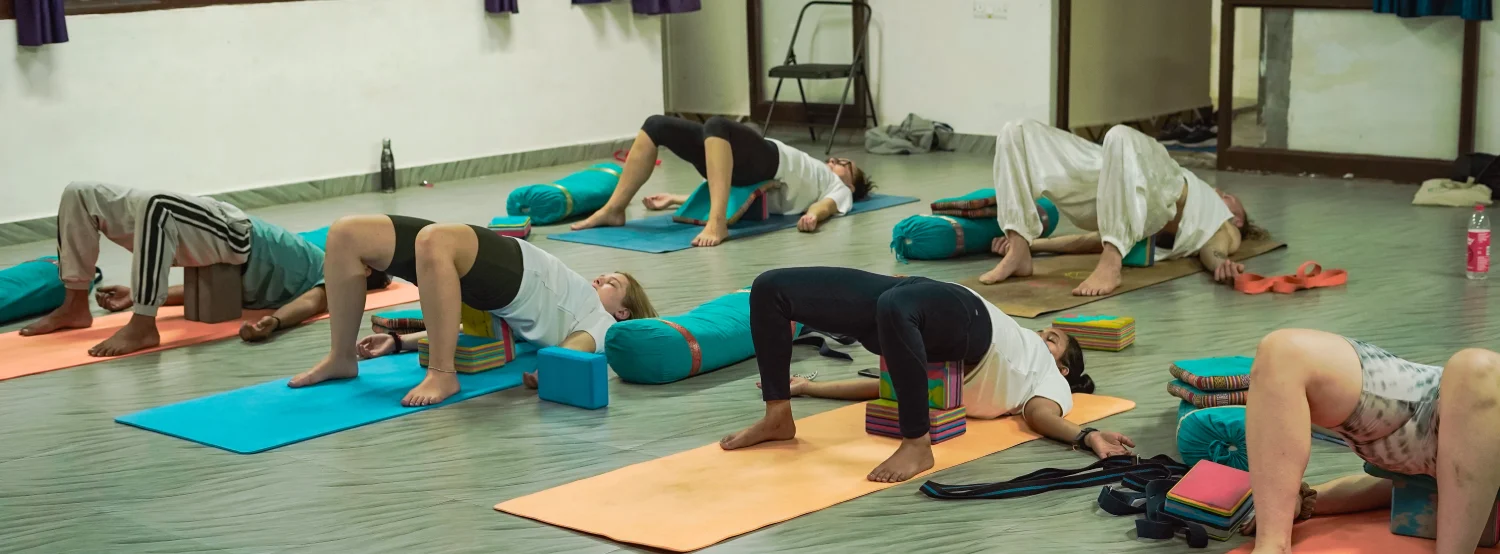

How to Choose 200 Hour YTT School Rishikesh: A Complete Guide to Finding the Right Yoga Teacher Training Program
Introduction
Choosing the right school is one of the most important decisions you will make before becoming a yoga teacher. When you research how to choose 200 hour YTT school Rishikesh, you quickly discover dozens of programs offering similar certifications, residential packages and promises of personal growth. So, how do you distinguish a genuinely suitable school from one that simply has attractive photographs and competitive prices?
The answer is to look beyond marketing. Your training should prepare you to practise safely, understand yoga philosophy, develop teaching skills and guide students with different abilities. The school you choose will influence not only what you learn but also how confidently you begin teaching after graduation.
Rishikesh offers a distinctive environment for yoga education, but every school has its own teaching methods, accommodation standards, schedule and approach to student support.
This guide explains how to compare schools using practical criteria, evaluate teachers and certification, understand course fees, recognise warning signs and decide which program suits your goals. Whether you are an international student travelling to India or an Indian practitioner taking your first step towards teaching, you will have a clearer framework for making an informed decision.

1. How to Choose a 200-Hour YTT School in Rishikesh: Start With Your Goals
Before comparing schools, identify what you want from your training. A program that suits someone seeking personal development may not be the best option for someone preparing to teach professionally.
Start by answering three questions: Do you want to teach yoga, deepen your personal practice, or explore yoga philosophy and lifestyle? How much experience do you have? Where do you intend to teach after completing the course?
Your answers will help you assess whether a school’s curriculum and teaching approach fit your expectations.
Check the certification and registration
If you intend to pursue a Yoga Alliance credential, verify the school’s current registration directly through the official Yoga Alliance website. A school’s marketing claims are not a substitute for independent verification.
You should understand the distinction between completing a 200-hour training and obtaining an individual credential. Graduation requirements, the school’s registration status and the applicable credentialing process all matter.
Ask the school:
- Is the school currently registered for the relevant 200-hour training?
- What certificate will you receive after successful completion?
- Are attendance, assignments, assessments and teaching practice required?
- What additional steps, if any, are necessary to apply for an individual credential?
Registration alone does not guarantee excellent instruction or employment. Treat it as one important checkpoint rather than your entire decision.
Match the program to your experience
You do not necessarily need advanced flexibility to enrol. However, you should be prepared for regular practice, sustained concentration and constructive feedback.
A good school explains its prerequisites honestly and helps beginners develop a foundation without encouraging them to force difficult postures. If your main goal is personal exploration rather than completing a full teacher-training qualification, consider whether a shorter program would meet your needs more appropriately.
2. Compare Teachers, Curriculum and Practical Teaching Experience
A school’s faculty can influence your learning more directly than its location or accommodation. Look for teachers who can explain not only how to perform a posture but also why it is taught, how it can be adapted and when a student should avoid it.
Evaluate the teaching team
Ask for the names, qualifications and teaching experience of the instructors responsible for your main subjects. Find out who teaches asana, pranayama, meditation, anatomy, philosophy and teaching methodology.
Be cautious if a school advertises an impressive faculty but cannot confirm who will actually teach your batch.
You should also ask about class sizes and individual feedback. A smaller group may make it easier to receive corrections and practise teaching, although the quality of instruction matters more than the number of students alone.
For more specific questions about instructor experience, use this guide to evaluating yoga school faculty and teacher selection.
Examine the complete curriculum
A well-rounded 200-hour program should cover several connected areas:
- Asana practice: Alignment, posture variations, sequencing and appropriate modifications.
- Anatomy and physiology: Basic movement principles, common limitations and safe practice.
- Pranayama and meditation: Techniques, preparation, limitations and responsible guidance.
- Yoga philosophy: Foundational concepts, traditional texts and the context behind common teachings.
- Teaching methodology: Class planning, cueing, observation, communication and adapting instruction.
- Practice teaching: Opportunities to lead sessions, receive feedback and improve.
Compare the actual timetable rather than relying on a list of subjects. Ask how much time is allocated to practical teaching, anatomy, philosophy and supervised feedback.
For broader background on traditional yoga systems, you can consult Britannica’s overview of yoga. Historical and philosophical context can enrich your studies, but it does not replace structured instruction or supervised practice.
3. Compare Fees, Accommodation and What Is Included
The cheapest advertised course is not always the least expensive option overall. A package may exclude meals, accommodation, airport transfers, study materials or other services you assumed were included.
Before paying a deposit, request a written breakdown of the complete cost.
Build a realistic course budget
Your comparison should include:
- Tuition and registration-related charges, where applicable.
- Accommodation type, room occupancy and bathroom arrangements.
- Meals, drinking water and any dietary options you require.
- Airport or railway-station transfers, if needed.
- Study materials, books, equipment and laundry.
- Travel insurance, flights, visas and transport within India.
- Personal expenses and a contingency reserve.
International students should calculate the total in their own currency and allow for exchange-rate changes. Indian students should consider travel to Rishikesh, time away from work and any income lost during residential training.
A school offering a lower course fee may still be more expensive after additional charges are included.
For a more detailed breakdown, explore this guide to 200-hour YTT fees in India and what is included.
Assess accommodation and daily living
Residential training can be physically and mentally demanding. Your room should provide reasonable cleanliness, rest and privacy for the type of package you select.
Ask whether the photographs show the actual accommodation, how many students share a room, whether hot water is available and what happens if a facility needs maintenance.
Also confirm meal timings, food arrangements and whether you can accommodate relevant dietary needs. A peaceful environment is useful, but practical comfort matters too.
Read the refund and cancellation policy
Request the cancellation policy before transferring money. Check the deposit conditions, refund deadlines, batch-change rules and what happens if the school cancels or changes the program.
Keep written confirmations of prices, inclusions and payment receipts. These records can prevent misunderstandings later.
4. Read Reviews Critically and Check the Learning Environment
Online reviews can reveal useful details about teaching quality, food, accommodation and the daily routine. However, a five-star average does not automatically mean a school is right for you.
Look for specific accounts of what students learned, how teachers responded to questions and whether the advertised schedule matched reality.
Look for detailed, credible feedback
Give more weight to reviews that describe particular experiences than to comments consisting only of generic praise.
Check several sources when possible. Look for recurring themes rather than treating one negative review as conclusive evidence. Recent reviews can be particularly useful when accommodation, management or teaching staff may have changed.
Ask the school whether it can share an example timetable, course handbook or information about its current teaching team. If you contact former students, ask about the quality of feedback, workload, assessment and whether they felt prepared to teach.
Check batch size and student support
A large group is not automatically poor, and a small group is not automatically excellent. What matters is whether the school can provide adequate supervision, meaningful practice and individual feedback.
Ask how many students are expected in your batch, how many instructors will be teaching and how often you will practise leading classes.
You should also clarify what support is available if you struggle with a topic, become unwell or need help understanding an assignment.
A useful additional resource is this discussion of student life and the weekly schedule during a 200-hour YTT. Comparing daily routines can help you understand the commitment before enrolling.
5. Why Rishikesh Matters When Choosing a Yoga Teacher Training School
Rishikesh attracts yoga practitioners because it combines established yoga institutions, Himalayan surroundings, access to the Ganga and opportunities to explore different approaches to yoga practice.
However, choosing Rishikesh does not automatically mean choosing the right school. The quality of your education depends on the instructors, curriculum, supervision and learning environment you actually receive.
Consider the location within Rishikesh
Different neighbourhoods offer different experiences. Tapovan, for example, has yoga schools, cafés, accommodation and services used by visitors and students.
Think about how much time you want to spend walking, whether you need easy access to shops or transport, and how comfortable you are with the local environment.
Ask whether the school is close to the facilities it advertises and whether noise, road access or seasonal weather could affect your stay.
Understand the cultural and practical adjustment
If you are travelling from abroad, allow time to adapt to local food, climate, daily routines and cultural expectations. Read the course schedule carefully because residential teacher training often involves early mornings, several classes per day and limited leisure time.
Respect for traditional teachings should be accompanied by clear communication, safe instruction and appropriate professional boundaries. You should feel comfortable asking questions and raising concerns.
If you want to explore yoga beyond the classroom, consider whether your schedule leaves room for reflection, meditation or local activities without compromising attendance and rest.
Choose the experience, not just the destination
The surroundings may make your stay memorable, but your strongest measure of value is what you can understand and practise when the course ends.
Choose a school that prepares you to explain postures, recognise limitations, structure a class and respond thoughtfully to students. These skills are more useful than selecting a program simply because it promises a picturesque setting.

6. A Practical Checklist for Comparing Different 200-Hour YTT Schools
Once you have shortlisted two or three schools, use the same checklist for each. Comparing identical criteria makes it easier to identify meaningful differences without getting distracted by marketing.
| Criterion | What to verify |
|---|---|
| Registration | Current status and the exact qualification offered |
| Faculty | Instructor experience, subject expertise and teaching responsibilities |
| Curriculum | Subject coverage, practical teaching and assessment |
| Class size | Expected students, supervision and individual feedback |
| Accommodation | Room type, cleanliness, meals and facilities |
| Total cost | Tuition, inclusions, exclusions and additional expenses |
| Reviews | Recent, detailed feedback and recurring concerns |
| Student support | Help with learning, health concerns and administrative questions |
| Policies | Cancellation, refunds, attendance and graduation requirements |
| Teaching readiness | Class planning, supervised practice and constructive evaluation |
Use a weighted score rather than guesswork
Assign each school a score from 1 to 5 for every criterion. A score of 1 means the school provides little evidence or does not meet your needs; a score of 5 means it meets your requirements well and provides clear supporting information.
Give greater weight to the factors that matter most to your goals. For example, if you want to teach professionally, faculty quality, practical teaching and curriculum should carry more weight than decorative facilities.
Do not award high scores just because a school has an attractive website. If an important detail remains unverified, mark it as unknown and request clarification.
Your final decision should consider both the score and any serious concerns. A school with excellent accommodation should not compensate for unclear certification or inadequate teaching practice.
7. Choose a School That Supports Your Next Step as a Yoga Teacher
Completing a 200-hour course is a starting point, not a guarantee of employment or teaching competence. Your next steps may include additional practice, mentoring, continuing education and gradually developing your own teaching style.
Ask how the school prepares students to transition from learning yoga to leading a class. Does the curriculum include lesson planning, giving instructions, observing students and adapting sequences? Will you receive feedback on your teaching?
You can explore this guide to creating a yoga class plan for new teachers to understand why sequencing and clear instruction deserve attention during training.
Look beyond the certificate
After graduation, you may need to practise teaching with peers, build a portfolio of class plans, seek supervised experience and develop professional communication skills.
If you intend to teach internationally, research the expectations of studios, employers and relevant professional organisations in your intended market. Requirements and preferences can differ by country and employer.
Do not assume that a certificate guarantees a job, a particular salary or eligibility for every teaching position.
Consider your long-term learning plan
You may eventually want to specialise in restorative yoga, meditation, pranayama or another area. Choose foundational training that gives you a sound base rather than promising mastery of every specialisation in a few weeks.
The best school for your needs is one that gives you a realistic understanding of your current abilities, identifies areas for improvement and helps you develop the discipline to continue learning.
8. Explore Maa Ganga Yogashala as One of Your Rishikesh Options
If you are comparing residential yoga teacher training programs in Tapovan, Rishikesh, we invite you to explore our 200-hour yoga teacher training program and review its curriculum, accommodation details, inclusions and enrollment information before deciding.
Compare these details with other schools using the same checklist. Ask questions about the teaching team, daily schedule, assessment process and total cost so you can determine whether the program suits your expectations.
A school should make it possible for you to understand what you are paying for and what is expected of you as a student. Take the time to clarify anything that remains uncertain before committing.
9. Frequently Asked Questions About Choosing a 200-Hour YTT School
How do you choose the best 200-hour YTT school in Rishikesh?
Start by checking the school’s current registration status if you want a Yoga Alliance credential. Then compare faculty experience, curriculum, supervised teaching practice, accommodation, complete fees, student reviews and cancellation policies. The best choice is the one that meets your learning goals and budget with the fewest unresolved concerns.
Is Yoga Alliance registration enough to guarantee a good school?
No. Registration can help you verify a school’s status within the relevant system, but it does not guarantee teaching quality, employment or an ideal student experience. You should also evaluate the curriculum, instructors, practical teaching opportunities and student support.
How much does a 200-hour yoga teacher training course in Rishikesh cost?
Fees vary by school, season, accommodation category, course inclusions and other services. Compare complete written quotations rather than advertised starting prices. Include travel, meals if excluded, insurance, personal expenses and a contingency reserve in your budget.
Do you need advanced yoga experience before enrolling?
Not necessarily. Many foundational programs accept practitioners who are still developing their strength and flexibility. However, you should confirm the school’s prerequisites and be prepared for regular practice, study and constructive feedback. Avoid programs that encourage you to push through pain or ignore physical limitations.
Can you teach professionally after completing a 200-hour YTT?
A 200-hour program can provide foundational training for beginning to teach, subject to the qualification and requirements relevant to your situation. Completing the course does not guarantee employment or competence in every teaching environment. Continued practice, supervised experience and further learning are important for developing your skills.
10. Conclusion: Make a Confident Choice Before You Enrol
Learning how to choose 200 hour YTT school Rishikesh comes down to asking better questions and verifying the answers. Look beyond attractive packages and compare the things that will shape your education: instructors, curriculum, teaching practice, certification, student support and total cost.
Take time to read detailed reviews, examine the daily timetable and understand the school’s policies. If something important is unclear, ask for written confirmation before paying a deposit.
The right program should match your current experience, prepare you for your next learning step and offer a realistic picture of what the training involves.
Ready to compare your options? Explore Maa Ganga Yogashala’s 200-hour Yoga Teacher Training in Rishikesh, review the course details and contact the school with your questions. Make your decision when the curriculum, costs and expectations are clear, so you can begin your training with confidence.