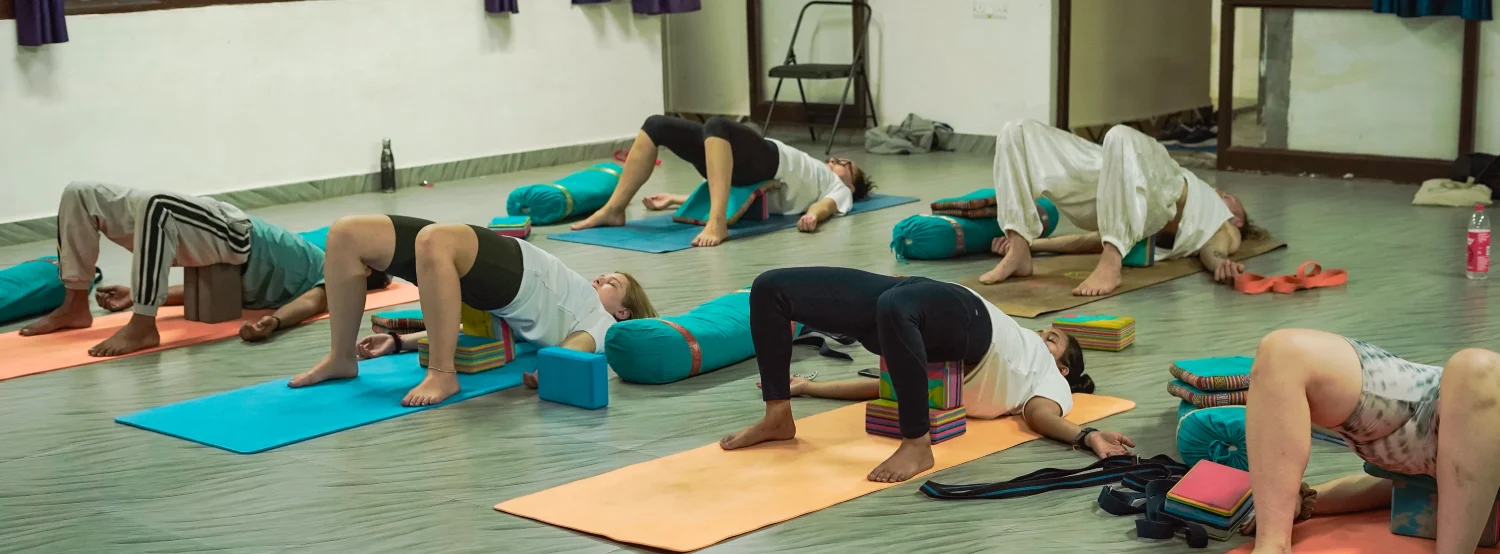
Teaching Methodology 200 Hour YTT: What It Means in Practice
Teaching methodology 200 hour YTT principles form the absolute foundation of your transition from a dedicated practitioner to a powerful, confident instructor. Many practitioners arrive at their training expecting to spend most of their time perfecting advanced asanas, only to realize that doing a pose and teaching a pose require entirely different skill sets. You might be able to hold a perfect headstand for five minutes, but if you cannot break down the mechanics, assess a student’s bodily alignment, and safely guide them into the posture using your voice alone, you are not yet ready to teach.
This specific module is designed to bridge that exact gap. It breaks down the psychology of learning, the mechanics of physical cueing, and the art of holding space for a diverse room of students. Throughout your training, you will dissect every aspect of class creation, from the moment a student unrolls their mat to the final awakening from Savasana.
Understanding these methods ensures you can teach safely, effectively, and authentically. By the time you complete your studies, you will possess a reliable toolkit of instructional skills that allow you to handle any situation that arises in a studio environment. You will learn to observe bodies critically, use language efficiently, and structure classes logically, ensuring every session you lead is both safe and impactful.
The Core Elements of Teaching Methodology 200 Hour YTT
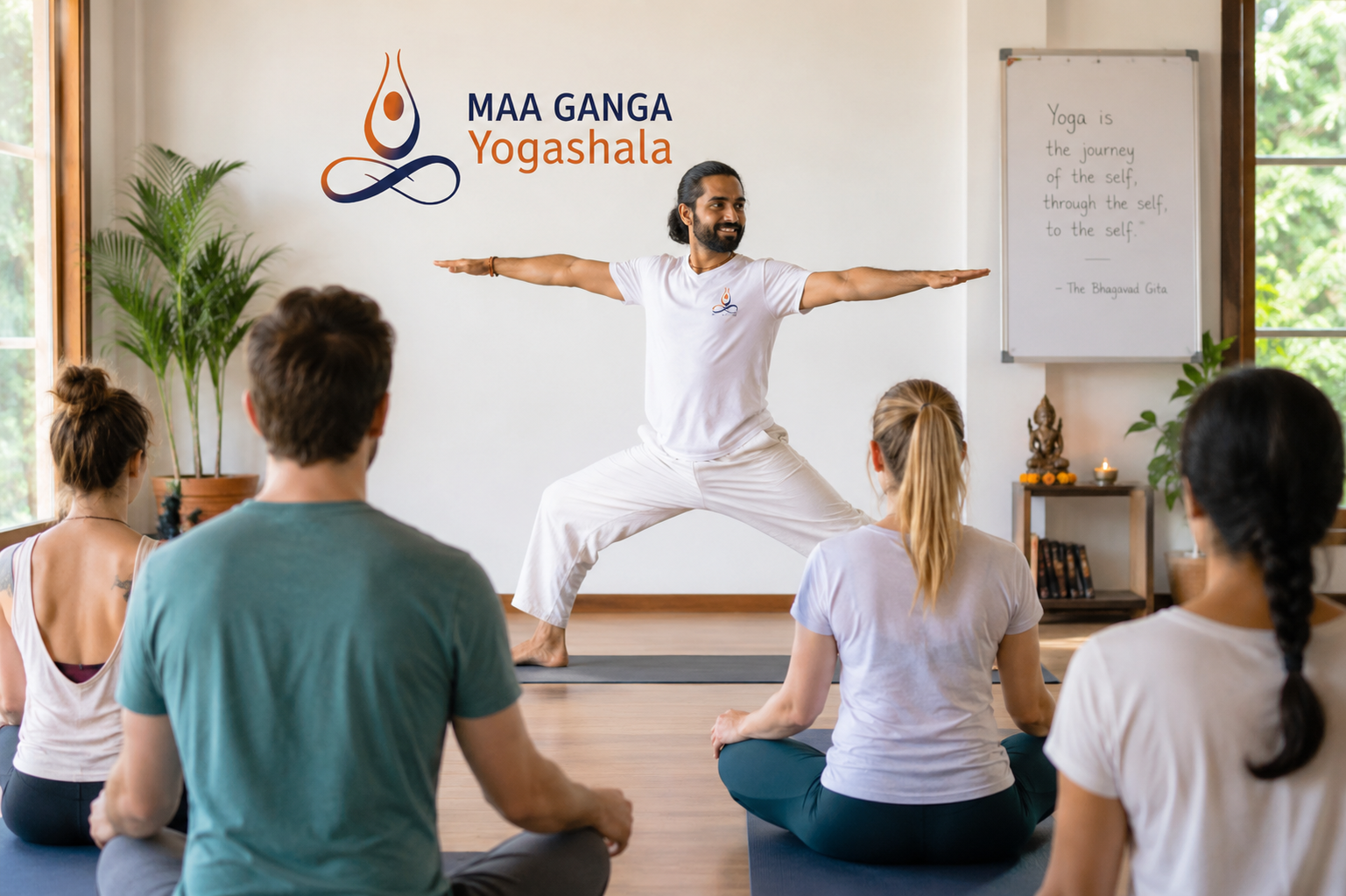
Mastering teaching methodology 200 hour YTT requires a deep dive into several interconnected disciplines that elevate your instructional capabilities. The first major component focuses on the principles of demonstration. When you stand at the front of a room, your body becomes the primary visual reference for your students. You must learn when it is appropriate to demonstrate a posture, how to position yourself so the entire room can see the critical alignment points, and when it is actually more beneficial to stop demonstrating and walk around the room to observe.
Observation is the second crucial pillar. A skilled instructor rarely stays anchored to their mat. Instead, they scan the room continuously, assessing the physical and energetic state of their students. This requires training your eyes to look for subtle misalignments, signs of fatigue, or indications that a student is pushing themselves too far. Organizations like Yoga Alliance outline rigorous standards emphasizing that teachers must prioritize student safety above all else, which fundamentally relies on acute observational skills.
The third pillar involves the actual delivery of instruction. This encompasses your tone of voice, your pacing, and your choice of vocabulary. You will learn the difference between direct commands and suggestive cues, and how to utilize both effectively depending on the energy of the class. If you are curious about how these instructional dynamics change depending on the learning environment, reviewing Online vs In Person 200 Hour YTT: The Ultimate Comparison provides excellent context on adapting these core skills.
The Art of Cueing and Language
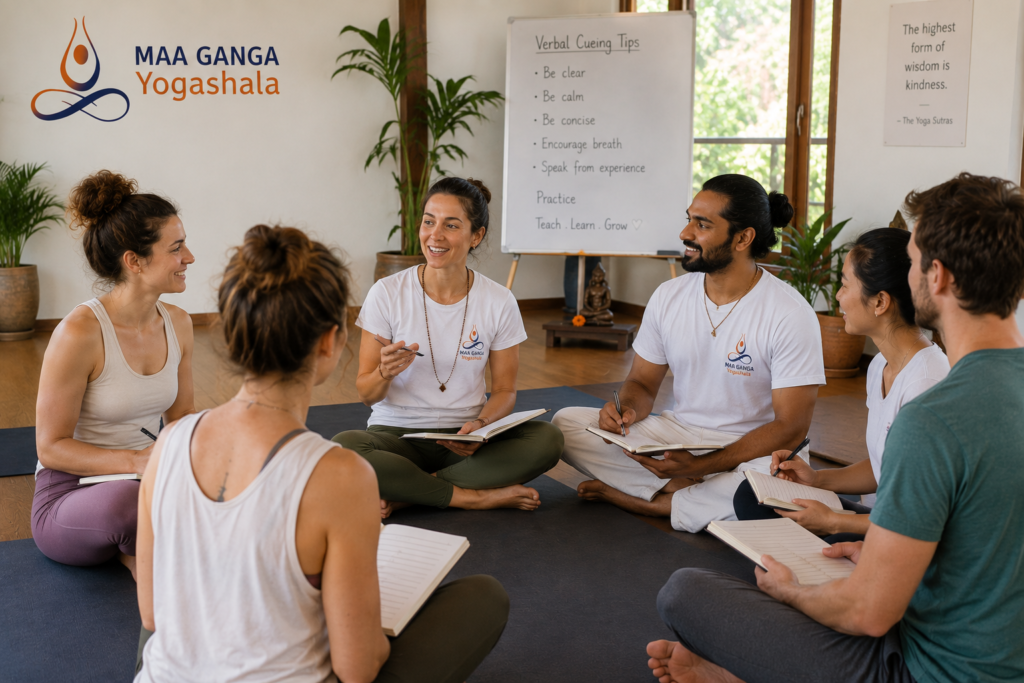
Your voice is the most powerful tool you possess as a yoga instructor, and refining how you use it is a massive undertaking during your training. Clear, concise, and intentional language minimizes confusion and keeps students focused on their internal experience rather than looking around the room in bewilderment. You will practice stripping away unnecessary filler words, replacing vague descriptions with anatomical precision, and delivering cues in a logical sequence that usually moves from the foundation of the pose upward.
Cultivating Your Authentic Voice
Finding your unique teaching voice takes significant practice. During your practicum sessions, you will likely feel awkward or unnatural at first, mimicking the teachers you admire. However, as you gain confidence, you will begin to sound like yourself. You will learn to modulate your volume to match the phase of the class—using a strong, commanding voice during vigorous Vinyasa flows and a soft, soothing tone during grounding postures and meditation.
Utilizing Precise Terminology
A major aspect of effective communication is knowing exactly what to call the poses and anatomical landmarks. While English descriptions are necessary for accessibility, integrating traditional terminology adds depth and authority to your teaching. Understanding the roots and precise meanings of the postures allows you to convey the philosophy alongside the physical movement. For a deeper look at the vocabulary you will master, explore Sanskrit yoga teacher training essential terms: 5 Best Joys.
Anatomy, Alignment, and Safe Adjustments
You cannot effectively guide a student into a posture if you do not understand the biomechanics required to achieve it. Teaching methodology heavily intersects with functional anatomy. You will learn to identify different body types, recognize skeletal variations, and understand why a posture that looks effortless for one student might be anatomically impossible or dangerous for another. This knowledge is what separates an instructor who simply recites a script from a teacher who truly understands the human body.
The Science of Physical Assists
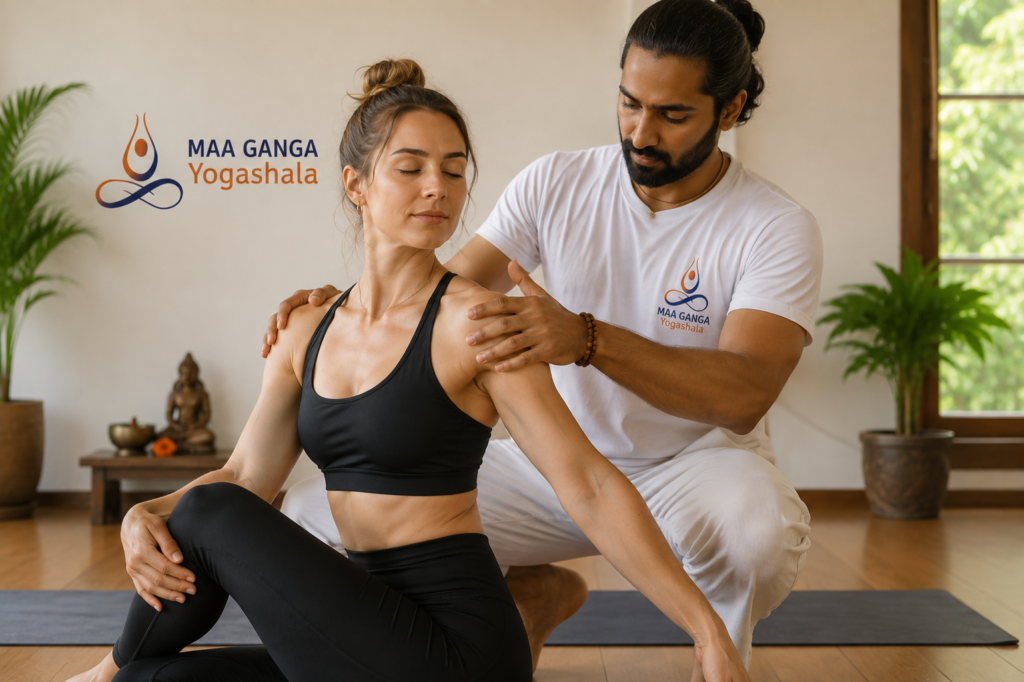
Hands-on adjustments are a highly sensitive and complex area of instruction. You will learn the clear distinction between an adjustment meant to correct a dangerous misalignment and an assist meant to deepen a student’s experience of a pose. Furthermore, you will study the ethics of touch, the importance of obtaining explicit consent, and how to read a student’s non-verbal bodily responses to your physical presence. Research highlighted on platforms like PubMed frequently notes the physiological impact of touch on the nervous system, emphasizing the need for a trauma-informed approach.
To develop a robust understanding of how to approach these physical corrections respectfully and effectively, you must dedicate time to studying the mechanics detailed in Yoga Adjustments Assists Teacher Training: 7 Best Secrets. This ensures you build trust with your students rather than causing hesitation or discomfort.
Intelligent Sequencing and Class Management
A great yoga class feels like a seamless narrative, with a clear beginning, middle, and end. This does not happen by accident; it is the result of intelligent, deliberate sequencing. You will learn how to design classes around specific anatomical themes, peak poses, or energetic goals. This involves understanding how to safely warm up the specific muscle groups required for complex postures and how to cool the body down afterward to prevent injury and promote recovery.
Class management extends beyond just the sequence of postures. It includes managing time effectively so you do not run ten minutes over the scheduled slot or finish abruptly. It involves controlling the lighting, managing the room temperature, and curating playlists that enhance rather than distract from the practice. You will also learn strategies for handling unexpected disruptions, such as a student arriving late, someone experiencing a sudden physical issue, or managing a room with drastically mixed experience levels.
Mastering the logic behind a well-structured flow requires patience and a deep understanding of counter-poses and physiological responses. For practical frameworks on building these fluid experiences, study Create Yoga Sequence After Teacher Training | 7 Best Steps.
Why Rishikesh? / Why This Matters
Studying teaching methodology in Rishikesh offers an unparalleled advantage. When you immerse yourself in the environment where these practices originated, the theoretical concepts you study in a manual take on a profound, lived reality. The methodology here is not just about physical safety; it is heavily infused with the spiritual and philosophical lineages that have been passed down through generations of masters living along the banks of the Ganga River.
The environment naturally strips away distractions, forcing you to confront your own limitations, habits, and communication barriers. As you learn to teach others, you are simultaneously undergoing an intense process of self-inquiry. You cannot authentically guide a student through a difficult physical or emotional breakthrough on the mat if you have not navigated similar terrain yourself. The intense, supportive community in Rishikesh accelerates this personal growth.
Furthermore, training in this specific location exposes you to a global cohort of peers. You will practice teaching students from vastly different cultural backgrounds, with varying native languages and physical conditioning. This diversity forces you to refine your methodology rapidly, ensuring your cues are universally understandable, your demonstrations are crystal clear, and your adjustments are culturally sensitive and universally respectful.
Cultivating Your Skills with Maa Ganga Yogashala
If you’re considering training in Rishikesh, Maa Ganga Yogashala offers an environment specifically structured to nurture these critical instructional skills. Our curriculum guarantees you spend ample time out of your notebook and on the mat, actively practicing your cues, adjustments, and sequencing in a supportive, feedback-rich setting.
Before committing to a full certification, some students prefer to experience the rhythm and instructional quality of an ashram environment firsthand. A great way to sample this authentic approach to teaching and practice is by joining a 5 Days Yoga Retreat in Rishikesh, which allows you to immerse yourself in the methodology without the immediate pressure of examinations.
FAQs
What exactly does a teaching methodology module cover?
This module strictly covers the practical skills required to lead a class. It includes learning how to demonstrate postures effectively, observe students for misalignments, deliver clear verbal cues, execute safe hands-on adjustments, and structure logical, anatomical sequences.
Do I need prior teaching experience to succeed in this training?
No, the curriculum is meticulously designed to start from the absolute basics. You will begin with simple exercises, such as teaching a single posture to a partner, and progressively build up to leading a full, comprehensive class by the end of the course.
How will I practice these new skills?
You will practice daily through hands-on practicums. You will actively teach your peers in small groups, receive immediate, constructive feedback from lead instructors, and continuously refine your voice, pacing, and physical assists in a safe environment.
Can I teach beginners right after finishing the course?
Absolutely. A strong focus of the methodology training is learning how to modify postures and use accessible language specifically designed to guide beginners safely through their initial experiences with the practice.
Conclusion
Understanding teaching methodology 200 hour YTT is what ultimately transforms you from a passionate student into a capable, safe, and inspiring leader in the studio. By mastering the art of observation, refining your verbal cues, understanding the mechanics of physical adjustments, and learning to structure intelligent sequences, you build a foundation that will support your entire teaching career.
This journey requires dedication, humility, and a willingness to step outside your comfort zone, but the reward is the ability to share the profound benefits of this practice with others safely and effectively. Ready to begin? Explore our comprehensive 200-Hour Yoga Teacher Training in Rishikesh or build your foundational knowledge first with our 100-Hour Yoga Teacher Training in Rishikesh, and take the first step toward finding your authentic voice today.