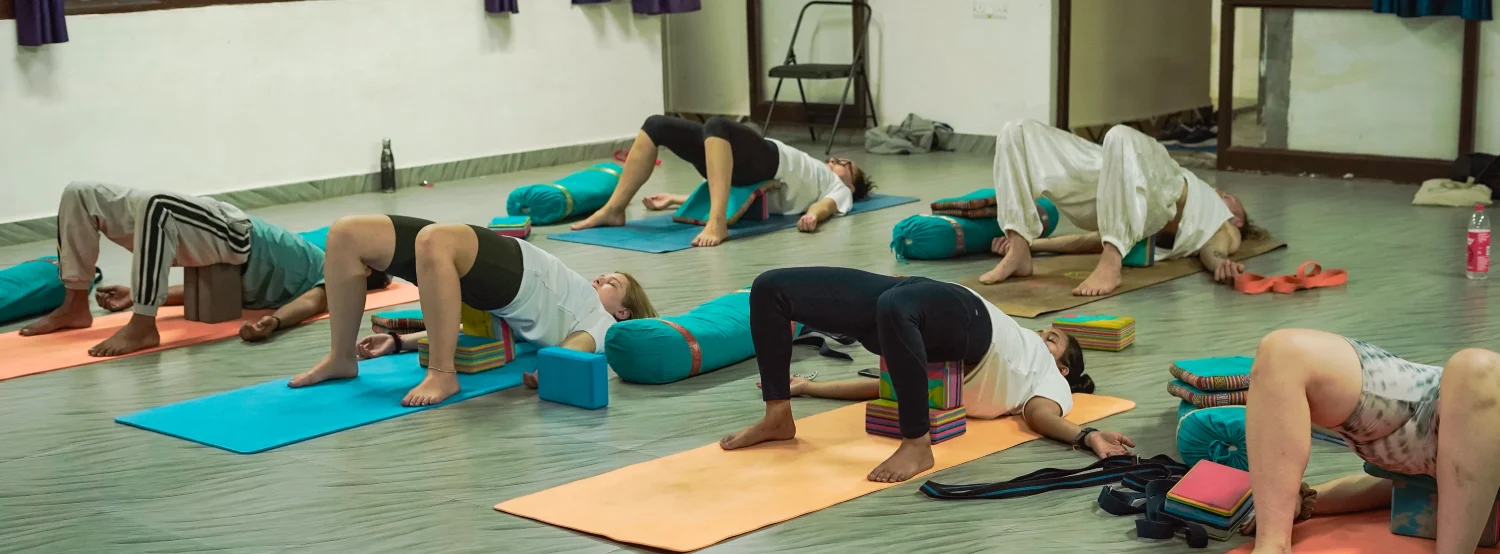

Trauma-Informed Yoga Teacher Training Basics: Why It Is Introduced Even in 100-Hour Courses
trauma-informed yoga teacher training basics are becoming essential knowledge for anyone who may teach students with different life experiences, stress responses, and boundaries. Why introduce these basics even in a 100-hour course? Because a teacher does not need to be a therapist to create a class where students have meaningful choices, feel respected, and are not pressured to override their own limits.
When you study yoga more seriously, you quickly discover that teaching is not only about demonstrating postures. Your language, sequencing, adjustments, room setup, breathing practices, and expectations can influence how safe or exposed a student feels. Trauma-informed education gives you a practical framework for making those choices with greater care.
This does not mean every 100-hour program turns you into a trauma specialist. It means you begin learning where your teaching responsibility starts, where it ends, and how to avoid common practices that may unintentionally create distress. You will explore why consent matters, how choice can be built into a class, how to use less demanding language, and when referral to an appropriately qualified professional is necessary.
Why trauma-informed yoga teacher training basics belong in a 100-hour course
A 100-hour training is often a first serious step from practicing yoga for yourself toward understanding how to guide someone else. That shift changes the responsibility you carry. Your students may arrive with very different relationships to movement, touch, authority, breath, silence, or being watched in a group.
Trauma-informed teaching begins with a simple principle: you do not need to know a student’s personal history to teach with sensitivity. In fact, asking students to disclose painful experiences in a group setting can be inappropriate. Instead, you can design classes that offer autonomy and reduce unnecessary pressure.
A useful starting point is choice. Instead of treating one shape as the only correct outcome, you can offer options: stay where you are, reduce the range of movement, change the position, rest, or skip the practice. This approach does not make a class less disciplined. It makes your instruction more adaptable.
Language also matters. Commands such as “you must,” “push through,” or “don’t give up” may sound motivating in a conventional fitness context, but they can be unhelpful for some students. A trauma-aware teacher can use invitations such as “you might explore,” “if this feels appropriate,” or “you can choose another option.”
Research on yoga and trauma is promising but should not be exaggerated. Reviews have found potential benefits for PTSD symptoms, while also pointing out limitations in study quality and the need for more rigorous research. Yoga should therefore be presented as a complementary practice rather than a replacement for professional mental-health treatment.
For a broader understanding of professional yoga education and teacher-training standards, you can also review Yoga Alliance.

What you actually learn from trauma-informed yoga teacher training basics
The phrase “trauma-informed” can sound technical, but the classroom applications are surprisingly practical. You are learning how to notice where teaching habits may reduce a student’s sense of control and how to replace them with clearer choices.
Consent, autonomy, and respectful communication
Consent is more than asking before a hands-on adjustment. It is a teaching attitude. A student should be able to decline an adjustment, change an exercise, take rest, or step out of an activity without being embarrassed.
You can also normalize choice before students need it. For example, before a challenging balance, you might explain two or three variations and make it clear that every option is legitimate. This prevents the student from feeling that choosing a simpler version means failing.
Your tone matters as much as your words. Avoid interpreting a student’s emotional response for them. If someone becomes quiet or uncomfortable, you do not need to diagnose what is happening. You can simply offer space, a different option, or permission to rest.
Predictability without rigidity
A predictable class structure can help students know what to expect. You might explain the sequence, mention when there will be transitions, and give students time before changing positions.
Predictability does not mean every class must be identical. It means you reduce unnecessary surprises. If you plan an unusual breathing exercise, inversion, partner practice, or hands-on adjustment, explain it first and provide an alternative.
These skills fit naturally into a foundational teacher-training curriculum because they improve communication for every student, not only students who identify as trauma survivors.
How trauma-aware teaching changes your yoga class
The biggest difference may be less about adding new poses and more about changing how you teach familiar ones.
Consider a simple seated forward fold. A conventional instruction might focus on depth: “Go farther and relax into the stretch.” A trauma-aware approach can shift the goal toward awareness and choice: “Explore a comfortable range. You can keep the knees bent, sit higher, or stay upright if that feels better.”
The posture has not become medically different. The teaching relationship has changed.
Breath practices deserve similar care. Strong breath retention, rapid breathing, or prolonged internal focus can feel uncomfortable for some people. A teacher should avoid presenting a single breathing pattern as universally suitable. You can provide alternatives and encourage students to return to natural breathing when needed.
Physical adjustments also deserve careful consideration. Even when a teacher intends to help, unexpected touch can feel intrusive. A clear consent process, non-touch alternatives, and respect for a student’s decision are safer teaching habits.
A 100-hour course can introduce these principles without claiming to provide clinical trauma therapy training. That distinction matters. Specialized trauma-focused work may require additional education, supervised experience, and professional boundaries.
Research also supports caution. A PubMed review describes trauma-informed yoga as an adapted approach that may help create a safer, more tailored practice, while warning that poorly adapted practices may activate symptoms such as hyperarousal or dissociation.
You can deepen your understanding of teaching behavior through Yoga Teacher Ethics Training in 100 Hour, especially when thinking about consent, boundaries, and professional responsibility.
What trauma-informed basics do not mean
There is a common misunderstanding that trauma-informed yoga means making every class extremely gentle or avoiding challenging practices. That is too simplistic.
A trauma-aware class can still include standing sequences, strength work, balances, pranayama, meditation, and traditional yoga practices. The difference is that you consider how you introduce them and whether students have meaningful alternatives.
It also does not mean you need to ask every student whether they have experienced trauma. Trauma is personal. A respectful teacher can create options without demanding disclosure.
Most importantly, trauma-informed teaching does not make you a therapist. If a student shares severe symptoms, asks for psychological treatment, or appears to need clinical support beyond your competence, your responsibility is to stay within your scope and encourage appropriate professional help.
You can also think of trauma awareness as part of good general teaching. Clear instructions, predictable transitions, consent, accessible options, and non-judgmental communication benefit beginners, experienced practitioners, and students who simply have a difficult day.
If you want to compare foundational training with a longer pathway, our 100-Hour Yoga Teacher Training in Rishikesh provides a useful starting point for exploring how teaching skills can be developed in a focused format.
Why Rishikesh matters for this kind of learning
Rishikesh attracts yoga students from many countries, which means your training environment can expose you to different expectations, cultures, bodies, learning styles, and communication habits. That diversity can make teacher education more practical.
In Tapovan, you are also learning in an environment where yoga is practiced alongside retreat culture, meditation, spiritual study, wellness programs, and international travel. For a future teacher, that mix can highlight an important reality: students do not all arrive with the same reason for practicing.
One student may want stronger asana practice. Another may be rebuilding a personal routine after a difficult period. Someone else may simply want to slow down. You cannot know the full story behind every person who enters your class, and you do not need to.
What you can control is the environment you create.
That means giving clear expectations, avoiding unnecessary pressure, explaining options, respecting personal boundaries, and knowing when your role ends. These are valuable skills whether you eventually teach in India, Europe, North America, or online.
The Ministry of Ayush also presents yoga as a practice connected with overall well-being and has published yoga protocols that include physical practices, breathing, and meditation.
If your interest extends beyond teacher training into a short immersion, you can explore our 5-Day Yoga Retreat in Rishikesh to experience a structured yoga and wellness setting before committing to a longer training path.
Choosing a 100-hour course that takes trauma awareness seriously
Not every course that mentions trauma offers the same depth. When comparing programs, look beyond a single syllabus line that says “trauma-informed yoga.”
Ask what you will actually learn. Will you discuss consent and hands-on adjustments? Will teachers explain inclusive language? Will you practice offering alternatives? Will you learn how to respond when a student becomes overwhelmed? Will the course clearly explain the boundary between yoga teaching and mental-health treatment?
You should also ask how the training handles student privacy and emotional safety. A professional program should not pressure you to share personal trauma as proof that you are participating.
Another useful question is whether the training connects trauma awareness with broader teaching ethics. The best foundational education does not isolate these subjects. It shows how communication, boundaries, sequencing, anatomy, observation, and professional responsibility work together.
If you are comparing a 100-hour course with a more comprehensive certification route, review the 200-Hour Yoga Teacher Training in Rishikesh as a longer option for developing your teaching foundation.
You may also find Questions Before Enrolling in 100 Hour YTT India useful when evaluating curriculum, teaching style, schedule, and what is genuinely included in a program.
Before enrolling, it is also useful to understand how assessment works, so you can review the 100-Hour YTT Exam Assessment and Evaluation approach rather than judging a course only by its marketing language.
If you later move into a longer program, studying Teaching Methodology in a 200-Hour YTT can help you see how foundational teaching principles expand into more detailed instruction.
A practical checklist for your first trauma-aware teaching practice
Before teaching, you can run through a simple checklist:
- Give students meaningful choices instead of presenting one “perfect” version.
- Explain unfamiliar practices before asking students to participate.
- Normalize resting, modifying, or skipping.
- Use consent-based language around physical adjustments.
- Avoid asking students to disclose personal trauma.
- Do not diagnose or interpret a student’s psychological response.
- Watch your own tone, especially when correcting someone.
- Offer grounding alternatives when a practice becomes uncomfortable.
- Keep your professional scope clear.
- Know where to refer a student when their needs exceed your training.
You do not need to make every class complicated. In fact, simple teaching can be more effective. Clear instructions and genuine respect often matter more than adding sophisticated terminology.
This is one reason the basics belong in a 100-hour course. You are not trying to master every specialist application in a short program. You are building the habits that can keep developing throughout your teaching career.
A thoughtful next step with Maa Ganga Yogashala
If you want to study yoga teaching in Rishikesh while developing a stronger awareness of communication, ethics, and student needs, we invite you to explore our training approach and curriculum.
Our 100-Hour Yoga Teacher Training in Rishikesh is a focused option if you want to build foundational teaching knowledge before deciding on a longer certification pathway.
If you are not ready for teacher training, our 3-Day Yoga Retreat in Rishikesh can be a shorter way to experience a structured yoga environment in Tapovan.
The goal is not to label yourself a “trauma-informed teacher” after memorizing a few techniques. The goal is to become a teacher who understands choice, consent, boundaries, and responsibility—and continues learning as your experience grows.

FAQs
Is trauma-informed yoga included in every 100-hour yoga teacher training?
No. Course content varies significantly. Some 100-hour programs may introduce trauma-aware teaching as part of ethics, teaching methodology, or student safety, while others may not cover it in meaningful depth. Check the actual curriculum rather than relying on the course title.
Do you need to be a therapist to teach trauma-informed yoga?
No, but you need clear professional boundaries. A yoga teacher can create a choice-based, respectful class without providing psychotherapy. If a student’s needs move into clinical mental-health care, you should stay within your competence and encourage appropriate professional support.
Can trauma-informed teaching be useful if your students have never disclosed trauma?
Yes. You should not assume you know a student’s history. Consent, choice, predictable instruction, respectful language, and permission to modify practices are useful teaching habits for almost any group.
Is a 100-hour course enough to become a trauma specialist?
No. A foundational course can introduce principles and practical teaching habits, but specialist trauma work may require dedicated education, supervision, and clinical or therapeutic qualifications depending on the role and setting.
What should you look for in a trauma-aware yoga course in Rishikesh?
Look for a curriculum that explains consent, boundaries, inclusive communication, modifications, teaching ethics, and scope of practice. Also check how much teaching practice you receive and whether the program clearly distinguishes yoga instruction from mental-health treatment.
Conclusion: Build safer teaching habits from the beginning
trauma-informed yoga teacher training basics are not about turning a 100-hour student into a mental-health professional. They are about helping you understand the responsibility that comes with guiding another person through movement, breath, attention, and stillness.
When you learn to offer choice, respect consent, communicate clearly, avoid unnecessary pressure, and recognize your professional limits, you become a more thoughtful teacher. Those habits can serve you long after your first certificate.
If you are ready to build that foundation in Rishikesh, explore our 100-Hour Yoga Teacher Training in Rishikesh and take the next step toward teaching with greater awareness, responsibility, and confidence.