Yoga Class Plan Template New Teacher: How to Build a Clear, Confident Class
A yoga class plan template new teacher can be the difference between a class that feels calm and intentional and one that feels improvised. If you are new to teaching, having a clear sequence on paper helps you focus on your students instead of wondering what pose comes next.
The good news is that your plan does not need to be complicated. You need a logical arc, a realistic time structure, appropriate transitions, useful teaching cues, and enough flexibility to respond to the people in front of you.
This guide shows you how to build a class from the opening breath to final relaxation. You will learn what to include in a reusable template, how to sequence poses safely, how to choose a class theme, and how to avoid common planning mistakes. You will also see how teacher training can sharpen the skills behind a strong class plan.
Yoga Class Plan Template New Teacher: Start With the Class Goal
Before choosing poses, decide what you want your students to experience. A beginner teacher often starts with a list of favorite asanas and tries to connect them afterward. That usually produces a sequence without a clear purpose.
Instead, begin with one simple goal. Your class might focus on hip mobility, standing balance, gentle backbends, stress reduction, or preparation for a peak posture. The goal should influence the warm-up, main sequence, pace, and closing.
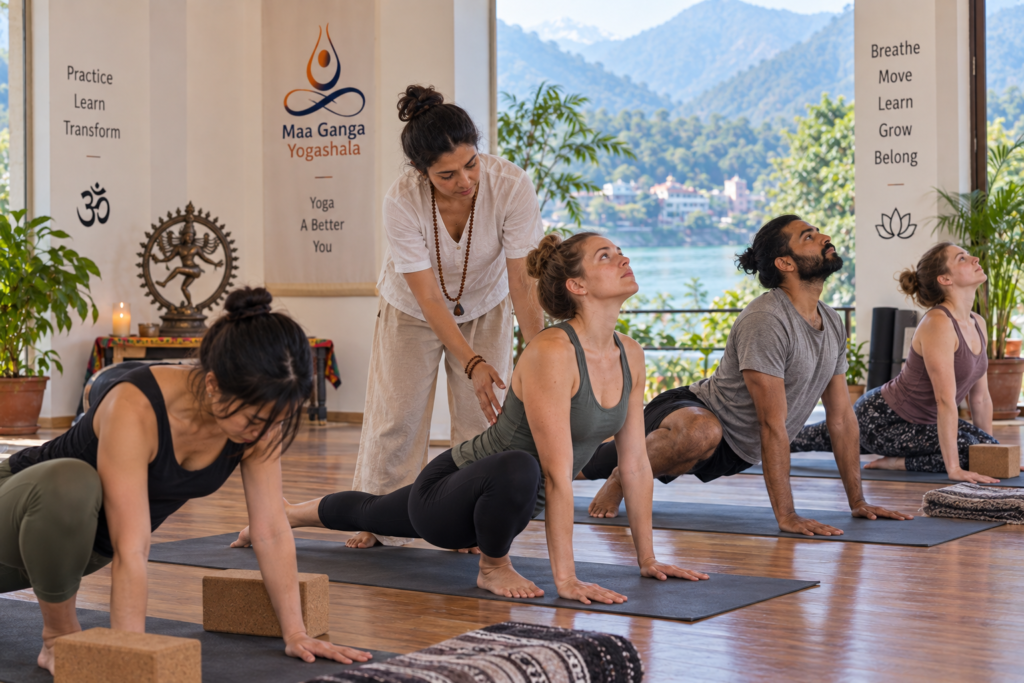
A practical planning sheet can include:
- Class length: 60, 75, or 90 minutes
- Level: beginner, mixed, intermediate, or advanced
- Main intention: physical, breath-based, meditative, or thematic
- Peak posture or movement pattern
- Key contraindications or modifications
- Opening practice
- Warm-up
- Main sequence
- Cool-down
- Savasana
- Teaching cues and transition notes
Keep the goal narrow. “Improve flexibility” is too broad for one class. “Prepare the body for a comfortable low lunge” is much easier to turn into a coherent lesson.
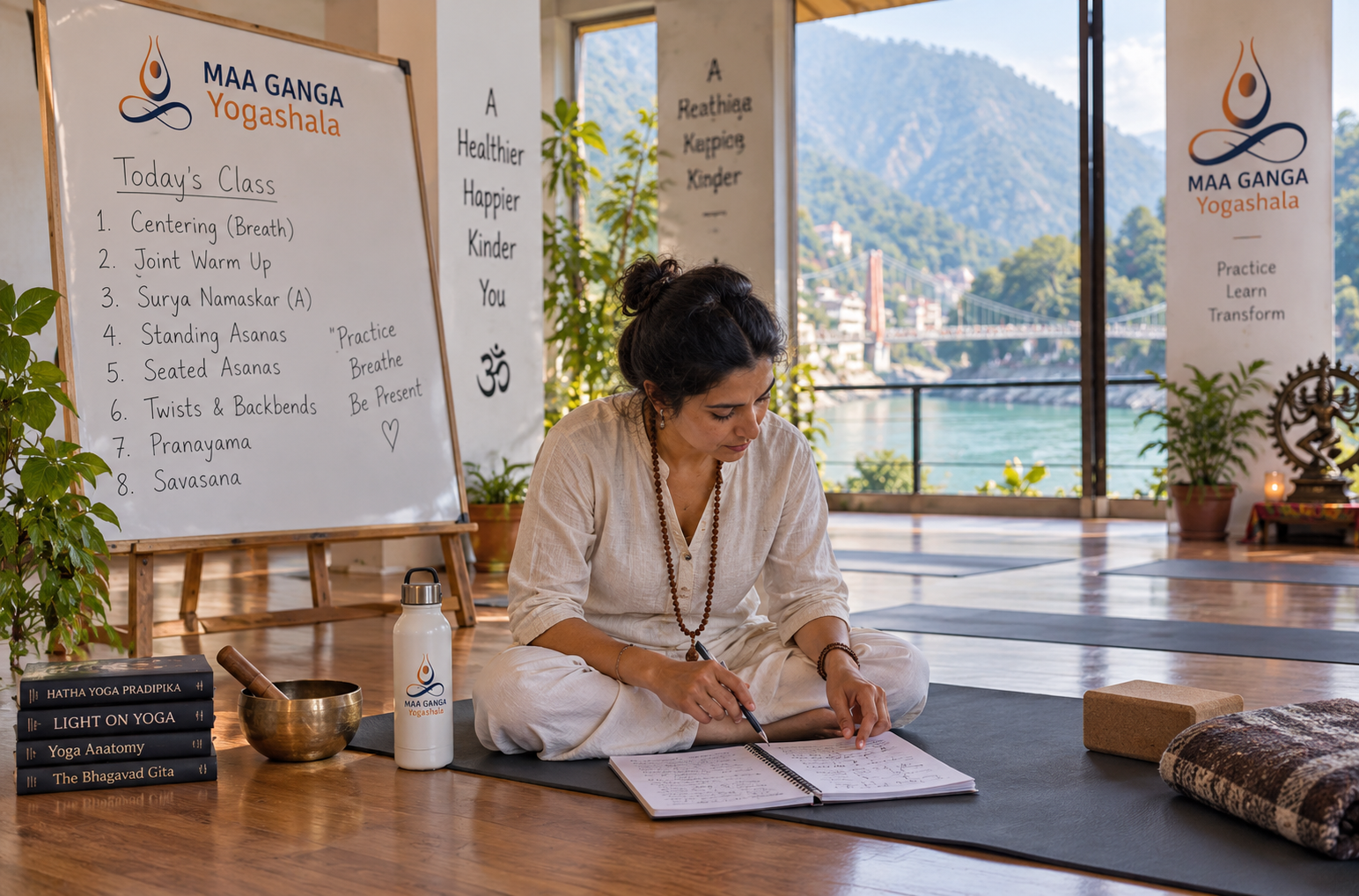
You can also separate your plan into time blocks. For a 60-minute class, a useful starting framework is 5 minutes of centering, 10 minutes of warm-up, 25 minutes of standing and main work, 10 minutes of floor-based cooling, and 10 minutes for relaxation. The exact split can change depending on the class.
Your plan is a map, not a script. You should know where you are going without forcing every student to move at the same speed.
For background on yoga as a practice and tradition, you can also consult Britannica.
How to Build a Yoga Class Sequence Step by Step
Once you know the objective, build the class from simple movements toward the most demanding part. Think about preparation rather than simply collecting poses.
Start with arrival. Give students a moment to settle, notice their breathing, and understand the intention. Then introduce movements that gradually increase range of motion and temperature. From there, progress toward standing poses, strength work, balance, or your chosen peak.
A useful sequence logic is:
- Arrive and regulate the breath.
- Mobilize the areas needed later.
- Introduce foundational shapes.
- Increase load, range, or complexity gradually.
- Reach the peak posture or movement.
- Reduce intensity.
- Finish with cooling, stillness, and relaxation.
Transitions matter as much as individual poses. If you move from the floor directly into a demanding standing balance without preparation, students may feel rushed. A good plan considers how they get into and out of each shape.
For example, if your peak is Warrior III, your preparation could include gentle hamstring work, standing strength, ankle stability, hip extension, and balance drills. You do not need ten preparatory poses. You need the right ones.
Your sequencing should also account for repetition. Repeating a movement can help students learn it, but unnecessary repetition can consume time and create fatigue.
If your class includes bandhas, make sure you understand what you are teaching rather than adding terminology for atmosphere. A deeper look at bandhas, their types, and how to practice them can help you connect traditional concepts with clear instruction.
What to Put Inside Your Yoga Class Plan Template
A useful template should help you teach, not create extra paperwork. The most important sections are the ones you will actually glance at while teaching.
Write the class objective and peak posture
At the top, write one sentence: “By the end of class, you will explore a stable Warrior III with relaxed breathing.” This keeps your decisions aligned.
If there is no peak posture, identify the main movement quality instead. For a restorative class, the “peak” might be a longer supported forward fold or a sustained breathing practice.
List poses with transitions and timing
Write the pose, approximate duration, transition, and one or two important cues. For example:
“Low lunge — 5 breaths — lengthen through the spine, soften the front ribs — step back to Downward-Facing Dog.”
That is more useful than writing an enormous paragraph about anatomy.
Add modifications
Plan at least one easier option and, where appropriate, one progression. A beginner may need a shorter stance, a block, a chair, a bent knee, or a reduced range of motion.
Avoid presenting advanced variations as goals students should achieve. Your job is to make the practice workable for the room you actually have.
Add teaching cues you can say clearly
Good cues are observable and actionable. “Press the back heel away” tells a student what to do. “Activate your energetic body” is much harder to act on unless you explain exactly what you mean.
Keep your cue list short. Too many instructions can make a class feel like a technical lecture.
Leave space for changes
If your 60-minute class plan has exactly 60 minutes of content, you have no room for questions, demonstrations, slower transitions, or unexpected needs. Plan a small buffer.
A strong template might therefore have six columns: time, pose, transition, key cue, modification, and notes. After teaching, write down what worked and what did not. Your future plans will improve quickly when you treat each class as feedback.
Common Yoga Class Planning Mistakes New Teachers Should Avoid
The biggest planning mistake is trying to prove how much you know. New teachers sometimes create complicated sequences with many poses, Sanskrit names, philosophical references, and rapid transitions. Students usually benefit more from clarity.
Another common mistake is poor time management. A plan that takes 15 minutes to reach the warm-up stage may leave you rushing through Savasana. Rehearse the sequence with a timer before teaching it.
Do not make every class physically intense. A well-designed practice can be challenging without being exhausting. Consider the student’s energy, experience, age range, and the purpose of the session.
Watch your transitions too. If students have to repeatedly move from standing to the floor and back again for no clear reason, the class can feel disjointed. Efficient sequencing makes the experience smoother.
Avoid teaching from memory alone when you are still developing confidence. A small cue card or concise plan is not a sign that you are unprepared. It is a tool for reducing cognitive load.
Safety should also be built into the plan. You should know which movements may need alternatives and how to offer them without alarming students. If you teach anatomy, keep claims precise and avoid promising that one alignment rule is universally correct for every body.
Your plan should also reflect the difference between demonstration and instruction. If you spend too much time doing the practice yourself, you may stop observing your students. Teach enough to show the shape, then watch the room.
For a broader look at anatomy concepts relevant to teachers, see this guide to yoga anatomy, muscles, joints, and alignment. If you are nervous about stepping into the teaching role, these tips for teaching your first yoga class can help you prepare for the human side of the classroom.
Why Rishikesh Matters When You Are Learning to Teach Yoga
Rishikesh is more than a backdrop for yoga photographs. It is a place where different approaches to yoga teaching, practice, philosophy, meditation, and wellness meet. For someone learning to teach, that environment can expose you to teaching styles and student expectations that are difficult to understand from a textbook alone.
If you are planning to teach internationally, practicing with people from different countries can also improve your communication. A cue that feels obvious to one student may be unclear to another. You learn to use simpler language, demonstrate effectively, and offer options without making anyone feel singled out.
The setting can also encourage you to think beyond physical sequencing. A class plan may include breath awareness, meditation, relaxation, or a theme connected to yoga philosophy. These elements should support the class rather than become decorative speeches.
If you are considering teacher training in Rishikesh, choosing the right course matters. A structured 200-hour yoga teacher training in Rishikesh can give you more time to develop sequencing, teaching methodology, anatomy, practice, and classroom confidence. You can also explore Maa Ganga Yogashala to understand the wider learning environment before deciding.
For general information about traditional systems of medicine and wellness in India, you can also review the Ministry of Ayush.
From Class Plan to Confident Teaching: Where Training Helps
A template can organize your thoughts, but it cannot replace teaching practice. The difficult part is learning how to adjust the plan while students are moving.
You may discover that your group needs more warm-up time. Someone may struggle with a transition. A posture that looked simple on paper may create confusion in the room. Good teachers notice these signals and adapt without losing the overall direction.
That is why teacher training can be useful even when you already practice yoga regularly. Training gives you repeated opportunities to sequence, demonstrate, cue, observe, receive feedback, and teach again.
A shorter program can also be appropriate when you already have a strong foundation and want focused study. If you want to explore a more compact training route, our 100-hour yoga teacher training in Rishikesh is one option to consider.
Inside a well-structured training environment, you can also learn that a good class is not necessarily the most creative one. It is the one in which students understand what to do, can modify when necessary, breathe without unnecessary strain, and leave feeling that the sequence had a purpose.
That principle should shape every plan you write.
FAQs About Creating a Yoga Class Plan
How long should a yoga class plan be?
Your written plan can be one page for a 60-minute class if it uses concise notes. You need enough information to remember the sequence, timing, key cues, transitions, and modifications without writing a script.
How many poses should a beginner yoga teacher include?
There is no ideal number. A 60-minute class may contain a modest number of poses repeated with intention rather than dozens of different shapes. Quality of sequencing matters more than the number of asanas.
Should you write every teaching cue in your plan?
No. Write the cues most likely to be forgotten or the ones that are especially important for safety and clarity. Trying to script every sentence can make your teaching sound rigid.
How do you plan a yoga class for mixed levels?
Build a common foundation and offer options. Use accessible base shapes, then provide modifications or progressions. Keep everyone working toward the same class intention without requiring everyone to perform the same variation.
Can you use the same yoga class plan more than once?
Yes. Reusing a successful structure is sensible. Change the theme, emphasis, pacing, or peak posture when appropriate, but do not feel pressure to invent a completely new class every time.
Conclusion: Use the Template, Then Learn to Adapt
A yoga class plan template new teacher should give you structure without trapping you in a script. Start with one clear goal, prepare the body progressively, choose realistic timing, write concise cues, include modifications, and leave enough space to respond to your students.
The best plans become better after they are taught. Review what confused students, where you ran out of time, which transitions felt awkward, and which cues worked. Then revise the next class.
If you are ready to build these skills through structured study and practical teaching, explore our 200-hour yoga teacher training in Rishikesh and take the next step toward teaching with greater clarity and confidence.