



Introduction
Yoga Teacher Training in Rishikesh 2026 is becoming one of the most sought-after experiences for beginners and international students looking for authentic and transformative yoga education. Over the past decade, the global yoga industry has witnessed explosive growth, transforming from a simple fitness routine into a powerful global wellness movement. Today, millions of people across the United States, Europe, Australia, and other parts of the world are turning to yoga not only to improve physical health but also to manage stress, anxiety, and overall mental well-being. As modern lifestyles become more fast-paced and stressful, yoga has emerged as a holistic solution that combines physical strength, mental clarity, and spiritual balance.
India, being the birthplace of yoga, continues to hold a unique and irreplaceable position in this global shift. Among all destinations, Rishikesh stands out as the heart of authentic yoga learning. Known as the Yoga Capital of the World, Rishikesh offers something that no modern studio can replicate—an environment deeply rooted in ancient yogic traditions, surrounded by the peaceful Himalayas and the sacred flow of the Ganges River. This is exactly why thousands of international students travel here every year in search of a more meaningful and immersive yoga experience.
Traditional schools like Maa Ganga Yogashala play a crucial role in preserving this authenticity while adapting to modern learning needs. These institutions not only teach physical postures but also focus on deeper aspects such as pranayama, meditation, yogic philosophy, and holistic living—creating a complete transformational journey for students.
As the demand for Yoga Teacher Training (YTT) continues to rise globally, students are becoming more aware and selective about where and how they learn. Simply choosing any course is no longer enough. Understanding the latest trends in yoga teacher training has become essential for making the right decision—especially for beginners and international students who are investing both time and money into this journey.
In 2026, yoga is no longer just about asanas—it has evolved into a complete lifestyle, a global career opportunity, and a path of deep personal transformation.
Evolution of Yoga Teacher Training: From Ancient Traditions to Modern Global Programs
Yoga teacher training has undergone a significant transformation over the years. What once began as a deeply spiritual and traditional learning process in ancient India has now evolved into a structured, globally recognized education system. To truly understand the trends in 2026, it is important to first look at how yoga teacher training has evolved—from the roots of the traditional Gurukul system to the modern-day Yoga Teacher Training (YTT) programs offered in places like Rishikesh.
Traditional Gurukul System vs Modern YTT
In ancient times, yoga was not taught in classrooms or through short-term courses. It was passed down through the Gurukul system, where students (shishyas) lived with their teacher (guru) for years. This was not just about learning physical postures but about understanding life itself. The focus was on discipline, self-awareness, spiritual growth, and a deep connection with the teachings of yoga philosophy, including texts like the Yoga Sutras and the Bhagavad Gita.
In contrast, modern yoga teacher training programs are more structured and time-bound. Courses such as 100-hour, 200-hour, and 300-hour YTT have become the global standard. These programs are designed to fit into the fast-paced lives of modern students, especially international learners who may not have the time to commit to long-term residential learning.
However, the challenge with modern YTT is that many programs focus heavily on physical asanas while neglecting the deeper aspects of yoga. This is where traditional schools in Rishikesh, such as Maa Ganga Yogashala, stand out by maintaining a balance between traditional teachings and modern structure—offering students both authenticity and practicality.
Pre-Pandemic vs Post-Pandemic Shift
The COVID-19 pandemic played a major role in reshaping the yoga industry. Before the pandemic, most yoga teacher training programs were conducted in-person, especially in destinations like Rishikesh. Students would travel from around the world to experience immersive, residential courses.
During and after the pandemic, there was a massive shift towards online learning. Yoga schools started offering virtual classes, online certifications, and hybrid models that combined digital learning with in-person practice. This made yoga more accessible to a global audience, especially for those who could not travel due to restrictions or financial limitations.
In 2026, this hybrid model has become a strong trend. Students now prefer flexibility—learning theory online and completing practical training on-site. This shift has also increased competition among yoga schools, pushing them to improve both their teaching quality and overall student experience.
Rising Demand for Certification and Global Recognition
Another major evolution in yoga teacher training is the increasing demand for internationally recognized certifications. Organizations like Yoga Alliance have played a key role in standardizing yoga education across the world. Today, most students specifically look for Yoga Alliance-certified courses to ensure credibility and global teaching opportunities.
For international students, certification is not just a formality—it is a gateway to building a professional career in yoga. Whether they want to teach in studios, start their own classes, or offer online sessions, having a recognized certification adds trust and value.
At the same time, there is a growing awareness among students about the difference between genuine training and fast-track certifications. Many learners are now actively seeking schools that offer depth, authenticity, and real transformation rather than just a certificate. This is why traditional and well-established yoga schools in Rishikesh continue to attract serious students from around the world.
Overall, the evolution of yoga teacher training reflects a shift from purely spiritual learning to a balanced combination of tradition, structure, and global opportunity. Understanding this journey helps students make better decisions and choose programs that truly align with their personal and professional goals in 2026.
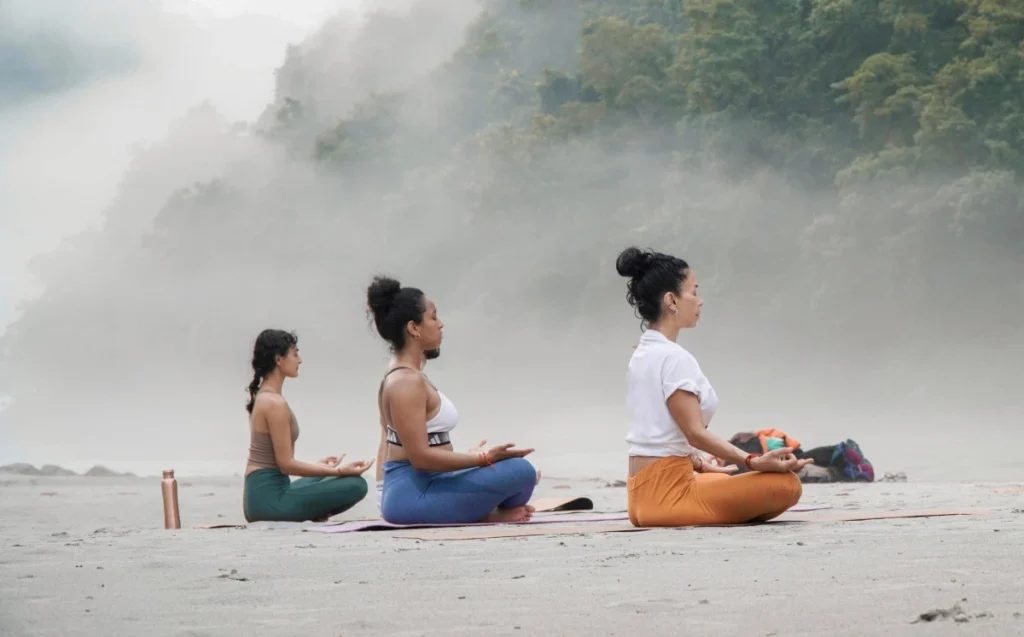
Top Yoga Teacher Training Trends in 2026
Hybrid Learning (Online + Offline)
One of the most significant trends shaping yoga teacher training in 2026 is the rise of hybrid learning models, which combine the flexibility of online education with the depth of in-person practice. This approach has redefined how students from around the world access authentic yoga training, especially in destinations like Rishikesh. Yoga Teacher Training in Rishikesh 2026 is becoming a global trend among beginners.
Traditionally, yoga teacher training required students to travel and stay in an ashram or yoga school for several weeks. While this immersive experience is still highly valuable, not every student can commit to long-term travel due to work, financial limitations, or personal responsibilities. Hybrid learning solves this problem by offering a more flexible and accessible pathway. Many students prefer Yoga Teacher Training in Rishikesh 2026 due to its authenticity.
In a typical hybrid yoga teacher training program, theoretical subjects are taught online, while practical training is completed on-site. Topics such as yoga philosophy, anatomy, teaching methodology, and alignment principles can be effectively delivered through online sessions. Students can attend live classes, interact with teachers, and even revisit recorded sessions for better understanding.
This brings a major advantage—recorded + live classes combination. Live sessions allow real-time interaction, questions, and guidance, while recorded content helps students revise complex topics at their own pace. For beginners, this is especially helpful because yoga is not just about learning once—it requires repetition and deeper understanding over time.
For international students, hybrid learning has become a game-changer. Instead of traveling blindly, they can first build a foundation online, understand the teaching style, and then come to Rishikesh for the practical immersion. This reduces uncertainty and makes the entire experience more comfortable and efficient.
Yoga schools like Maa Ganga Yogashala are adapting to this trend by offering structured hybrid programs that maintain the authenticity of traditional yoga while embracing modern learning methods. Students can begin their journey from anywhere in the world and then complete their transformation in the spiritual environment of Rishikesh.
However, it is important to understand that while hybrid learning offers convenience, practical experience cannot be replaced. Yoga is ultimately a physical, mental, and spiritual practice that requires direct guidance, hands-on adjustments, and real-time feedback from experienced teachers. This is why the offline component of training remains essential.
In 2026, the future of yoga teacher training is not purely online or purely offline—it is a balanced combination of both. Hybrid learning is making yoga more accessible, more flexible, and more aligned with the needs of modern students, without losing its traditional essence.
Focus on Mental Health & Therapy
In 2026, one of the most powerful shifts in yoga teacher training is the growing focus on mental health and therapeutic applications of yoga. Earlier, yoga was mostly associated with physical fitness—flexibility, strength, and posture improvement. But today, the demand has clearly shifted toward using yoga as a tool for healing the mind, not just the body.
With rising levels of stress, anxiety, and depression worldwide, more people are turning to yoga as a natural and sustainable solution. This is why modern yoga teacher training programs now include specific modules on yoga for mental health, helping future teachers understand how to guide students dealing with emotional and psychological challenges.
Yoga for Anxiety and Depression
Yoga is increasingly being recognized as an effective complementary practice for managing anxiety and depression. In 2026, YTT courses are going beyond basic asanas and teaching:
- Breathwork techniques (pranayama) for calming the nervous system
- Slow, mindful movements that reduce stress hormones
- Relaxation practices like Yoga Nidra for deep mental rest
Students are trained to understand how different practices impact the mind and body. For example, fast-paced sequences may energize the body, while slow, grounding practices help reduce anxiety. This level of awareness is essential for teaching responsibly.
For beginners and international students, this is especially valuable because many join yoga not just to become teachers, but to heal themselves first.
Trauma-Informed Yoga
Another important trend in 2026 is the rise of trauma-informed yoga. This approach focuses on creating a safe and supportive environment for individuals who may have experienced emotional or psychological trauma.
In traditional classes, physical adjustments and strict instructions were common. However, trauma-informed yoga emphasizes:
- Consent-based teaching (no forced adjustments)
- Gentle guidance instead of authoritative commands
- Creating a non-judgmental, safe space
Yoga teacher training programs now educate students about how trauma affects the body and mind, and how yoga can be used carefully as a healing tool. This is a major step forward, especially for teachers who want to work in wellness centers, therapy environments, or with sensitive groups.
Meditation and Mindfulness Integration
Meditation and mindfulness are no longer optional add-ons—they are becoming a core part of yoga teacher training. In 2026, students are expected to not only practice meditation but also understand how to teach it effectively.
Training programs now include:
- Guided meditation techniques
- Mindfulness practices for daily life
- Breath awareness and concentration exercises
These practices help students develop mental clarity, emotional stability, and self-awareness, which are essential qualities for any yoga teacher.
Schools like Maa Ganga Yogashala emphasize this holistic approach by integrating meditation, pranayama, and yogic philosophy into their training. This ensures that students experience yoga as a complete system of inner transformation, not just a physical workout.
Why This Trend Matters
The focus on mental health and therapy is not just a trend—it is the future of yoga. As more people seek healing and balance in their lives, the role of a yoga teacher is evolving from an instructor to a guide for overall well-being.
In 2026, the most successful yoga teachers will not be those who can perform advanced poses, but those who can understand, support, and transform lives through yoga.
Specialization-Based Courses
In 2026, one of the most important trends in yoga teacher training is the shift from general teaching to specialization-based courses. Earlier, completing a 200-hour Yoga Teacher Training (YTT) was considered enough to start teaching. But now, the industry has become more competitive, and students as well as teachers are looking for niche expertise rather than just basic certification.
This shift is happening because the needs of students are becoming more specific. People are no longer searching for just “yoga classes”—they are looking for targeted solutions like yoga for kids, pregnancy, therapy, or breathing techniques. As a result, yoga schools are expanding their curriculum to include specialized training programs that allow teachers to stand out in the global market.
Kids Yoga Teacher Training
Kids yoga is rapidly growing in popularity, especially in countries like the USA, UK, and Australia. Parents are becoming more aware of the importance of mindfulness and physical activity for children at an early age.
In 2026, kids yoga teacher training focuses on:
- Making yoga fun and engaging through games and storytelling
- Improving concentration and emotional balance in children
- Teaching basic asanas in a safe and playful way
This specialization requires a completely different teaching approach compared to adult yoga. Teachers need patience, creativity, and an understanding of child psychology. For international students, this opens up opportunities to work in schools, activity centers, and wellness programs for children.
Prenatal Yoga
Prenatal yoga is another high-demand specialization. Pregnant women are increasingly turning to yoga to maintain physical health, reduce stress, and prepare for childbirth.
Prenatal yoga teacher training includes:
- Safe yoga practices for different stages of pregnancy
- Breathing techniques for labor support
- Gentle stretches to reduce back pain and improve circulation
Yoga Teacher Training in Rishikesh 2026 is becoming a global trend among beginners. This field requires proper knowledge and responsibility because it directly affects both the mother and the baby. Certified prenatal yoga teachers are highly valued, especially in urban wellness centers and maternity programs worldwide.
Yoga Therapy Certification
One of the fastest-growing areas in 2026 is yoga therapy. Unlike general yoga classes, yoga therapy focuses on using yogic practices to support specific health conditions.
Courses in yoga therapy cover:
- Yoga for back pain, diabetes, and lifestyle disorders
- Stress and anxiety management through breathwork and meditation
- Personalized yoga practices based on individual needs
This specialization bridges the gap between traditional yoga and modern healthcare. Many students are now choosing yoga therapy as a career path because it offers deeper impact and long-term professional opportunities.
Advanced Pranayama Courses
Breathwork, or pranayama, is gaining massive attention in modern yoga training. While basic pranayama is included in most YTT programs, advanced courses are now becoming a separate specialization.
Advanced pranayama training focuses on:
- Deep breathing techniques for energy control
- Nervous system regulation
- Improving focus, mental clarity, and emotional stability
In 2026, breathwork is not just a part of yoga—it is becoming a powerful standalone practice. Teachers who master pranayama can offer workshops, online sessions, and therapy-based classes globally.
Why Specialization Matters in 2026
Yoga Teacher Training in Rishikesh 2026 is becoming a global trend among beginners. The biggest advantage of specialization is career differentiation. Instead of being just another yoga teacher, you become an expert in a specific field. This not only increases your value but also opens up multiple income streams—both offline and online.
Yoga schools like Maa Ganga Yogashala are recognizing this shift and offering programs that go beyond basic training. By combining traditional knowledge with modern specialization, they prepare students for real-world teaching challenges.
In simple terms, the future belongs to those who go deeper, not just broader. In 2026, becoming a yoga teacher is not enough—becoming a specialized yoga professional is what truly sets you apart.
Integration of Technology in Yoga Teacher Training
In 2026, technology is playing a transformative role in the way yoga is learned, practiced, and taught across the world. While yoga is rooted in ancient traditions, modern advancements are enhancing the learning experience and making it more accessible, personalized, and efficient—especially for international students. Yoga Teacher Training in Rishikesh 2026 is becoming a global trend among beginners.
The integration of technology in yoga teacher training does not replace traditional practices; instead, it supports and enhances them. From AI-powered tools to virtual learning environments, technology is helping students understand their bodies better and teachers deliver more precise guidance.
AI-Based Posture Correction Tools
One of the most impactful innovations in yoga training is the use of AI-based posture correction applications. These tools use camera-based tracking and advanced algorithms to analyze body alignment during yoga practice.
In 2026, many students are using such tools to:
- Check their posture accuracy in real-time
- Identify alignment mistakes
- Improve their form without constant supervision
For beginners, this is extremely useful because incorrect posture can lead to injuries or ineffective practice. AI tools act like a digital assistant, helping students refine their asanas even when practicing alone.
However, it is important to understand that AI cannot fully replace an experienced yoga teacher. Human guidance is still essential for subtle corrections, energy alignment, and personalized feedback. Technology should be seen as a support system, not a replacement. Yoga Teacher Training in Rishikesh 2026 is becoming a global trend among beginners.
Wearables and Fitness Tracking
Another growing trend is the use of wearable devices, such as fitness trackers and smartwatches, during yoga practice. These devices help monitor:
- Heart rate
- Breathing patterns
- Calories burned
- Stress levels
In yoga teacher training, this data can provide valuable insights into how the body responds to different practices. For example, students can observe how pranayama techniques affect their heart rate or how meditation helps in reducing stress levels.
This combination of ancient wisdom and modern data allows for a more scientific understanding of yoga, which is especially appealing to international students who prefer measurable results alongside traditional learning.
Virtual Yoga Classes (VR/AR Future)
Looking ahead, Virtual Reality (VR) and Augmented Reality (AR) are beginning to shape the future of yoga education. Although still in early stages, these technologies are expected to grow significantly in the coming years.
Imagine practicing yoga in a virtual Himalayan setting or attending a guided meditation session by the Ganges without physically being there. VR can create immersive environments that enhance focus and engagement, especially for students who cannot travel to India.
AR, on the other hand, can overlay instructions and posture guidance in real-time, helping students correct their alignment visually.
While these technologies are still evolving, they highlight an important shift—yoga is becoming globally accessible without losing its experiential depth.
Balancing Technology with Tradition
Despite these advancements, one thing remains clear: yoga is ultimately a human experience. The presence of a teacher, the energy of a group, and the spiritual atmosphere of a place like Rishikesh cannot be fully replicated through screens or devices.
That’s why leading yoga schools like Maa Ganga Yogashala are adopting a balanced approach—integrating modern tools where useful, while preserving the authenticity of traditional teaching methods.
Why This Trend Matters
The integration of technology is opening new doors for both students and teachers:
- Easier access to learning from anywhere in the world
- Better self-assessment and improvement
- Opportunities to teach globally through online platforms
In 2026, the most successful yoga teachers will be those who can combine traditional knowledge with modern tools, creating a learning experience that is both authentic and innovative.
In simple terms, technology is not changing the essence of yoga—it is expanding its reach and making it more adaptable to the modern world.
Short-Term & Flexible Courses
In 2026, one of the most noticeable shifts in yoga teacher training is the rising demand for short-term and flexible course formats. While traditional 200-hour residential programs are still popular, many students—especially beginners and international learners—are now looking for options that fit into their schedules without requiring a long-term commitment.
This change is driven by modern lifestyles. Not everyone can take a full month off from work, travel to India, and stay in an ashram. As a result, yoga schools are adapting by offering flexible learning pathways that make it easier for more people to begin their yoga journey.
Growing Demand for 100-Hour Yoga Teacher Training
The 100-hour Yoga Teacher Training (YTT) has become a strong entry point for beginners in 2026. Instead of jumping directly into an intensive 200-hour course, many students prefer to start with a shorter program to build a foundation.
A 100-hour YTT typically covers:
- Basic asanas and alignment
- Introduction to pranayama
- Fundamental yoga philosophy
- Basic teaching techniques
For international students, this is a low-risk way to experience yoga training in Rishikesh before committing to a full certification. It allows them to understand the teaching style, environment, and personal readiness.
Many schools, including Maa Ganga Yogashala, structure their programs in a way that students can later upgrade from 100-hour to 200-hour certification, making the learning journey more flexible and progressive.
Weekend and Modular Training Programs
Another major trend is the rise of weekend and modular training formats. These programs are designed for students who cannot attend continuous residential courses.
Instead of completing training in one stretch, students can:
- Attend classes on weekends
- Complete modules over several weeks or months
- Learn at their own pace
This format is especially useful for working professionals or travelers who want to continue learning while managing other responsibilities.
For example, a student might complete theory modules online and attend practical sessions during specific periods in Rishikesh. This makes yoga education more accessible without compromising on quality.
Fast-Track Certifications: Opportunity or Risk?
With the increasing demand for quick results, many yoga schools are offering fast-track certification programs. These promise to complete training in a shorter time frame, sometimes even in a few days or weeks.
While this may sound attractive, it comes with an important caution.
👉 Yoga is not just a skill—it is a discipline that requires time, practice, and understanding.
Fast-track courses often:
- Rush through important concepts
- Focus more on certification than learning
- Lack depth in philosophy and practice
As a result, students may end up with a certificate but without the confidence or knowledge to teach effectively.
In 2026, students are becoming more aware of this difference. They are now actively choosing programs that offer flexibility without compromising depth.
Why Flexibility Matters for Modern Students
The rise of short-term and flexible courses reflects a simple truth—yoga education needs to adapt to modern life.
This trend offers several benefits:
- Easier entry for beginners
- Better time management for international students
- Reduced financial and travel pressure
- Opportunity to learn step-by-step instead of all at once
However, the key is to choose a program that maintains a balance between convenience and authenticity.
Holistic Curriculum (Beyond Asanas)
In 2026, one of the most important shifts in yoga teacher training is the move toward a holistic curriculum that goes far beyond physical postures (asanas). While many beginners initially associate yoga with flexibility and body movement, true yoga has always been a complete system that integrates the body, mind, and spirit.
Modern students—especially international learners—are now seeking deeper, more meaningful experiences. They are no longer satisfied with surface-level training focused only on poses. Instead, they want to understand the science, philosophy, and lifestyle of yoga. This demand has pushed yoga schools to design programs that offer a more comprehensive and transformational learning journey.
Ayurveda: The Science of Life
Ayurveda, the ancient Indian system of natural healing, has become a key part of modern yoga teacher training. It focuses on maintaining balance in the body through diet, lifestyle, and daily routines.
In 2026, YTT programs are introducing students to:
- Basic Ayurvedic principles (doshas: Vata, Pitta, Kapha)
- Yogic diet (sattvic food) and its impact on the body and mind
- Daily routines (dinacharya) for overall well-being
For students, this adds a new dimension to yoga. They begin to understand that health is not just about exercise—it is about how you eat, live, and think.
Sound Healing
Another rapidly growing component of holistic yoga training is sound healing. This practice uses vibrations from instruments like singing bowls, gongs, and mantras to promote deep relaxation and inner healing.
In yoga teacher training, students are introduced to:
- Basics of sound therapy
- How vibrations affect the nervous system
- Using sound for meditation and emotional release
Sound healing is especially popular among international students because it offers a unique and powerful experience beyond traditional yoga classes. It also opens up additional career opportunities, such as conducting sound healing sessions or workshops. The demand for Yoga Teacher Training in Rishikesh 2026 is increasing worldwide.
Breathwork (Advanced Pranayama)
Breath is the bridge between the body and the mind, and in 2026, there is a much stronger focus on advanced pranayama (breathwork) within yoga teacher training.
Instead of just basic breathing techniques, students now learn:
- Advanced pranayama practices for energy control
- Techniques to calm the nervous system
- Breath awareness for mental clarity and focus
Breathwork is gaining recognition as a powerful tool for managing stress, improving concentration, and enhancing overall well-being. Many modern wellness practices are now incorporating breathwork, but in yoga, it has always been a core element.
Yogic Philosophy (Bhagavad Gita & Patanjali Yoga Sutras)
One of the most essential parts of a holistic curriculum is yogic philosophy. Without understanding the philosophy, yoga remains incomplete.
In 2026, quality YTT programs include teachings from:
- The Bhagavad Gita
- The Yoga Sutras of Patanjali
These texts provide insights into:
- The purpose of yoga
- The nature of the mind
- The path to self-realization
For many students, this becomes the most transformative part of their journey. It shifts their perspective from seeing yoga as a physical activity to experiencing it as a way of life.
Why Holistic Learning Matters
The shift toward a holistic curriculum reflects a deeper understanding of what yoga truly is. It is not just about mastering poses—it is about creating balance in every aspect of life.
Yoga schools like Maa Ganga Yogashala emphasize this approach by integrating traditional teachings with practical application. Students are not only trained to teach yoga but also to live yoga.
Rise of Destination Yoga Training (Rishikesh Boom)
In 2026, yoga teacher training is no longer just about choosing a course—it is about choosing a destination that shapes the entire experience. This has led to the rapid rise of destination-based yoga training, where students travel across the world to learn yoga in places that offer authenticity, spirituality, and a deeper connection to the practice.
Among all global destinations, Rishikesh stands at the center of this movement. Known as the Yoga Capital of the World, it has become the top choice for beginners and international students who are not just looking for certification, but for a life-changing experience.
The Importance of a Spiritual Environment
One of the biggest reasons behind the Rishikesh boom is its spiritual atmosphere, which cannot be replicated in modern cities or commercial studios.
In Rishikesh:
- The pace of life is slower and more mindful
- The surroundings are calm and distraction-free
- There is a natural focus on inner growth and self-reflection
This environment plays a crucial role in yoga teacher training. Learning yoga in a peaceful, spiritually charged space allows students to go deeper into their practice. It becomes easier to disconnect from daily stress and truly focus on transformation.
For many international students, this is their first experience of living in such an environment—and it often becomes the most impactful part of their journey.
Cultural Immersion and Authentic Learning
Another key factor driving destination yoga training is the opportunity for cultural immersion. In Rishikesh, students are not just attending classes—they are experiencing the culture and lifestyle of yoga.
This includes:
- Participating in Ganga Aarti ceremonies
- Following a sattvic (yogic) diet
- Learning traditional practices and rituals
- Interacting with teachers who are rooted in authentic yogic traditions
This cultural exposure helps students understand yoga in its original context, rather than as a modern fitness trend. It adds depth, meaning, and authenticity to their learning.
Yoga schools like Maa Ganga Yogashala play an important role in providing this immersive experience. By combining traditional teachings with a supportive environment, they help students connect with yoga on a deeper level—physically, mentally, and spiritually.
Why Destination Training Matters in 2026
Yoga Teacher Training in Rishikesh 2026 is becoming a global trend among beginners. The rise of destination yoga training reflects a clear shift in student mindset. People are no longer satisfied with learning yoga in a routine setting—they want an experience that transforms them from within.
Destination-based training offers:
- A break from daily distractions
- A deeper connection with the practice
- A memorable and life-changing journey
Final Insight
In 2026, where you learn yoga is just as important as what you learn. Rishikesh continues to lead as the global hub for authentic yoga education because it offers something beyond certification—it offers transformation.
For anyone serious about yoga teacher training, choosing a destination like Rishikesh is not just a decision—it is the beginning of a completely new perspective on life. Yoga Teacher Training in Rishikesh 2026 is becoming a global trend among beginners.
Personal Branding for Yoga Teachers
In 2026, becoming a yoga teacher is no longer just about mastering postures and completing a certification—it is also about building a strong personal brand. The reality is simple: there are thousands of certified yoga teachers every year, but only a small percentage actually stand out and build a sustainable career. The difference? Visibility, positioning, and digital presence.
With the rise of social media and online platforms, yoga teachers are now expected to do more than just teach—they need to communicate, influence, and connect with a global audience. Personal branding has become a key factor in determining how successful a yoga teacher can be. Choosing the right Yoga Teacher Training in Rishikesh 2026 is very important.
Instagram and YouTube: The New Yoga Platforms
Platforms like Instagram and YouTube have become essential tools for yoga teachers in 2026. These are not just social media apps—they are powerful platforms for building trust, showcasing expertise, and reaching a global audience.
On Instagram, teachers can:
- Share short yoga tutorials and reels
- Post daily practice insights
- Build a consistent visual identity
On YouTube, they can:
- Upload full-length classes
- Create beginner-friendly guides
- Share educational content on yoga philosophy and breathwork
For beginners and international students, these platforms often become the first point of contact with a teacher or yoga school. Before joining a course, many students check social presence to understand teaching style, authenticity, and personality.
Online Classes and Monetization Opportunities
Another major shift in 2026 is the ability to earn online through yoga teaching. Earlier, teaching yoga was limited to physical studios or in-person classes. Today, teachers can generate income from anywhere in the world.
Popular monetization methods include:
- Live online yoga classes (Zoom sessions)
- Pre-recorded courses and workshops
- Subscription-based platforms
- One-on-one virtual coaching
This creates a huge opportunity, especially for those who complete their training in places like Rishikesh and then return to their home countries. They are no longer restricted by location—they can teach globally.
However, earning online requires more than just knowledge. It requires:
- Clear communication
- Consistent content creation
- Ability to engage and retain an audience
Building a Global Audience
In today’s digital world, a yoga teacher is not limited to local students. With the right strategy, it is possible to build a global audience.
This involves:
- Creating valuable and consistent content
- Understanding what your audience needs (beginners, stress relief, flexibility, etc.)
- Building trust over time through authenticity
Students in 2026 are not just looking for a teacher—they are looking for someone they can relate to, learn from, and follow regularly. This is why personal branding is not about showing perfection, but about showing real value and genuine connection.
Yoga schools like Maa Ganga Yogashala are also adapting to this trend by encouraging students to develop confidence in teaching, communication skills, and online presence. This prepares them not just to complete a course, but to actually build a career after certification.
Why Personal Branding Matters
The biggest mistake many new yoga teachers make is assuming that certification alone will bring students. The truth is—it won’t.
In 2026:
- Skills get you qualified
- Branding gets you noticed
- Consistency gets you paid
Final Insight
Personal branding is no longer optional—it is a necessity. The most successful yoga teachers today are those who combine authentic knowledge with strong online presence.
In simple terms, if people don’t know you, they can’t learn from you. And if they can’t learn from you, you can’t grow as a teacher.
Building a personal brand is not about becoming famous—it’s about becoming visible, trustworthy, and valuable in a highly competitive global yoga industry.
Why Students Should Care About These Trends
Understanding the latest trends in yoga teacher training is not just useful—it is essential in 2026. Many students make the mistake of choosing a course based only on price, duration, or location, without considering how relevant that training will be in the real world. The truth is, the yoga industry is evolving rapidly, and those who stay updated with these changes are the ones who actually succeed. Choosing the right Yoga Teacher Training in Rishikesh 2026 is very important.
If you are planning to join a yoga teacher training program in Rishikesh, especially as a beginner or international student, these trends directly impact your career growth, earning potential, and long-term success.
Better Career Opportunities
The yoga industry today is far more competitive than it was a few years ago. Simply completing a 200-hour certification is no longer enough to stand out. Studios, wellness centers, and online platforms are now looking for teachers who have modern skills and deeper understanding. Choosing the right Yoga Teacher Training in Rishikesh 2026 is very important.
By choosing a training program that aligns with current trends—such as specialization, mental health focus, or holistic learning—you increase your chances of:
- Getting hired by reputable yoga studios
- Working in wellness retreats or therapy centers
- Offering niche classes (like prenatal or therapeutic yoga)
Students who are aware of these trends can position themselves better in the job market, rather than struggling after certification.
Global Teaching Opportunities
The demand for Yoga Teacher Training in Rishikesh 2026 is increasing worldwide. One of the biggest advantages of modern yoga training is the ability to teach anywhere in the world. In 2026, yoga is not limited to one country or region—it is a truly global profession.
With the rise of online platforms and hybrid learning:
- You can teach students from different countries
- Conduct online classes from your home
- Build an international student base
However, to take advantage of this, your training must meet global standards. This includes recognized certifications, proper teaching methodology, and an understanding of diverse student needs.
Learning in a place like Rishikesh, especially in schools such as Maa Ganga Yogashala, gives you a strong foundation that is respected worldwide. It adds authenticity to your profile and makes you more credible as a teacher.
Higher Income Potential
Let’s be practical—most students also care about financial stability. The good news is that yoga, when approached correctly, can become a sustainable and rewarding career.
Teachers who follow modern trends can:
- Offer specialized classes (higher pricing)
- Conduct online workshops and courses
- Build personal brands and monetize content
Instead of relying only on local studio classes, they create multiple income streams. This significantly increases earning potential compared to traditional teaching methods.
But this only works if your training prepares you for these opportunities. Without understanding trends like online teaching, personal branding, or specialization, it becomes much harder to grow financially.
Skill Differentiation in a Competitive Market
Every year, thousands of new yoga teachers enter the market. So the real question is—what makes you different?
This is where trends play a crucial role.
If you:
- Understand mental health applications of yoga
- Have knowledge of Ayurveda or breathwork
- Specialize in a specific niche
You automatically stand out from the crowd.
Skill differentiation is what turns an average teacher into a sought-after professional. It helps you attract the right students, charge better fees, and build a long-term career.
Final Insight
In 2026, joining a yoga teacher training program without understanding current trends is like entering a competitive field without preparation. You may complete the course, but you will struggle to grow afterward. The demand for Yoga Teacher Training in Rishikesh 2026 is increasing worldwide. Choosing the right Yoga Teacher Training in Rishikesh 2026 is very important.
The students who succeed are those who think beyond certification. They choose programs that prepare them for the real demands of the industry, not just the classroom.
In simple terms, trends are not just changes—they are opportunities. And the sooner you understand them, the stronger your journey in yoga will become. Choosing the right Yoga Teacher Training in Rishikesh 2026 is very important.
How to Choose the Right Yoga Teacher Training (YTT) in 2026
Choosing the right yoga teacher training program in 2026 is one of the most important decisions you will make in your yoga journey. With hundreds of yoga schools—especially in Rishikesh—it is easy to get confused or attracted by low prices and quick certifications. But the reality is harsh: a wrong choice can waste your time, money, and effort, while the right choice can completely transform your life and career.
If you are a beginner or an international student, you need to be even more careful. Here are the key factors you must consider before selecting a YTT program.
Certification Check (Yoga Alliance and Global Recognition)
The first thing you should verify is whether the course is Yoga Alliance certified. This is one of the most widely recognized organizations for yoga teacher training worldwide.
A certified course ensures:
- Standardized curriculum
- International recognition
- Better career opportunities globally
However, don’t blindly trust logos on websites. Many schools falsely claim certification. Always cross-check on the official Yoga Alliance website.
Also remember: certification alone is not enough—but lack of certification is a red flag.
Curriculum Depth (Not Just Asanas)
One of the biggest mistakes students make is choosing a course that focuses only on physical postures. True yoga is much deeper than that.
A good YTT program should include:
- Asanas (with alignment and adjustments)
- Pranayama (breathwork)
- Meditation techniques
- Yogic philosophy (Patanjali Yoga Sutras, Bhagavad Gita)
- Anatomy and teaching methodology
If a course only promises “learn advanced poses,” it is incomplete. You are not just learning to perform yoga—you are learning to teach and live it.
Schools like Maa Ganga Yogashala emphasize a holistic curriculum, which is essential for real growth and understanding.
Location Matters (Rishikesh vs Other Destinations)
In 2026, location plays a huge role in your learning experience. You can find yoga courses in many countries, but not all offer the same depth.
Rishikesh stands out because:
- It is the birthplace and spiritual hub of yoga
- The environment is peaceful and distraction-free
- You are surrounded by authentic teachers and traditions
Other destinations like Bali or Thailand may offer beautiful settings, but they often focus more on the commercial side of yoga.
If your goal is authentic learning and transformation, Rishikesh remains the top choice.
Reviews and Authenticity
Before enrolling, always check:
- Google reviews
- Student testimonials
- Social media presence
But don’t just look at ratings—read the actual feedback. Look for details about:
- Teaching quality
- Living conditions
- Teacher support
- Overall experience
Be careful of fake reviews. If all reviews sound overly perfect or repetitive, it’s a warning sign.
Authentic schools will have a mix of feedback but consistent positive experiences.
Avoid Fake Fast Certifications (Most Important)
Choosing the right Yoga Teacher Training in Rishikesh 2026 is very important. This is where most students get trapped.
Many schools offer:
- “Become a yoga teacher in 7 days”
- Extremely cheap courses
- Guaranteed certification with minimal effort
👉 These are major red flags.
Yoga is a discipline that requires time, practice, and understanding. Fast-track certifications often:
- Skip important topics
- Provide shallow knowledge
- Leave students unprepared to teach
In the long run, this damages your confidence and credibility as a teacher.
In 2026, students are becoming smarter and avoiding these shortcuts. They are choosing programs that offer real learning, not just a certificate.
Final Insight
Choosing the right YTT is not about finding the cheapest or fastest option—it is about finding the most valuable and authentic experience.
If you focus on:
- Verified certification
- Deep and holistic curriculum
- Authentic location like Rishikesh
- Genuine student reviews
You will not only complete a course—you will build a strong foundation for a lifelong journey in yoga.
In simple terms, don’t chase shortcuts. Choose depth, choose authenticity, and choose a training that truly prepares you for the real world.
Future of Yoga Teacher Training (2027 & Beyond)
As we move beyond 2026, yoga teacher training is expected to evolve even further, shaped by changing lifestyles, technological advancements, and a growing global focus on health and well-being. The future of yoga is not limited to traditional classrooms or retreat centers—it is expanding into a dynamic, global, and technology-driven ecosystem.
For students considering yoga teacher training today, understanding where the industry is heading is just as important as understanding current trends. This allows you to make decisions that are not only relevant now but also valuable in the long term.
More Digital Integration in Learning and Teaching
The role of technology in yoga education will continue to grow significantly in the coming years. While traditional in-person training in places like Rishikesh will always remain valuable, digital tools will become an integral part of the learning experience.
In the future, we can expect:
- More advanced online learning platforms with structured courses
- AI-assisted feedback for posture and alignment
- Interactive virtual classrooms with real-time guidance
- Global access to top teachers without geographical limitations
Hybrid learning models will become the standard rather than the exception. Students will begin their journey online and then complete immersive training on-site. This combination will offer both flexibility and depth.
However, the key will be balance—technology will support yoga education, but it will not replace the human connection and experiential learning that define true yoga practice.
Rapid Growth in Global Demand
The demand for yoga is expected to increase significantly across the world. As stress, lifestyle disorders, and mental health challenges continue to rise, more people will turn to yoga as a long-term solution.
This growth will create opportunities in:
- Fitness and wellness industries
- Corporate wellness programs
- Rehabilitation and therapy centers
- Online teaching platforms
Countries that previously had limited exposure to yoga are now adopting it rapidly. This means that certified and well-trained yoga teachers will have access to a truly global career market.
For students training in Rishikesh, this presents a major advantage. Learning yoga from its source adds authenticity and credibility, which is highly valued internationally.
The Rise of Yoga as a Therapy Industry
One of the most significant developments in the future of yoga is its expansion into the therapy and healthcare space. Yoga is increasingly being recognized not just as a fitness practice, but as a complementary approach to managing physical and mental health conditions.
In the coming years, we can expect:
- Greater integration of yoga in medical and wellness programs
- Increased demand for certified yoga therapists
- More research supporting the benefits of yoga for conditions like anxiety, depression, and chronic pain
This shift will require yoga teachers to go beyond basic training and develop deeper knowledge in areas such as:
- Anatomy and physiology
- Mental health awareness
- Breathwork and meditation techniques
Yoga schools like Maa Ganga Yogashala are already aligning with this future by incorporating holistic and therapeutic elements into their training programs.
Final Insight
The future of yoga teacher training is full of opportunities—but it also comes with higher expectations. In 2027 and beyond, being a yoga teacher will require more than just certification. It will require adaptability, continuous learning, and a deeper understanding of yoga as both a practice and a profession.
Students who prepare themselves according to future trends will not only find more opportunities but will also be able to create a meaningful and sustainable career.
In simple terms, yoga is no longer limited to a mat in a classroom—it is becoming a global movement, a professional pathway, and a powerful tool for transformation in the modern world.
Conclusion
Yoga teacher training in 2026 is no longer limited to learning physical postures or earning a certification—it has evolved into a complete journey of personal growth, skill development, and global opportunity. From hybrid learning models and mental health-focused practices to specialization, technology integration, and holistic education, the modern YTT landscape is designed to meet the needs of today’s students. Choosing the right Yoga Teacher Training in Rishikesh 2026 is very important.
For beginners and international learners, these trends highlight an important shift: yoga is not just something you practice—it is something you live and share with others. Choosing the right training program now means looking beyond the surface and focusing on depth, authenticity, and long-term value.
Instead of chasing quick certifications or shortcuts, it is far more important to invest in a program that offers true understanding, real experience, and a strong foundation. The right training will not only prepare you to teach yoga but will also transform your mindset, lifestyle, and perspective on life. Choosing the right Yoga Teacher Training in Rishikesh 2026 is very important.
If you want an authentic yoga experience, it is always best to choose a school that is deeply rooted in traditional teachings while adapting to modern needs.
At Maa Ganga Yogashala in Rishikesh, you can explore a range of programs including:
- 100 Hour Yoga Teacher Training
- 200 Hour Yoga Teacher Training
- Sound Healing Courses
- 3 Days Yoga Retreat
- 5 Days Yoga Retreat
👉 To learn more about course details, curriculum, and upcoming batches, visit the official website:
https://maagangayogashala.com/
👉 You can also submit an inquiry directly through the website, and the team will guide you step-by-step to start your yoga journey.
👉 Yoga Alliance:
https://www.yogaalliance.org
👉 Wikipedia Yoga:
https://en.wikipedia.org/wiki/Yoga