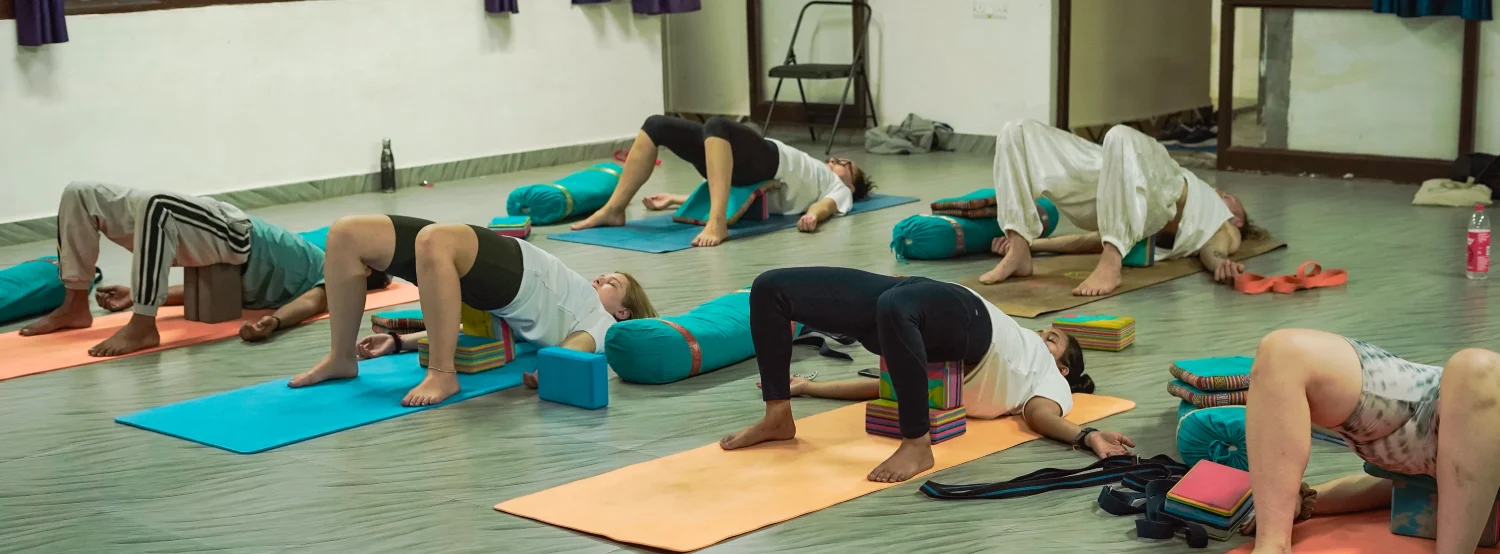

Maa Ganga Yogashala 100 hour YTT testimonials: What Graduates Really Say
Maa Ganga Yogashala 100 hour YTT testimonials can tell you something a course brochure cannot: what the experience actually feels like when you arrive as a student. If you are comparing yoga teacher training in Rishikesh, you probably want more than polished promises—you want to know whether the teachers explain clearly, whether beginners feel supported, and whether 100 hours can genuinely deepen your practice.
This guide looks at published graduate feedback, the themes that appear behind those experiences, and the practical questions you should ask before choosing a course. You will also see why a shorter foundational training can suit some students better than immediately committing to a longer programme.
Most importantly, treat testimonials as evidence, not proof. A positive review can show what one person experienced, but it cannot guarantee that your experience will be identical. The smarter approach is to compare student feedback with the curriculum, teaching format, credentials, schedule, accommodation, and your own goals.
What 100-hour YTT graduate testimonials reveal about the experience
When you read a testimonial, look past words such as “amazing” or “beautiful.” The useful details are the specific things a student noticed: teaching quality, clarity, atmosphere, personal attention, and what they learned.
A published testimonial from Alina Jackson describes her 100-hour training in Rishikesh as a positive experience. She highlights kind, helpful teachers, learning about yoga and herself, and a peaceful, clean environment. Those details matter because they speak to the everyday experience of residential training rather than simply describing the destination.
The school’s current student-stories page also features Lucas Hoffmann from Germany, who says he joined as a complete beginner and initially felt nervous. His feedback focuses on patient teachers, knowledgeable instruction, memorable morning practice near the Ganga, and the 100-hour course being a good starting point.
That is a useful pattern if you are new to formal yoga education. You do not necessarily need to arrive with advanced flexibility or years of practice. What matters more is whether you are willing to learn consistently and participate fully.
You should also notice what these testimonials do not prove. They do not independently verify teaching outcomes for every graduate, and they cannot tell you whether the teaching style matches your personality. Before enrolling, compare testimonials with the published curriculum and ask direct questions about class size, assessment, teaching practice, accommodation, and what certificate you receive.
For broader context on registered yoga-school standards and credentials, you can review Yoga Alliance before making a decision. The organisation explains the different RYS and RYT pathways and what its credentials represent.
100-hour YTT graduate feedback: What beginners notice first
One of the strongest themes in beginner feedback is not physical difficulty. It is confidence.
If you have mostly practised yoga through videos, occasional studio classes, or your own routine, a structured teacher-training environment can feel very different. You are no longer only following instructions. You are learning why a practice is taught, how to observe your own body, and how to communicate what you understand.
Lucas Hoffmann’s published feedback is particularly relevant here. His story starts with nervousness as a complete beginner and emphasises patient teachers and a supportive learning environment. That suggests a practical benefit of a foundation-level programme: it can reduce the intimidation that often comes with entering a formal training setting.
Alina Jackson’s testimonial adds another dimension. She describes learning not only about yoga but also about herself. That is common when your daily routine becomes more structured: early practice, study, repetition, reflection, and interaction with teachers and classmates leave less room for passive participation.
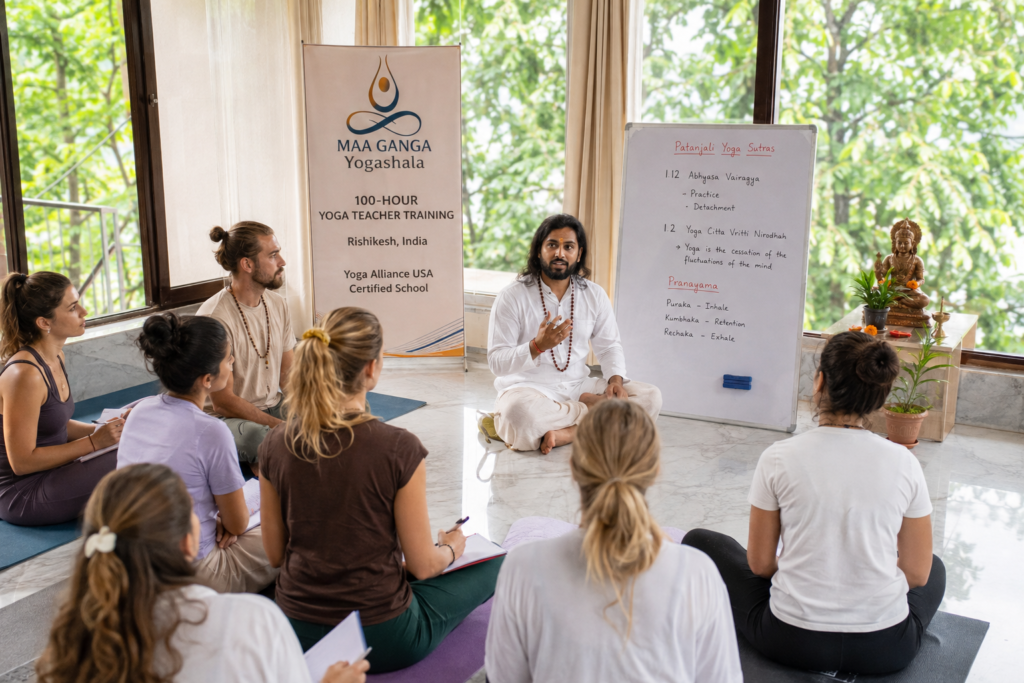
What you should expect from the learning curve
A 100-hour course should not be judged by whether every student becomes “advanced.” A better question is whether you leave with a stronger foundation.
You may notice improvement in areas such as:
- understanding basic asana principles rather than memorising shapes;
- becoming more consistent with pranayama and meditation;
- understanding introductory yoga philosophy;
- observing alignment and movement more carefully;
- developing confidence speaking about yoga in front of others;
- discovering whether you actually enjoy disciplined teacher training.
The current programme information describes the 100-hour course as an 11-day foundational training covering Hatha, Ashtanga, pranayama, meditation, and yoga philosophy.
If you are researching the practical rhythm before committing, our related guide on the 100-hour YTT daily schedule and 11-day structure can help you think through the intensity and routine.
What graduates say about teachers, community, and personal attention
A yoga teacher-training experience is heavily shaped by the people in the room. The same syllabus can feel completely different depending on how teachers answer questions, correct technique, encourage beginners, and create space for discussion.
Both published 100-hour testimonials point toward supportive teaching. Alina describes the teachers as kind and helpful, while Lucas highlights patience and knowledge.
For you, that means the best testimonial question is not “Did they love it?” Ask instead: “What did the teachers actually do that helped?”
Personal attention is particularly important in yoga because verbal explanation is only part of learning. You also need observation, correction, repetition, and feedback. A useful school should make it possible for you to ask questions without feeling that you are slowing everyone else down.
Community also matters. Residential training places you around people with different levels of experience, cultures, and reasons for studying yoga. That can challenge your assumptions. You may discover that the strongest practitioner in the room is not the person with the deepest backbend, and that confidence does not always come from physical ability.
If you want to look beyond testimonials and explore published research on yoga, PubMed is a useful starting point for reviewing peer-reviewed literature rather than relying only on marketing claims.
If you are worried about flexibility, read our guide on the myth about flexibility requirements for yoga teacher training. Your ability to learn should not be reduced to how impressive your postures look on day one.
There is another practical point: community can make an intensive schedule easier to sustain. Shared meals, conversations after class, and practising alongside classmates can create accountability. But do not confuse a friendly atmosphere with educational quality. You still need qualified teachers, a coherent curriculum, clear expectations, and honest assessment.
How to judge 100-hour YTT testimonials before you trust them
Testimonials are useful, but you should read them like a careful buyer rather than a fan.
Start by checking who is speaking. A named student, location, course type, and specific experience give you more context than an anonymous sentence saying “Best yoga school ever.” Then compare multiple testimonials. If several students independently mention teaching clarity, beginner support, or the learning environment, those repeated themes are more meaningful.
Next, look for balance. Real experiences usually include adjustment periods. An intensive residential programme can involve early mornings, long study periods, unfamiliar food, travel fatigue, and the challenge of living with new people. If every testimonial sounds identical, you should be cautious about treating the collection as strong evidence.
You should also separate satisfaction from suitability. A student can genuinely love a 100-hour course while it still being the wrong choice for you. For example, if your primary goal is to qualify through a full 200-hour pathway, a 100-hour foundation may not be enough for your professional plan.
Yoga Alliance states that the RYT 200 credential requires completion of a 200-hour training with a registered RYS 200; shorter trainings should not be assumed to equal an RYT 200 pathway.
For an additional perspective on evaluating training, our guide to questions before enrolling in a 100-hour YTT in India can help you build a pre-enrolment checklist.
You should also ask for current information. Course dates, fees, schedules, room options, curriculum details, and certification arrangements can change. A testimonial is historical evidence; the course page and written confirmation from the school are the better sources for current terms.
Why Rishikesh matters when you evaluate a 100-hour YTT
Rishikesh changes the context of teacher training. You are not simply entering a classroom for a few hours and returning to your usual routine. In Tapovan, daily life can place yoga, meditation, the Ganga, temples, local movement, and the Himalayan foothills around your training environment.
That context can help you focus, but it can also test you. India may feel unfamiliar if you are travelling internationally. Noise, weather, food, traffic, cultural differences, and a different daily rhythm can require adaptation. That is not necessarily a problem; it is part of deciding whether an immersive training suits you.
The school’s published information places its campus on Badrinath Road in Tapovan, Rishikesh, near the Ganga, and describes an international student community.
A good Rishikesh experience also requires realistic expectations. Do not travel thousands of kilometres expecting the location alone to create discipline. Your habits still matter. You will get more from the course if you arrive prepared to wake up on time, practise when you are tired, ask questions, take notes, and reflect on what you are learning.
If the spiritual setting is important to you, our guide to the spiritual significance of the Ganga River in Rishikesh offers useful context before your trip.
For you, the real value of Rishikesh is not simply the scenery. It is the opportunity to temporarily remove distractions and give your practice a defined place in your daily life.
What you can realistically take away after 100 hours
A strong 100-hour programme should leave you with more than photographs and a certificate.
You may return home with a clearer personal practice, better awareness of breath and alignment, introductory knowledge of yoga philosophy, and greater confidence discussing what you have learned. You may also discover that teaching is something you enjoy—or that you prefer practising yoga without making it a career.
That distinction is important. Not every student needs to become a professional yoga teacher. A shorter training can be valuable for personal development, continuing education, or exploring whether a deeper teacher-training pathway is right for you.
At the same time, do not expect 100 hours to make you an expert. Teaching safely and effectively requires ongoing study, observation, practice, and humility. If your goal is professional teaching, compare the foundation course with a full 200-hour Yoga Teacher Training in Rishikesh and understand the credential requirements before you decide.
The best outcome is not “I finished 100 hours.” It is “I understand what I need to learn next.”
A soft next step: explore the 100-hour YTT in Rishikesh
If you are considering a structured foundation course in Rishikesh, we invite you to explore our 100-hour Yoga Teacher Training in Rishikesh, compare the curriculum with your goals, and ask questions before reserving your place.
Our approach is to give you a focused environment where you can practise, study, ask questions, and experience residential yoga learning in Tapovan. Current programme information describes the 100-hour training as a foundational course for students who want an introduction to Hatha, Ashtanga, pranayama, meditation, and yoga philosophy.
Before you enrol, check the exact dates, accommodation arrangement, meals, daily schedule, assessment process, and certificate details that apply to your batch. Those practical details matter just as much as testimonials.
If your goal is personal exploration, the shorter format may be a sensible entry point. If your goal is a professional teaching credential, make sure your chosen pathway matches the credential you ultimately want.
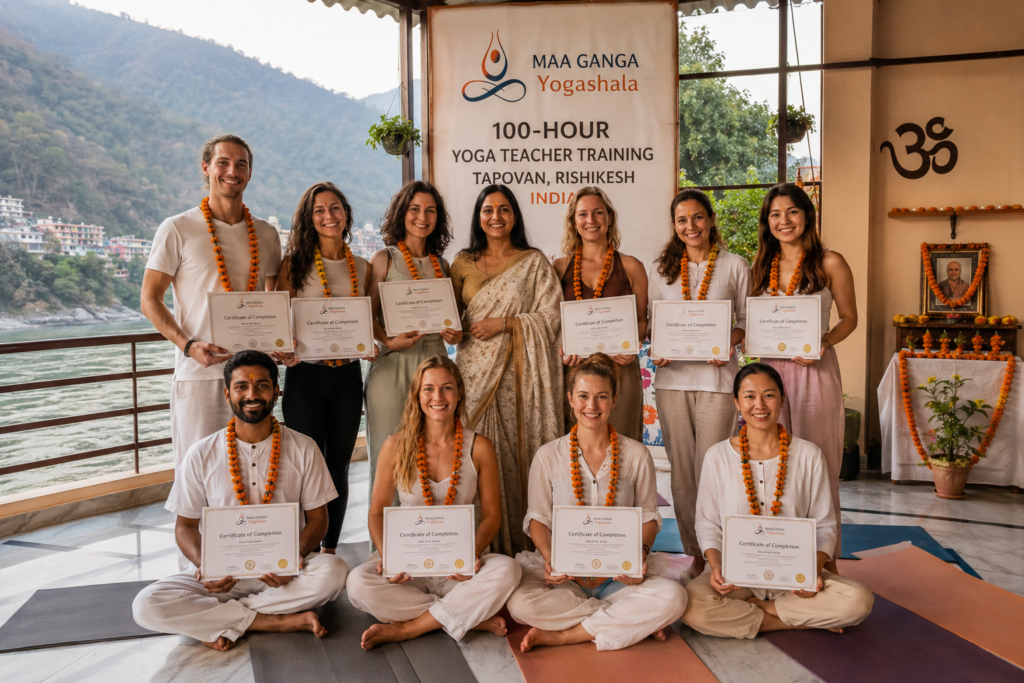
FAQs about 100-hour YTT graduate testimonials
Are the Maa Ganga Yogashala 100-hour YTT testimonials from real students?
The school currently publishes named student testimonials, including Alina Jackson for the 100-hour programme and Lucas Hoffmann from Germany for the 100-hour course. Their comments describe their individual experiences, so you should treat them as student feedback rather than a guarantee of identical results.
Is a 100-hour YTT enough to become an RYT 200?
No. You should not treat a 100-hour course as equivalent to a 200-hour RYT pathway. Yoga Alliance states that RYT 200 requires completion of a 200-hour training with a registered RYS 200.
Is a 100-hour course suitable if you are a beginner?
It can be, provided the programme is designed for beginners and you are prepared for an intensive schedule. The current course information describes the 100-hour training as beginner-friendly and foundational.
What should you ask before enrolling?
Ask about the exact curriculum, daily timetable, teaching methodology, practical teaching opportunities, accommodation, meals, class size, assessment, certificate, cancellation policy, and whether the course matches your long-term professional goals.
Should you choose testimonials or the curriculum when comparing schools?
Use both. Testimonials help you understand the student experience, while the curriculum and credential information tell you what you are actually buying. If a school has glowing reviews but cannot clearly explain its training structure, that is a reason to ask more questions—not a reason to enrol immediately.
Conclusion: what these graduate experiences really tell you
The most useful Maa Ganga Yogashala 100 hour YTT testimonials are not valuable because they promise that every student will have the same experience. They are valuable because they show specific themes: beginners can feel supported, teachers can make a difference, and an immersive Rishikesh setting can give you space to practise and study with greater consistency.
Use those testimonials as one part of your decision. Compare them with the curriculum, current course details, credential pathway, daily schedule, and your own reason for going.
If you are ready to explore the next step, we would be happy to help you compare our yoga teacher training programmes in Rishikesh with your goals. If you already know that you want a deeper professional pathway, explore our 200-hour Yoga Teacher Training in Rishikesh and choose the level that matches where you want your yoga education to go.
The right training is not the one with the loudest promises. It is the one whose teaching, structure, expectations, and pathway make sense for you.